Operation Breaking Dawn enters 3rd day; military says terror groups launched nearly 600 rockets at Israel, including toward Jerusalem; 120 fall short, some killing Palestinians
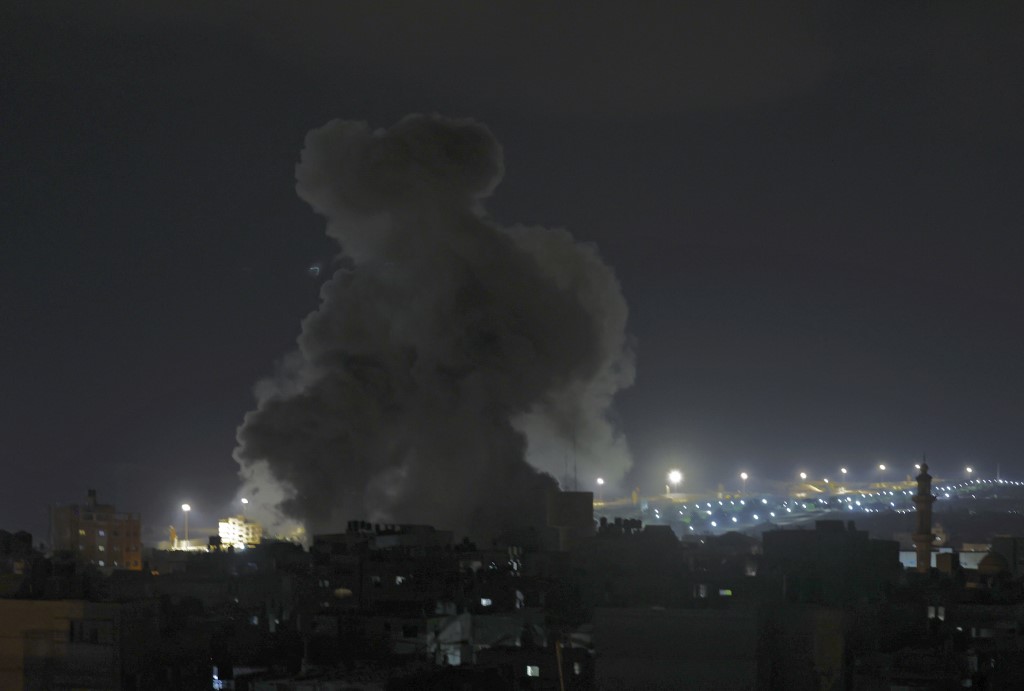
Smoke billows from the site of an Israeli strike in Rafah in the southern Gaza Strip, on August 6, 2022. (Said Khatib/AFP)

Smoke billows from the site of an Israeli strike in Rafah in the southern Gaza Strip, on August 6, 2022. (Said Khatib/AFP)

The Israeli Air Force struck a Palestinian Islamic Jihad “attack tunnel” in the Gaza Strip in the early hours of Sunday morning, the military said, as Operation Breaking Dawn entered the third day.

According to the Israel Defense Forces, the tunnel, built several meters underground from the southern Gaza city of Rafah, was to be used to “enter and attack Israel by surprise.”

The IDF said the tunnel did not cross into Israeli territory, as Israel has a high-tech belowground wall guarding its frontier with Gaza from attack tunnels, which once threatened southern towns.

Military spokesperson Ran Kochav told reporters that the IDF had struck some 140 Islamic Jihad targets across the coastal enclave since the beginning of the operation, which began Friday afternoon with the killing of the terror group’s northern Gaza commander.

The targets included the tunnel, dozens of observation posts and military sites, several rocket launching positions, and eight terror squads en route to committing an attack, he said.

Palestinian rocket attacks on southern Israel continued on Sunday, and for the first time in the current conflict, sirens sounded in towns close to Jerusalem. Several rockets were intercepted by the Iron Dome air defense system on the outskirts of the capital.

0 seconds of 17 secondsVolume 90%


The latest IDF data put the number of rockets and mortars launched toward Israel by PIJ since Friday at over 580.

Of them, 120 fell short in the Gaza Strip. In one of the failed rocket launches, seven Palestinians were killed, including children.

The IDF believed another failed launch on Sunday caused an explosion in northern Gaza, killing another two Palestinians.

Palestinians search through the rubble of a building in which Khaled Mansour, a top Islamic Jihad terror commander died in the southern Gaza strip, on August 7, 2022. (Said Khatib/AFP)

The Iron Dome missile defense system intercepted some 200 projectiles, according to the latest data, which was as of 6:30 a.m.

The military said the Iron Dome demonstrated a 97 percent success rate at intercepting projectiles fired toward populated areas. The system is programmed to ignore rockets that are not deemed a threat.

Still, several homes and other civilian infrastructure in southern Israel have been damaged in rocket attacks.

A rocket strike in the southern city of Ashkelon after a barrage launched toward Israel by a Gaza terror group, August 6, 2022. (Yonatan Sindel/Flash90)

The Magen David Adom ambulance service said it had taken 28 people to hospitals since the beginning of fighting, including two people who were lightly hurt by rocket shrapnel, 19 after falling while running to shelter, and seven who were treated for anxiety.

The Hamas-run health ministry meanwhile said at least 29 people had been killed in Gaza, including six children. Another 203 people were wounded, it said. Israel has denied responsibility for the deaths in the apparent failed rocket launches in the Jabaliya refugee camps.

In the West Bank, the IDF said Sunday morning that troops detained 20 Palestinians affiliated with PIJ during overnight raids.

Israeli troops detain a man allegedly affiliated with Palestinian Islamic Jihad in the West Bank, August 7, 2022. (Israel Defense Forces).

The Gaza operation was launched after several days of closures and lockdowns in Israeli communities near the Strip due to the alert of an imminent attack, with the PIJ seeking to avenge the arrest of its West Bank leader last Monday.

Israeli leaders said the operation was started because Islamic Jihad had refused to back down from its plans to attack Israeli targets close to the border.

In the opening round of Israeli strikes on Friday, the military killed one of PIJ’s senior commanders, Tayseer Jabari, whom officials said was planning to attack Israeli civilians near the border. Jabari replaced Baha Abu al-Ata as the group’s commander in northern Gaza after the latter was killed in an Israeli strike in 2019.

On Saturday night, Israel killed Jabari’s southern Gaza counterpart, Khaled Mansour in an airstrike in Rafah.

Senior Palestinian Islamic Jihad commanders Khaled Mansour (right) and Tayseer Jabari (left) in an undated photo. The pair were killed in separate Israeli airstrikes on August 5 and 6, 2022. (Ashraf Amra/Courtesy)

Prime Minister Yair Lapid and Defense Minister Benny Gantz on Sunday praised the IDF and Shin Bet security agency for the “extraordinary achievement” of eliminating Mansour.


 t of Gaza operation


UAE is one of nations initiating meeting, expressing ‘deep concern’ over violence; Jordanian FM decries Israel’s ‘aggression’ in Strip, warns against Temple Mount ‘provocations’


Palestinian Ambassador to the United Nations Karen Riyad Mansour listens to speakers during a meeting on the Middle East, including the Palestinian question, Wednesday, November 20, 2019, at United Nations headquarters. (AP Photo/Mary Altaffer)

Palestinian Ambassador to the United Nations Karen Riyad Mansour listens to speakers during a meeting on the Middle East, including the Palestinian question, Wednesday, November 20, 2019, at United Nations headquarters. (AP Photo/Mary Altaffer)

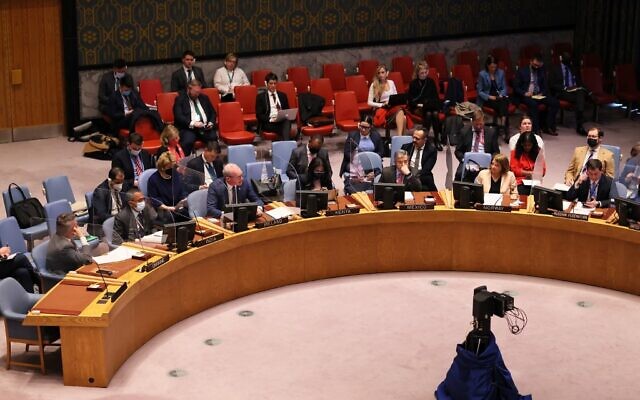
The UN Security Council will hold an emergency closed-door meeting on Monday to discuss the latest escalation between Israel and Palestinian Islamic Jihad in the Gaza Strip, Palestinian Ambassador to the UN Riyad Mansour said in a statement.

The meeting was requested by the UAE — a UNSC member — along with China, France, Ireland and Norway, the UAE Foreign Ministry strategic communications director Afra Mahash al-Hameli said in a statement.

“The United Arab Emirates has emphasized the need to restore calm to the Gaza Strip, reduce escalation, and preserve civilian lives,” she said, adding that Abu Dhabi “expresses its deep concern over the current escalation and calls for exercising maximum restraint, to prevent being drawn into new levels of violence and instability.”

During the Monday meeting, Security Council members will discuss “the current developments and ways to support international efforts to achieve a comprehensive and just peace,” the senior Emirati official said.

Israel has conducted numerous strikes in Gaza targeting Islamic Jihad as part of the operation launched Friday to tackle what Israeli leaders said was an immediate concrete threat by the terror group to Israeli communities.

The operation was launched after several days of closures and lockdowns in Israeli communities near the Strip due to the alert of an imminent attack, with the PIJ seeking to avenge the arrest of its West Bank leader earlier in the week.

Members of the United Nations Security Council meet in New York on April 19, 2022. (Michael M. Santiago/Getty Images/AFP)

Israeli leaders said the operation was started because the PIJ had refused to back down from its plans to attack Israeli targets at the border.

Islamic Jihad has fired over 580 rockets toward Israel since Friday, the Israel Defense Forces said Sunday.

Channel 12 news reported, without citing sources, that Israel was trying to muster some level of support for its actions from the UAE, with which it formed official ties in 2020, and Saudi Arabia, with which the Jewish state has quietly fostered an unofficial relationship in recent years, but to no avail.

On Saturday night, Jordanian Foreign Minister Ayman Safadi condemned Israel’s operation in Gaza as an “aggression,” tweeting that he had discussed the matter with UN Middle East envoy Tor Wennesland.

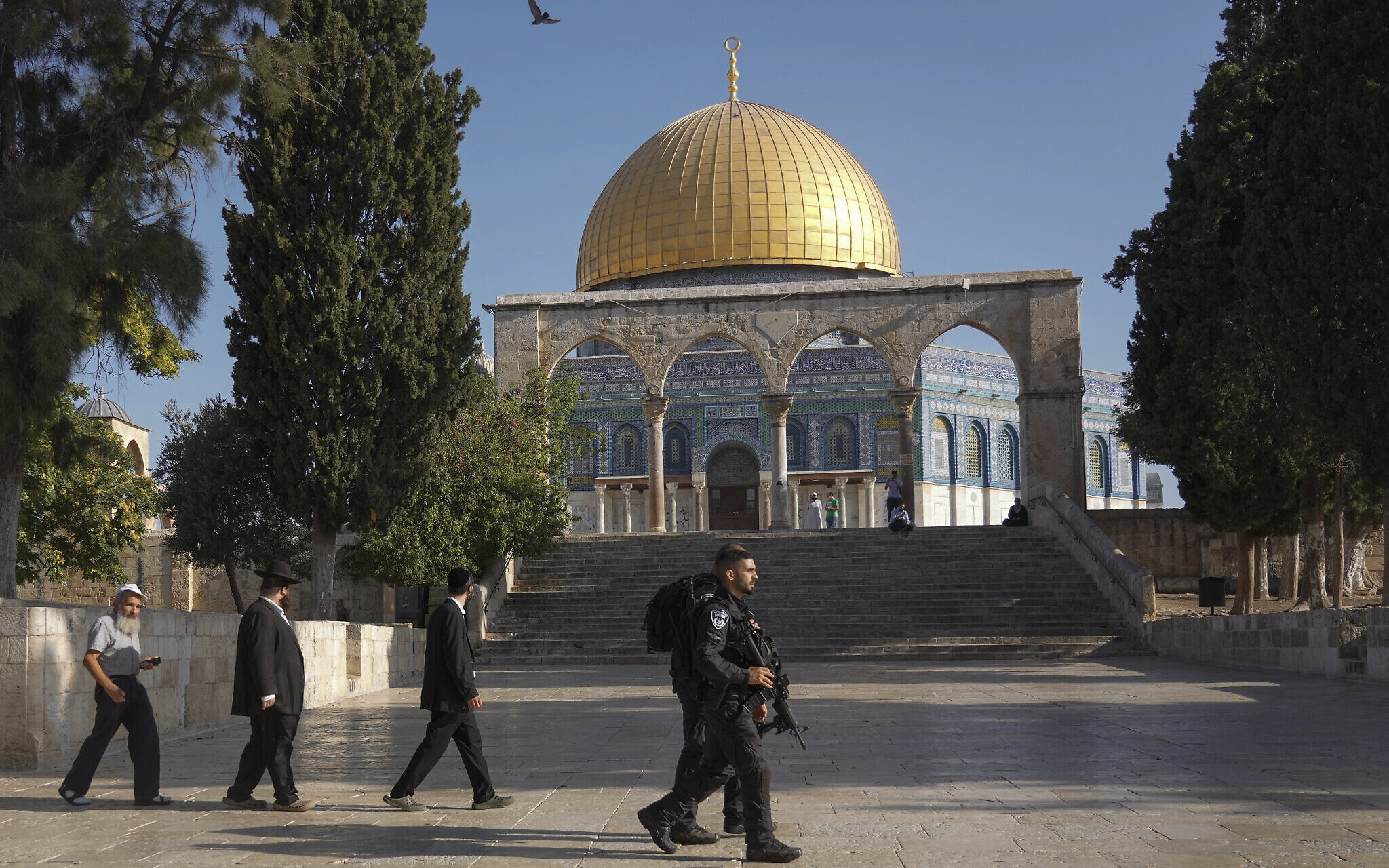
He also stressed that Israeli “provocations” should be prevented at Jerusalem’s Temple Mount on Sunday, as Jews mark Tisha B’Av, which commemorates the destruction of the temples believed to have stood at the site.

Israeli police officers escort a group of Jewish men to visit the Temple Mount, Aug. 7, 2022. (AP Photo/Mahmoud Illean)

Jordan ruled the West Bank and East Jerusalem from 1948 until the 1967 Six Day War, when Israel captured the area and subsequently claimed sovereignty in the Old City and an expanded Jerusalem. Jordan has long maintained that its treaties with Israel grant it custodianship over Jerusalem’s Christian and Muslim holy sites; while Israel has never accepted this claim, it grants day-to-day administration of the Temple Mount to the Jordan-funded Waqf.

Previous Tisha B’Avs have seen over 1,000 Jewish pilgrims visiting the flashpoint site that has been at the center of repeated rounds of Israeli-Palestinian violence in recent years. Israel doesn’t view such visits as a violation of an arrangement known as the “status quo,” which is used to help dictate conduct at the site.

The policy allows Muslims to visit and pray at the Temple Mount, whereas non-Muslims are only allowed to visit. But Palestinians view such large numbers of Jewish visitors as a status quo violation in itself.