
by Algemeiner Staff

Palestinian group Hamas’ top leader, Ismail Haniyeh, gestures as he speaks during his visit at Ain el Hilweh Palestinian refugee camp in Sidon, Lebanon September 6, 2020. REUTERS/Aziz Taher

Hamas’ political chief Ismail Haniyeh applauded Russian Foreign Minister Sergey Lavrov for his “rejection” of Israeli actions on Jerusalem’s Temple Mount, where clashes between Palestinian rioters and Israeli police continued on Thursday, hours after rocket fire from Gaza prompted IDF strikes against the Palestinian terror group.

In a phone call between the two officials, Haniyeh “expressed his appreciation for the Russian position in support of Palestinian rights and rejection of the ongoing Israeli steps in Al-Aqsa mosque,” according to the Hamas-affiliated Shehab news agency.

Haniyeh called for a “central Russian role in curbing this aggression” by Israel, while Lavrov was quoted as denouncing Israel’s use of “excessive force” against Palestinians.

“Our position is firm on the issue. We have always been on the side of the Palestinian people in their right to self-determination and their right to establish their Palestinian state,” Lavrov said, according to Shehab.

Russian leader Vladimir Putin last week condemned Israel’s actions in Jerusalem during a call to Palestinian Authority President Mahmoud Abbas, who for his part declared support for the Kremlin’s stance on its war in Ukraine.

Lavrov’s outreach to Haniyeh came amid continued tensions in Jerusalem, and after rocket fire from the Gaza Strip provoked Israeli air strikes on Hamas terror targets in the enclave.

Israel’s Defense Minister Benny Gantz said Thursday he had spoken with local leaders in Israel’s south and reinforced defenses in the sector.

“The policy of a severe response against any terrorist activity will continue,” Gantz said. “I told them that Israel was prepared to make whatever move was necessary to keep its citizens safe in attack and defense.”

Hamas said in a statement that the Israeli strikes would merely encourage Palestinians to “resist the occupation and step up their support for Jerusalem and its people.”

Meanwhile, Thursday saw new clashes on Jerusalem’s Temple Mount, Israeli police said, after dozens of rioters “disturbed the peace with severe violence.”

“Earlier this morning, they entered the Al-Aqsa Mosque, closed its doors and continued to disturb the peace and riot, by throwing rocks and using fireworks, desecrating the mosque, where they are barricading themselves at this time,” an Israel Police spokesperson said. “The Israel Police will continue to allow freedom of worship and take resolute action against rioters and violent lawbreakers wherever they are.”

Israeli Foreign Minister Yair Lapid met Thursday with US State Department officials in Israel to discuss the situation in Jerusalem, which have raised fears of a new round of conflict with the Hamas terror group.

“Israel will maintain and will continue to maintain the status quo on the Temple Mount in the future and we have no intention of changing it,” Lapid said. “We will not accept any missile fire from the Gaza Strip on the State of Israel. Hamas and the whole world need to know that Israel will act and do whatever it takes to protect the security of its citizens.”

by Reuters and Algemeiner Staff

Members of Iran’s Islamic Revolutionary Guard Corps (IRGC) march during a parade to commemorate the anniversary of the Iran-Iraq war (1980-88), in Tehran on Sep. 22, 2010. Photo: Reuters/Morteza Nikoubazl/File photo

Iran will not give up on its plans to avenge the 2020 US assassination of Quds Force Commander Qassem Soleimani, despite “regular offers” from Washington to lift sanctions and provide other concessions in return, a top official said on Thursday.

Over the last year, Iran and the United States have had indirect talks in Vienna to revive a 2015 nuclear deal that was abandoned by Washington in 2018 by then-President Donald Trump and subsequently violated by Tehran.

“The enemy keeps sending messages that if we give up on avenging Soleimani, they will give us some concessions or lift some sanctions,” Revolutionary Guards’ Navy Commander Alireza Tangsiri said. “This is pure fantasy. The Supreme Leader has emphasized the need for revenge and the Revolutionary Guards’ top commander has said that revenge is inevitable and that we will choose the time and place for it.”

Responding later on Thursday, the US said on if Iran wanted sanctions relief beyond that of the 2015 Iran nuclear deal — an apparent reference to removing Iran’s Revolutionary Guards from a US terrorism list — it must address US concerns beyond the pact.

“We are not negotiating in public, but if Iran wants sanctions lifting that goes beyond the JCPOA, they will need to address concerns of ours beyond the JCPOA,” a State Department spokesperson said, referring to the 2015 deal by the acronym for formal name, the Joint Comprehensive Plan of Action.

“Conversely, if they do not want to use these talks to resolve other bilateral issues beyond the JCPOA, then we are confident that we can very quickly reach an understanding on the JCPOA and begin reimplementing the deal,” the spokesperson added. “Iran needs to make a decision.”

The Quds Force is the foreign espionage and paramilitary arm of Iran’s Islamic Revolutionary Guard Corps (IRGC) that controls its allied militia abroad. The Trump administration put the IRGC on the State Department list of Foreign Terrorist Organizations in 2019, marking the first time Washington had formally labeled another nation’s military a terrorist group.

“Under any return to the JCPOA, the United States would retain and aggressively use our powerful tools to address Iran’s destabilizing activities and its support for terrorism and terrorist proxies, and especially to counter the IRGC,” the State Department spokesperson said.


Iran claims it caught 3 Mossad spies in southeast of country

The three were involved in “disseminating classified information and documents.”

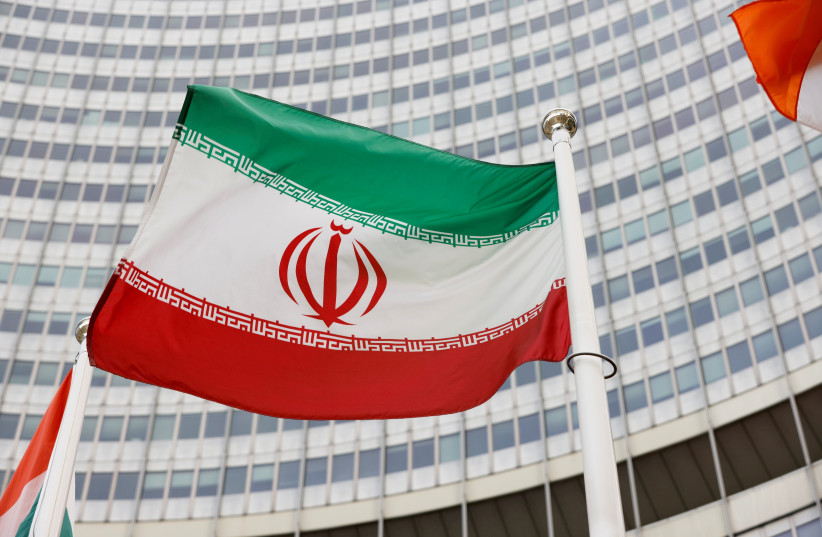
 The Iranian flag waves in front of the International Atomic Energy Agency (IAEA) headquarters, amid the coronavirus disease (COVID-19) pandemic, in Vienna, Austria May 23, 2021. (photo credit: REUTERS/LEONHARD FOEGER)
The Iranian flag waves in front of the International Atomic Energy Agency (IAEA) headquarters, amid the coronavirus disease (COVID-19) pandemic, in Vienna, Austria May 23, 2021.
(photo credit: REUTERS/LEONHARD FOEGER)

Iranian intelligence claimed that it caught three Mossad spies in the Sistan and Baluchestan Province in southeast Iran near the border with Pakistan and Afghanistan on Wednesday, according to the semi-official Fars News Agency.

The three were involved in “disseminating classified information and documents,” according to the report.

According to Iranian news agency IRNA, more details about the case will be released at a later date.

Clashes with smugglers and militants in the province are common.

In March, the Iranian Intelligence Ministry in West Azerbaijan claimed that it caught an Israeli spy network in Iran, according to IRNA.

 Mossad seal (credit: רונאלדיניו המלך/Wikimedia Commons)Mossad seal (credit: רונאלדיניו המלך/Wikimedia Commons)The ministry claimed that the spy network was trying to carry out acts of sabotage inside Iran by hiring locals. The ministry added that “those who threaten the security of the people and society must either die, be injured or surrender to the law,” according to IRNA.

In July of last year, Iran’s Intelligence Ministry claimed that it had arrested a network of Mossad agents and seized a heavy shipment of weapons and ammunition after they entered Iran through its western border, according to Fars News Agency.
