
The airstrikes were carried out from over northern Lebanon, with Syrian air defenses responding to the strikes
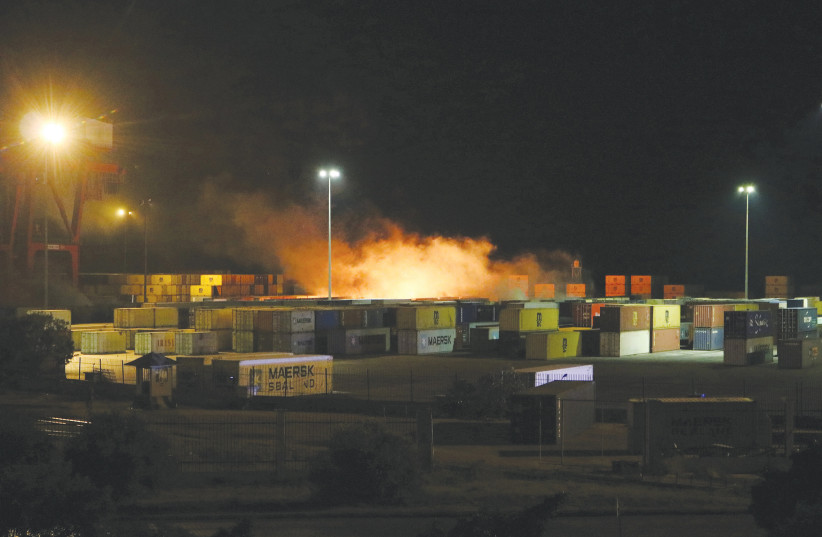
Smoke rises from a fire in a container storage area, after Syrian state media reported an Israeli air strike on the port of Latakia on December 7. (photo credit: SANA/REUTERS)
Smoke rises from a fire in a container storage area, after Syrian state media reported an Israeli air strike on the port of Latakia on December 7.
(photo credit: SANA/REUTERS)

A rare daytime alleged Israeli airstrike targeted sites near Masyaf in northwestern Syria on Saturday afternoon, according to Syrian reports.

The airstrikes were carried out from over northern Lebanon, with Syrian air defenses responding to the strikes, according to Syrian state news site SANA. According to SANA, only material damage was caused.

Video reportedly from the scene showed large plumes of smoke rising from hillsides in the area.

The Step News Agency reported that the strikes targeted sites belonging to pro-Iranian militias and scientific research sites in Masyaf.

The area of Masyaf has been a target in several attacks in recent years, mostly attributed to the Israeli Air Force (IAF). The last time an airstrike attributed to Israel targeted the area of Masyaf was in early June, when an alleged Israeli airstrike targeted chemical weapons facilities in the city and in other locations, according to The Washington Post. At least eight Syrian soldiers were killed in those strikes, according to opposition-affiliated media.

A site belonging to the Syrian Scientific Studies and Research Center (SSRC) is located in Masyaf and has been targeted by Israeli airstrikes in the past. In 2017, two soldiers were killed in an airstrike blamed on Israel, according to the BBC. The SSRC site in Masyaf was used to produce chemical weapons, according to the BBC.

The last Israeli airstrike in Syria was reported on March 7 when an alleged Israeli airstrike targeted sites near the Damascus airport and the Al-Assad suburb, with the Islamic Revolutionary Guard Corps (IRGC) reporting that two of its officers were killed in the strike.

The IRGC warned a few days after the attack that “the Zionist regime will undoubtedly pay the price for such a crime.”

Last month, Russian Ambassador to Syria Alexander Efimov warned that Israeli strikes in Syria are “provoking” Russia to react, in one of the strongest Russian condemnations of Israeli operations in Syria.

Efimov additionally complained that Israeli strikes aim to “escalate tensions and allow the West to carry out military activities in Syria.”
“We are not going to sit idly by or be indifferent to the situation where Iran is legitimized as a nuclear threshold state,” he told the Washington Post

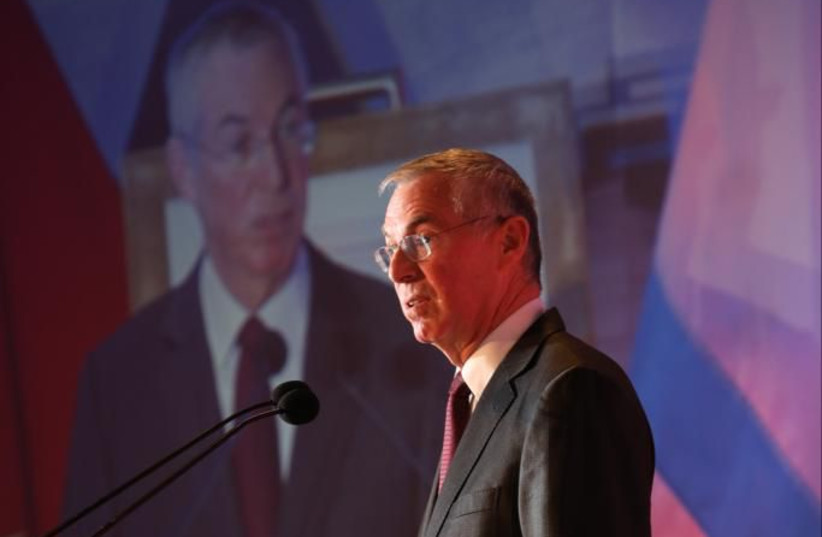
Israeli Ambassador to the US Mike Herzog at the event celebrating one to to normalization with Morocco, December 9, 2021.  (photo credit: SHMULIK ALMANY/ISRAELI EMBASSY IN THE US)
Israeli Ambassador to the US Mike Herzog at the event celebrating one to to normalization with Morocco, December 9, 2021.
(photo credit: SHMULIK ALMANY/ISRAELI EMBASSY IN THE US)

WASHINGTON – Israel’s Ambassador to the US, Mike Herzog, said on Monday that no deal would put Iran in a box “unless there is a serious deterrence vis a vis Iran.” In a live interview with The Washington Post, he said that he would like to see that deterrence in place “with or without a deal.”

“The discussion between this deal and no deal is a difficult one because both options are unappealing, unfortunately,” said Herzog. “To me, the most critical element is not whether you do a deal and don’t do a deal. It’s whether you have deterrence vis a vis Iran. Iran is a predator state. Iran is a destabilizing factor in the region.”

“I certainly believe that if you show assertiveness vis a vis Iran, as Israel has shown in the last few years in the region, you will deter Iran,” he continued. “With all due respect, Iran is not an 800-pound gorilla that cannot be deterred.”

Asked how Israel would react should a deal be signed, he said that Israel’s leadership stated more than once that it is not part of the deal if there is a deal to be had “and therefore we maintain our options open.”

“We will build our capabilities to counter Iran; We will maintain our freedom of action and will decide in due time what action to take,” Herzog continued. “But of course, we are not going to sit idly by or be indifferent to the situation where Iran is legitimized as a nuclear threshold state.”

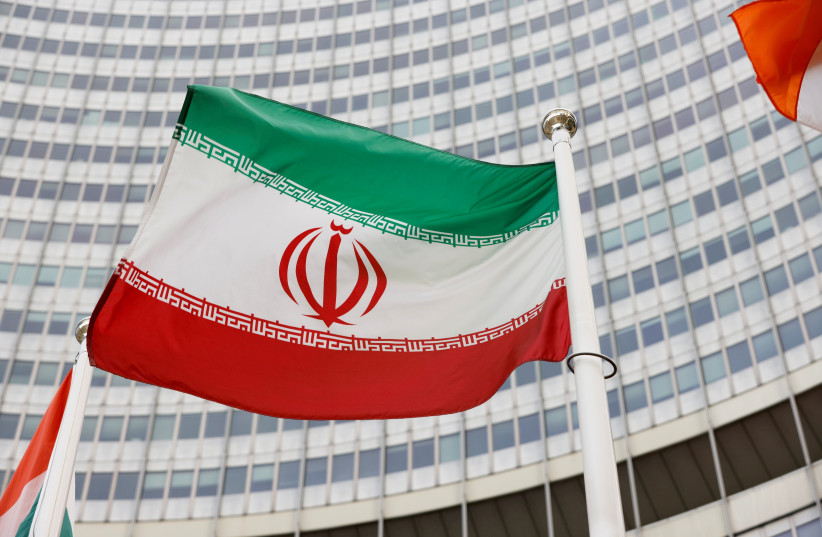
 The Iranian flag waves in front of the International Atomic Energy Agency (IAEA) headquarters, amid the coronavirus disease (COVID-19) pandemic, in Vienna, Austria May 23, 2021. (credit: REUTERS/LEONHARD FOEGER)The Iranian flag waves in front of the International Atomic Energy Agency (IAEA) headquarters, amid the coronavirus disease (COVID-19) pandemic, in Vienna, Austria May 23, 2021. (credit: REUTERS/LEONHARD FOEGER)Asked what kind of elements he wished the deal would include, he said: “If I had to single out one element I would like to see a deal without sunsets [clauses], or if at all, sunsets in a very far distance. To do a deal only a few years, for us this is concerning.”

“In this New Deal, if you compare it to the original deal, in one sense you get less from Iran because the Iranian advances on the nuclear field can bring about a situation where a breakout time towards military-grade fissile material for a bomb is shortened considerably compared to the original deal because Iran advanced and manufactures new types of centrifuges that were not at its disposal at the time,” he said. “And this is a deal for a relatively short period of time.”

He said that lifting sanctions from the Islamic Republic would provide Tehran the funds for more destabilizing regional activities.

“Israel is concerned – and by the way, it’s not only Israel, also our neighbors in the region – that these funds will find their way to Iranian proxies, and we will feel it,” he said. “It will destabilize the region. So for all of these reasons, we are very much concerned this deal would not add stability but may be counterproductive.”


Identified by the Palestinian Ministry of Health as 47-year-old Ghada Ibrahim Ali al-Sabiteen, IDF said she approached in a suspicious manner and refused to stop.

 View of the Jewish settlement of Alon Shvut, in the West Bank, on February 27, 2022.  (photo credit: GERSHON ELINSON/FLASH90)
View of the Jewish settlement of Alon Shvut, in the West Bank, on February 27, 2022.
(photo credit: GERSHON ELINSON/FLASH90)

A stabbing attack injured one Border Police officer at the entrance of the Tomb of the Patriarchs holy site in Hebron before the attacker was neutralized by security forces on Sunday evening, Israel Border Police confirmed.

The attacker approached a Border Police checkpoint and stabbed one of the officers stationed there.

Not long after, a Jewish resident of Israel tried to grab a gun from a soldier in Ashkelon, and an IDF officer in the area shot him. The man was, according to Channel 12, fleeing from a psychiatric ward. No other injuries were reported. The man emerged from a vehicle, which contained a total of four people.  According to testimonies, the individuals escaped in their vehicle, and one of them may be armed. The police are currently conducting a search on land and in the air (via helicopter) for the vehicle.

An unarmed Palestinian woman was shot and killed by IDF troops in the West Bank town of Husan, near the city of Bethlehem, on Sunday morning.

Identified by the Palestinian Ministry of Health as 47-year-old Ghada Ibrahim Ali al-Sabiteen, the IDF said she was shot by forces after she approached them in a suspicious manner and refused to stop.

“The force opened fire on her as part of a suspect arrest procedure that included firing into the air. After she did not stop, the soldiers fired at her lower body,” the Israel Defense Forces said in a statement.

She received medical treatment at the scene before being evacuated to the hospital in Beit Jala. The Palestinian Health Ministry said she suffered from a bullet wound to her thigh and died due to loss of blood.

According to reports, al-Sabiteen was a widow and mother to seven.

In response to her death, Hamas released a statement calling for an escalation “of the resistance to deter the occupation and stop its crimes”.

Tensions have risen in Israel in recent weeks due to a spate of terror attacks that have killed 14 Israelis and wounded dozens more. The IDF and other security bodies have been placed on high alert in order to thwart future attacks.
