BEHIND THE LINES: Despite setbacks, Iraq’s Iranian-backed militias continue to thrive politically, posing a lasting threat to Israel’s security.

Supporters of Iraqi Prime Minister Mohammed Shia al-Sudani’s Reconstruction and Development Coalition Party celebrate, after election results were announced in Baghdad last month. A week later, Sudani announced that his faction would join with the Coordination Framework, a political bloc with ties t
(photo credit: AHMED SAAD/REUTERS)
This week, the government of Iraq announced a decision to freeze assets held by the Lebanese Hezbollah organization and the Yemeni Ansar Allah (Houthis) group. The move was rapidly hailed as a major step forward, signaling Baghdad’s determination to distance itself from Iran’s regional network of militias.

Within hours, however, the government reversed its decision, with the Prime Minister’s Media Office asserting that an “error” had been made. This incident (or non-incident) demonstrated precisely the opposite of what had presumably been intended.

It showed the extent to which Iran-supported militias continue to play a key role in Iraqi governance, and are able and willing to act to prevent any moves to curtail or reduce the power and the capacities of their allies.

Fighters with the Kurdistan Workers' Party (PKK) walk for a disarmament ceremony marking a significant step toward ending the decades-long conflict between Turkey and the outlawed group, in the Qandil mountains, Iraq October 26, 2025. (credit: REUTERS/Thaier Al-Sudani TPX IMAGES OF THE DAY)
Fighters with the Kurdistan Workers’ Party (PKK) walk for a disarmament ceremony marking a significant step toward ending the decades-long conflict between Turkey and the outlawed group, in the Qandil mountains, Iraq October 26, 2025. (credit: REUTERS/Thaier Al-Sudani TPX IMAGES OF THE DAY)

While Iraq’s militias stayed out of the previous round, following a brief intervention in late 2023, there is no reason to assume that this will be repeated. With the loss of Syria, Iraq has taken on added importance to Tehran. 

Advertisement
It has long been known to Israel that the militias have missiles deployed in the large deserts close to Iraq’s western borders. The distance from western Iraq to Israel’s north is only 400 km. This relatively close proximity would enable the militias to launch a wide array of drones and missiles, which would quickly reach Israeli airspace.

Although there is a general impression in Israel that the Iran-led militia array has been defeated in the course of the last two years, or at least has suffered severe setbacks, this is not entirely supported by the facts. In the Iraqi case, the militias have made significant advances in recent months.

As a result, the hope that an increasingly stable internal Iraqi political scene might induce or coerce Iran-supported armed groups to voluntarily disarm and become exclusively political organizations seems misplaced. Rather, it is the militias themselves, in their political iteration, who are moving forward.

In the November Iraqi elections, parties linked to the Shi’ite militias performed well. The Sadiqoun bloc, associated with the Asaib Ahl al-Haq (AH) militia, led by Qais al-Khazali, won 27 seats in the 329-seat parliament. Asaib Ahl al Haq is one of the most active of the pro-Iran militias and has been involved in abductions and murders of Westerners.

The Badr Organization, the oldest and among the most established of the Iran-linked Shi’ite militias (and one which, unlike AH, remains undesignated as a terror organization by the US government), won 18 seats. The Huquq (Rights) list, linked to the Ktaeb Hezbollah (KH) group, won six seats. KH was responsible for the kidnapping, imprisonment, and torture of Elizabeth Tsurkov, an Israeli citizen who was released in September after 903 days in captivity.

All three of these militias are component elements within the Coordination Framework (CF), the largest single grouping within the Iraqi parliament. This faction backed the current government. Prime Minister Mohammed Shia al-Sudani, whose Reconstruction and Development Bloc won 46 seats, will be unable to form a new administration without the CF’s backing.

The CF brings together all the main Shi’ite militias into a single list, alongside several non-armed factions. The most powerful player within the Framework is former Prime Minister Nouri al-Maliki. While not a militia leader himself, he is closely linked to the armed groups and acts in their interest, seeking to embed their representatives within a broader political framework in order to increase their ability to shape policy and guard them from any legal efforts against them.

On November 18, following the elections, Sudani announced that his faction would join with the CF, giving the joint bloc the command of 165 seats and making it almost certainly the faction around which the next government will be formed.

Such a government will continue to obey the demands of the militias in areas crucial to them, as seen, for example, in the move to reverse the decision on the Houthis and Lebanese Hezbollah.

The political direction in Iraq demonstrated the extent to which the Iranian model for the seeding of proxy political and military power in Arab states remains unbroken, and essentially unchanged, despite the events of the last two years.

Following the Gaza ceasefire on October 10, and the previous ceasefires agreed by Iran in June of this year, and Hezbollah in November 2024, it was widely predicted by Israeli observers that Iran must surely adopt a new national strategy, the approach based on proxies having been so clearly defeated.

It appears, however, that Iran does not share this view. The Iraqi example shows the way that this model continues to work, combining electoral power with paramilitary muscle and extensive conventional military capacities.

The Iran-led element is quite content to allow large swathes of the political and societal life of the country to continue without its interference. But when issues arise of importance to this structure, no other force can stand against it or contradict its will.

As an article in the Arab Weekly described it succinctly this week: Iraq currently lives under “a system in which the formal state is largely a framework through which powerful political and militia networks operate.”

What does this mean for Israel? First of all, the somewhat triumphalist and delusional rhetoric that followed the ceasefire in Gaza should be retired forthwith. The Iran-led regional bloc and its project have not been destroyed, though it received serious setbacks as a result of the last two years of war. The latest events in Iraq show that it is advancing once again.


Iran Accelerates Ballistic Missile Production, Israel Warns

December 12, 2025 3:05 pm

by Ailin Vilches Arguello

December 12, 2025 3:05 pm

Iran Accelerates Ballistic Missile Production, Israel Warns

avatarby Ailin Vilches Arguello

An Iranian missile is launched during a military exercise in an undisclosed location in Iran, Aug. 20, 2025. Photo: Iranian Army/WANA (West Asia News Agency)/Handout via REUTERS

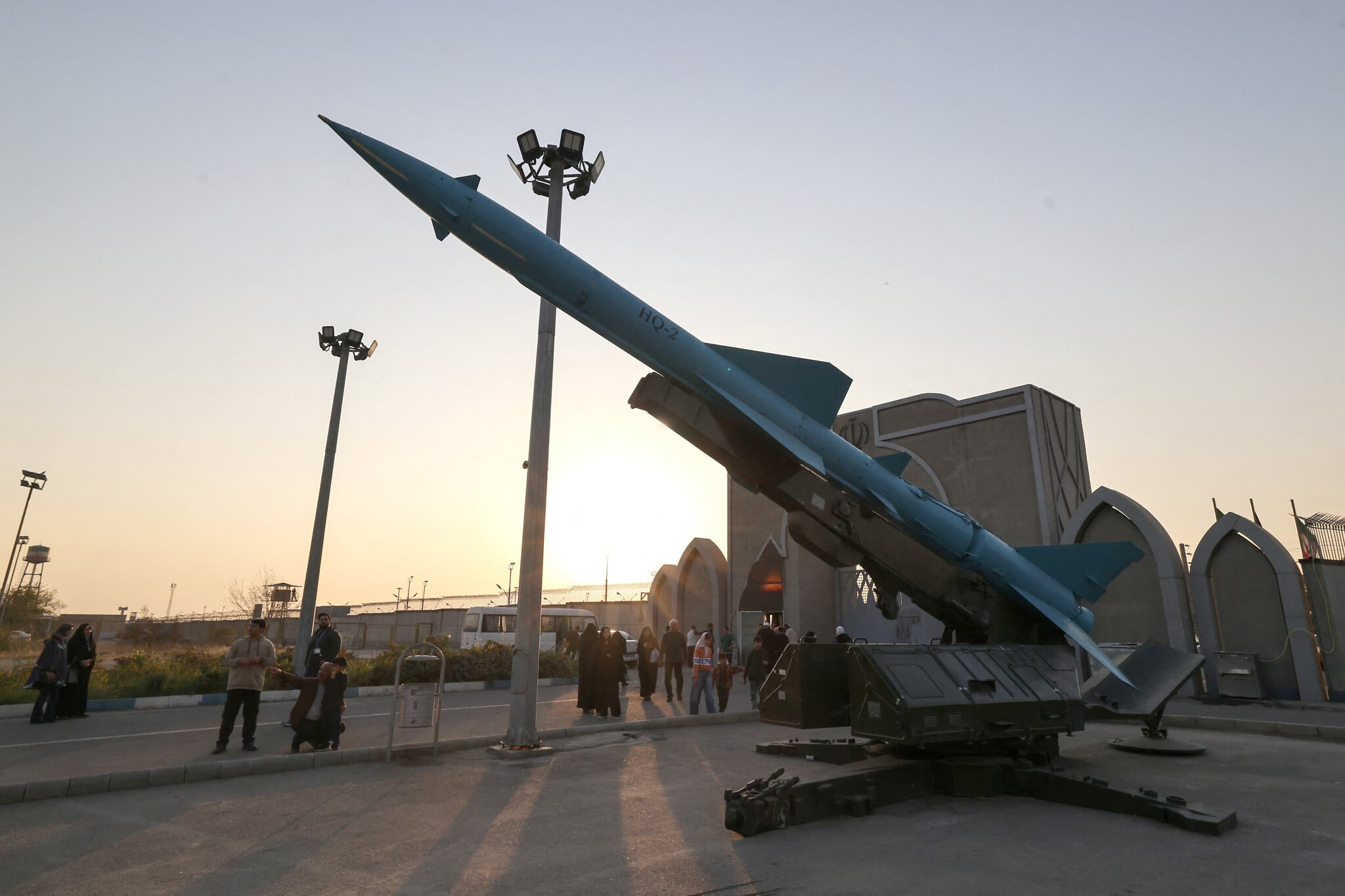
Iran is rapidly rebuilding its missile arsenal following the 12-day war with Israel in June, raising alarm bells among Israeli officials as Tehran aims to restore its weakened military capabilities and extend its influence across the Middle East.

During a closed meeting of the Knesset Foreign Affairs and Defense Committee this week, a senior Israeli military official told lawmakers that Iran has resumed large-scale production of ballistic missiles, roughly six months after the June conflict, Israeli media reported.

Israeli intelligence assessments have confirmed that Tehran resumed massive production of long-range missiles, with factories operating “around the clock” to rebuild capabilities destroyed in Israeli and US strikes.

With Israel having destroyed key missile-production equipment, including planetary mixers, the Iranian regime is relying on older manufacturing methods to restart its missile program, according to the Israeli news outlet Ynet.

Israeli officials now reportedly fear that the damage inflicted on Iran’s ballistic missile program during the June war was less extensive than initially thought.

Earlier this year, Israel, with support from the United States, carried out large-scale military strikes against the Islamist regime in Iran, targeting critical nuclear enrichment sites — including the heavily fortified Fordow facility — after multiple rounds of negotiations over Iran’s nuclear program failed to yield results.

In the aftermath of the strikes, intelligence and media assessments of the damage to Iran’s nuclear and defense capabilities have been inconsistent and often contradictory, with some reports indicating only a short-term setback and others pointing to potentially years of disruption. Many experts believe the nuclear program has been set back by multiple years. However, Iran’s missile arsenal may have suffered less damage.

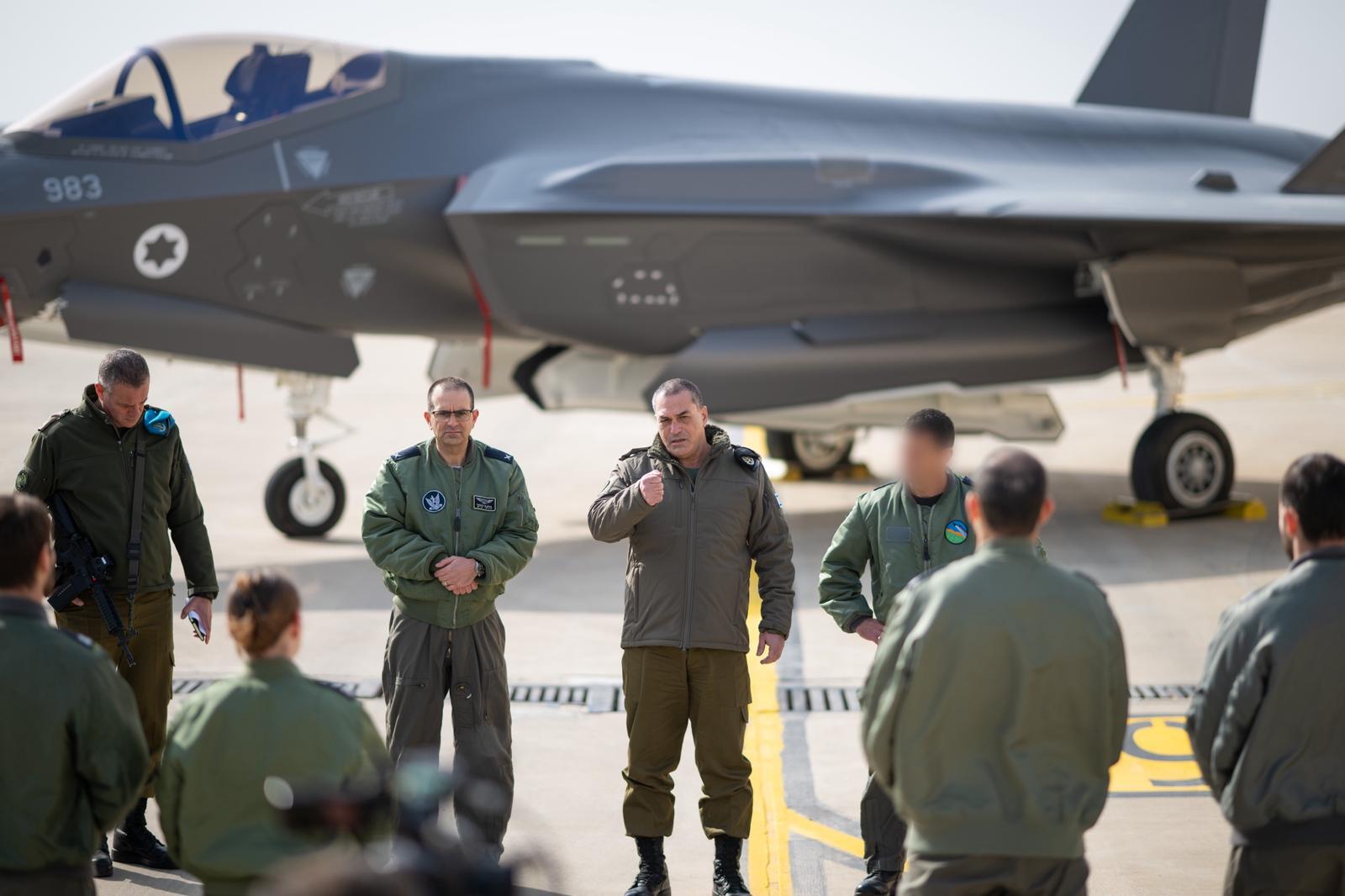
Earlier this week, Israel Defense Forces military intelligence chief Maj. Gen. Shlomi Binder told US Ambassador to the UN Mike Waltz that Iran still possesses roughly 2,000 heavy ballistic missiles — about the same number it had before the war, the Al-Monitor news outlet reported.

Since the end of the war, Iran has repeatedly threatened to respond to any future Israeli attack, as the regime has attempted to rebuild its decimated air defenses and expand its military capabilities.

Last week, Tehran conducted a major naval exercise in the Persian Gulf, carried out by the Islamic Revolutionary Guard Corps and featuring ballistic missiles, cruise missiles, and drones, as part of an effort to deter foreign threats.

Iranian state media reported that missiles struck mock targets in the Gulf of Oman with “high accuracy” and drones hit simulated enemy bases, while three air defense systems were deployed during the exercise under electronic warfare conditions.

“Utilizing artificial intelligence, these systems were able to identify flight and maritime targets in a fraction of the time and hit them with high accuracy,” according to Iranian media reports.

The commander of Iran’s Revolutionary Guard Navy, Rear Admiral Alireza Tangsiri, also said that a new missile was tested during the drills, reportedly capable of reaching beyond the length of the Persian Gulf, though he did not provide specific details.

“The Persian Gulf is 1,375 kilometers long – this missile’s range is beyond that,” he told Press TV.

Built domestically, the missile can be “guided after launch” and has demonstrated “very high precision,” Tangsiri said.


Iran’s FM Araghchi accepts Beirut’s invitation after his Lebanese counterpart rejected a visit to Tehran.

Abbas Araghchi

Abbas AraghchiREUTERS/Mohamed Azakir/File Photo

Iranian Foreign Minister Abbas Araghchi announced Thursday he accepted an invitation from his Lebanese counterpart, Youssef Raggi, to visit Beirut in order to open “a new chapter” in bilateral relations, reported the Anadolu news agency.

The announcement followed Raggi’s rejection of Araghchi’s earlier invitation to visit Tehran, instead suggesting that talks be held in a third neutral country.

In a statement on social media, Araghchi described Raggi’s refusal as “bemusing.” He added, “Foreign ministers of nations with brotherly and full diplomatic relations need no ‘neutral’ venue to meet. Subjected to Israeli occupation and blatant ‘ceasefire’ violations, I fully understand why my esteemed Lebanese counterpart is not prepared to visit Tehran.”

The exchange comes amid sharp disagreements over Hezbollah’s future. Iran is a major sponsor of the Hezbollah terrorist organization and in the past has vowed to always support the group.

A report in March of last year revealed that Iran is using European ports to provide cover for shipments of weapons to the Hezbollah terrorist organization in Lebanon.

Iranian officials, including Araghchi himself, have criticized Lebanon’s recent decision to disarm the terror group, in line with a ceasefire agreement reached with Israel last year.

On Wednesday, Raggi emphasized that relations between Lebanon and Iran must be built on “mutual respect for the sovereignty of both countries and non-interference in internal affairs.”

Hezbollah has rejected the initiative, insisting that Israeli forces must fully withdraw from Lebanese territory before it considers laying down arms.