Bennett: Shorter, weaker Iran deal may be coming soon

“Since the original deal was signed, two things happened: The Iranians advanced their enrichment capabilities very much, and time has passed.”
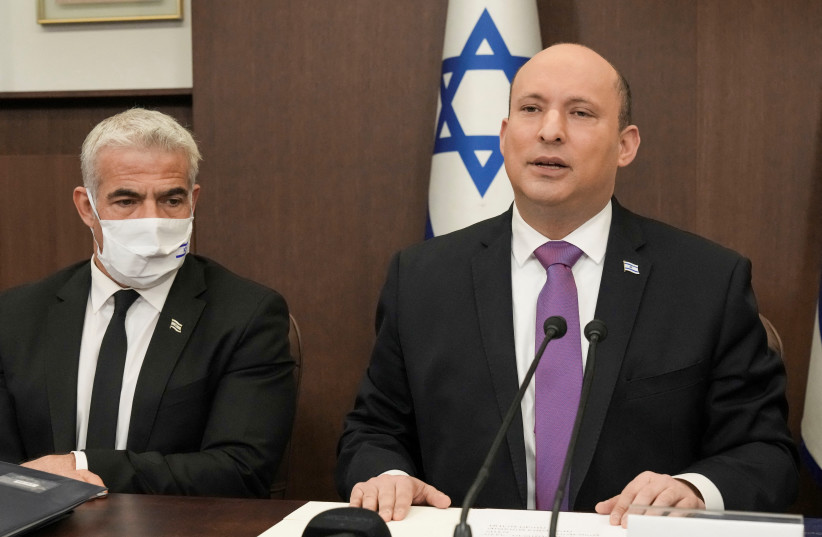
 Israeli Prime Minister Naftali Bennett chairs the weekly cabinet meeting with Israeli Foreign Minister Yair Lapid in Jerusalem, February 20, 2022. (photo credit: Tsafrir Abayov/Pool via REUTERS)
Israeli Prime Minister Naftali Bennett chairs the weekly cabinet meeting with Israeli Foreign Minister Yair Lapid in Jerusalem, February 20, 2022.
(photo credit: Tsafrir Abayov/Pool via REUTERS)

Nuclear negotiations may soon end with a deal that is insufficiently tough on Iran, Prime Minister Naftali Bennett warned at the opening of Sunday’s cabinet meeting.

“The talks between Iran and the [world] powers on a return to the Iran deal are very advanced,” Bennett said. “It may be that we will see an agreement in a short time.

“The apparent new deal is shorter and weaker than the previous one,” he added.

Bennett explained that the Joint Comprehensive Plan of Action, signed in 2015, was for 10 years, which means returning to it means a deal in which most of its restrictions on Iran’s uranium enrichment will expire in only 2.5 years.

“Since the original deal was signed, two things happened: The Iranians advanced their enrichment capabilities very much, and time has passed,” he said.
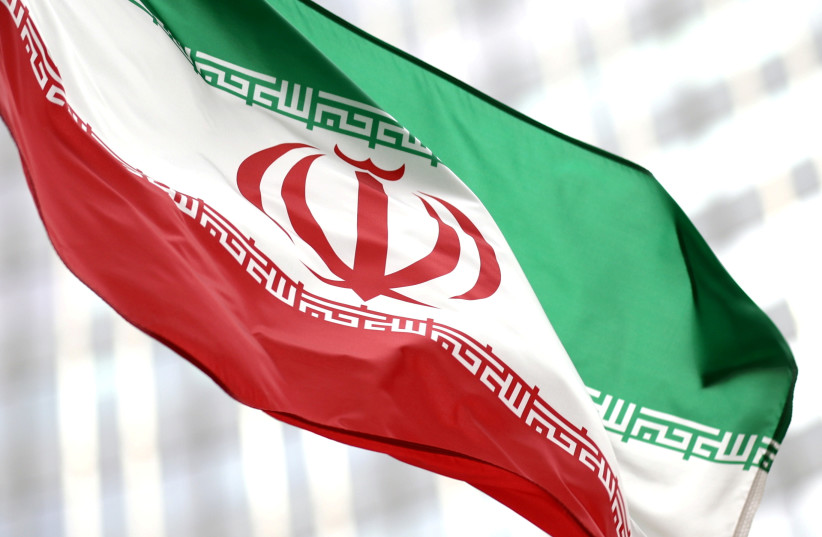
Iranian flag flies in front of the UN office building, housing IAEA headquarters, amid the coronavirus disease (COVID-19) pandemic, in Vienna, Austria, May 24, 2021. (credit: LISI NIESNER/ REUTERS)Iranian flag flies in front of the UN office building, housing IAEA headquarters, amid the coronavirus disease (COVID-19) pandemic, in Vienna, Austria, May 24, 2021. (credit: LISI NIESNER/ REUTERS)

In 2.5 years, Bennett said, “Iran will be able and entitled to develop and install advanced centrifuges, without restrictions; stadiums full of centrifuges, according to the agreement.

“In return, the Iranians will, at present, receive tens of billions of dollars and sanctions removed,” he said. “In the end, that money will reach terror in the region. That terror endangers us and other countries in the region – as we saw recently – and will also endanger American forces in the region.”

Israel is prepared to protect its citizens security, on its own, in any scenario, the prime minister added.

Israel has been concerned about the possibility of an insufficiently robust deal with Iran in recent weeks, as the participants in the nuclear talks – China, the EU, France, Germany, Iran, Russia, the UK and the US – say they are drawing to a close.

Western parties to the talks have pointed out that time is running out for the JCPOA’s nonproliferation benefits to remain relevant.

French President Emmanuel Macron spoke with his Iranian counterpart Ebrahim Raisi on Saturday, urging him to agree to a deal, the Elysee said.

In a phone call that lasted an hour and a half, Macron expressed his conviction that talks had come to a solution respectful of all parties’ interests and said Iran should seize the opportunity to preserve the Vienna deal and avoid a major crisis, according to a French presidency statement.

The draft currently being discussed would suspend Iran’s uranium enrichment beyond 5% purity, according to diplomats involved in the talks.

It would also freeze $7 billion in Iranian funds stuck in South Korean banks due to US sanctions, and would have Iran release Western prisoners.

After that, Iran would have to return to the main limits of the JCPOA, such as mostly eliminating its enriched uranium stockpile and reducing enrichment to 3.75%. The US would also waive sanctions on Iranian oil.

However, Iran continued to demand a guarantee from the US that it will not withdraw from the deal again, though US President Joe Biden cannot legally bind his successors to it. In addition, Iran has sought to have Washington lift all Trump-era sanctions, including those for human rights violations and terrorism, and not just those related to the nuclear file.

Iranian Foreign Minister Hossein Amirabdollahian told the Munich Security Conference that indirect talks between Tehran and Washington could succeed “at the earliest possible time” if the US makes the necessary political decisions.

“I would like to emphasize here that we are ready to achieve a good deal, at the earliest possible time, if the other side makes the needed political decision,” Amirabdollahian said in a panel session.

“If the nuclear talks between Tehran and world powers fail in Vienna, Western powers will be responsible for it because we want a good deal,” he said.

When asked whether Tehran was ready to hold direct talks with Washington, Amirabdollahian refrained from ruling it out, saying: “We need to see tangible steps of goodwill by Washington such as freeing Iran’s frozen assets abroad.”

Israeli Defense Minister Benny Gantz told US Vice President Kamala Harris at the Munich Security Conference on Saturday night that “any future agreement must include consistent enforcement by the IAEA in addition to handling the open files in the nuclear program.”

Reuters and Tovah Lazaroff contributed to this report.


G

PM says Israel will maintain its citizens’ security; charges that Tehran will use financial gain from the potential agreement to fund regional terror


Prime Minister Naftali Bennett chairs the weekly cabinet meeting at the prime minister's office in Jerusalem on February 20, 2022. (Tsafrir Abayov / POOL / AFP)

Prime Minister Naftali Bennett chairs the weekly cabinet meeting at the prime minister’s office in Jerusalem on February 20, 2022. (Tsafrir Abayov / POOL / AFP)

Prime Minister Naftali Bennett said Sunday that Israel was making preparations for the day after the agreement emerging from the Vienna nuclear talks, which he said appears to be “shorter and weaker” than the previous deal.

“We are organizing and preparing for the day after, in all ways, so that we can maintain the security of the citizens of Israel on our own,” Bennett said at the start of the weekly cabinet meeting.

Israel has long vowed that it will not allow Iran to obtain nuclear weapons.

Bennett said that the original 2015 deal covered a period of ten years and would have expired in 2025, and that the potential new deal would only be in effect for two and a half years.

“Two things have happened since the original signing — the Iranians have made great strides in building their enrichment capabilities, and time has passed,” Bennett said.

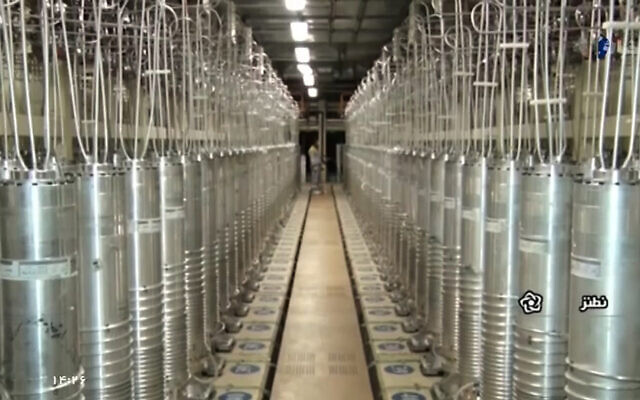
Various centrifuge machines line a hall at the Natanz Uranium Enrichment Facility, on April 17, 2021. (screenshot, Islamic Republic Iran Broadcasting – IRIB, via AP)

Bennett said that in exchange for signing the agreement, Tehran will receive billions of dollars with the removal of sanctions, and will use the money to fund terror in the region.

“This terrorism endangers us, endangers other countries in the region, and as we have seen recently, will also endanger American forces in the region,” Bennett said.

Tehran backs a number of groups in the region, including Lebanon’s Hezbollah terror group, Gaza terror factions and Yemen’s Houthis, as well as proxies in Iraq and Syria. Recent weeks have seen an uptick in drone and cruise missile attacks by those groups.

While publicly lobbying against a return to the multilateral accord, Israel is preparing itself for world powers and Iran to reach an agreement within days to revive the deal aimed at curbing the Islamic Republic’s nuclear program, Israeli television reported Friday.

A police officer patrols outside the Hotel Palais Coburg in Vienna, where talks are being held on reviving the 2015 Iran nuclear deal, December 27, 2021. (Alex Halada/AFP)

Israel opposed the original agreement, formally known as the Joint Comprehensive Plan of Action, with then-prime minister Benjamin Netanyahu arguing that it actually paved the path to an Iranian nuclear arsenal.

The Netanyahu government then backed former US president Donald Trump’s decision to withdraw the US from the deal in 2018 and initiate a “maximum pressure” campaign against Iran, which led Tehran to publicly ramp up nuclear work in violation of the JCPOA.

US President Joe Biden is now seeking to revive the accord, on the condition that Iran will return to compliance.

Defense Minister Benny Gantz met with US Vice President Kamala Harris on Saturday and told her any future nuclear deal with Iran must include consistent enforcement by the International Atomic Energy Agency (IAEA).

Agencies contributed to this report.


READ MORE:

antz to Kamala Harris: Nuke deal must include consistent enforcement by UN watchdog


Israel and its regional allies are developing a joint defense pact to protect against the threat of suicide drones, Channel 12 news reports.

The unsourced report says this includes neighbors near and far, but does not provide details.

It says the drones used by Iran and its proxies have become a threat to many Arab countries in the Middle East. Under the prospective agreement, the countries will assist each other in the detection of drones, notifying of any potential threat they detect in the airspace.

In this photo released on May 21, 2021 by Sepahnews, the website of the Iranian Revolutionary Guard, a new Gaza drone is displayed in an undisclosed location in Iran. (Sepahnews via AP)