Fire erupts at Iranian military base, in latest in series of mishaps

Cause of blaze still unknown; recent attacks on Iranian military and nuclear sites have been blamed on Israel


Fire rising from an oil pipeline that exploded in southern Iran on November 17, 2021. (Screenshot: Twitter)

Illustrative: Fire rises from an oil pipeline that exploded in southern Iran on November 17, 2021. (Screenshot: Twitter)

DUBAI, United Arab Emirates — A fire erupted at a military base in western Iran, state-linked media reported on Monday, the latest in a series of blazes and other mishaps at Iranian infrastructure in recent months.

The fire broke out at a warehouse full of engine oil and flammable materials at a base belonging to Iran’s powerful paramilitary Revolutionary Guard in the western province of Kemranshah, reported the Iranian website Nournews, which is believed to be close to Iran’s Supreme National Security Council.

The blaze damaged a shed but did not cause any casualties. Investigators were looking into the cause and details, the report added.

The day before, unconfirmed reports proliferated online about several explosions heard in northern Kermanshah, a strategic location in Iran with various missile and military sites.

Sensitive military and nuclear sites have been the target of attacks in the past years, which Iran has blamed on Israel.

The fire broke out as Iran remains on edge about negotiations over its nuclear program continuing in Vienna this week.

Chief Iranian nuclear negotiator Ali Bagheri Kani arrives at the Coburg Palace, venue of the talks aimed at reviving the Iran nuclear deal, in Vienna, on February 8, 2022. (Alex Halada/AFP)

The 2015 deal that granted Iran sanctions relief in exchange for curbs on its nuclear program collapsed nearly four years ago when former US president Donald Trump withdrew the US from the accord and re-imposed crushing sanctions.

After months of slow progress, diplomats have said the nuclear negotiations are reaching a decisive phase.


If Israel strikes Iran, what happens next?

Nuclear deal talks are entering into their final stage in Vienna.

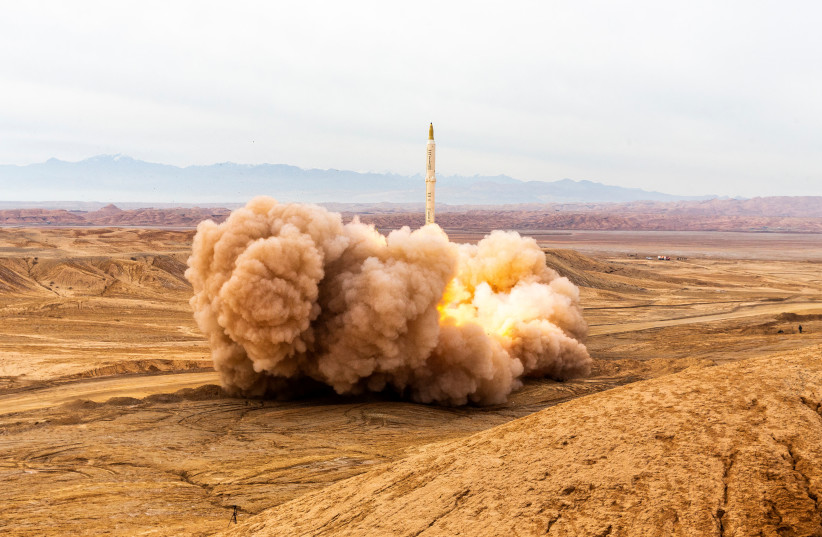
 A missile is launched during a joint exercise called the 'Great Prophet 17', in the southwest of Iran, December 24, 2021. Picture taken December 24, 2021.  (photo credit: SAEED SAJJADI/FARS NEWS/WANA (WEST ASIA NEWS AGENCY)VIA REUTERS)
A missile is launched during a joint exercise called the ‘Great Prophet 17’, in the southwest of Iran, December 24, 2021. Picture taken December 24, 2021.
(photo credit: SAEED SAJJADI/FARS NEWS/WANA (WEST ASIA NEWS AGENCY)VIA REUTERS)

As negotiations between the world powers and Iran in Vienna continue and reportedly enter their “final stage,” many in the Middle East – but also in Washington and European capitals – hold their breath to see if a return to a nuclear deal with Iran is possible.

Israel is also closely following developments in Vienna. Accepting the fact that some agreement with Iran is almost certainly on the way, Prime Minister Naftali Bennett recently said that “the agreement and what appears to be its conditions will damage the ability to take on [Iran’s] nuclear program.”

Yet, if the talks in Vienna fail to produce an agreement and Iran is free to pursue its nuclear program (in addition to its existing malign regional activities, including against Israeli targets), the prospects for an Israeli strike against Iran become much higher.

Worrying that a deal with Iran won’t be able to stop the country from developing a nuclear weapon, Israel already signaled its readiness to strike Iran. Bennett stated that “Israel will continue to ensure its full freedom of operation in any place and at any time, with no limitations,” and incoming IAF commander Maj.-Gen. Tomer Bar said that the Israel Air Force is ready to attack Iran “tomorrow.”

If Israel does indeed attack Iran, as Israeli officials have increasingly implied might happen, what impact would it have on the Middle East? How would the region be any different after such a development?

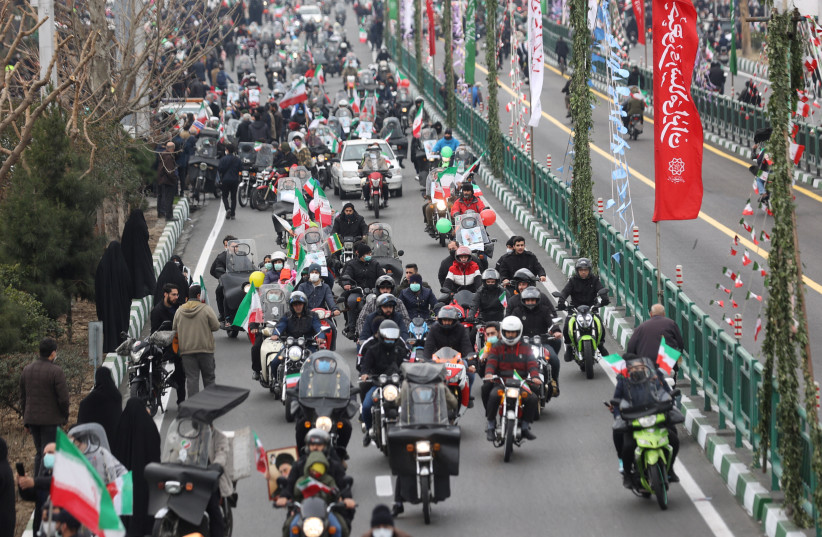
Iranians ride on motorcycles as they participate in the celebration of the 43rd anniversary of the Islamic Revolution in Tehran, Iran, February 11, 2022. (credit: MAJID ASGARIPOUR/WANA (WEST ASIA NEWS AGENCY) VIA REUTERS)Iranians ride on motorcycles as they participate in the celebration of the 43rd anniversary of the Islamic Revolution in Tehran, Iran, February 11, 2022. (credit: MAJID ASGARIPOUR/WANA (WEST ASIA NEWS AGENCY) VIA REUTERS)

These questions may be hypothetical now, but they could very well turn out to be reality tomorrow.

TO ANSWER them, Wikistrat, a crowdsourced consultancy, ran a weeklong simulation from January 24 to 31, 2022, while the talks in Vienna were still taking place.

To explore how an Israeli strike would impact the region’s stability, the simulation focused on the five actors that were considered the most significant in the Gulf region: Iran, Saudi Arabia, the United States, China and Russia. The simulation included 31 experts from 13 countries and focused on three scenarios: a successful Israeli strike on Iran, a failed strike, and a partially successful strike.

Discussions in the simulation produced a few key insights, which observers of developments in the region may want to keep in mind as they try to make sense of the Middle East in the next few years.

First, the experts argued that in the years after an Israeli military strike (regardless of its results), the Middle East will enter the nuclear proliferation phase, which will include not only Israel but also Iran and possibly Saudi Arabia. An Israeli strike will embolden the Iran regime’s desire to have a nuclear weapon, viewing it – much like North Korea – as a guarantee against future attacks.

For its part, fearing an Iranian nuclear retaliation against it, Saudi Arabia will also seek to develop its own nuclear program. This is based on the participants’ assessment that a failed Israeli strike would drive the Saudi leadership to move forward as quickly as possible with its own nuclear program. A successful strike could serve as a catalyst to the Saudi nuclear program, encouraging Saudi decision-makers to leverage the attack and to catch up with the Iranian nuclear program.

How would an Israeli strike against Iran impact Israel?

A successful strike could lead to a Saudi-Israeli normalization. Some of the experts argued that a successful Israeli strike might cause Mohammed bin Salman, as king, to normalize relations with Israel, in the expectation that the entrenched anti-Iranian sentiment in Saudi Arabia would outweigh any backlash against normalization.

However, a failed strike could have a negative effect on Israel’s regional position, as Israel was perceived until then as a strong partner to the Gulf states on security affairs and a critical partner for confronting Iran. The experts assessed that if Israel failed to deliver on confronting Iran by failing to destroy its nuclear facilities, Saudi Arabia would be less inclined to engage with it.

While a nuclear deal between the US, other world powers and Iran seems almost certain at this point, the stakes for an unchecked nuclear Iran are higher than ever.

If Israel feels compelled to act alone to stop a nuclear Iran, a completely different geopolitical reality could emerge in the Middle East.

A simulation examining what happens when Israel strikes Iran, featuring some of the world’s top Iran and Middle East experts, gives us a look at the year after such a development.

Such a strike would impact Iran, Saudi Arabia, Russia, China and the United States – but also Israel’s regional position.

The writer is Head of the Middle East desk at Wikistrat, a crowdsourced consultancy.


https://www.jpost.com/opinion/article-696367


Ukraine is responsible for a large percentage of Israel’s grain.

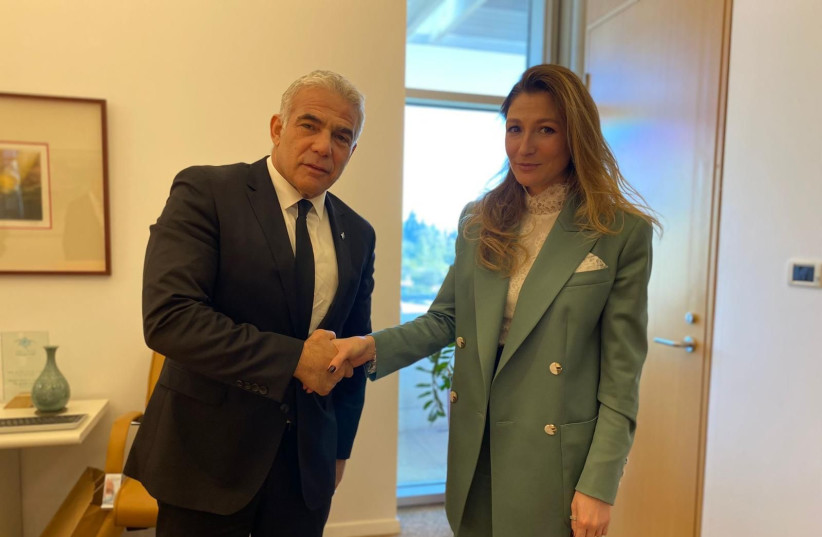
 FM Yair Lapid meets with Ukraine's Deputy FM Emine Dzhaparov (photo credit: FOREIGN MINISTRY)
FM Yair Lapid meets with Ukraine’s Deputy FM Emine Dzhaparov
(photo credit: FOREIGN MINISTRY)

Israel’s grain supply will be slashed if there is an escalation in Ukraine, the country’s Deputy Foreign Minister Emine Dzhaparova warned in an interview on Sunday.

“In case of an escalation, the State of Israel will be directly affected,” Dzhaparova said in Jerusalem, after meeting with Foreign Minister Yair Lapid.

Ukraine, known as “Europe’s breadbasket” is the source of half of the grains imported into Israel, according to Dzhaparova.

“Cut your bread supply in half to understand how Israel will be affected,” she said.

Dzhaparova also pointed to the Israeli construction industry as likely to be negatively impacted by a war, because Israel imports a lot of metals from Ukraine. Hi-tech, which has outsourced thousands of jobs to Ukraine, is also likely to suffer.

 Ukraine's Deputy FM Emine Dzhaparov visits Israel and meets with FM Yair Lapid. (credit: FOREIGN MINISTRY)Ukraine’s Deputy FM Emine Dzhaparov visits Israel and meets with FM Yair Lapid. (credit: FOREIGN MINISTRY)

“I think Israel should be involved in seeking a resolution to a greater extent,” Dzhaparova said. “With all due understanding of domestic concerns and the issues in Syria and Iran, [Israel has] large communities coming from the former Soviet Union.

“This is not the time for Israel to remove itself from the dossier. It is time to demonstrate greater involvement in seeking a peaceful resolution,” she added.

Dzhaparova said that she made these points in meetings with Israeli officials, including Lapid, whom she invited to visit Kyiv. The Foreign Ministry said on Sunday that no trip is currently planned.

Ukrainian President Volodymyr Zelensky last year asked Prime Minister Naftali Bennett and his predecessor Benjamin Netanyahu to try to mediate between him and Russian President Vladimir Putin, or between other officials, in light of the good relations Israel has with both countries. Both premiers offered, but Moscow refused.

Dzhaparova said she hopes Israel will support her country, in light of the Russian military buildup of about 100,000 soldiers on Ukraine’s borders. Ukrainian diplomats are focused on three kinds of support.

“The first is political solidarity with my country, explaining why this aggression cannot be allowed,” she said. “The second is economic sanctions…. In case Russia crosses the red lines, what will happen with regards to a deterrence mechanism?”

The third is most relevant to Israel: “There is great potential for cooperation between Israel and Ukraine on security issues. We believe that a secure Ukraine is a secure Europe and a secure region,” she said.

Dzhaparova said she thinks “there is potential and hope” following her meeting with Lapid.

In addition, she pointed out that Ukraine has “a very strong Jewish community,” which includes Zelensky and other members of his cabinet.

“This automatically brings higher expectations in assistance support help from the State of Israel,” she said. “This is something our society is waiting for.”

In light of recent comments by Zelensky to avoid actions motivated by panic, she was asked if Israel’s decision to evacuate diplomats’ families and call on its citizens to leave Ukraine immediately was an example of such an action. Dzhaparova responded diplomatically, saying it is Israel’s decision and that she will not try to influence it.

However, she said that travel warnings and evacuations “create chaos and panic,” and added that the government of Ukraine “calls to stay closer to the ground with respect to the information from Ukrainian intelligence services. In making these kinds of decisions, it is good to coordinate.”

Dzhaparova pointed out that “seven percent of the territory of Ukraine has been under occupation since 2014, and the consequences have been really awful in terms of violations in human rights and changes of demography. The Russians brought in half a million newcomers [to the Donbas]… which is a war crime.

“The war in Donbas is not a civil war as Russia claimed; it is a war with Russia,” she added, saying that Russia provides weapons, military coordination and soldiers, though Russia denies it.

Earlier this month, Ukrainian Ambassador to Israel Yevgen Korniychuk took issue with comments by Lapid about the situation on his country’s borders. Lapid said in an interview with Walla News that he “doesn’t see a violent conflict happening soon. I don’t think a world war will break out.”

He also expressed concern that the tensions in Ukraine will distract Washington from Iran nuclear talks.

Korniychuk wrote on Facebook that Lapid “reiterates rhetoric of Russian propaganda.” The Foreign Ministry called the ambassador to Jerusalem for a reprimand.

The ambassador said that the meeting with Dzhaparova went well despite the incident and that Lapid said his comments were misunderstood.

Dzhaparova remarked that this was her first visit to Israel.

“I enjoyed walking in Jerusalem where you see a microcosm of world processes in just one kilometer. It was very important to see this firsthand,” she said.