IDF soldiers were deployed to the scene in the outskirts of Jalud, a village under the jurisdiction of the Samaria Brigade, but found no suspects.
People examine cars damaged and vandalized by attackers in the Arab village of Ein Rafa, near Jerusalem, January 8, 2026(photo credit: JAMAL AWAD/FLASH90)ByTZVI JASPER, SHOSHANA BAKER Updated:
The IDF on Friday announced a series of strikes against Hezbollah targets in Lebanon “in response to Hezbollah’s continued violations of the ceasefire understandings.”
The IDF also announced that, in collaboration with the Shin Bet (Israel Security Agency), it had struck several Hamas sites in the Gaza Strip on Thursday night.
The strikes targeted Hamas terrorists, rocket launch sites, and additional terrorist infrastructure.
This attempted launch was in direct violation of the ceasefire agreement between Israel and Hamas.
Hamas terrorists targeted, and killed
Following the strikes, the IDF confirmed the following terrorists had been identified and confirmed as eliminated in the operation.
Kamal Abd al-Rahman Muhammad Awad served as the head of the anti-tank missile unit within the Hamas terrorist organization. Ahmad Thabet was the head of a weapons workshop in a Hamas department, and Ahmad Abd al-Fattah Saeed Maghdalawi who was a member of the Nukhba terrorist unit in the Nuseirat Battalion.
Maghdalawi infiltrated Israel and participated in the deadly massacre on October 7th, which included the attack on the Nova music festival.
The IDF also reported the discovery of a rocket launcher on thursday with two loaded rockets that were ready to be launched toward Israel during continued operations to dismantle terrorist infrastructure within the Yellow Line border in the northern Gaza Strip.
IDF responds to settler violence in West Bank
Additionally, the IDF on Thursday night responded to a report that Israeli citizens had vandalized a Palestinian school building and its contents.
Soldiers were deployed to the scene on the outskirts of Jalud, a village under the jurisdiction of the Samaria Brigade, but found no suspects.
Additional reports were received of Israeli citizens vandalizing Palestinian property, including setting cars on fire.
The demonstrations, which began in Tehran last month, have spread to all of Iran’s 31 provinces but have yet to reach the scale of the 2022-3 unrest sparked by the death of Mahsa Amini.
Khosro Isfahani: Iran’s protests and Crown Prince Pahlavi’s call to the streets!
ByALEX WINSTONUpdated: The Jerusalem Post’s News editor, Alex Winston, sits down with Senior Research Analyst Khosro Isfahani from the National Union for Democracy in Iran (NUFDI) to unpack the first 12 days of protests in Iran, the regime’s response, and what might happen after Crown Prince Reza Pahlavi’s calls for united protests on Iran’s streets.
Isfahani said demonstrations have spread “from north to south, from east to west,” with participants chanting in support of exiled Crown Prince Reza Pahlavi and facing arrests and live fire from security forces.
Isfahani, who was born and raised in Iran and now serves as a senior research analyst with the Washington-based NGO, said the movement’s focus has shifted from economic grievances to a clear demand for a secular democracy. He added that activists are preparing for coordinated evening actions after Pahlavi urged Iranians to take to the streets at 8 p.m. on Thursday and Friday.
The analyst argued that the Islamic Republic frames its project as delivering “justice on earth,” a vision that has fueled conflict beyond Iran’s borders while costing thousands of lives at home during previous protest waves. “This man has walked through a sea of blood,” Isfahani said, referring to Khamenei.
Iranians gather while blocking a street during a protest in Kermanshah, Iran on January 8, 2026. (credit: Kamran / Middle East Images / AFP via Getty Images)
Demonstrations near two-week mark
The demonstrations, which began in Tehran last month, have spread to all of Iran’s 31 provinces but have yet to reach the scale of the 2022-3 unrest sparked by the death of Mahsa Amini while in detention for allegedly violating Islamic dress codes.
Starting in Tehran with shopkeepers in the Grand Bazaar angered by a sharp slide in the rial currency, the latest protests now involve others – mainly young men rather than the women and girls who played a key role at the Amini protests.
The US-based Human Rights Activists News Agency (HRANA), has reported at least 34 protesters and four security personnel killed, and 2,200 arrested during the unrest, which analysts say highlights a deeper disillusionment with the Shi’ite status quo.
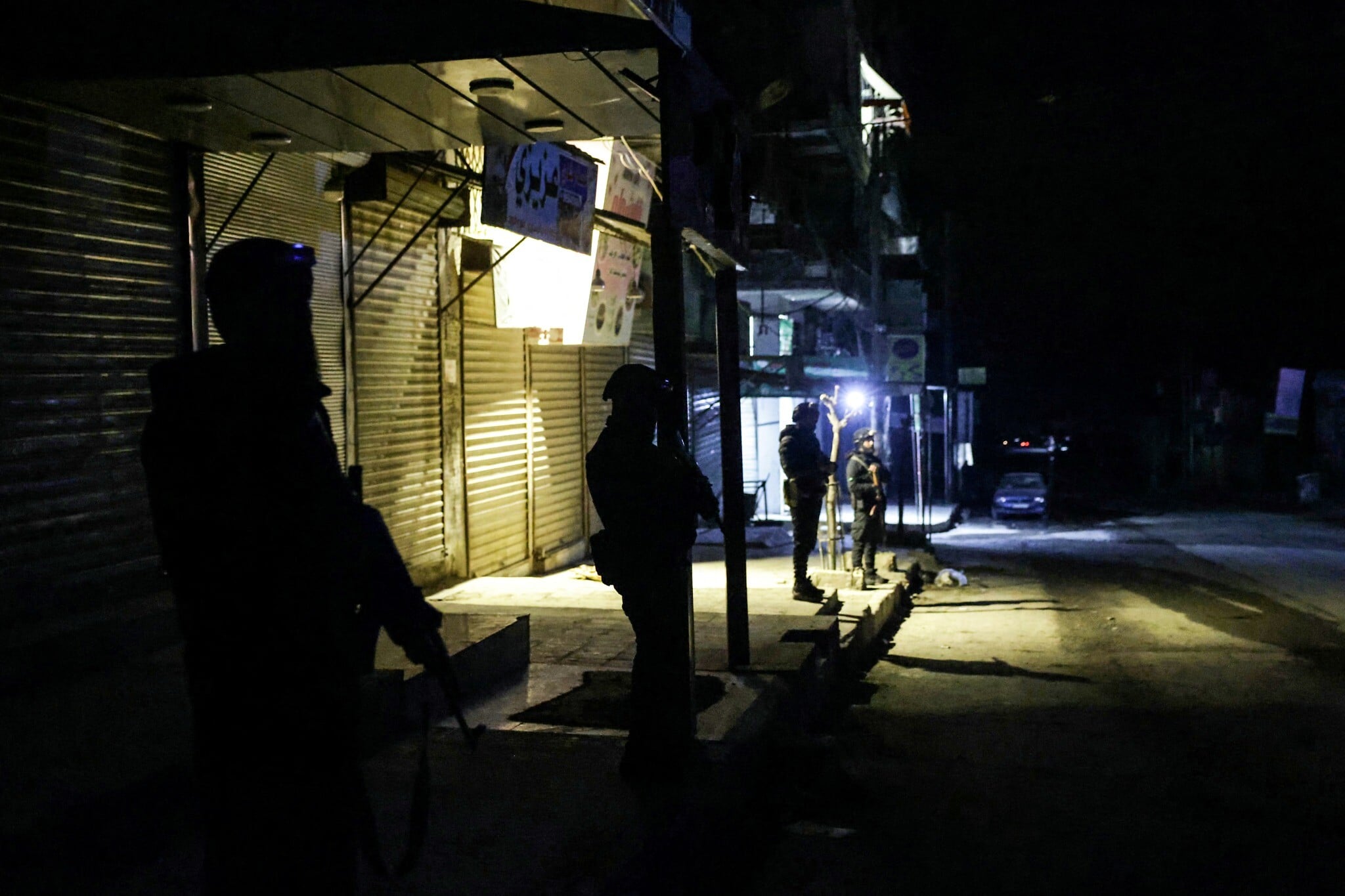
Syrian Internal Security Forces secure the streets as they enter the Ashrafiyeh neighborhood of the city of Aleppo, northern Syria late on January 8, 2026, following heavy clashes with the US-backed Kurdish-led Syrian Democratic Forces (SDF) forces. (Bakr ALkasem / AFP)
ALEPPO, Syria — Syria’s Defense Ministry announced a ceasefire on Friday after three days of clashes between government forces and Kurdish fighters in the northern city of Aleppo that displaced tens of thousands of people.
The statement said the ceasefire went into effect at 3 a.m. in the neighborhoods of Sheikh Maqsoud, Achrafieh and Bani Zaid and gave armed groups six hours to leave the area.
It said departing fighters would be allowed to carry their “personal light weapons” and would be provided with an escort to the country’s northeast, which is controlled by the Kurdish-led Syrian Democratic Forces.
Aleppo Governor Azzam al-Gharib toured the contested neighborhoods with an escort of security forces overnight.
There was no immediate public response from the SDF, and it was unclear whether Kurdish forces in Aleppo had agreed to the deal.
US envoy to Syria Tom Barrack welcomed the announcement in a statement on X and extended “profound gratitude to all parties — the Syrian government, the Syrian Democratic Forces, local authorities, and community leaders — for the restraint and goodwill that made this vital pause possible.”
Barrack said the US was working with the parties to extend the ceasefire beyond the six-hour deadline.
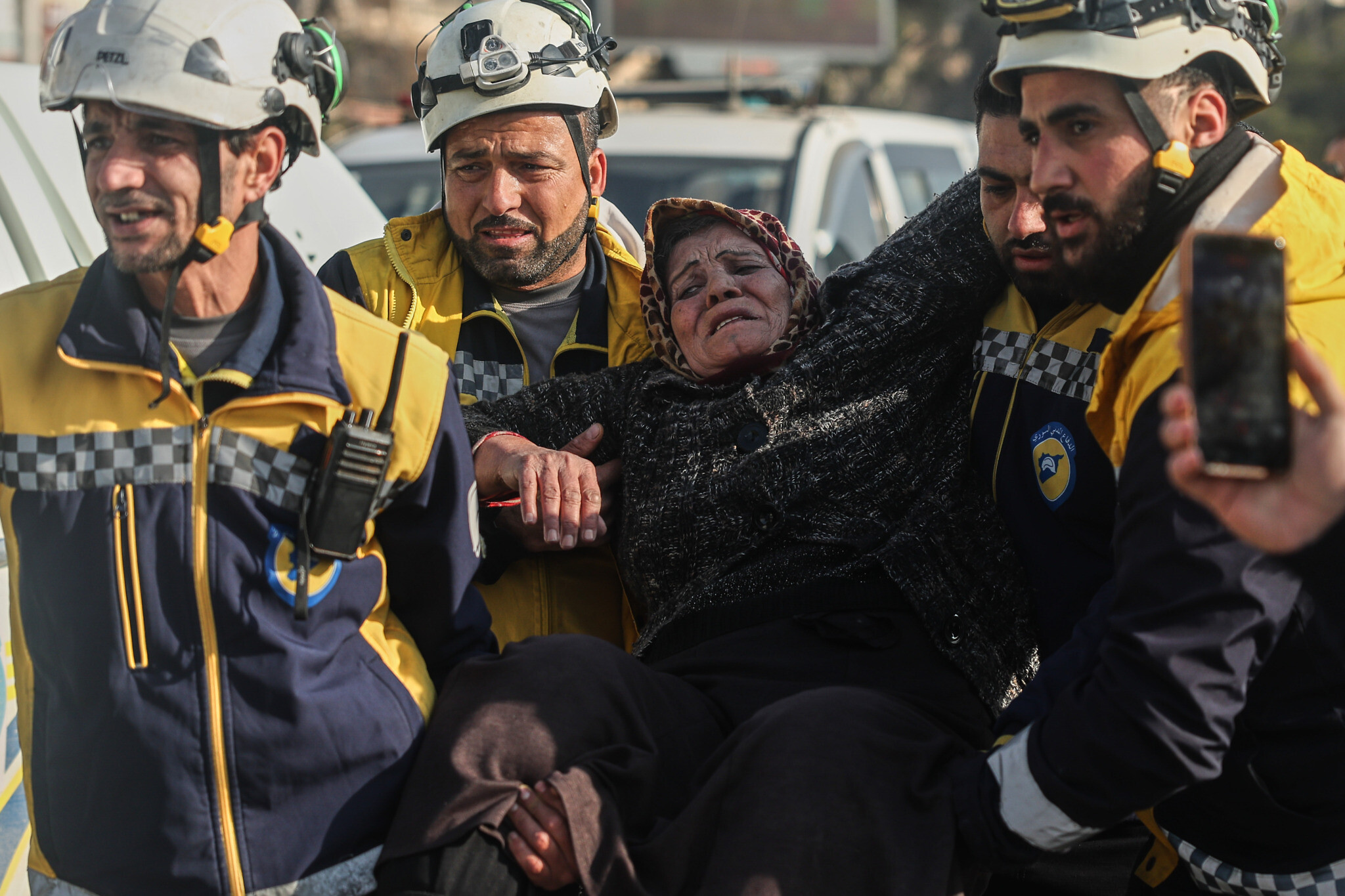
Members of the White Helmets, a volunteer civil defense group, help an elderly woman fleeing the Sheikh Maqsoud and Achrafieh neighborhoods in Aleppo, Syria, Thursday, Jan. 8, 2026, after clashes erupted Tuesday between Syrian government forces and Kurdish fighters. (AP/Ghaith Alsayed)
Some 142,000 people have been displaced by the fighting, which broke out Tuesday with exchanges of shelling and drone strikes.
Each side has accused the other of starting the violence and of deliberately targeting civilian neighborhoods and infrastructure, including ambulance crews and hospitals.
Kurdish forces said at least 12 civilians were killed in the Kurdish-majority neighborhoods, while government officials reported at least nine civilians were killed in the surrounding government-controlled areas in the fighting.
Dozens more on both sides have been wounded. It was not clear how many fighters were killed on each side.
The clashes come amid an impasse in political negotiations between the central state and the SDF.
The leadership in Damascus under interim President Ahmad al-Sharaa had signed a deal in March last year with the SDF, which controls much of the northeast, for it to merge with the Syrian army by the end of 2025. There have been disagreements on how it would happen.
Some of the factions that make up the new Syrian army, formed after the fall of former President Bashar Assad in a rebel offensive in December 2024, were previously Turkey-backed insurgent groups that have a long history of clashing with Kurdish forces.
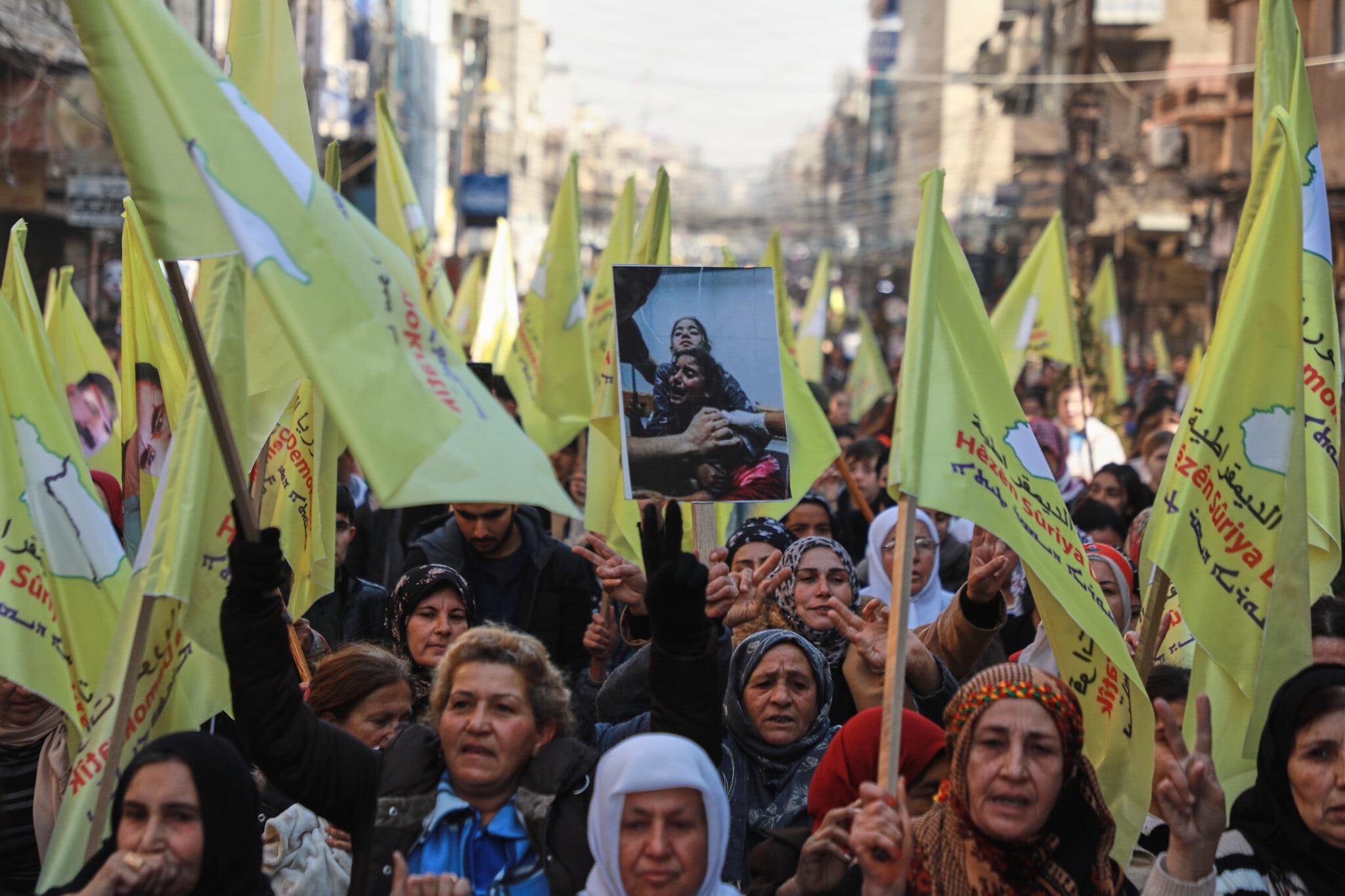
Demonstrators chant slogans in support of the Kurdish-led Syrian Democratic Forces (SDF) during a protest in Qamishli, northeastern Syria, Thursday, Jan. 8, 2026. (AP/Hogir Al Abdo)
The SDF has for years been the main US partner in Syria in fighting against the Islamic State group, but Turkey considers the SDF a terrorist organization because of its association with the Kurdistan Workers’ Party, or PKK, which has waged a long-running insurgency in Turkey. A peace process is now underway.
Despite the long-running US support for the SDF, the Trump administration in the US has also developed close ties with al-Sharaa’s government and has pushed the Kurds to implement the March deal.