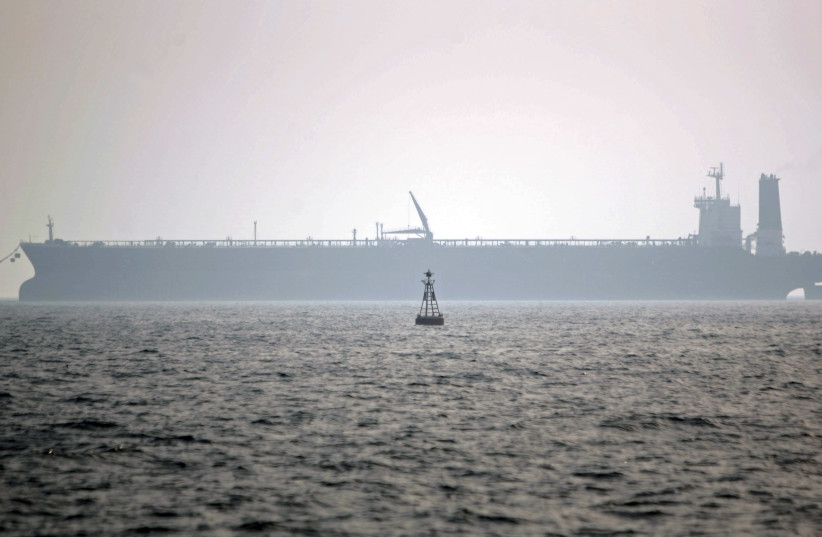
Iran said last week it had seized another foreign tanker carrying 6 million litres of what it described as smuggled diesel in the Gulf of Oman.
Etswani flagged vessel.(photo credit: illustrative/ screenshot/section 27a/via X)ByREUTERS, SETH J. FRANTZMANIran has seized a foreign oil tanker near the Iranian island of Qeshm in the Gulf, saying it was carrying four million litres of smuggled fuel, state media reported on Friday.
Authorities did not name the vessel or disclose its nationality. They said 16 foreign crew members had been detained on criminal charges. State TV said the tanker was seized on Wednesday.
Iranian news websites published video footage and photographs of what they said was the seized tanker.
Iran, which has some of the world’s lowest fuel prices due to heavy subsidies and a sharp fall in the value of its national currency, has been seeking to curb widespread fuel smuggling by land to neighbouring countries and by sea to Gulf states.
An oil tanker loads gas in Assaluyeh seaport at the Persian Gulf, 1,400 km (870 miles) south of Tehran, Iran May 27, 2006. (credit: MORTEZA NIKOUBAZI/ REUTERS)
How US blockade of oil tankers in Venezuela affects Iran
At the beginning of December, US President Donald Trump announced that the US was beginning a “total and complete blockade” of sanctioned oil tankers entering or leaving Venezuela.
This could also affect Iran or other countries that trade with Venezuela or that operate sanctioned oil tanker vessels. This is important because back in 2020, the US targeted four oil tankers which were part of a “multi-million dollar fuel shipment by the Islamic Revolutionary Guard Corps,” the US Justice Department said at the time.
Four Iranian tankers had already turned around after heading to Venezuela after the US seized a vessel called Skipper. It was seized “for its alleged involvement in transporting sanctioned oil,” Bloomberg reported.
Iran signed a 20-year cooperation agreement with Venezuela in 2022.
The locations attacked included a combat training ground and warehouses of weaponry and terrorist infrastructure.
Smoke billows over Beirut’s southern suburbs, following an Israeli strike after issuing an evacuation warning for the area, as seen from Baabda, Lebanon, April 27, 2025.(photo credit: MOHAMED AZAKIR/REUTERS)ByTZVI JASPERUpdated: The IDF launched an attack on several Hezbollah sites in Lebanon, the IDF spokesperson announced on Friday.
The locations attacked included a combat training ground used by Hezbollah’s Radwan Force, which the spokesperson said was used to plan terror attacks against the IDF and Israel.
A number of warehouses containing weaponry and terrorist infrastructure were also attacked, as well as structures used by Hezbollah to advance terrorism goals within Lebanon.
An F-35 Adir from the 140th squadron takes part in an Israeli air force air show during the graduation ceremony for soldiers who have completed the IAF Flight Course, at the Hatzerim Air Base in the Negev desert, June 29, 2023. (credit: OFER ZIDON/FLASH90)
Israel’s recent Lebanon assassinations
This attack is the latest in a series of operations the IDF has conducted in Lebanon recently.
On Thursday, Israel assassinated a senior Islamic Revolutionary Guard Corps Quds Force Unit 840 commander in Lebanon, Hasin Mahmoud Marshad al-Jawahiri.
Earlier that day, the IDF confirmed it had killed an additional Hezbollah terrorist working towards restoring Hezbollah’s terror infrastructures in Southern Lebanon.
This is a developing story.
US worked with Nigeria on strikes, which came after warnings from US president that West African country doing too little to combat anti-Christian persecution
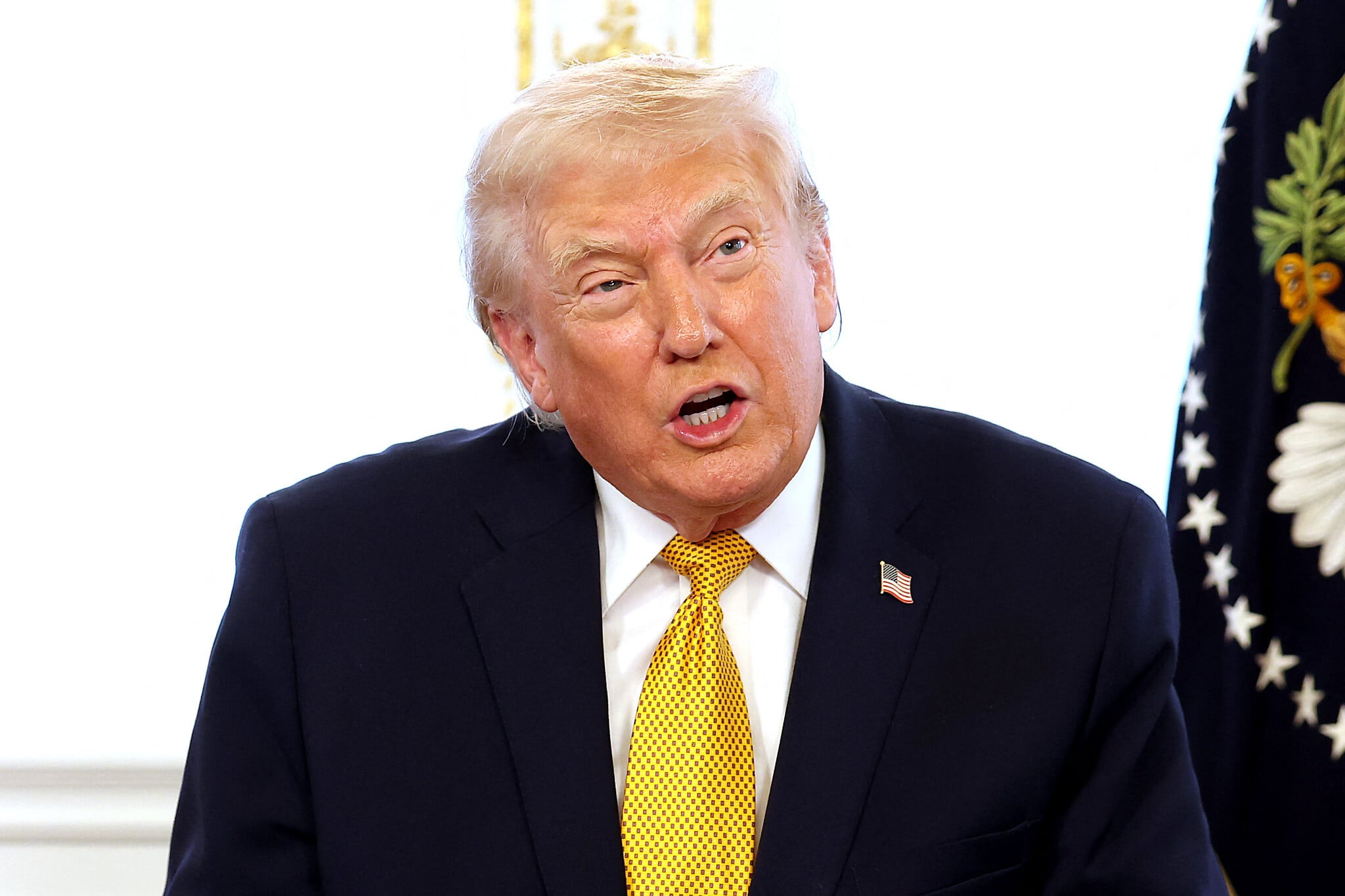
US President Donald Trump calls service members on Christmas Eve at the Mar-a-Lago resort on December 24, 2025, in Palm Beach, Florida. (TASOS KATOPODIS / GETTY IMAGES NORTH AMERICA / Getty Images via AFP)
WEST PALM BEACH, Florida (AP) — US President Donald Trump said Thursday that the US had launched a “powerful and deadly” strike against Islamic State forces in Nigeria, after spending weeks accusing the West African country’s government of failing to rein in the persecution of Christians.
In a post on December 25 on his social media site, Trump did not provide details or mention the extent of the damage caused by the strikes.
A US Defense Department official, who insisted on anonymity to discuss details not made public, said the US worked with Nigeria to carry out the strikes and that the Nigerian government had approved them.
Nigeria’s Ministry of Foreign Affairs stated that the cooperation involved the exchange of intelligence and strategic coordination in ways “consistent with international law, mutual respect for sovereignty and shared commitments to regional and global security.”
Trump said the airstrikes were launched against ISIS militants “who have been targeting and viciously killing, primarily, innocent Christians.”
Residents and security analysts have said Nigeria’s security crisis affects both Christians, predominant in the south, and Muslims, who are the majority in the north.
“Terrorist violence in any form, whether directed at Christians, Muslims or other communities, remains an affront to Nigeria’s values and to international peace and security,” Nigeria’s Ministry of Foreign Affairs said.
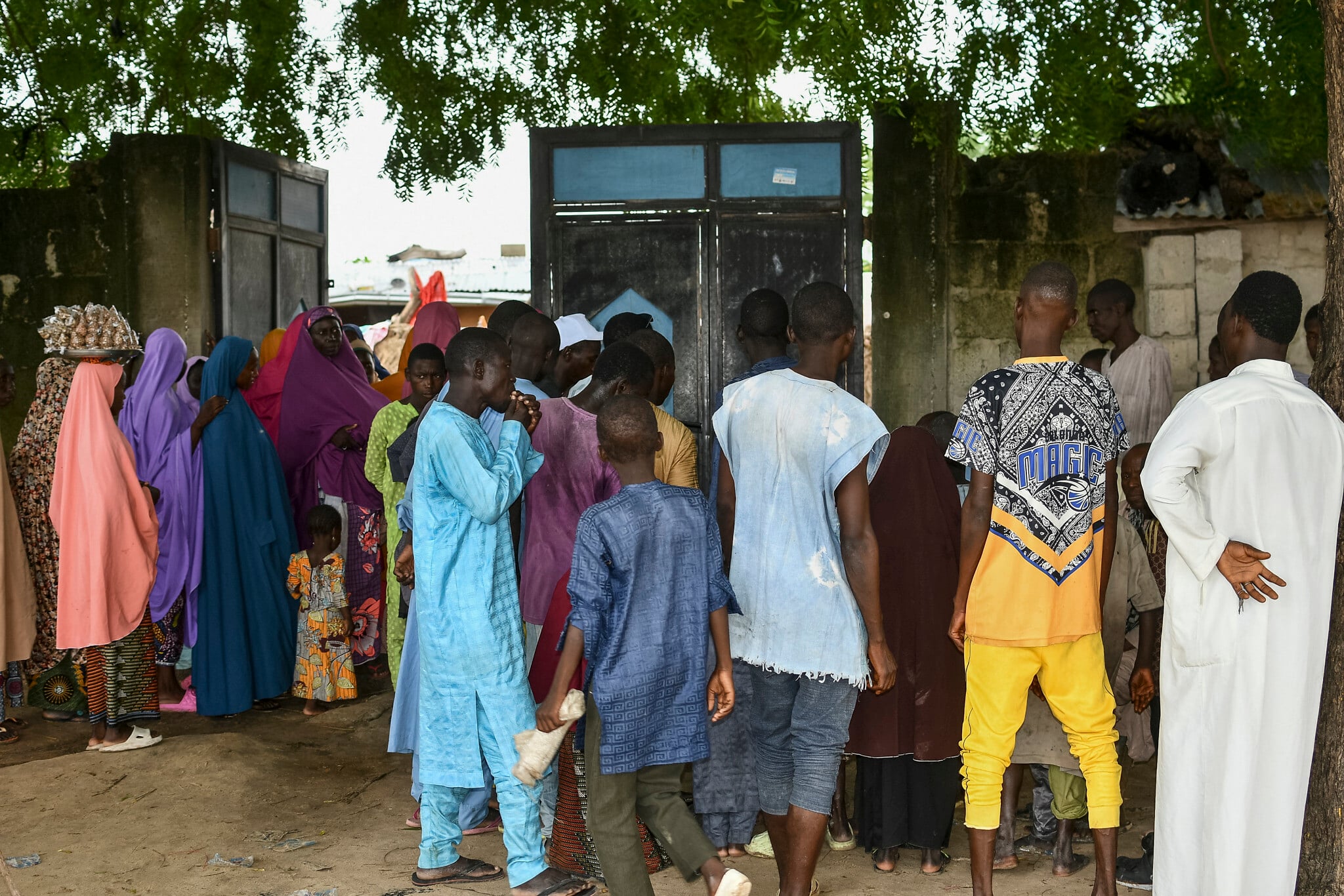
Survivors and family members of the victims of a suspected attack by Boko Haram stand in Babban Gide, Nigeria, on September 4, 2024. (Audu MARTE / AFP)
Nigeria is battling multiple armed groups, including at least two affiliated with ISIS, an offshoot of the Boko Haram terror group known as the Islamic State West Africa Province in the northeast, and the less-known Lakurawa group, prominent in the northwestern states like Sokoto, where the gangs use large swathes of forests connecting states as hideouts.
Security analysts said the target of the US strikes could be the Lakurawa group, which in the last year has increasingly become lethal in the region, often targeting remote communities and security forces.
“Lakurawa is a group that is actually controlling territories in Nigeria, in Sokoto state and in other states like Kebbi,” said Malik Samuel, a Nigerian security researcher at Good Governance Africa. “In the northwest, there has been the incursion of violent extremist groups that are ideologically driven,” he said, blaming the incursion on the near absence of the state and security forces in hot spots.
Trump ordered the Pentagon last month to begin planning for potential military action in Nigeria to try to curb the so-called Christian persecution. The US State Department recently announced it would restrict visas for Nigerians and their family members involved in killing Christians there.
And the US recently designated Nigeria a “country of particular concern” under the International Religious Freedom Act.
Trump said the US defense officials had “executed numerous perfect strikes, as only the United States is capable of doing” and added that “our Country will not allow Radical Islamic Terrorism to prosper.”
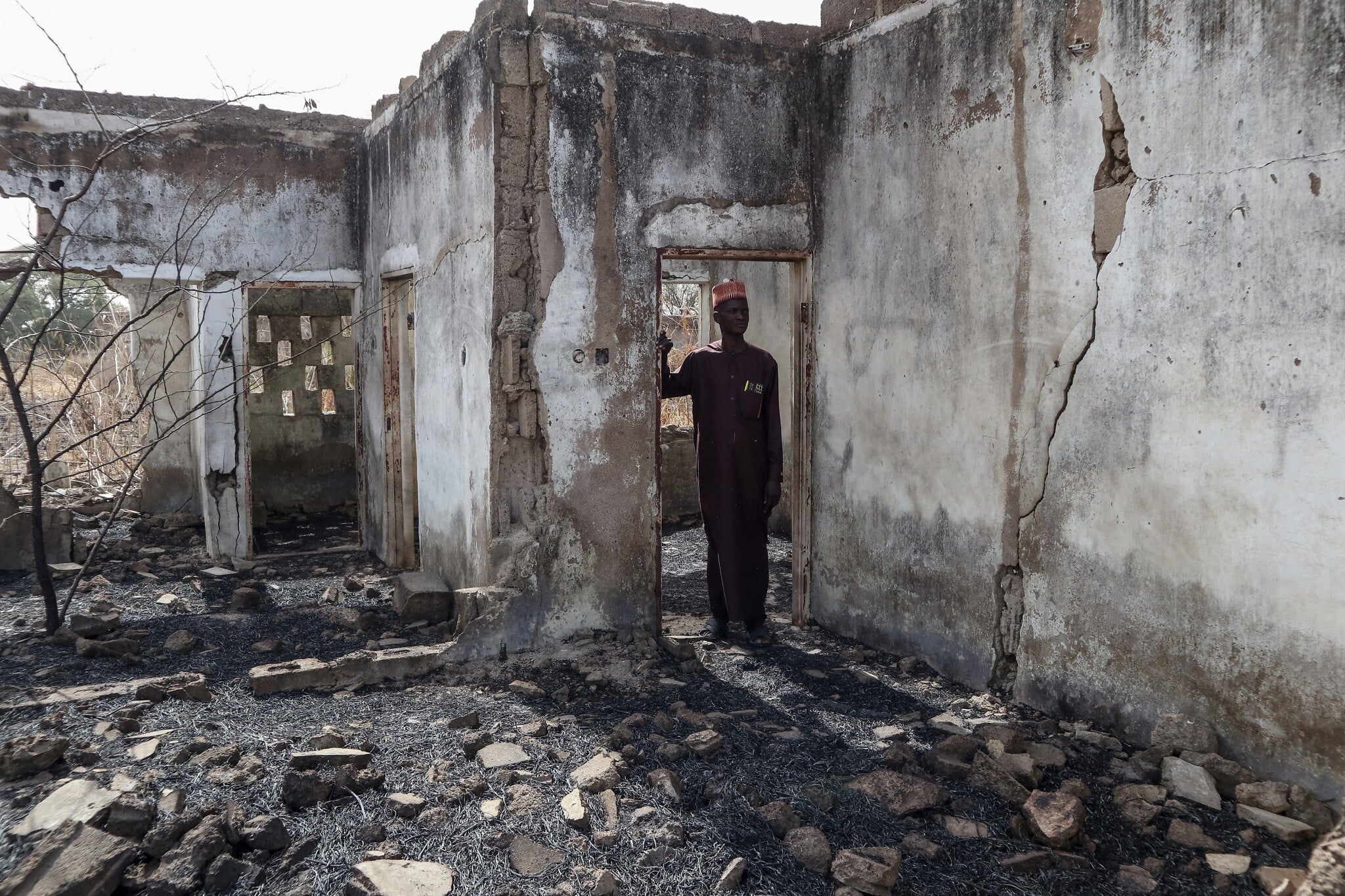
Vice Principal Bature Sule surveys the wreckage of a dormitory destroyed by Boko Haram fighters at the Chibok Government Girls Secondary School in Nigeria in 2014. (Laurie Churchman / AFP)
Nigeria’s population of 220 million is split almost equally between Christians and Muslims. The country has long faced insecurity from various fronts, including Boko Haram, which the US has designated a terror group, and which seeks to establish its radical interpretation of Islamic law and has also targeted Muslims it deems not Muslim enough.
But attacks in Nigeria often have varying motives. There are religiously motivated ones targeting both Christians and Muslims, clashes between farmers and herders over dwindling resources, communal rivalries, secessionist groups and ethnic clashes.
The US security footprint has diminished in Africa, where military partnerships have either been scaled down or canceled. US forces likely would have to be drawn from other parts of the world for any larger-scale military intervention in Nigeria.
Trump has nonetheless kept up the pressure as Nigeria faced a series of attacks on schools and churches in violence that experts and residents say targets both Christians and Muslims.
US Defense Secretary Pete Hegseth posted Thursday night on X: “The President was clear last month: the killing of innocent Christians in Nigeria (and elsewhere) must end.”
Hegseth said that US military forces are “always ready, so ISIS found out tonight — on Christmas” and added: “More to come…Grateful for Nigerian government support & cooperation” before signing off, “Merry Christmas!”