Iran held missile drills in various cities on Monday, state media reported, citing unnamed sources and witnesses, in what was the second such reported exercise in a month.
NBC News reported on Saturday that US President Donald Trump was to be briefed by Israeli Prime Minister Benjamin Netanyahu that any expansion of Iran‘s ballistic missile program poses a threat that could necessitate swift action.
Western powers regard Iran‘s ballistic missile arsenal both as a conventional military threat to Middle East stability and a possible delivery mechanism for nuclear weapons should Tehran develop them. It denies any intent to build atomic bombs.
The Telegram channel of Iran‘s public broadcaster and semi-official Nournews published videos of what appeared to be missile launches, without specifying the whereabouts.
However, the outlets said launches took place from the capital Tehran and the cities of Isfahan and Mashhad. Reuters could not independently verify the authenticity of the videos.
State media later on Monday cited “informed sources” as denying that missiles were tested and saying the circulated images were of “high-altitude aircraft.” No clarification regarding the conflicting reports was provided.
NBC reported that Israeli officials are concerned that Iran is reconstituting nuclear enrichment sites the US bombed in June, and were preparing to brief Trump for options on attacking the missile program again.
Earlier this month, the navy of Iran‘s elite Revolutionary Guards held a two-day exercise aimed at countering foreign threats, firing ballistic and cruise missiles at simulated targets in the Gulf.
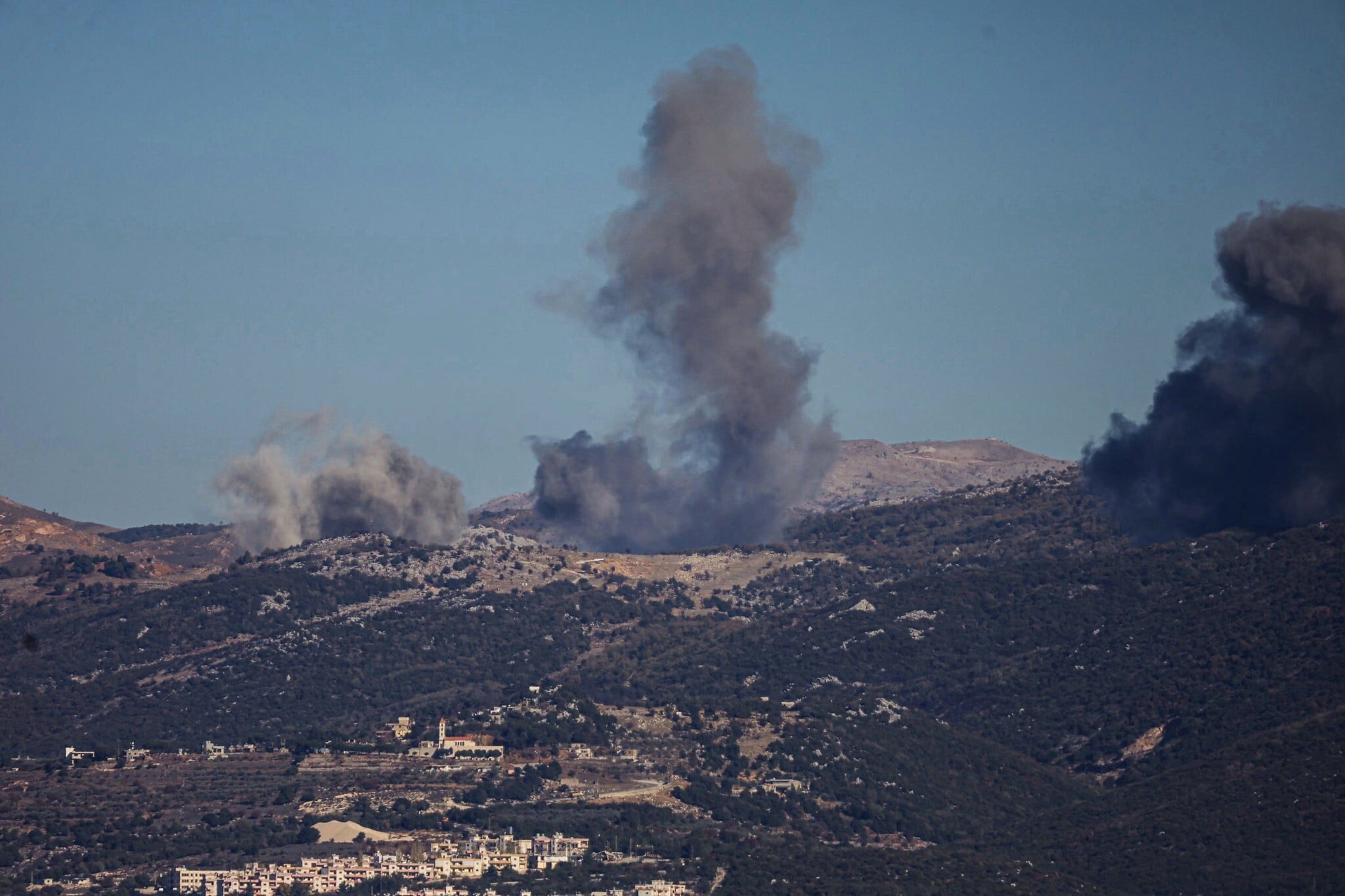
Illustrative: Smoke rises from the site of a series of Israeli airstrikes that targeted the outskirts of the southern Lebanese village of al-Katrani on December 18, 2025. (Rabih DAHER / AFP)
The Israeli military said that it targeted two Hezbollah operatives in strikes in southern Lebanon on Sunday, with one being killed.
The Lebanese health ministry also reported one person killed and another wounded in the strikes in the southern Lebanon town of Yater.
One of the strikes killed a Hezbollah operative involved in restoring the terror group’s infrastructure in the area, the army said on Monday, adding that his activities “constituted a violation of the understandings between Israel and Lebanon.”
The army published footage of the strike.
Israel has kept up regular strikes on Lebanon, usually saying it is targeting Hezbollah infrastructure or operatives violating the November 2024 ceasefire.
It has also kept troops in five south Lebanon locations that it deems strategic.
The health ministry in Beirut said on Sunday that “two Israeli enemy strikes today, on a vehicle and a motorbike in the town of Yater,” killed one person and wounded another. Yater is around five kilometers (three miles) from the border with Israel.
In two separate, but identical statements, issued within 15 minutes, the IDF said it “struck a Hezbollah terrorist in the area of Yater.”
Also on Sunday, Lebanon’s army said in a statement that troops had discovered and dismantled “an Israeli spy device” in Yaroun, elsewhere in south Lebanon near the border.
Under heavy US pressure and amid fears of expanded Israeli strikes, Lebanon has committed to disarming Hezbollah and plans to do so south of the Litani River, about 30 kilometers from the border with Israel, by year end.
Israel has questioned the Lebanese military’s effectiveness and has accused Hezbollah of rearming, while the group itself has rejected calls to surrender its weapons.
During a visit to Israel on Sunday, US Senator Lindsey Graham also accused Hezbollah of rearming.
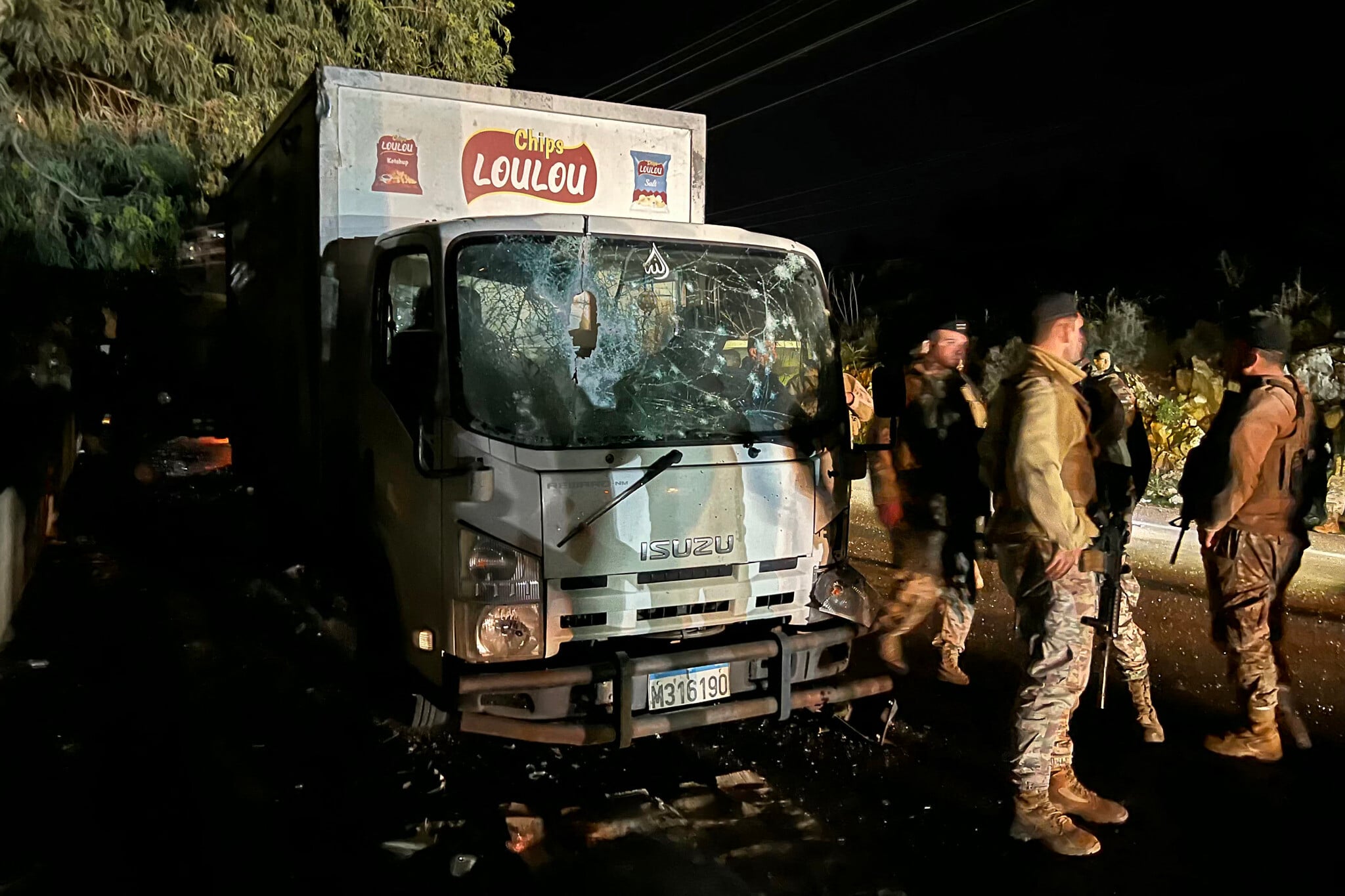
Lebanese soldiers secure the site of an Israeli drone strike that targeted a truck in the village of Sibline, south of Beirut, on December 16, 2025. (Mahmoud ZAYYAT / AFP)
“My impression is that Hezbollah is trying to make more weapons… That’s not an acceptable outcome,” Graham said in a video statement issued by Prime Minister Benjamin Netanyahu’s office.
This week at talks in Paris, Lebanon’s army chief agreed to document the military’s progress in disarming Hezbollah, the French foreign ministry said.
On Friday, Lebanese and Israeli civilian representatives took part in a meeting of the ceasefire monitoring committee for a second time, after holding their first direct talks in decades earlier this month under the committee’s auspices.
Israel said Friday’s meeting was part of broader efforts to ensure Hezbollah’s disarmament and strengthen security in border areas.
The US-brokered ceasefire with Hezbollah came after two months of open conflict in Lebanon late last year, including an IDF ground operation in the country’s south, in a bid to enable the safe return of some 60,000 residents of northern Israel displaced by the terror group’s near-daily attacks. The rocket attacks began on October 8, 2023 — a day after fellow Iran-backed terror group Hamas invaded southern Israel, sparking the war in Gaza.
The ceasefire required both Israel and Hezbollah to vacate southern Lebanon, to be replaced by the Lebanese armed forces. Israel has withdrawn from all but five strategic posts along the border.
Since the ceasefire, the IDF said it has killed over 380 Hezbollah operatives and members of allied terror groups in strikes, hit hundreds of Hezbollah sites, and conducted over 1,200 raids and other small operations in southern Lebanon.
Axios says US doesn’t believe Iranian strike imminent; Israeli source: Chances ‘less than 50%, but nobody is willing to take the risk’; IDF, CENTCOM chiefs said to discuss threat
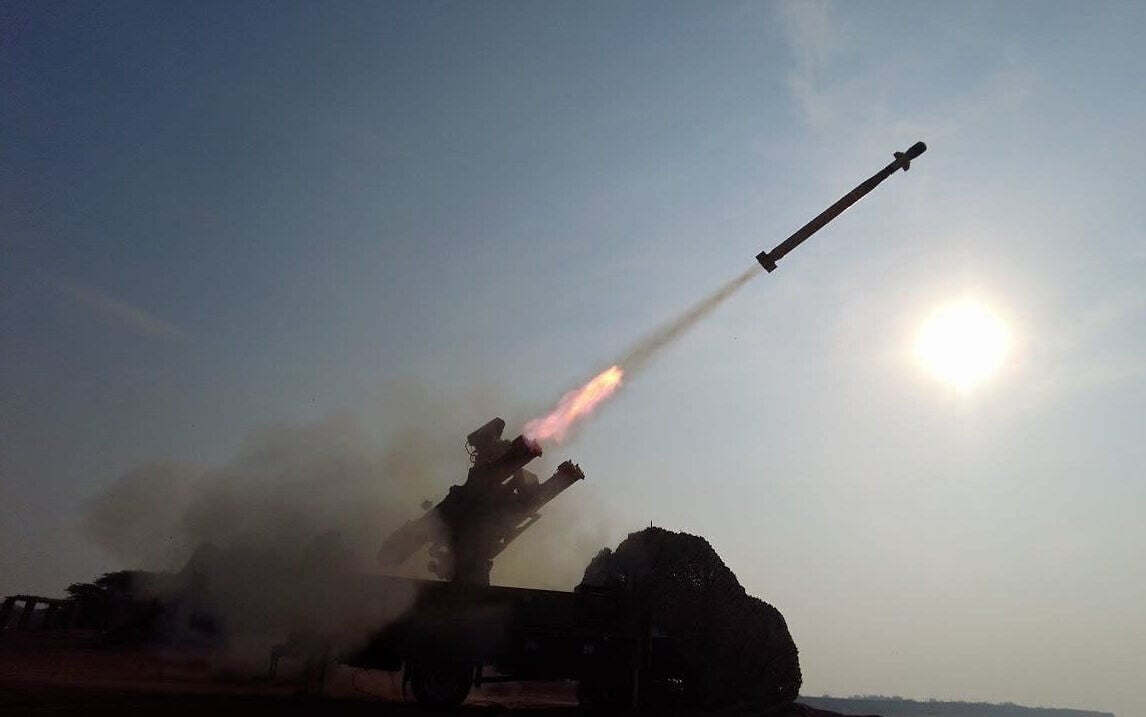
In this image provided December 4, 2025, by Sepahnews of Iran’s Islamic Revolutionary Guard Corps, a missile is launched as a part of the guard’s drill in the Persian Gulf, and Gulf of Oman. (Sepahnews via AP)
Israel has warned the Trump administration that Iran’s Islamic Revolutionary Guard Corps may be using an ongoing military exercise focusing on missiles as cover to launch an attack on Israel, according to a Sunday report, amid fears that Jerusalem and Tehran are readying for another confrontation.
Citing Israeli and US sources, the Axios news site reported that Israel has a much lower risk tolerance after Hamas’s October 7, 2023, attack, and noted that Jerusalem issued similar warnings six weeks ago when it identified similar movements of Iranian missiles, though nothing came of it.
“The chances for an Iranian attack are less than 50 percent, but nobody is willing to take the risk and just say it is only an exercise,” an Israeli source was quoted as saying.
However, the US intelligence community has not seen any signs that an Iranian strike could be imminent, an American source told the outlet.
According to the sources quoted by Axios, the highest risk of war breaking out between the two regional enemy countries comes from a potential “miscalculation,” with each side thinking that other is preparing for attack and moving to preempt it.
According to the report, Iran was down around 50% after the war with Israel and was left with around 1,500 missiles and 200 launchers. While Tehran is ramping up production efforts, the outlet quoted an Israeli source as saying it has not yet returned to its prewar stockpiles.
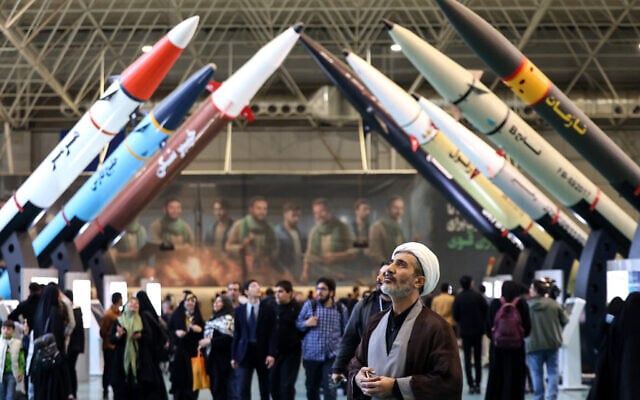
Iranians visit an exhibition showcasing missile and drone achievements in Tehran on November 12, 2025. (Photo by ATTA KENARE / AFP)
The report added that both Mossad and the IDF’s Military Intelligence do not assess that the current pace of Iran’s rearmament necessitates immediate action, but they believe the problem could become more urgent in several months.
According to Axios, IDF Chief of Staff Lt. Gen. Eyal Zamir called US Central Command head Adm. Bradley Cooper on Saturday and voiced Israel’s concerns about Iranian military exercises.
The two then met in Tel Aviv on Sunday, the report added, where Zamir urged close coordination between the US and Israeli militaries on defensive preparations.
The IDF declined to comment on the report, and CENTCOM did not respond to the outlet’s request to comment.
Zamir on Sunday warned publicly that the IDF will strike Israel’s enemies “wherever required, on near and distant fronts alike,” apparently hinting that Israel may again need to attack in Iran.
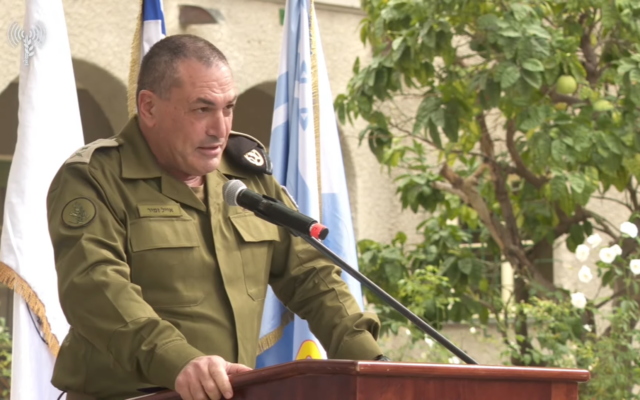
IDF Chief of Staff Lt. Gen. Eyal Zamir speaks at a handover ceremony for the Planning Directorate chief at the IDF headquarters in Tel Aviv, December 21, 2025. (Screenshot: Israel Defense Forces)
“Iran is the one that financed and armed the ring of strangulation around Israel and stood behind the plans for its destruction,” he said at a changeover ceremony for the head of the IDF Planning Directorate, referring to the terror proxies that Tehran built up in the region.
Zamir’s comments came a day after NBC News reported that Prime Minister Benjamin Netanyahu will present plans for a new potential attack on Iran to US President Donald Trump during his upcoming visit to the United States.
According to the report, which cited several unnamed officials with knowledge of the matter, Israel is growing increasingly concerned that Iran is rebuilding and even expanding its ballistic missile production in the wake of the nations’ 12-day war in June.
“The threat of the missiles is very real, and we weren’t able to prevent them all last time,” a source said.
A source with knowledge on the matter, as well as former US officials, told NBC that Jerusalem believes Iran’s renewed production of ballistic missiles could increase to 3,000 per year if left unchecked.
Perhaps lending credence to Israel’s concerns, Iran’s Foreign Minister Abbas Araghchi claimed Sunday that his country was “fully prepared” for a new round of fighting if it comes, and that it has rebuilt its strategic facilities damaged during the June war.
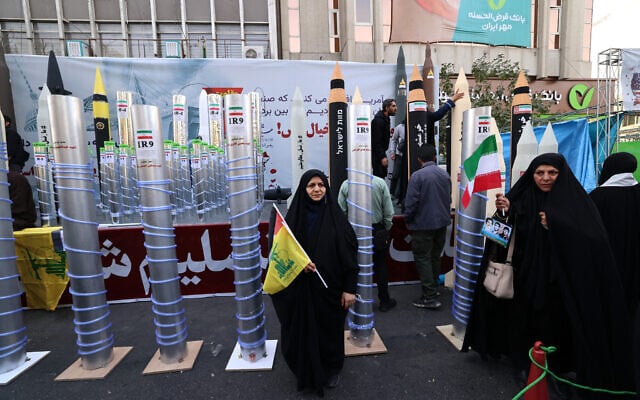
Women stand next to model missiles and a nuclear enrichment centrifuge during a rally outside the former US embassy in Tehran as Iranians mark the 46th anniversary of the start of the Iran hostage crisis, on November 4, 2025 (ATTA KENARE / AFP)
Israel launched its war against Iran in June targeting the Islamic Republic’s nuclear and ballistic missile programs, and citing an imminent existential threat.
Over 12 days, successive waves of airstrikes killed Iranian nuclear scientists, took out much of the supply and production capacity for the missile program, and damaged uranium enrichment sites, with the US joining in the last days to take out underground nuclear facilities that only heavy bunker-buster bombs could penetrate.
Iran said over 1,000 people were killed by Israeli strikes in the war. It retaliated by launching over 500 ballistic missiles and around 1,100 drones at Israel, which killed 32 people and wounded over 3,000 in Israel, according to health officials and hospitals.
In all, Israel suffered 36 missile impacts and one drone strike in populated areas, causing damage to 2,305 homes in 240 buildings, along with two universities and a hospital, and leaving over 13,000 Israelis displaced.