Turkey and the United States are discussing the US sanctions and obstacles to Ankara rejoining the F-35 jet program but nothing has changed with respect to its possession of Russian S-400 air defenses, the defense ministry said on Friday.
The NATO allies have been at loggerheads since 2020 when Washington removed Ankara from Lockheed Martin’s fighter jet program and imposed sanctions over Turkey‘s acquisition of the S-400s, which Washington calls a security threat.
Turkey says that move was unjust. Both sides have said they hope the CAATSA sanctions and US laws can be overcome in US President Donald Trump’s second term so that Turkey can both buy the jets and return to the manufacturing program.
US Ambassador to Ankara Tom Barrack said on Wednesday that discussions continue on the issue, but noted US law would not permit Turkey to operate or possess the S-400 system if it wants to return to the F-35 program.
Addressing Barrack’s comments at a press briefing, the Turkish defense ministry said: “There have been no new developments regarding the S-400 air defense systems, which has been put on the agenda in recent days.”
Turkey‘s diplomatic discussions with the US continue “on lifting sanctions and obstacles to the F-35 procurement and re-admitting our country to the program,” it said.
“Addressing the process regarding the F-35 project within the spirit of alliance, through mutual dialogue and constructive consultation, will contribute positively to bilateral relations,” the ministry added.
Foreign Minister Hakan Fidan told Reuters last week he believed Turkey and the US would find a way to remove American sanctions “very soon.”
Washington says the S-400s pose a threat to its F-35 fighter jets and to NATO’s broader defense systems. Turkey rejects that and says the S-400s will not be integrated into NATO.
Official says unresolved disputes over Gaza, Rafah Crossing and security make summit with Netanyahu unlikely despite interest from Jerusalem, Washington
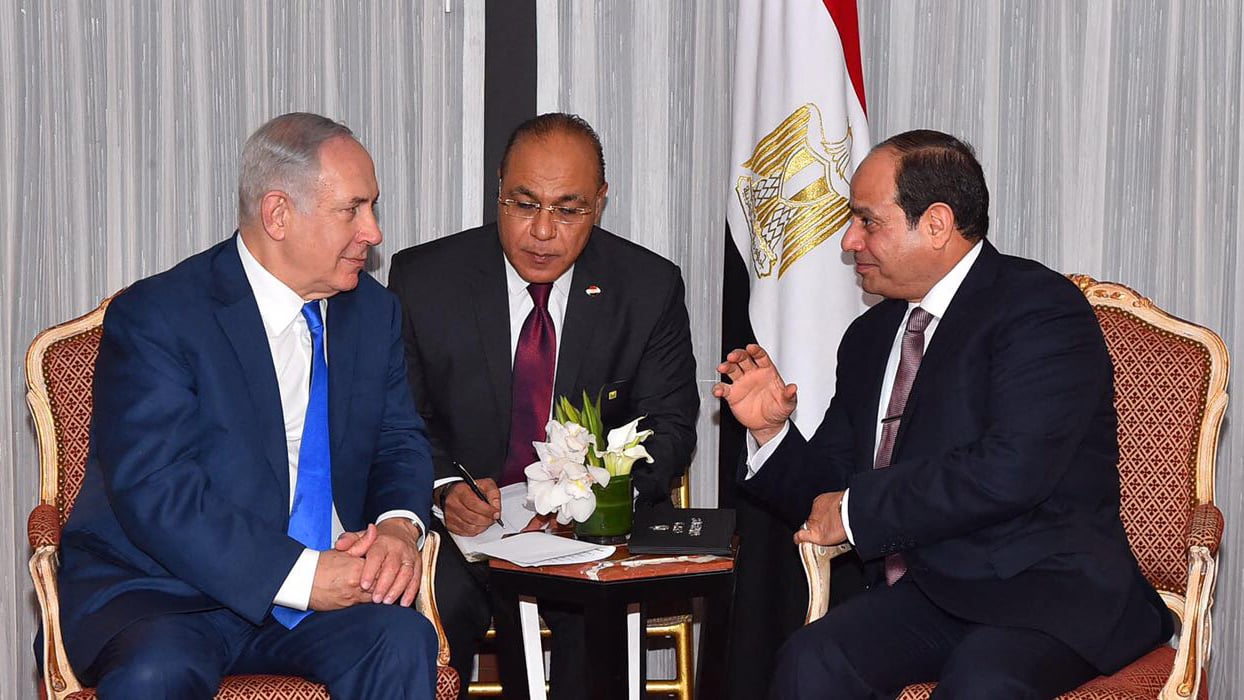
A handout released by the Egyptian Presidency shows Israeli Prime Minister Benjamin Netanyahu (L) meeting with Egyptian President Abdel Fattah al-Sissi in New York on September 18, 2017. (HO/AFP)
Egyptian President Abdel-Fattah el-Sissi currently has no plans to meet with Prime Minister Benjamin Netanyahu, a government official familiar with the matter told The Times of Israel, amid reports that the Israeli premier is actively seeking such a sit-down.
Egypt has fumed at Israel for a host of issues in recent months that remain unresolved, accordingly decreasing the chances that Sissi will meet Netanyahu any time soon, despite interest in Jerusalem and Washington in making such a summit happen, the official said.
Throughout the Gaza war, sparked by Hamas’s October 7 onslaught, Cairo warned Israel against military operations that would push Palestinians southwards in the Strip toward Egypt’s Sinai Peninsula, viewing such a possibility as a red line and a national security threat.
Cairo still fears that Israel hasn’t ruled out the effort amid plans to focus the first reconstruction projects in the southern Gaza city of Rafah, along the Egyptian border, the official said.
Tensions have also flared over the Rafah Crossing. Israel has allowed the crossing to open only for Palestinians exiting Gaza, a policy Egyptian Foreign Minister Badr Abdelatty said last week Cairo views as an attempt to thin the enclave’s population — an outcome Egypt has said it will not permit.
Strains deepened further in October, when Israeli Energy Minister Eli Cohen pulled out of a planned signing ceremony for a lucrative natural gas deal with Egypt, arguing the terms were unfair to Israel — a move that angered both Cairo and Washington.
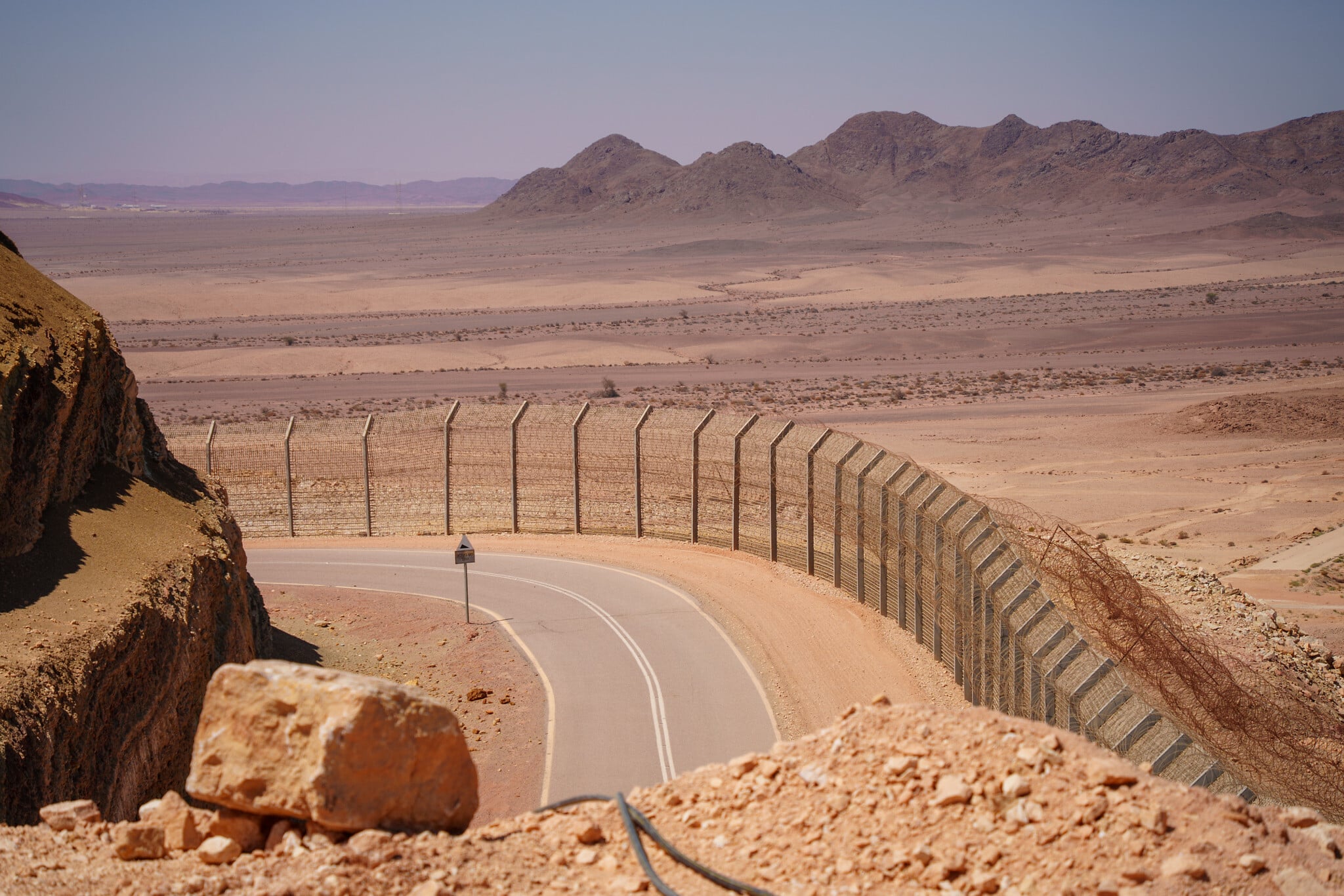
View of the Israeli-Egyptian border. September 9, 2025 (Yaniv Nadav/FLASH90)
Netanyahu, Israel’s Ambassador to the US Yechiel Leiter, and other Israeli officials have also repeatedly accused Egypt of amassing troops in the Sinai Peninsula, in what Jerusalem claims is a violation of their 1979 peace treaty. Egypt has dismissed the allegations outright.
Netanyahu and Sissi have long shared a strained relationship and have not spoken since before the war.
While Netanyahu has sought in recent months to repair ties, Sissi has shown little interest in engaging with the Israeli leader absent what the official described as fundamental changes in Israel’s conduct toward Egypt.
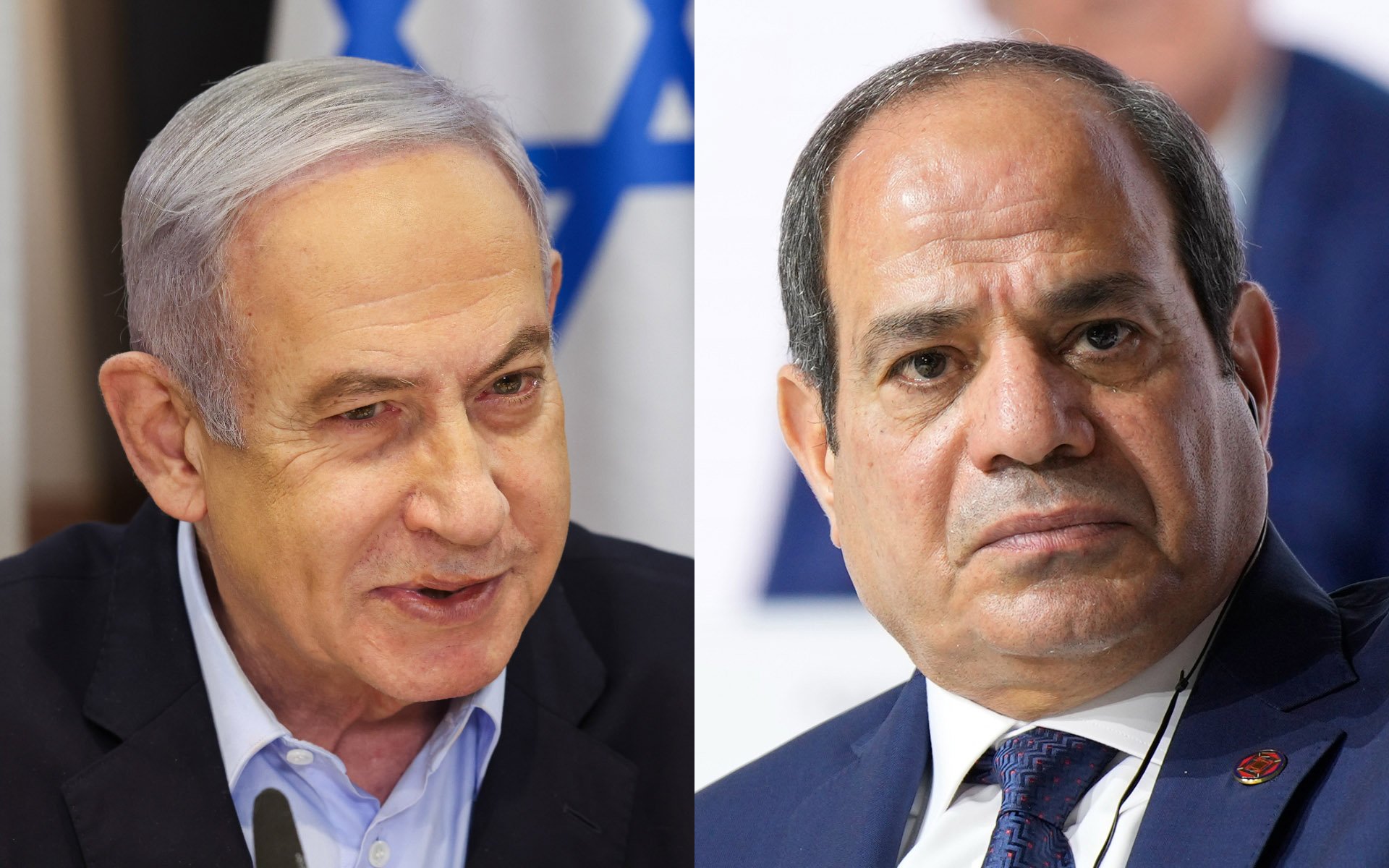
Left: Israeli Prime Minister Benjamin Netanyahu in Tel Aviv, January 7, 2024; Right: Egyptian President Abdel Fattah el-Sissi in Paris, June 23, 2023 (Ronen Zvulun/via AP; /Lewis Joly/AP)
The official added that Sissi is also wary of being used as a “prop” by Netanyahu in an Israeli election year.
The comments came as Netanyahu was reportedly working to arrange a visit to Cairo, where he hoped to meet Sissi and sign a multibillion-dollar agreement to supply Israeli natural gas to Egypt. Israeli officials have been coordinating the effort with senior US diplomats, according to a senior American diplomatic source familiar with the preparations.
Netanyahu has publicly visited Egypt twice in the past, both times under former president Hosni Mubarak, with his last official state visit taking place in January 2011. Other meetings were held secretly.
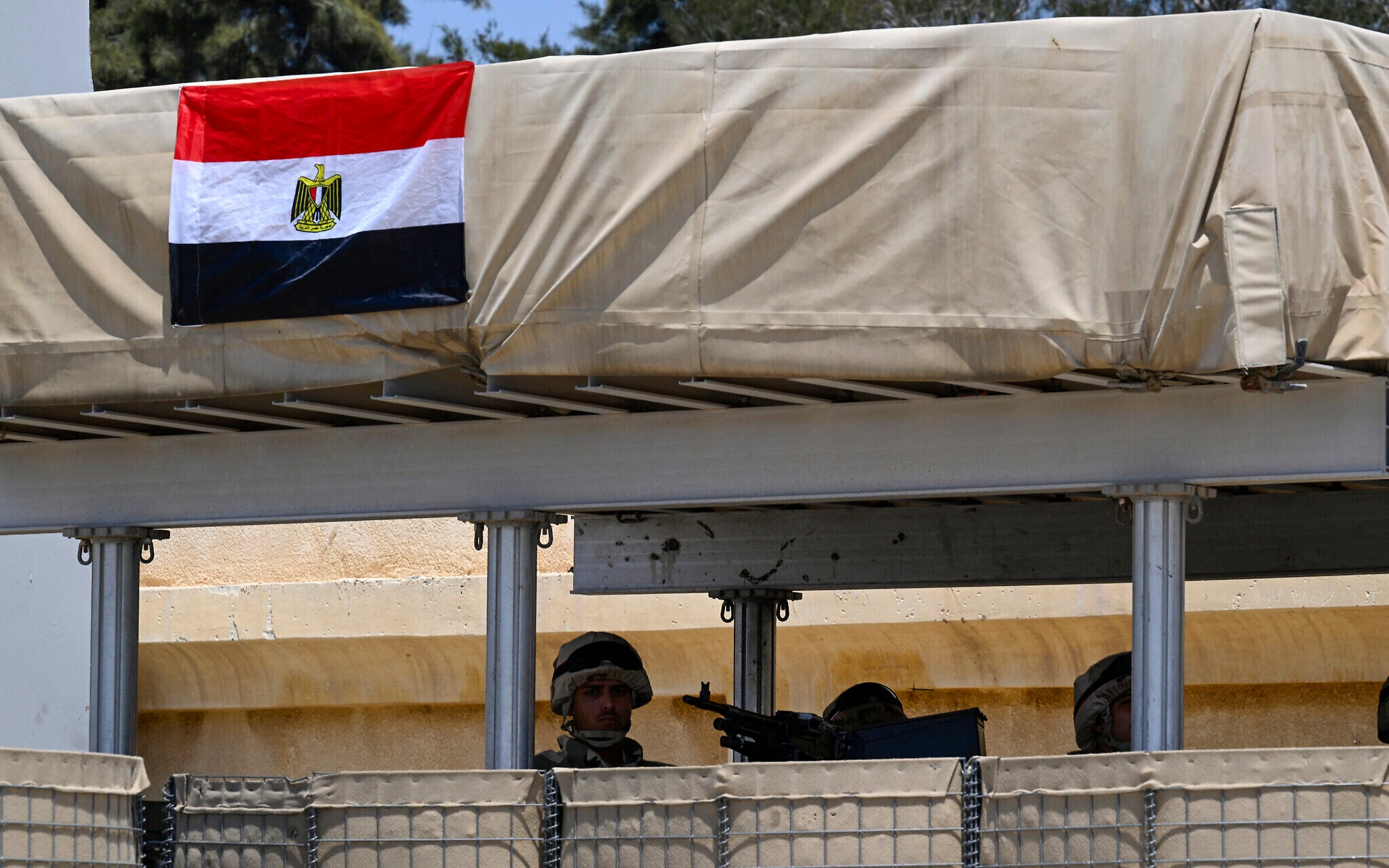
Soldiers at a post on the Egyptian side of the Rafah border crossing with Gaza in Rafah on August 18, 2025 (Khaled DESOUKI / AFP)
Since the Hamas-led October 7, 2023, attack that sparked the Gaza war, diplomatic relations between Israel and Egypt have largely frozen, aside from ongoing security coordination — particularly between intelligence services — focused on hostage-related issues.
Additional disputes have emerged over control of the Rafah Crossing, Egypt’s refusal to accept Gazan refugees, potential Egyptian participation in the planned International Stabilization Force for Gaza, and recent drone-based smuggling attempts from Egypt into Israel.
The proposed gas deal, estimated at $35 billion, carries clear economic benefits for both sides. However, Cohen has warned that large-scale exports could undermine Israel’s domestic energy security and has delayed the agreement pending the resolution of broader security disagreements with Egypt.
Netanyahu, for his part, reportedly views the deal as an opportunity to demonstrate that Israel is strengthening and expanding its peace agreements in the region after the war, and to advance his long-standing vision of using Israel’s natural gas reserves to secure long-term state revenues.
BEHIND THE LINES: Despite setbacks, Iraq’s Iranian-backed militias continue to thrive politically, posing a lasting threat to Israel’s security.
Supporters of Iraqi Prime Minister Mohammed Shia al-Sudani’s Reconstruction and Development Coalition Party celebrate, after election results were announced in Baghdad last month. A week later, Sudani announced that his faction would join with the Coordination Framework, a political bloc with ties t(photo credit: AHMED SAAD/REUTERS)ByJONATHAN SPYERThis week, the government of Iraq announced a decision to freeze assets held by the Lebanese Hezbollah organization and the Yemeni Ansar Allah (Houthis) group. The move was rapidly hailed as a major step forward, signaling Baghdad’s determination to distance itself from Iran’s regional network of militias.
Within hours, however, the government reversed its decision, with the Prime Minister’s Media Office asserting that an “error” had been made. This incident (or non-incident) demonstrated precisely the opposite of what had presumably been intended.
It showed the extent to which Iran-supported militias continue to play a key role in Iraqi governance, and are able and willing to act to prevent any moves to curtail or reduce the power and the capacities of their allies.
Fighters with the Kurdistan Workers’ Party (PKK) walk for a disarmament ceremony marking a significant step toward ending the decades-long conflict between Turkey and the outlawed group, in the Qandil mountains, Iraq October 26, 2025. (credit: REUTERS/Thaier Al-Sudani TPX IMAGES OF THE DAY)
While Iraq’s militias stayed out of the previous round, following a brief intervention in late 2023, there is no reason to assume that this will be repeated. With the loss of Syria, Iraq has taken on added importance to Tehran.
Advertisement
It has long been known to Israel that the militias have missiles deployed in the large deserts close to Iraq’s western borders. The distance from western Iraq to Israel’s north is only 400 km. This relatively close proximity would enable the militias to launch a wide array of drones and missiles, which would quickly reach Israeli airspace.
Although there is a general impression in Israel that the Iran-led militia array has been defeated in the course of the last two years, or at least has suffered severe setbacks, this is not entirely supported by the facts. In the Iraqi case, the militias have made significant advances in recent months.
As a result, the hope that an increasingly stable internal Iraqi political scene might induce or coerce Iran-supported armed groups to voluntarily disarm and become exclusively political organizations seems misplaced. Rather, it is the militias themselves, in their political iteration, who are moving forward.
In the November Iraqi elections, parties linked to the Shi’ite militias performed well. The Sadiqoun bloc, associated with the Asaib Ahl al-Haq (AH) militia, led by Qais al-Khazali, won 27 seats in the 329-seat parliament. Asaib Ahl al Haq is one of the most active of the pro-Iran militias and has been involved in abductions and murders of Westerners.
The Badr Organization, the oldest and among the most established of the Iran-linked Shi’ite militias (and one which, unlike AH, remains undesignated as a terror organization by the US government), won 18 seats. The Huquq (Rights) list, linked to the Ktaeb Hezbollah (KH) group, won six seats. KH was responsible for the kidnapping, imprisonment, and torture of Elizabeth Tsurkov, an Israeli citizen who was released in September after 903 days in captivity.
All three of these militias are component elements within the Coordination Framework (CF), the largest single grouping within the Iraqi parliament. This faction backed the current government. Prime Minister Mohammed Shia al-Sudani, whose Reconstruction and Development Bloc won 46 seats, will be unable to form a new administration without the CF’s backing.
The CF brings together all the main Shi’ite militias into a single list, alongside several non-armed factions. The most powerful player within the Framework is former Prime Minister Nouri al-Maliki. While not a militia leader himself, he is closely linked to the armed groups and acts in their interest, seeking to embed their representatives within a broader political framework in order to increase their ability to shape policy and guard them from any legal efforts against them.
On November 18, following the elections, Sudani announced that his faction would join with the CF, giving the joint bloc the command of 165 seats and making it almost certainly the faction around which the next government will be formed.
Such a government will continue to obey the demands of the militias in areas crucial to them, as seen, for example, in the move to reverse the decision on the Houthis and Lebanese Hezbollah.
The political direction in Iraq demonstrated the extent to which the Iranian model for the seeding of proxy political and military power in Arab states remains unbroken, and essentially unchanged, despite the events of the last two years.
Following the Gaza ceasefire on October 10, and the previous ceasefires agreed by Iran in June of this year, and Hezbollah in November 2024, it was widely predicted by Israeli observers that Iran must surely adopt a new national strategy, the approach based on proxies having been so clearly defeated.
It appears, however, that Iran does not share this view. The Iraqi example shows the way that this model continues to work, combining electoral power with paramilitary muscle and extensive conventional military capacities.
The Iran-led element is quite content to allow large swathes of the political and societal life of the country to continue without its interference. But when issues arise of importance to this structure, no other force can stand against it or contradict its will.
As an article in the Arab Weekly described it succinctly this week: Iraq currently lives under “a system in which the formal state is largely a framework through which powerful political and militia networks operate.”
What does this mean for Israel? First of all, the somewhat triumphalist and delusional rhetoric that followed the ceasefire in Gaza should be retired forthwith. The Iran-led regional bloc and its project have not been destroyed, though it received serious setbacks as a result of the last two years of war. The latest events in Iraq show that it is advancing once again.