
i24NEWS

AP Photo/Kamran Jebreili, FileFILE – Saudi Prince Turki al-Faisal talks to The Associated Press in Abu Dhabi, United Arab Emirates, on November 24, 2018.

Former Saudi ambassador to the US says Israel incarcerates Palestinians ‘in concentration camps’

A Saudi prince launched a scathing attack against the Jewish state on Sunday, prompting Israel’s Foreign Minister Gabi Ashkenazi to “reject his remarks“ and emphasize that the “’blame game’ era [in the Middle East] is over.“

Former senior government official of Saudi Arabia Turki al-Faisal al Saud blasted Israel for having “arrested thousands of the inhabitants of the lands they are colonizing and incarcerated them in concentration camps under the flimsiest of security accusations — young and old, women and men who are rotting there without recourse or justice,” according to the Times of Israel (TOI).

Al-Faisal further lambasted Israel for demolishing Palestinian homes “as they wish,” assassinating “whomever they want,” and questioning Israel’s democracy as it defines itself as “exclusively Jewish.”

He also branded the security fence in the West Bank separating Israel from the Palestinians an “apartheid wall,” according to TOI.

The seething remarks were delivered at a panel discussion in Manama, Bahrain, in which Ashkenazi participated as well.

In his turn to speak via video from Jerusalem, the Israeli minister replied that “I would like to express my regret on the comments of the Saudi representative. I don’t believe that they reflect the spirit and the changes taking place in the Middle East.”

Israeli officials have confirmed recently that Prime Minister Benjamin Netanyahu held a secret meeting with Saudi Crown Prince Mohammed bin Salman in Saudi about two weeks ago.

https://www.i24news.tv/en/news/israel/diplomacy-defense/1607260917-saudi-prince-lashes-out-at-jewish-state-israeli-fm-blame-game-era-is-over?fbclid=IwAR1PEgv7h0pnMxQfKssJyh3zk70Z-NUoBcCptfbPaF5RHJjkw1wbelx7Xug
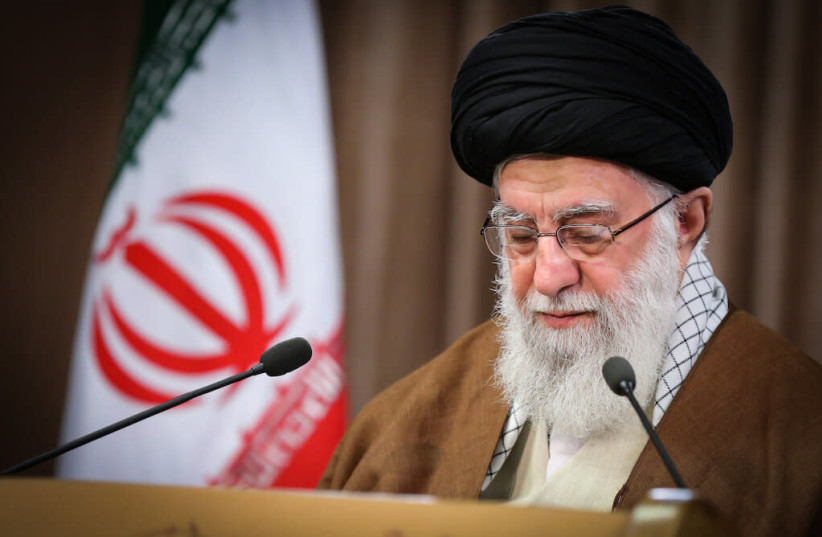

If true, it is unclear if the role is permanent, as it goes against the Iranian constitution’s laws regarding succession.

Iran's Supreme Leader Ayatollah Ali Khamenei (photo credit: KHAMENEI.IR)
Iran’s Supreme Leader Ayatollah Ali Khamenei
(photo credit: KHAMENEI.IR)
Iran‘s Supreme Leader Ayatollah Ali Khamenei may have transferred power to his son amid concerns over his declining health, Iranian journalist Momahad Ahwaze reported Saturday.

Taking to Twitter, Ahwaze wrote in Arabic that sources in Iran were concerned regarding the 81-year-old leader’s health, and those close to him are reportedly “very concerned” over his deteriorating condition.

As such, his powers have reportedly been transferred to his 51-year-old son, Sayyid Mojtaba Hosseini Khamenei, who currently oversees several important security and intelligence departments in the country. European sources have pegged Mojtaba as a potential successor to the supreme leader’s position for over 10 years, and British news outlet The Guardian even dubbed him “the gatekeeper to Iran’s supreme leader” in a 2009 article.

Ahwaze noted that it is unclear what has caused such deterioration in the supreme leader’s condition overnight, though he did suspect it could be prostate cancer.

Khamenei’s deteriorating health has also reportedly seen the supreme leader cancel some important meetings, such as a recently scheduled meeting with President Hassan Rouhani, according to Ahwaze.

Khamenei has been in power since 1989, having taken over following the death of the Islamic Republic’s founder, Ruollah Khomenei. However, he has had health issues in the past, and in 2014 had surgery on his prostate. According to French news outlet Le Figaro in 2015, Western sources believed the supreme leader had suffered from prostate cancer.

No official confirmation has been made regarding any potential transfer of power, and media outlets have been unable to confirm it.

The Iranian journalist gained notoriety due to his coverage of the Islamic Republic’s COVID-19 outbreak, despite Tehran’s attempts at downplaying its severity, Newsweek reported.

If his reports are true, it would mean that Khamenei is stepping down following increased tensions with the US and Israel, as Tehran blames the Jewish state for the assassination of its chief nuclear scientist, Mohsen Fakhrizadeh, on November 27.

In addition, it is unclear if the succession will be permanent, as it goes against the constitution’s rules regarding appointing a new supreme leader.

According to Article 111 of Iran’s constitution, the supreme leader’s successor is to be chosen by the Assembly of Experts, which currently consists of 88 ayatollahs. In the interim, the country would be administered by a provisional leadership council, which would consist of Iran’s president, chief justice and a member of the guardian council.

However, according to articles from the prestigious Washington Institute for Near East Policy think tank, it may not be as simple as that, with outside pressure such as from the Islamic Revolutionary Guards Corps likely wanting a role in the process, due to the military body’s influence on the Assembly of Experts.


Czechoslavakia provided desperately needed weapons in 1948

Czechoslavakia provided desperately needed weapons in 1948

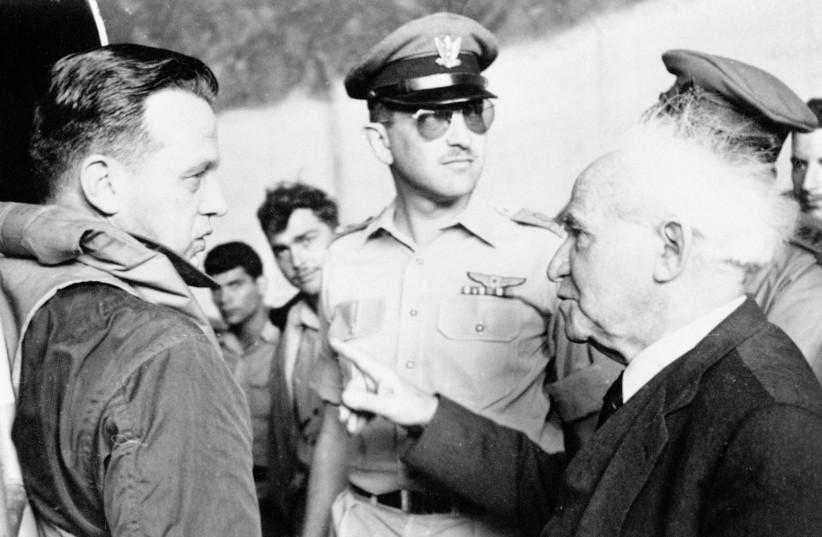
Prime Minister David Ben-Gurion meeting with two graduates of pilot training in Czechoslovakia - General Ezer Weizman, Commander-in-Chief of the Air Force and Colonel Daniel Shapiro (left).  (photo credit: MILITARY HISTORY INSTITUTE PRAGUE)
Prime Minister David Ben-Gurion meeting with two graduates of pilot training in Czechoslovakia – General Ezer Weizman, Commander-in-Chief of the Air Force and Colonel Daniel Shapiro (left).
(photo credit: MILITARY HISTORY INSTITUTE PRAGUE)
One day after the State of Israel was declared on May 14, 1948, a military coalition of Arab countries attacked the new state. David Ben-Gurion had expected the attack, and as the Jews in Mandatory Palestine desperately lacked arms, he had begun to seek them long before the UN November 1947 decision to establish the Jewish and Arab states. An international arms embargo was in force, and the only country willing to sell arms to a nascent Israel was cash-strapped Czechoslovakia, which also offered to train Israeli pilots and other specialists. The first deal between the Yishuv and Czechoslovakia was signed in January 1948 – and it was not cheap.
The Israelis obtained some 400 tons of mortars and other heavy machinery, aerial bombs, rifles, ammunition, machine guns, flamethrowers, explosives, tanks, and combat vehicles from the Czechs. A separate deal promised twenty-four Czech-built Avia S-199 fighters, a lesser version of the German Messerschmitt. After his first flight, Lou Lenart, an American fighter pilot and volunteer, said the plane was “the worst piece of crap I have ever flown.”
The first Israeli pilots and foreign volunteers arrived in Czechoslovakia before the Arab invasion, on May 11, 1948. The training was far from over when the War of Independence broke out; the fighter planes had to be hastily disassembled, sent to Israel, and reassembled.
In late May, the “Sakinim,” as the Israelis dubbed the Czech Messerschmitt, saved Tel Aviv. Six thousand Egyptian troops were advancing on the city when pilots Lou Lenart, Ezer Weizman, Modi Alon, and Eddie Cohen took off in their “Sakinim” and bombed the invaders. They inflicted only minimal damage but caused an enormous shock – the Egyptians had no idea that Israel had an air force. The Jewish ground troops attacked them, and Egypt withdrew.
By the fall, Czechoslovakia also offered its World War II-surplus Spitfires and sold 61 fighters to Israel. In the end, the Israelis stopped the enemy.
By January 1949, Czechoslovakia had trained some 200 Israeli specialists, paratroopers, and aircraft mechanics, including 82 pilots and 1,600 volunteers from Czechoslovakia and other European countries. Many of them chose to stay in Israel after the War of Independence.
For many people in Czechoslovakia, helping Israel was a moral issue close to their hearts, while for others, it was an opportunity to make money. According to a 1952 report from Czechoslovak Foreign Minister Viliam Široký, Czechoslovakia received almost $14.5 million for its arms. It was an enormous amount of money for the State of Israel, but the Avia S-199s played a crucial role. In 1968, David Ben-Gurion said: “Czechoslovak arms saved the State of Israel, really and absolutely. Without these weapons, we wouldn’t
have survived.”
In February 1948, Czechoslovakia became a Communist country, blindly following the Soviet Union. Initially, Joseph Stalin supported the State of Israel, but when its pro-Soviet parties lost Israel’s first election to the Knesset in January 1949, he withdrew his support – and so did Czechoslovakia.

This article was written in cooperation with Donath Business & Media s.r.o.