Israel strikes Iranian, Syrian targets in response to exposed IEDs

IDF Spokesperson: “We are attacking against the host and the visitor who is really not wanted”

The location of the exposed IEDs near the Syrian border. (photo credit: IDF SPOKESPERSON'S UNIT)
The location of the exposed IEDs near the Syrian border.
(photo credit: IDF SPOKESPERSON’S UNIT)
Israel struck Iranian and Syrian targets in Syria early Wednesday morning in response to explosive devices found on the border the previous day.
“IDF warplanes attacked military targets belonging to the Iranian Quds Force and the Syrian army tonight in Syria. The attack damaged warehouses, command posts and military complexes, and batteries of surface-to-air missiles,” the IDF said in a statement.
The strikes hit eight targets from the Golan Heights to Damascus including an Iranian military complex near Damascus International Airport, a secret military barracks which acts as a housing complex for senior Iranian officials as well as visiting delegations, a command post for Division 7 of the Syrian army which cooperates with the Quds force and mobile surface-to-air missile trucks which fired towards Israeli jets during the strikes.
The military added that “the attack was carried out in response to the placement of explosive charges next to the border fence between Syrian and Israeli territory by a Syrian squad acting under Iranian instruction,” the statement said.
According to IDF Spokesperson Brig.-Gen. Hidai Zilberman, the anti-personnel mines discovered yesterday were planted several weeks ago by local Syrians under the command of Iranian Quds Force.

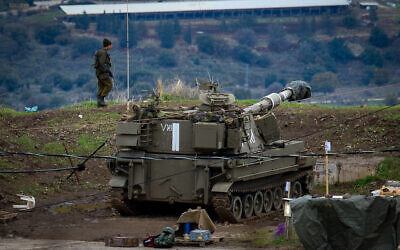
IDF troops at the site of the exposed IEDs on the Syrian border (Credit: IDF SPOKESPERSON'S UNIT)IDF troops at the site of the exposed IEDs on the Syrian border (Credit: IDF SPOKESPERSON’S UNIT)

The military, he said, has been following cells of Iranian Quds Force cells for several months trying to plant explosives on the border, and have been carrying out patrols- both on foot and by drones and reconnaissance to prevent attacks.
Syria’s state-run SANA news agency reported that Syrian air defenses intercepted the “Israeli aggression” in the south of the country and downed a number of missiles that had been launched.
Three military personnel were killed and one was injured in the attacks and according to the Syrian Observatory for Human Rights, some 10 personnel were killed. It isn’t clear if the casualties were Syrian or Iranian-backed troops.
Though the military is not expecting any response to the strikes, the Iron Dome has been deployed to the north, and ground troops have been placed on heightened alert
Defense Minister Benny Gantz, who was on a tour of the Northern Command on Tuesday where he was briefed on the regional situation and troop readiness, held Syria responsible.
“We have long been prepared for the possibility of terror attacks in the northern sector,” he said. “The IDF has the capabilities and the determination to respond severely to any incident both on the Lebanese and Syrian fronts… I say clearly: Syria is responsible for what occurs on its territory.”
In August, IDF troops from the elite Maglan reconnaissance unit foiled an attempt to place explosives along the border fence with Syria. The four-member cell was killed when the IDF force supported by aircraft attacked them.
Following an investigation of the scene, some 25 meters from the perimeter fence inside Israeli territory, weapons and a bag containing a number of explosive devices were found. The action taken against the cell placing the explosives on the border fence was later followed by Israeli airstrikes targeting Syrian positions.
“We understood that the message we sent the other side in August wasn’t fully understood,” said Zilberman said, adding that the military we wanted the other side, including the local Syrians on the Golan Heights understand that working with Iran is “not acceptable.”
“We won’t allow Iran to continue to embed themselves in Syria and especially along the border, and we won’t let the Syrians continue to let them. We are attacking against the host and the visitor who is really not wanted,” Zilberman told reporters, calling on the United Nations Disengagement Observer Force to stop the hostility on the Golan Heights.
“Iranian weapons continue to enter into Syria and Iranian forces continue to act on the Golan Heights which is not acceptable,” he added.
Israel has repeatedly warned of Iran’s aspirations of regional hegemony and has admitted to carrying out hundreds of airstrikes as part of its “war-between-wars” (known in Hebrew as MABAM) campaign to prevent the transfer of advanced weapons to Hezbollah in Lebanon and the entrenchment of its forces in Syria where they could easily act against Israel.
Although Israel usually refrains from targeting terror operatives to try to avoid subsequent retaliation, some strikes ascribed to the Jewish State have killed several Hezbollah operatives in southern Syria on the Golan Heights where the group has been trying to establish a permanent military presence.
According to a report by the ALMA Research and Education Center, Hezbollah’s presence in southern Syria is much larger than previously revealed, with some 58 sites in the southern Syrian provinces of Quneitra and Dara’a where the terror group’s Southern Command and Golan Project have been deployed.

IRINN TV airs report about Iran’s missile capabilities, with emphasis on missiles capable of striking Israel.

Arutz Sheva Staff , Nov 18 , 2020 9:07 AM


IRINN TV (Iran) aired a report about Iran’s missile capabilities, with an emphasis on the missiles capable of striking Israel, reports the Middle East Media Research Institute (MEMRI).

The narrator described the range, capabilities, and warhead capacities of various families of Iranian missiles, including Shahab, Fateh, Sejjil, Ghiam, Emad, and Fajr.

He elaborated that Hezbollah holds a large supply of Fateh-class missiles, which he claimed are the most accurate Iranian missiles, and he added that they can be used to target Israeli naval vessels and all of Israel’s territory. In addition, he also said that Palestinian fighters have been using the Fajr-3 and Fajr-5 missiles to target Israeli cities.


Military says Iranian command base near Damascus airport also among targets hit overnight in response to attempted border attack; army goes on high alert for possible retaliation


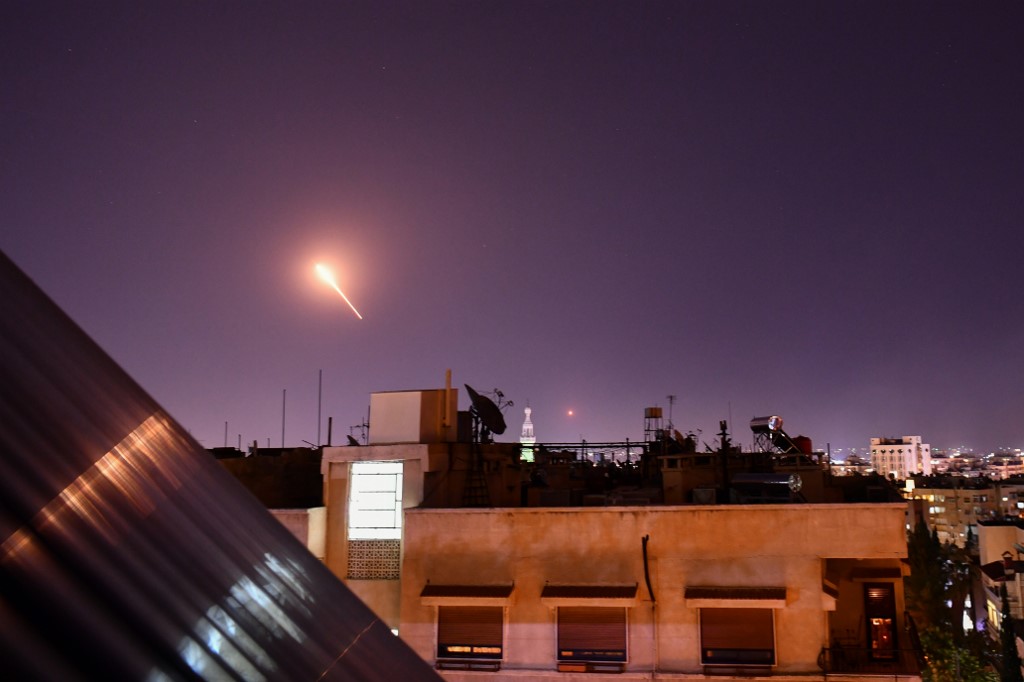
Syrian air defenses respond to alleged Israeli missiles targeting south of the capital Damascus, on July 20, 2020. (AFP)

Illustrative. Syrian air defenses respond to alleged Israeli missiles targeting south of the capital Damascus, on July 20, 2020. (AFP)

The Israel Defense Forces said a round of airstrikes it carried out in Syria on Wednesday morning was meant to send a message to Iran to leave the country, specifically the border area, following an attempted attack on the Golan Heights that was thwarted this week.

In the predawn hours of Wednesday morning, Israeli fighter jets struck eight targets in Syria — roughly half near Damascus and half along the Golan border — in response to an Iranian-directed effort to set off anti-personnel mines against Israeli troops, IDF Spokesperson Hidai Zilberman said. The explosives were disarmed on Tuesday morning.

According to the spokesman, the strikes targeted a number of facilities controlled by Iran’s Islamic Revolutionary Guards Corps’ expeditionary Quds Force, which commands and supports proxy militias in Syria. In addition, the Israeli fighter jets bombed a Syrian military base, as well as several Syrian anti-aircraft batteries that fired at them.

Zilberman told reporters that the retaliatory attack was intended as both a message to Iran that “we won’t allow Iranian entrenchment at all and next to the border specifically,” and a message to Syria that it will be held responsible for allowing Tehran to maintain a presence in its country.

The spokesman said that Israel tried to send a similar message to Iran and Syria in August after a previous attempt to plant bombs along the border, but it evidently “wasn’t received.”

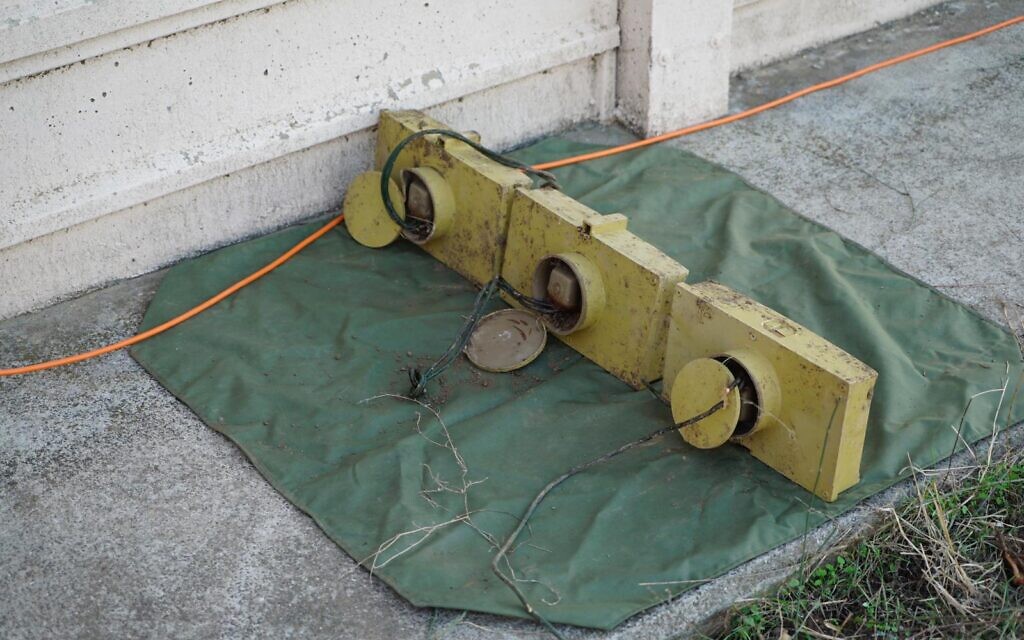
Three anti-personnel mines that Israel says were planted inside Israeli-controlled territory along the border with Syria, which were uncovered on November 17, 2020. (Israel Defense Forces)

Zilberman said the military was prepared for the possibility of retaliation from Iran or Syria, with Iron Dome and other air defense systems on high alert.

Israel views a permanent Iranian military presence in Syria as an unacceptable threat, which it will take military action to prevent.

Zilberman did not reveal the nature of all eight targets of the predawn attack, but said they included: a military base used by Iran to direct its forces in the country located just next door to Damascus International Airport; a secret barracks used by top Iranian commanders in Syria, which is also used to host visiting delegations from Tehran, southeast of Damascus; a base of the Syrian military’s 7th Division, which cooperates widely with Iran; and mobile Syrian surface-to-air missile batteries.

Illustrative: IDF troops near the Israel-Syria border, in the Golan Heights on January 3, 2020. (Basel Awidat/Flash90)

According to the spokesman, the military knew there were Iranian officers in the barracks when the attack was carried out, but did not specifically target them or the areas in the building where they were located.

In addition, the IDF said it targeted arms warehouses in Syria. Zilberman did not comment on the nature of the sites that were bombed on the Golan border.

The Syrian state news agency SANA said three soldiers were killed and one was injured in the attack, which it said targeted sites in southern Syria. There were no immediate reports of casualties from the IRGC.

The state news outlet also said Syrian air defenses shot down several incoming Israeli missiles, though war analysts generally dismiss the regime’s regular claims of interceptions as false, empty boasts. Zilberman said the military was still reviewing the results of the attack so he could not say definitively if the claim was true, but that if the Syrian military had succeeded in downing any incoming missiles, it was “extremely marginal if it happened at all.”

Though Israel officially maintains a policy of ambiguity regarding its activities in Syria — in the hopes of not giving Iran and Syria a pretext to respond — the IDF consistently acknowledges carrying out airstrikes on targets in Syria that either are in response to specific attacks from the country, as was the case this week, or were attempts to preempt and prevent such attacks.

Three anti-personnel mines that Israel says were planted inside Israeli-controlled territory along the border with Syria, which were uncovered on November 17, 2020. (Israel Defense Forces)

According to Zilberman, the three Claymore-style mines planted along the border were set there by Syrian nationals who live near the border, at the instruction of the IRGC Quds Force. The mines were uncovered in a buffer zone near the border that is under Israeli control but is on the Syrian side of the security fence, where the IDF regularly conducts patrols.

It was the same area where Iranian-backed Syrian operatives tried to plant mines in August, though in that case the four men were spotted by the IDF at the time and killed.

Since that attempt, the IDF has more closely monitored the area to prevent a similar attack.

Zilberman said the military did not yet know when the three mines were planted along the border, but that it seemed to have been several weeks ago. The IDF was investigating how the Iranian-backed operatives were able to evade detection and plant the bombs.

Volume 90%

On Tuesday morning, the IDF sent a team of combat engineers into the area to disarm the mines.

Zilberman said the military called on the UN peacekeeping force that is meant to maintain the 1974 ceasefire between Israel and Syria to prevent such attacks in the future.

The IDF has launched hundreds of strikes in Syria since the start of the civil war in 2011 against moves by Iran to establish a permanent military presence in the country and efforts to transport advanced, game-changing weapons to terrorist groups in the region, principally Hezbollah.