A second, larger Israeli delegation is planned to depart in the coming weeks. The second delegation will focus on economic issues, including water and agriculture.
Justice Alito describes how curbs on individual liberty imposed during 2020 were “previously unimaginable.”
“We have never before seen restrictions as severe, extensive, and prolonged as those experienced for most of 2020,” U.S. Supreme Court Justice Samuel Alito said on Thursday, as reported by Reuters.
In a speech made to the Federalist Society via video link, the conservative-leaning justice said that the curbs on individual liberty imposed in order to limit the spread of the coronavirus pandemic were “previously unimaginable.”
Alito focused mainly on religious rights in his comments, stating how, “It pains me to say this, but in certain quarters, religious liberty is fast becoming a disfavored right. Churches closed on Easter Sunday, synagogues closed for Passover and Yom Kippur – think of it!”
Referring to changing social norms and pressure from liberal ideology, Alito described how citizens were no longer free to give voice to their opinions on a widening raft of issues.
“You can’t say that marriage is a union between one man and one woman”, he said. “Until very recently that’s what a vast majority of Americans thought. Now it’s considered bigotry.”


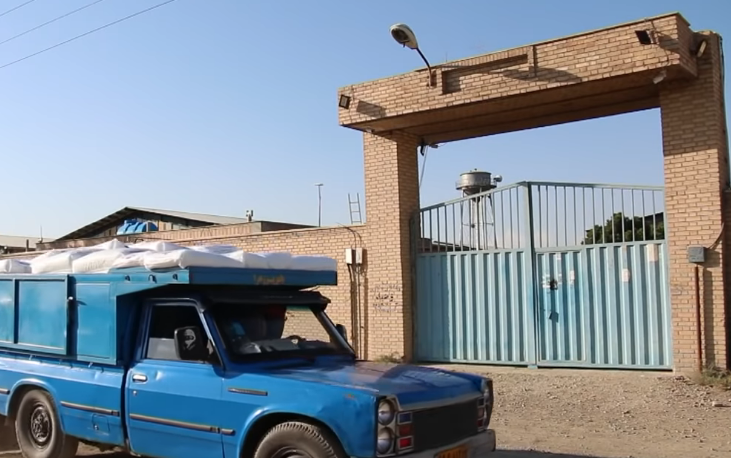
Atomic watchdog says Islamic Republic’s explanations are ‘not credible,’ demands answers on activity at Tehran warehouse dating back to early 2000s
The UN’s nuclear watchdog said Wednesday that Iran’s explanations over the presence of nuclear material at an undeclared site in the country were “not credible.”
Despite Iranian authorities providing some information about the site, “the agency informed Iran that it continues to consider Iran’s response to be not technically credible,” the International Atomic Energy Agency (IAEA) said in a report seen by AFP.
“A full and prompt explanation from Iran regarding the presence of uranium particles of anthropogenic origin… at a location in Iran not declared to the Agency, is needed,” the report said.
While the IAEA has not identified the site in question, diplomatic sources have indicated to AFP that it is in the Turquzabad district of Tehran, previously identified by Israel as an alleged site of secret atomic activity.
The report did not provide any new information about two other locations where the IAEA took samples in September and where undeclared nuclear activity may have taken place in the early 2000s.
The analysis of those samples is ongoing.
Iran initially refused to allow inspectors access to the sites, sparking a standoff with the IAEA only resolved in late August during a visit to Tehran by IAEA director Rafael Grossi.
In a speech in 2018 at the UN General Assembly, Prime Minister Benjamin Netanyahu revealed the existence of the warehouse in Tehran, which he said held “massive amounts” of equipment and material that were part of a secret Iranian nuclear program.
In that speech, Netanyahu claimed some 15 kilograms (33 pounds) of radioactive material had been recently removed from the atomic warehouse and squirreled away around Tehran, endangering the capital’s residents.
The site may have contained as much as 300 tons of nuclear-related equipment and material in 15 shipping containers, Netanyahu added. He did not specify what nuclear material was contained at the site.
That speech came months after Israel’s disclosure that it had spirited away what it said was a “half-ton” of Iranian nuclear documents from Tehran, with Netanyahu saying both the archive and the warehouse were proof that Iran continues to seek atomic weapons despite the 2015 nuclear deal. “Iran has not abandoned its goal to develop nuclear weapons…. Rest assured that will not happen. What Iran hides, Israel will find,” Netanyahu told the UN.
Iran has denied that the site was a nuclear facility or served any secretive purpose. In an initial response to Netanyahu’s UN speech, Iranian state media claimed the warehouse was actually a recycling facility for scrap metal.
The report did confirm that Iran’s stockpile of enriched uranium is now more than 12 times the limit set down in a 2015 deal with world powers.
It said that as of November 2, “Iran’s total enriched uranium stockpile… was 2,442.9 kg.”
The limit in the 2015 deal was set at 300 kilograms (661 pounds) of enriched uranium in a particular compound form, which is the equivalent of 202.8 kilograms of non-compound enriched uranium.
Wednesday’s report confirmed that, in line with previous statements by Iranian officials, centrifuges had been installed at an underground part of the Natanz nuclear facility after another part of the site was damaged in an explosion in July which Iran blamed on “sabotage.”