A Middle East in which nuclear deterrence is wielded by authoritarian regimes with Islamist ties is fundamentally different from one in which nuclear weapons remain the monopoly of recognized, responsible states. Opinion.

Nuclear power plant

Nuclear power plantiStock

Saudi Arabia and Pakistan’s new “strategic defense pact” is more than a symbolic gesture between two longstanding partners. By suggesting that Islamabad’s nuclear deterrent could extend to Riyadh, the agreement risks introducing nuclear proliferation into the heart of the Middle East and creating one of the most destabilizing security arrangements of the 21st century.

The pact, signed on September 18 by Crown Prince Mohammed bin Salman and Prime Minister Shehbaz Sharif, states that an attack on either country will be treated as an attack on both. Saudi commentators have gone further, explicitly comparing the arrangement to NATO’s Article 5 and hinting that Pakistan’s nuclear arsenal could be part of the package. That possibility would place nuclear weapons within the political reach of a monarchy that has long financed Islamist movements and leveraged religious ideology as a tool of foreign policy.

An Old Suspicion, Now Real

For decades, analysts speculated that Riyadh was quietly underwriting Pakistan’s nuclear program in exchange for future guarantees. Saudi officials denied such claims, but the timing and rhetoric surrounding this pact have revived those fears. By couching the deal in collective security language, the Saudi and Pakistani leadership have opened the door to what amounts to nuclear freelancing outside established alliances and norms.

The implications are grave. Saudi Arabia’s regional posture is not that of a status quo power seeking stability. From its export of Wahhabi ideology to its interventionist policies in Yemen and beyond, Riyadh has consistently acted in ways that destabilize its environment. Pakistan, meanwhile, has a deeply checkered history of nuclear stewardship: the A.Q. Khan network sold sensitive technology to Iran, North Korea, and Libya, while elements of the Pakistani security apparatus have long tolerated jihadist groups. Linking these two records under a nuclear umbrella magnifies, rather than reduces, risk.

Regional Consequences

The regional timing is telling. Just days before the pact, Israel carried out a precision strike in Doha against Hamas leaders. For Riyadh, that operation underscored both Israel’s reach and Washington’s limits. For Islamabad, struggling with financial crisis and diplomatic isolation, Saudi Arabia’s embrace provided both resources and prestige. What emerged was a convergence of insecurity — Riyadh’s desire for deterrence and Islamabad’s need for relevance — forged into a high-risk alliance.

For Israel, this presents a two-front challenge: containing Iran’s advancing program while factoring in a Saudi regime potentially emboldened by Pakistani nuclear cover. For the United States and Europe, it calls into question the credibility of long-standing security commitments. A Middle East in which nuclear deterrence is wielded by authoritarian regimes with Islamist ties is fundamentally different from one in which nuclear weapons remain the monopoly of recognized, responsible states.

A Necessary Policy Response

The West must move quickly to address this threat before it hardens into a new security reality. Several steps are essential.

First, Washington should make clear that any transfer of nuclear assets, technology, or operational control from Pakistan to Saudi Arabia will be met with immediate and severe sanctions. This message must be explicit, not implied, and it must be backed by bipartisan consensus to ensure credibility.

Second, Europe cannot afford to hedge. The European Union has a direct interest in preventing nuclear instability that could spill into North Africa and the Mediterranean. Coordinated U.S.-EU measures would send a powerful signal to both Riyadh and Islamabad that nuclear freelancing will isolate, not empower, them.

Third, Israel and Western intelligence services must intensify monitoring of potential proliferation channels. The A.Q. Khan episode proved how rapidly illicit networks can expand when left unchecked. Vigilance now could prevent a repeat of that history, this time with Saudi financing and state sponsorship behind it.

Finally, Washington should reassess its broader Gulf posture. For too long, Riyadh has been treated as an indispensable partner despite its destabilizing behavior. This pact demonstrates that the kingdom continues to view security through the prism of deterrence by proxy rather than genuine reform or integration into a stable regional order. U.S. policy must shift from indulgence to conditionality.

A Dangerous Precedent

The Saudi-Pakistani pact illustrates a troubling trend: authoritarian regimes bypassing established alliances to construct ad hoc, high-risk security guarantees. This is not NATO. It is a transactional arrangement between two states with long records of empowering Islamist movements. To treat it as a normal defense agreement would be a profound error.

Saudi Arabia and Pakistan present their defense pact as a step toward security and stability. In truth, it is an act of nuclear opportunism that threatens both. For Washington, Brussels, and Jerusalem, the challenge is immediate: prevent this pact from normalizing the idea that nuclear umbrellas can be rented by regimes that export extremism and fuel instability.

Amine Ayoub, a fellow at the Middle East Forum, is a policy analyst and writer based in Morocco. Follow him on X: @amineayoubx.

In the judgment of history, Sánchez’s words will be remembered as disgraceful – evidence of moral blindness and failed leadership.

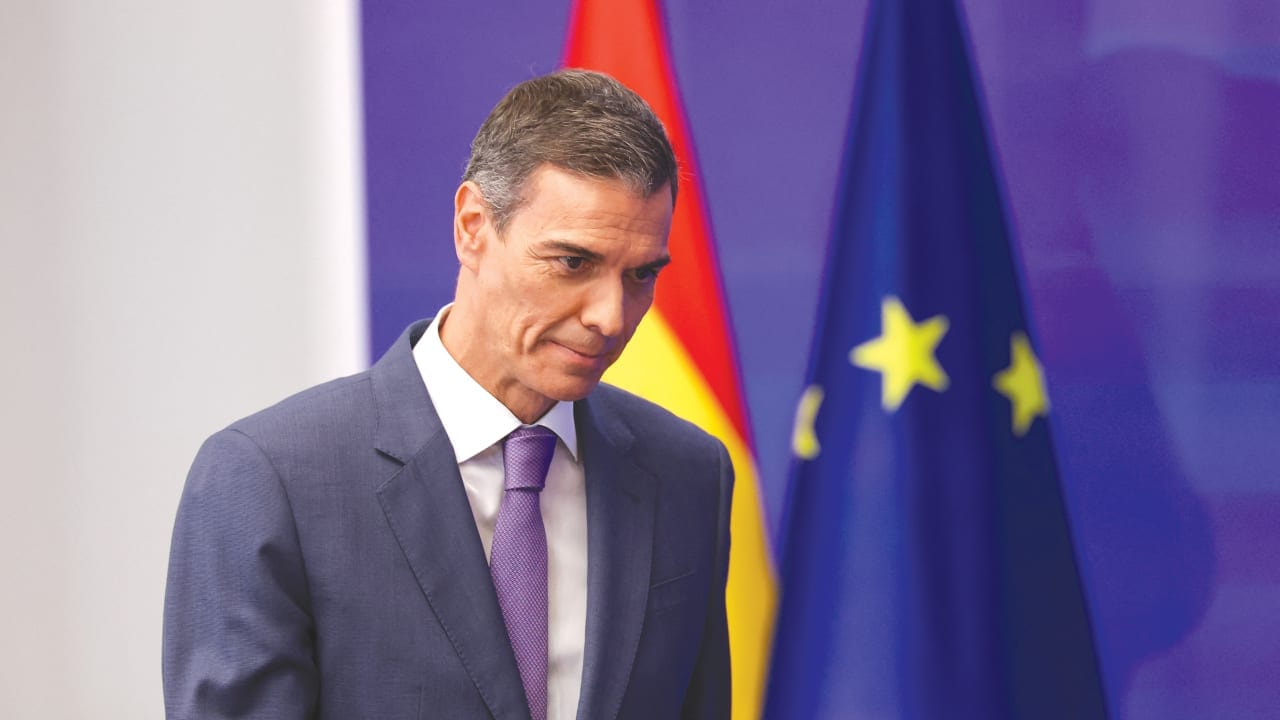
SPANISH PRIME MINISTER Pedro Sánchez leaves at the end of a news conference before summer break, in Madrid, in July. In recent weeks, he has led unprecedented moves against Israel, the writer charges.
(photo credit: Juan Medina/Reuters)
Spanish Prime Minister Pedro Sánchez’s recent remark that “We do not have atomic bombs to stop Israel” is not just another harsh political statement. It is a crossing of a red line that places Spain at the center of an international scandal.

This is not a case of clumsy wording or rhetorical exaggeration; it is an implied threat against the State of Israel, a sovereign nation fighting for its right to exist against terror and violence.

Should Israel understand from his words that if Spain possessed nuclear weapons, it would consider using them against Israel? Sánchez has never issued such threats toward Iran’s murderous ayatollah regime, which openly calls for Israel’s destruction.

In recent weeks, Sánchez has led unprecedented moves against Israel: declaring an arms embargo, supporting boycotts, and leveling false accusations of “genocide.” Yet his latest statement, which refers to Spain’s military capacity vis-à-vis Israel, while invoking the notion of “atomic bombs,” is reckless and resonates not only in newsrooms but also in diplomatic corridors worldwide.

Instead of working to secure the release of hostages held by terror groups, he chooses to direct his fire at Israel – the victim, not the aggressor.

Hostage families led a march with thousands of Israelis participating, from Savidor Central to the main rally at Hostages Square on September 13, 2025. (credit:  Uriel Even Sapir)
Hostage families led a march with thousands of Israelis participating, from Savidor Central to the main rally at Hostages Square on September 13, 2025. (credit: Uriel Even Sapir)

His words are especially disturbing in light of his silence regarding the hostages. Rather than using his international standing to demand their immediate release, Sánchez embraces an anti-Israel narrative that legitimizes terror. Every statement that blurs the line between innocent hostages and murderous terrorists strikes at human dignity and deepens the suffering of their families.

Sánchez has also announced that his government is advancing an arms embargo against Israel due to the war in Gaza, and that Madrid will bar ships and aircraft carrying weapons or military supplies to Israel from Spanish ports and airspace.

Iossible to ignore historical shadows cast by comments 

ONE CANNOT ignore the historical shadows cast by his comments. Spain is notorious in Jewish history for the 1492 Spanish Inquisition, one of the darkest chapters for the Jewish people, in which hundreds of thousands were expelled, humiliated, and murdered in the name of “purity of faith.”

Now, 500 years later, voices once again emerge from Madrid threatening Jews; this time in their sovereign state. The comparison is not coincidental: when a Spanish leader feels free to hurl grave accusations at the Jewish state and even hint at military threats, he continues a legacy of hostility that a modern democracy should have abandoned long ago.

The audacity lies not only in his words but in his willingness to jeopardize Spain’s relations with Israel, a democratic nation at the forefront of the global struggle against radical Islamic terror. His rhetoric does not advance peace or reconciliation; it fuels division, hatred, and rising antisemitism across Europe.

Instead of acting as a responsible NATO leader, Sánchez has chosen the language of bullying, seeking domestic political gain at the expense of another nation’s security. Any leader who dares to suggest, even hypothetically, the use of nuclear weapons forfeits the moral authority to lecture others about human rights or peace.

This bullying extends to the European arena, where Sánchez pressures other EU states to adopt anti-Israel policies, threatens leaders who resist, and attempts to impose a hostile diplomatic reality. In doing so, Spain disqualifies itself from any role as a potential mediator and becomes an openly adversarial actor in the Middle East.

Sánchez has also declared his willingness to accept “refugees from Gaza.” While seemingly humanitarian, such a move carries grave risks. Europe has already experienced the consequences of uncontrolled waves of migration, sometimes exploited as fertile ground for terror, antisemitism, and erosion of local identity.

A commitment to admit tens or hundreds of thousands from Gaza without security vetting – without distinguishing between innocent civilians and Hamas operatives – endangers not only Spain but the entire continent.

This declaration exposes Sánchez’s weakness in the face of radical Islam. He knows Hamas uses civilians as human shields, yet instead of condemning this, he is ready to throw open Spain’s gates. This is not humanitarianism. It is ideological capitulation, one that strengthens terror and undermines Europe’s capacity to defend itself.

A leader who embraces every refugee indiscriminately ignores the reality that among them may be Hamas supporters. This is not compassion; it is dangerous irresponsibility. History teaches that surrendering identity and principles never leads to peace, only to disaster. A European leader who fails to grasp this repeats past mistakes and imperils both his people and his neighbors.

Israel does not fear Sánchez’s threats. It is strong enough to withstand diplomatic assaults and will continue to defend its citizens against any enemy, near or far. Europe must ask itself: Is this truly the leader it wants at the forefront? Is this the voice it wishes to project – a voice of bullying, capitulation, and historic hostility toward Jews?

In the judgment of history, Sánchez’s words will be remembered as disgraceful – evidence of moral blindness and failed leadership.

The writer, CEO of Radios 100FM, is an honorary consul and deputy dean of the Consular Diplomatic Corps, president of the Israel Amateur Radio Club, a former Army Radio monitor, and NBC News correspondent.


Some 10 other nations also expected to recognize Palestinian statehood at General Assembly next week; Saudi Arabia, France, Norway and Spain launch global fundraising campaign for PA

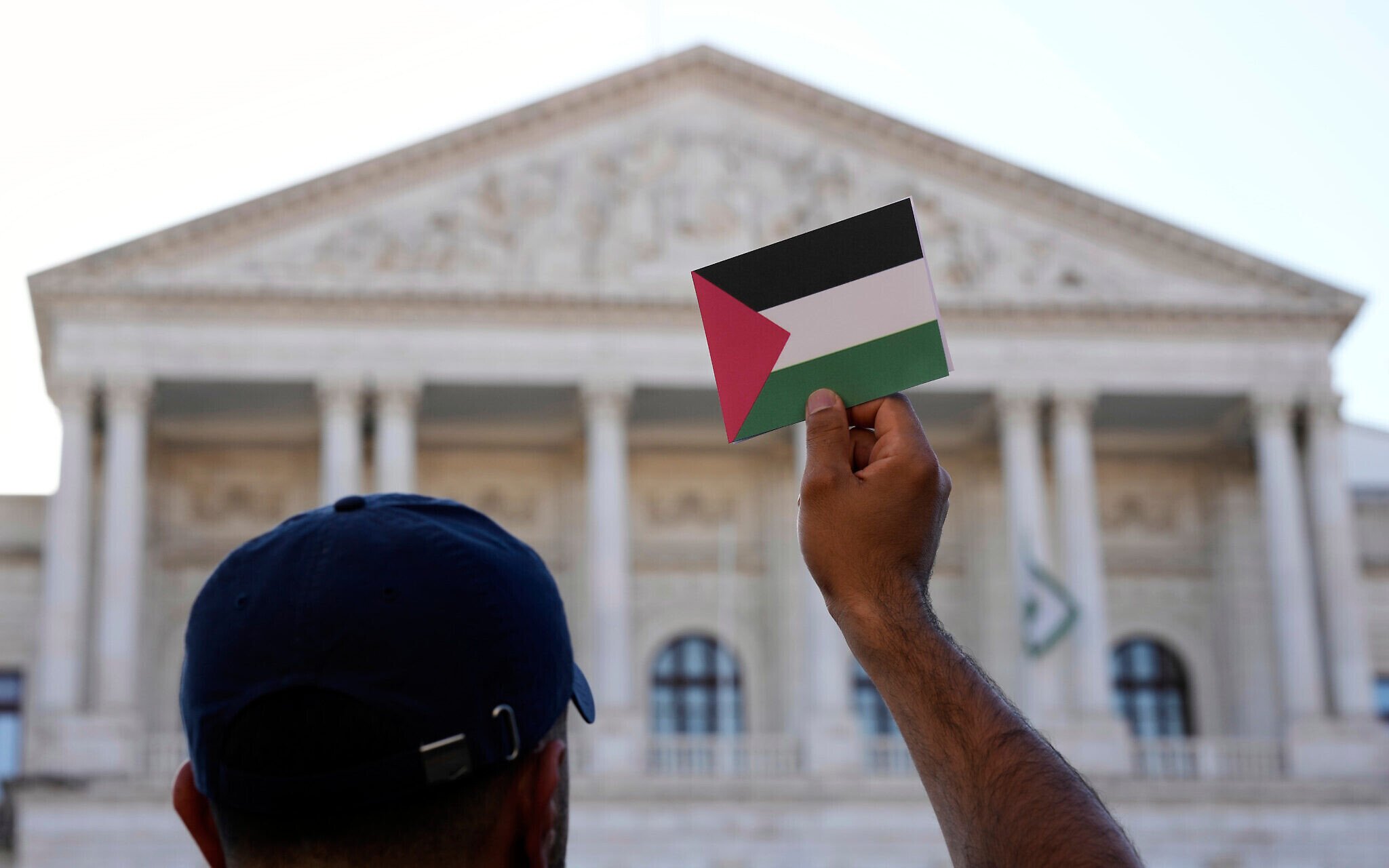
A man holds up a Palestinian flag postcard during a protest calling for the recognition of a Palestinian state outside the Portuguese parliament in Lisbon, June 17, 2025. (AP Photo/Armando Franca)

A man holds up a Palestinian flag postcard during a protest calling for the recognition of a Palestinian state outside the Portuguese parliament in Lisbon, June 17, 2025. (AP Photo/Armando Franca)

Portugal will officially recognize a Palestinian state on Sunday, Lisbon’s foreign ministry said on Friday, ahead of a UN General Assembly where around 10 other countries are set to follow suit.

Britain, Canada and France are among the other Western nations planning to give a Palestinian state recognition at the assembly, which comes as Israel’s campaign against Hamas in the Gaza Strip grinds on.

Lisbon had already announced in July that it intended to do so given the “extremely worrying evolution of the conflict,” as well as the humanitarian crisis and Israel’s repeated threats to annex the West Bank.

“The ministry of foreign affairs confirms that Portugal will recognize the State of Palestine… the official declaration of recognition will be made on Sunday, September 21,” a statement on the ministry’s website said.

Israel has fiercely criticized plans for Palestinian recognition, arguing that it rewards Hamas for its October 7, 2023, attack that sparked the war in Gaza.

Earlier Friday, an adviser to French President Emmanuel Macron said Andorra, Australia, Belgium, Luxembourg, Malta and San Marino also plan to recognize the state of Palestine.

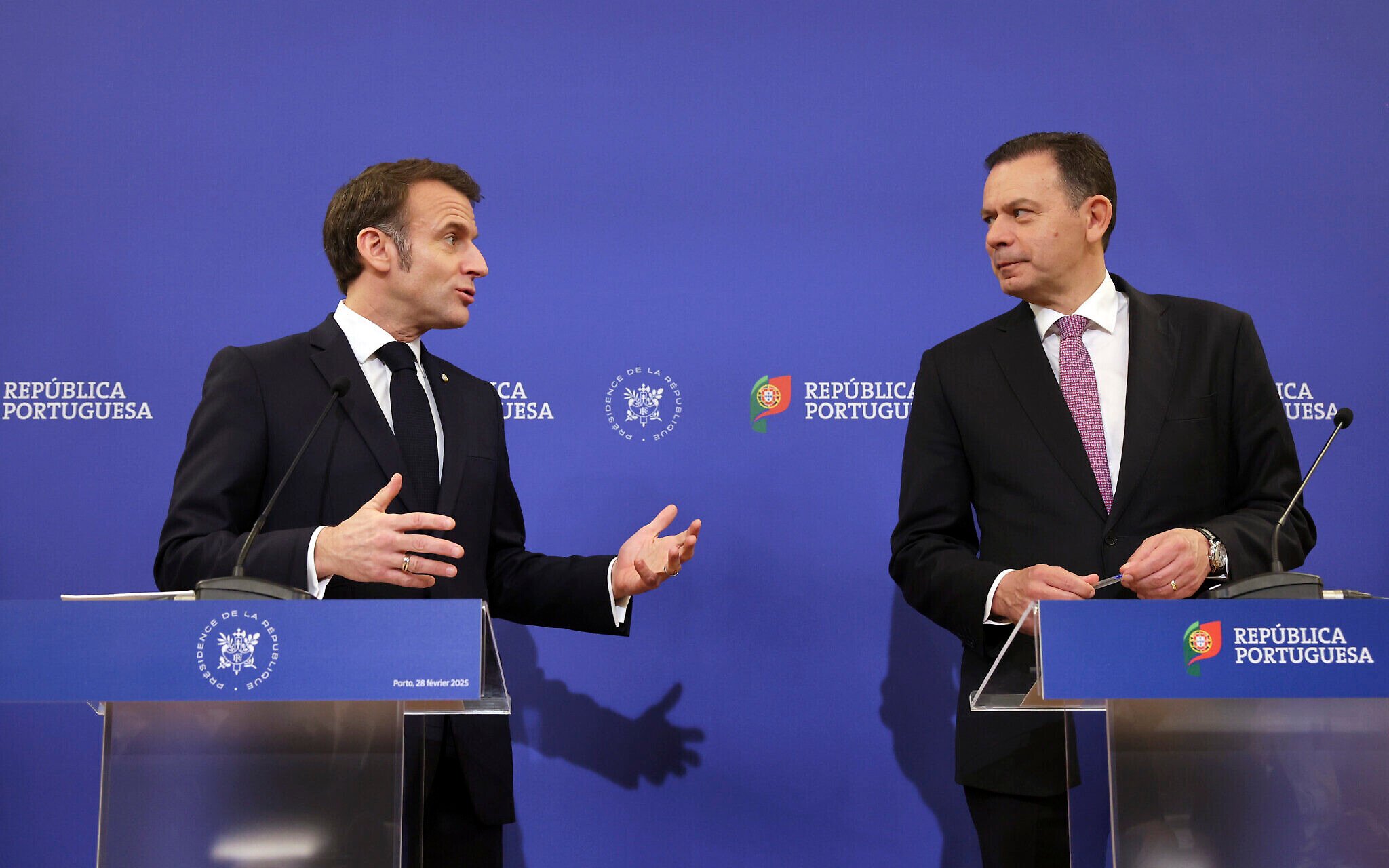
French President Emmanuel Macron, left, looks at Portuguese Prime Minister Luis Montenegro while addressing journalists at the Porto City Hall, in Porto, Portugal, February 28, 2025. (AP Photo/Luis Vieira)

Beginning on Monday, next week’s UN General Assembly in New York is set to be devoted to the question of the so-called two state solution to the long-running Israel-Palestinian conflict.

Around three-quarters of the 193 members of United Nations already recognize the state of Palestine, which the General Assembly approved de facto recognition of in 2012 by upgrading its observer status at the world body to “non-member state” from “entity.” Only a handful of the 27 European Union members currently recognize a Palestinian state, mostly former Communist countries as well as Sweden and Cyprus.

‘Mobilizing to prevent PA’s financial collapse’

Alongside the General Assembly, France and Saudi Arabia will co-chair a conference in New York next week on the two-state solution. Ahead of the confab, the two countries were working with Norway and Spain to rally countries around an emergency aid package to prevent the Palestinian Authority’s collapse while Israel withholds hundreds of millions of dollars that belong to Ramallah, according to a letter to potential donor states obtained by The Times of Israel.

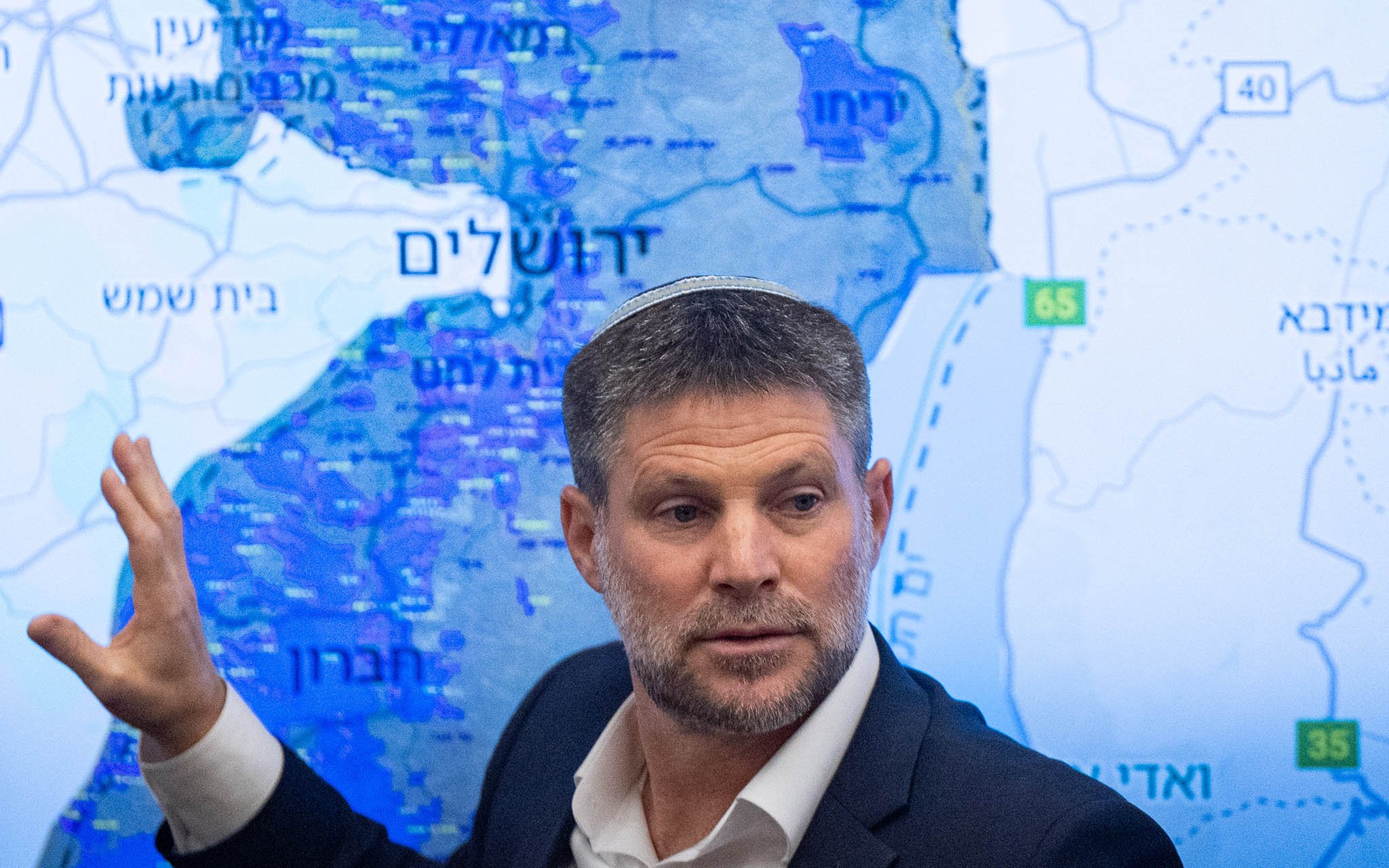
For four consecutive months, far-right Finance Minister Bezalel Smotrich has been refusing to transfer clearance revenues that Israel collects on the PA’s behalf. These funds make up the majority of Ramallah’s budget and their withholding has brought the PA to brink of collapse.

Finance Minister Bezalel Smotrich gestures toward a map of the West Bank during a press conference at the Finance Ministry in Jerusalem, September 3, 2025. (Yonatan Sindel/Flash90)

The letter to potential donor countries who will be attending a French-Saudi two-state solution conference at the UN on Monday says that participants are expected to demand Israel release the Palestinian funds.

However, organizers seemed resigned to the possibility that Jerusalem will not budge on the issue and therefore set a fundraising goal of $200 million for each of the next six months to cover the PA’s operating expenses.

“Support to the recovery of the private sector and the functioning of essential commercial actors, including Palestinian banks, is also needed,” the letter says.

A European diplomat teold The Times of Israel that the four participating countries have already agreed to donate $200 million a month to the PA for six months, but are hoping that other countries help share the burden.

“The Palestinian Authority is engaged in implementing an ambitious reform agenda, aiming at structural transformations that lay the foundation for a modern, transparent, and accountable State,” said the foreign ministers of Saudi Arabia, France, Norway and Spain, as they sought to justify another international fundraising campaign for Ramallah.

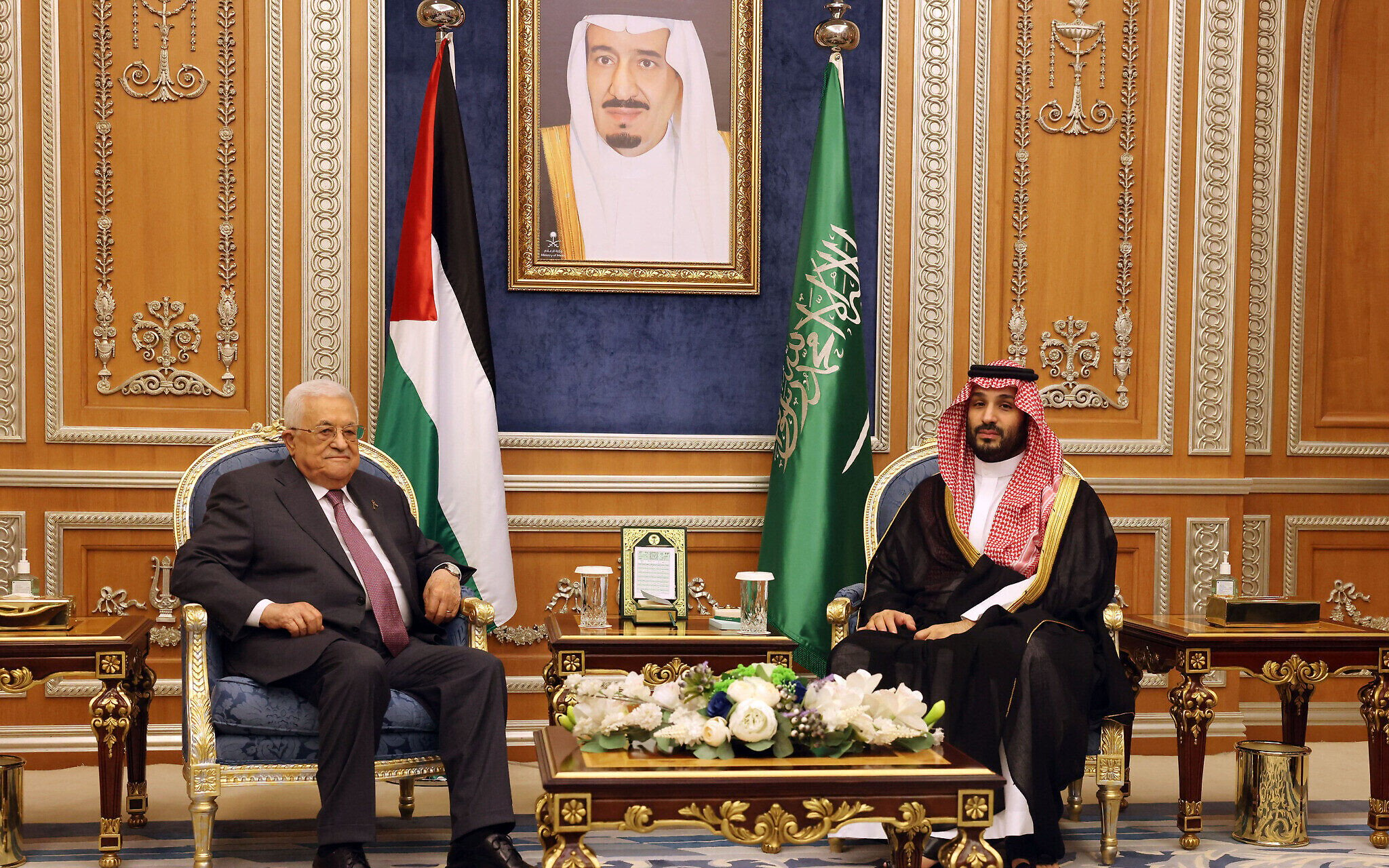
Saudi Arabia’s inclusion in the effort is particularly noteworthy, as Riyadh previously was one of PA President Mahmoud Abbas’s biggest critics, accusing him of corruption.

The leading Arab country’s inclusion in the effort gives Ramallah’s recent reform efforts a boost of legitimacy.

A handout picture provided by the Palestinian Authority’s press office (PPO) shows PA President Mahmoud Abbas (L) meeting with Saudi Arabia’s Crown Prince Mohammed Bin Salman in Riyadh on August 27, 2024. (Thaer Ghanaim / PPO / AFP)

The letter says the PA is facing an “existential threat” due to the withholding of clearance revenues on top of the Israel-Hamas war in Gaza, settler violence in the West Bank and blocks on transfers to Palestinian banks.

“A viable Palestinian state capable of fulfilling the needs and aspirations of the Palestinian people will be essential for a future of peace and security in the Middle East,” the four countries said.

“We therefore need to urgently mobilize to prevent a financial collapse of the Palestinian Authority, with severe implications for Palestinian society, regional stability, and international security,” the letter continues. “Financial shortcoming cannot be the cause of the failure of the Palestinian State and destabilization of the Middle East.”

“We need to act now, and with this objective, we propose to swiftly coordinate in the coming days an emergency coalition for Palestine,” the letter states.