Canada to recognize Palestinian state, subject to PA reforms

Canadian PM Mark Carney says Canada plans to recognize a Palestinian state in September—if the PA holds elections, disarms, and excludes Hamas. Israel condemns the move, calling it a reward for terror.

Mark Carney

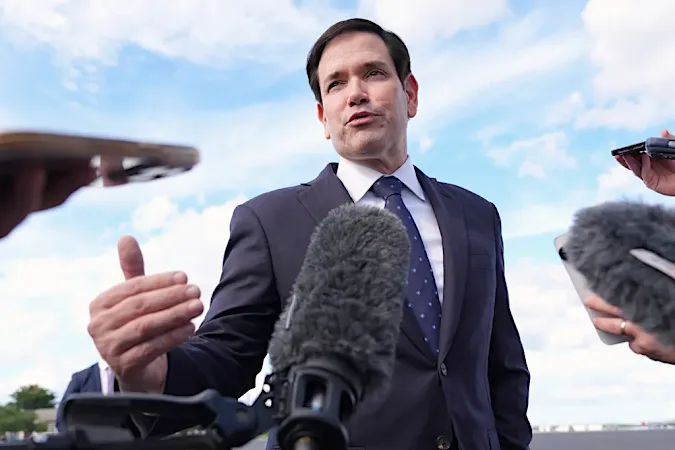
Canadian Prime Minister Mark Carney announced on Wednesday that his government intends to recognize the “State of Palestine” in September, provided the Palestinian Authority (PA) meets specific conditions tied to governance and security, the Toronto Star reports.

Recognition will be contingent upon the PA implementing a series of reforms, including holding elections in 2026, a full demilitarization process, and the exclusion of the Hamas terror group from any future governing coalition, Carney stated.

Hamas, which currently maintains control of Gaza, is designated as a terrorist organization by Canada and other Western nations.

Should Canada proceed, it would become the third G7 country – after France and the United Kingdom – to formally outline steps toward recognizing a Palestinian state.

The Foreign Ministry said in response, “Israel rejects the statement by the Prime Minister of Canada. The change in the position of the Canadian government at this time is a reward for Hamas and harms the efforts to achieve a ceasefire in Gaza and a framework for the release of the hostages.”

Canada was one of 26 countries that issued a joint statement earlier this month demanding an immediate end to the war in Gaza, expressing alarm over the worsening humanitarian situation ,and accusing Israel of imposing unacceptable restrictions on aid.

Carney, who replaced Justin Trudeau as Prime Minister, was shown during the recent election campaign at a rally in Calgary, where he responded to a protester in the crowd who yelled, “Mr. Carney, there is a genocide happening in Palestine,” by pausing and saying, “Thank you…I’m aware. Which is why we have an arms embargo.”

Carney was later asked by reporters about the remark and walked it back, claiming that he had not heard the specific term “genocide” and was simply referencing existing arms restrictions imposed by the Canadian government.

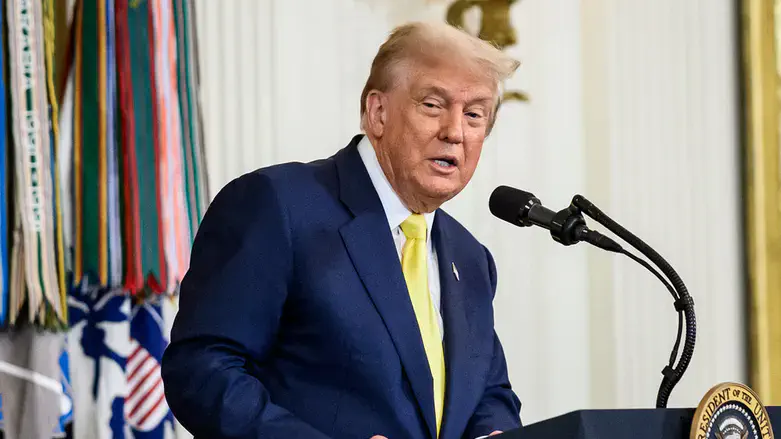
US President Donald Trump threatened financial sanctions over the decision, tweeting: “Wow! Canada has just announced that it is backing statehood for Palestine. That will make it very hard for us to make a Trade Deal with them. Oh’ Canada!!!”

Prime Minister Benjamin Netanyahu fired back at Carney, saying, “Canada has always sided with civilization. So should Mr. Carney. But instead of supporting Israel, a democracy that is fighting a just war with just means against the barbarians of Hamas, he attacks the one and only Jewish state. Mr. Carney, backtrack your irresponsible statement!”

Former US ambassador to Israel David Friedman tweeted: “Canada, like Britain and France, will now recognize a Palestinian state as a reward for Hamas terror. It has failed to protect its Jewish citizens at home and now will attempt to destroy the Jewish state.”

“This so called Palestinian state that Canada, Britain and France will “recognize” is beyond recognition. Its borders, its governance, its economy, its leadership, and its ability to live in peace are all unknown and unknowable. One thing, however, is clear: if Palestinians went to the polls today they would elect Hamas!”

“This is the “state” upon which Canada, Britain and France wish to place their fingerprints!”

“History shows that nations which betray the Jewish people have short shelf lives. Appeasing antisemitic radical Islamists is a sure path to ruin, and these three once great nations are heading off a cliff. Other nations will take their place.”


By World Israel News Staff

A retired senior Israeli intelligence official has urged Israel to end ceasefire negotiations and take full control of humanitarian aid distribution in Gaza.


American official says blacklisting of Mohammad Hossein Shamkhani and over 100 other individuals, entities and vessels will make it ‘much more difficult’ for Tehran to sell oil

Illustrative: Iranian oil tanker Fortune is anchored at the dock of the El Palito refinery near Puerto Cabello, Venezuela, May 25, 2020. (AP Photo/Ernesto Vargas, File)

Illustrative: Iranian oil tanker Fortune is anchored at the dock of the El Palito refinery near Puerto Cabello, Venezuela, May 25, 2020. (AP Photo/Ernesto Vargas, File)

WASHINGTON — The US Treasury Department announced fresh sanctions on Wednesday on over 115 Iran-linked individuals, entities and vessels, in a sign the Trump administration is doubling down on its “maximum pressure” campaign after bombing Tehran’s key nuclear sites in June.

The sanctions broadly target the shipping interests of Mohammad Hossein Shamkhani, the son of Ali Shamkhani, who is himself an adviser to Supreme Leader Ayatollah Ali Khamenei. The US Treasury said it was the most significant Iran-related sanctions action since 2018, during President Donald Trump’s first administration.

According to Treasury, Shamkhani controls a vast network of container ships and tankers through a complex web of intermediaries that sell Iranian and Russian oil and other goods throughout the world.

Treasury accused Shamkhani of using personal connections and corruption in Tehran to generate tens of billions of dollars in profits, much of which is used to prop up the Iranian regime.

Overall, the new sanctions target 15 shipping firms, 52 vessels, 12 individuals and 53 entities involved in sanctions evasion in 17 countries, ranging from Panama to Italy to Hong Kong.

A US official said the new sanctions would make it “much more difficult” for Iran to sell its oil, but added that the administration did not anticipate any sustained disruption to global oil markets.

The official said that Iran’s oil exports had already declined to around 1.2 million barrels per day, from 1.8 million barrels per day at the start of the year, after the Trump administration imposed several smaller rounds of sanctions targeting Iran’s oil business.

“We’re still engaging further action to bring that number down even more,” the official said, noting that sanctions pressure during Trump’s first term had cut Iran oil flows to a few hundred thousand barrels per day.

Illustrative: A picture taken on March 12, 2017, shows an oil facility in the Khark Island, Iran, on the shore of the Gulf. (ATTA KENARE / AFP)

An Iranian foreign ministry spokesperson called the sanctions “a clear example of America’s hostility towards the Iranian nation,” according to the country’s Student News Network.

The spokesperson, Esmaeil Baghaei, also said the oil sanctions represented “an evil act aimed at harming Iran’s economic development and the welfare of its people.”

China is the top buyer of Iran’s oil.

The European Union sanctioned Shamkhani earlier in July, citing his role in the Russian oil trade.

A US official said that Wednesday’s action would impact both Russia and Iran, but the action was focused on Iran.

“From our perspective, given where this individual fits, given his connection to the supreme leader and his father’s previous sanctions activities, given the Iran-related authorities, it’s critically important to emphasize that this is an Iran action that is meaningful and very impactful,” the official said.

The head of Iran’s Supreme National Security Council, Ali Shamkhani, at a meeting in the Iranian capital Tehran on June, 12, 2021. (AP Photo/Vahid Salemi)

The latest sanctions announcement came as prospects for renewed US-Iran diplomacy remained dim in the aftermath of the US bombing of Iranian nuclear sites last month.

Trump warned on Monday that he would order fresh US attacks should Tehran try to restart the nuclear sites the US had already struck.

He also told reporters Iran has been sending out “nasty signals” and that any effort to restart its nuclear program would be immediately quashed.

The United States held five rounds of talks with Iran prior to its airstrikes in June, which Trump said had “obliterated” a program that Washington and its ally Israel say is aimed at developing a nuclear bomb.

Some experts have questioned the extent of the damage. Iran denies seeking a nuclear weapon.

A senior White House official said last week that Washington was open to talking directly to Iran. But European and Iranian diplomats have said there is little prospect of Iran re-engaging with the US at the negotiating table for now.