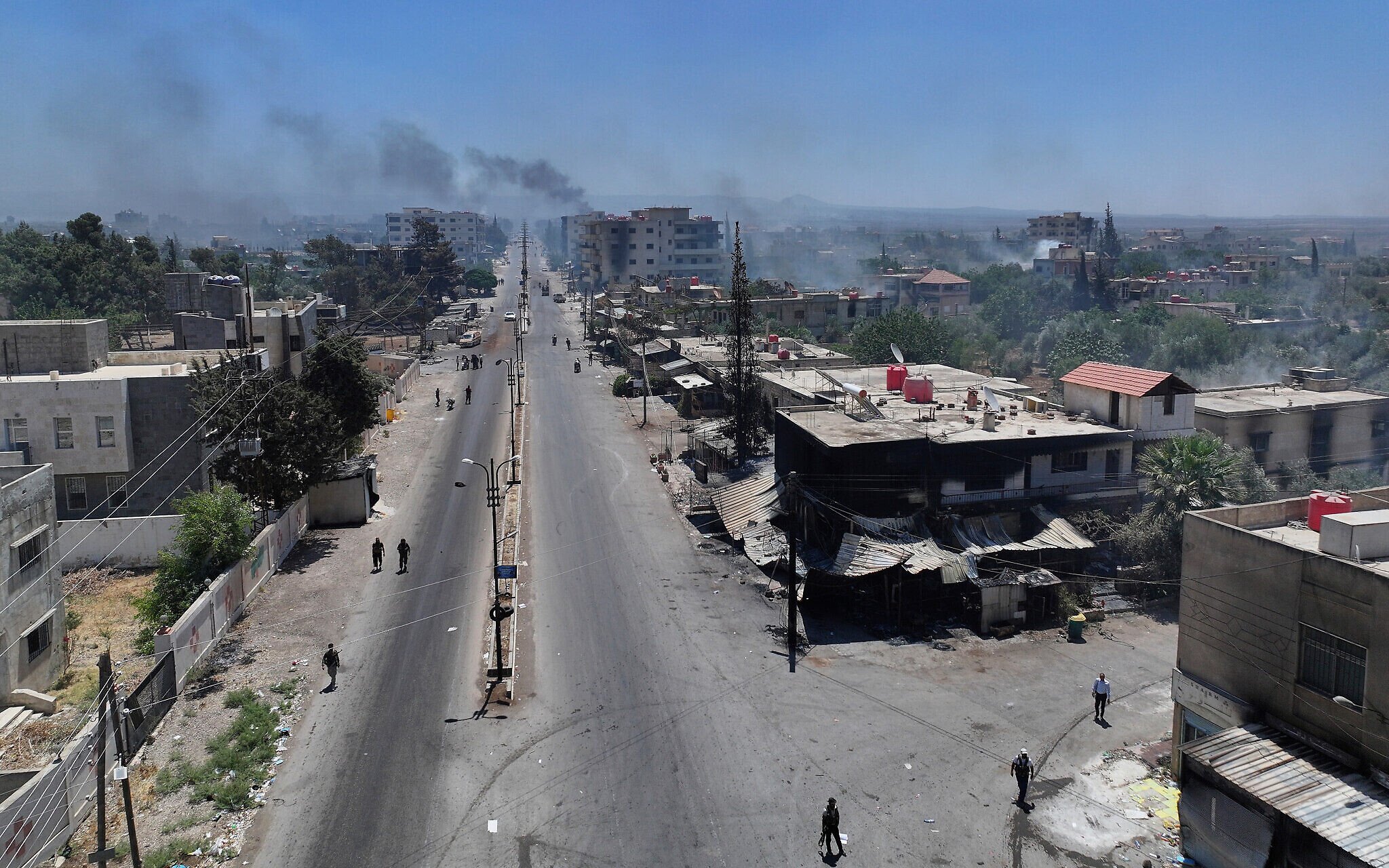
The United States announced Friday that Israel and Syria have agreed to a ceasefire, after days of bloodshed in the predominantly Druze area of Sweida that has killed over 300 people.
On Wednesday, Israel launched airstrikes in Damascus, while also hitting government forces in the south, demanding they withdraw and saying that Israel aimed to protect Syrian Druze — part of a small but influential minority that also has followers in Lebanon and Israel.
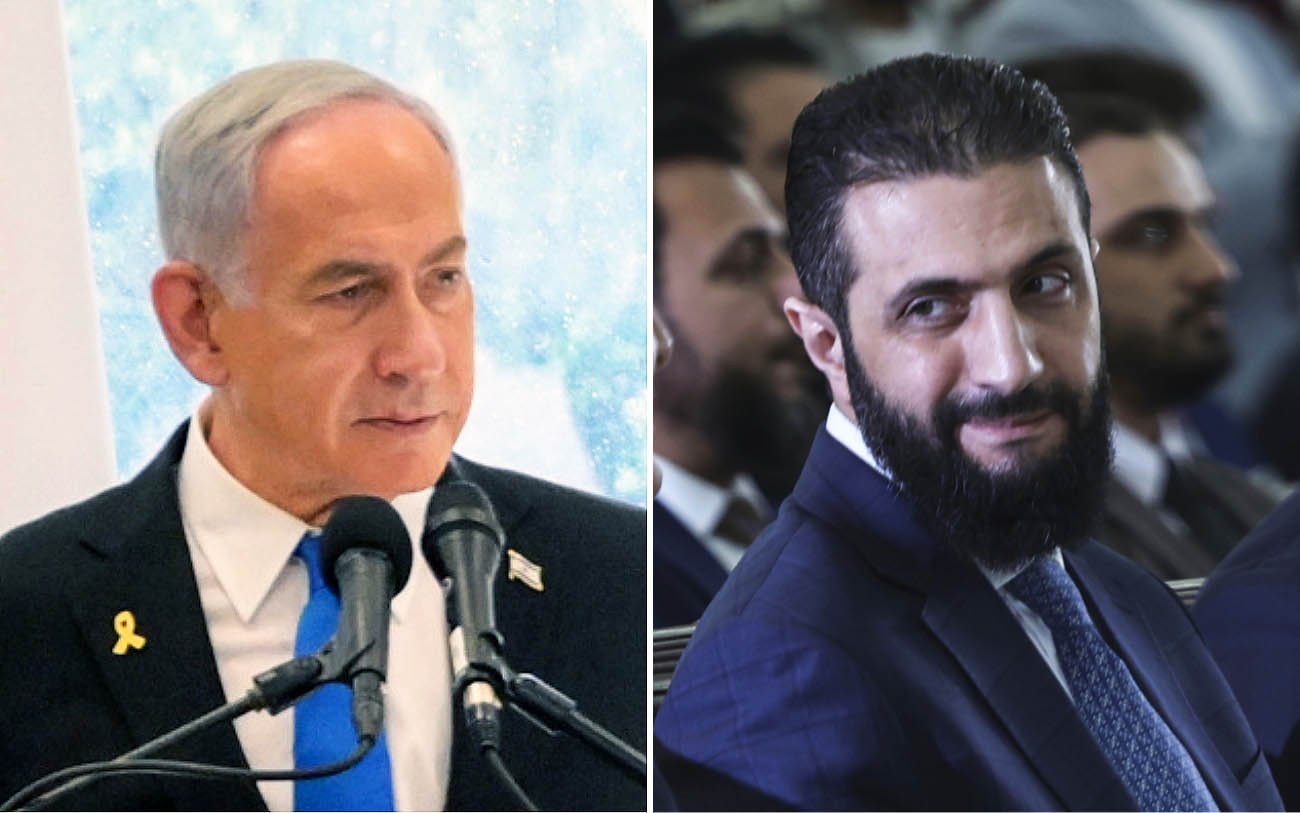
US Ambassador to Turkey Tom Barrack, who also serves as special envoy for Syria, wrote in a post on X that Prime Minister Benjamin Netanyahu and Syrian President Ahmed al-Sharaa, with the support of US Secretary of State Marco Rubio, agreed to a ceasefire “embraced” by Turkey, Jordan and other unidentified neighbors.
“We call upon Druze, Bedouins, and Sunnis to put down their weapons and together with other minorities build a new and united Syrian identity,” Barrack said without offering any further details about the ceasefire.
There was no immediate comment from the Prime Minister’s Office or the Syrian Presidency.
The announcement came as renewed clashes erupted between Druze groups and Bedouin clans, which has left tens of thousands of people displaced in a worsening humanitarian crisis.
The Syrian presidency said late on Friday that authorities would deploy a force in the south dedicated to ending the clashes, in coordination with political and security measures to restore stability and prevent the return of violence.
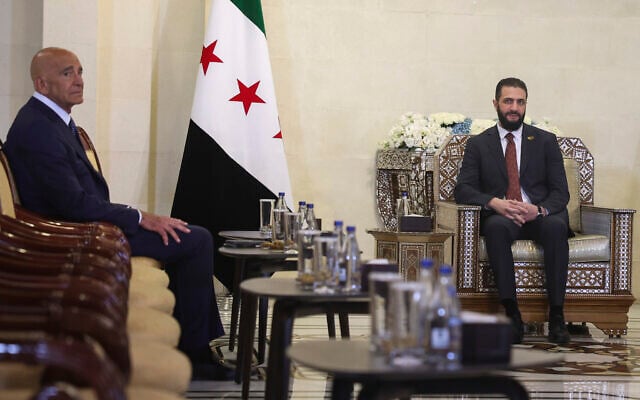
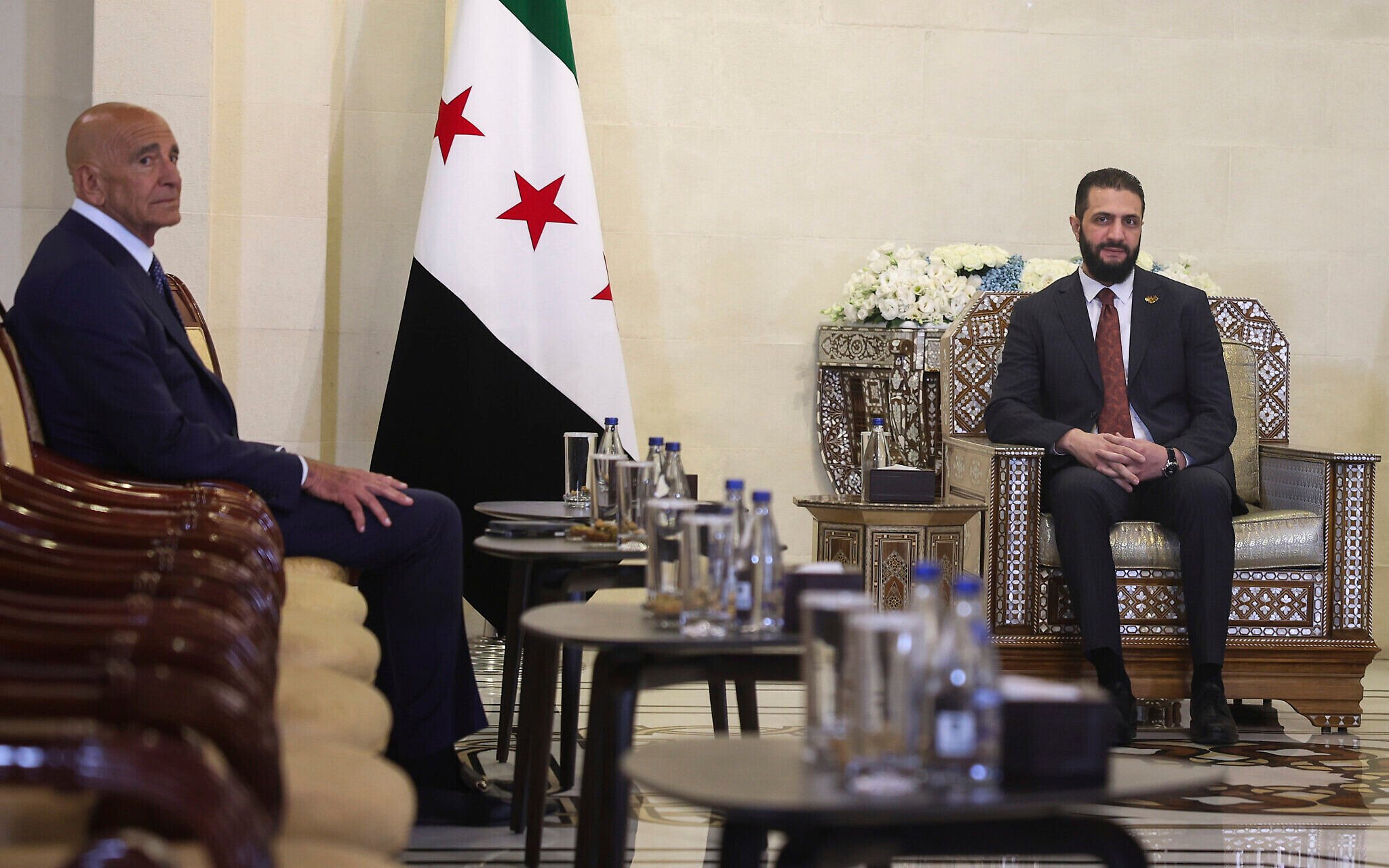
Syria’s interim president, Ahmed al-Sharaa, right, meets with US Ambassador to Turkey and Special Envoy to Syria Tom Barrack, at the People’s Palace in Damascus, Syria, July 9, 2025. (AP Photo/Ghaith Alsayed)
In Israel, meanwhile, a group of Israeli Druze crossed the border into Syria early Saturday morning.
The dozens who entered Syrian territory were part of a larger group of Druze who arrived at the border near the northern Golan Heights town of Majdal Shams, where the Ynet news site reported some of them shoved Israeli troops stationed in the area to prevent mass breaches of the frontier such as those earlier in the week.
IDF troops were working to return the Druze back to Israeli territory, the army told the Kan public broadcaster.
Earlier, an Israeli official said Israel agreed to allow Syrian forces limited access to the Sweida area of southern Syria for the next two days.
Damascus earlier this week dispatched government troops to quell the fighting, but they were accused of carrying out widespread violations against the Druze and were hit by Israeli strikes before withdrawing under a truce announced by the US on Wednesday.
Israel had repeatedly said it would not allow Syrian troops to deploy to the country’s south, but on Friday it said it would grant them a brief window to end renewed clashes there.
“In light of the ongoing instability in southwest Syria, Israel has agreed to allow limited entry of the (Syrian) internal security forces into Sweida district for the next 48 hours,” the official, who declined to be named, told reporters.
Describing Syria’s new rulers as barely disguised jihadists, Israel has vowed to shield the area’s Druze community from attack, encouraged by calls from Israel’s own Druze minority.
It carried out more strikes on Sweida in the early hours of Friday.
The US intervened to help secure the earlier truce between government forces and Druze fighters, and the White House said on Thursday that it appeared to be holding.
Sharaa, who has worked to establish warmer ties with the US, accused Israel of trying to fracture Syria and promised to protect its Druze minority.
Reuters reporters saw a convoy of units from Syria’s interior ministry stopped on a road in Daraa province, which lies directly east of Sweida. A security source told Reuters that forces were awaiting a final green light to enter Sweida.
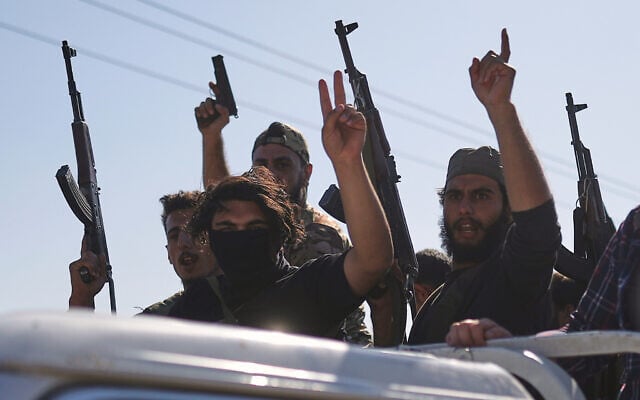
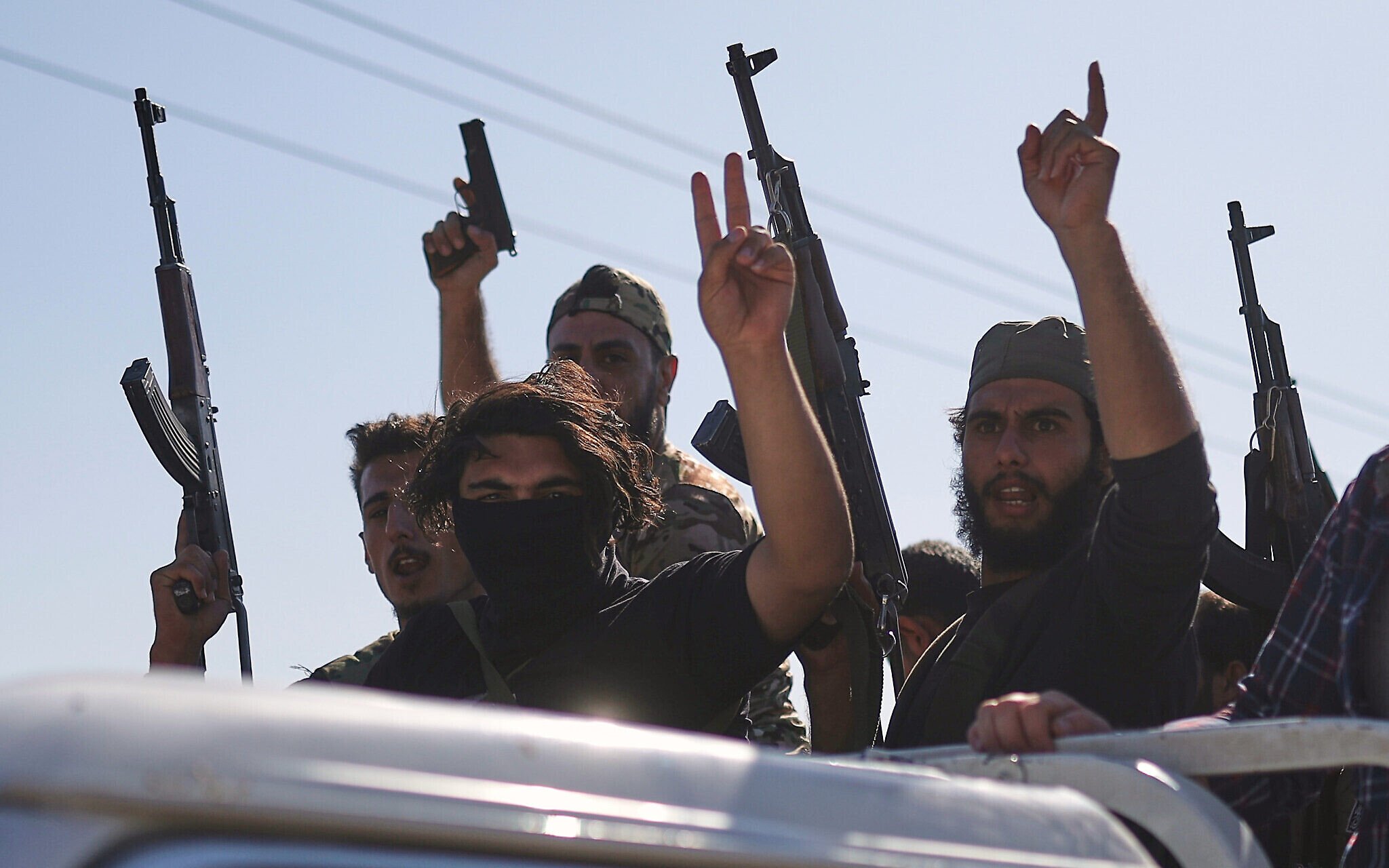
Bedouin fighters stand on a pickup truck as they arrive at al-Dour village on the outskirts of Sweida city, during clashes between the Bedouin clans and Druze militias, southern Syria, July 18, 2025. (AP Photo/Ghaith Alsayed)
But thousands of Bedouin fighters were still streaming into Sweida on Friday, the Reuters reporters said, prompting fears among residents that violence would continue unabated.
The Syrian Network for Human Rights said it had documented 321 deaths in fighting since Sunday, among them medical personnel, women and children. It said they included field executions by all sides.
Syria’s minister for emergencies said more than 500 wounded had been treated and hundreds of families had been evacuated out of the city.
‘Nothing at all’
Clashes continued in the north and west of Sweida province, according to residents and Ryan Marouf, the head of local news outlet Sweida24.
Residents said they had little food and water, and that electricity had been cut to the city for several days.
“For four days, there has been no electricity, no fuel, no food, no drink, nothing at all,” said Mudar, a 28-year-old resident of Sweida who asked to be identified only by his first name out of fear of reprisals.
“The clashes haven’t stopped,” he said, adding that “we can’t get news easily because there’s barely internet or phone coverage.”
The head of the UN human rights office urged Syria’s interim authorities to ensure accountability for what it said are credible reports of widespread rights violations during the fighting, including summary executions and kidnappings, the office said in a statement.
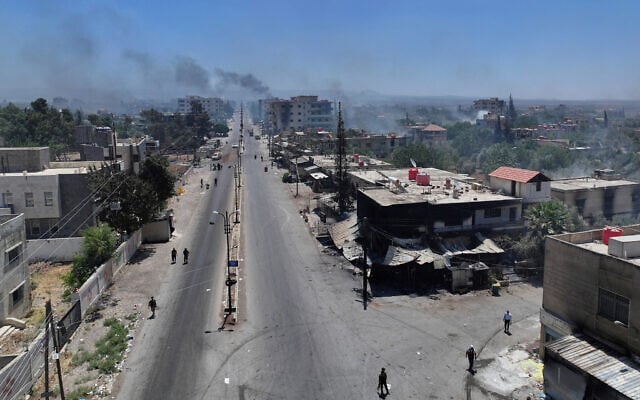
Bedouin fighters deploy at Mazraa village on the outskirts of Sweida city, as smoke rise from the clashes between the Bedouin clans and Druze militias, southern Syria, Friday, July 18, 2025. (AP Photo/Ghaith Alsayed)
At least 13 people were unlawfully killed in one recorded incident on Tuesday when affiliates of the interim authorities opened fire at a family gathering, the OHCHR said. Six men were summarily executed near their homes the same day.
The UN refugee agency on Friday urged all sides to allow humanitarian access, which it said had been curtailed by the violence.
Israel’s deep distrust of Syria’s new Islamist-led leadership appears to be at odds with the United States, which said it did not support the recent Israeli strikes on Syria.