A bloc of countries including Germany and Italy, though critical of ongoing war in Gaza Strip, would likely prevent European Union from taking major punitive measures

European Union High Representative and Vice-President for Foreign Affairs and Security Policy Kaja Kallas gives a press conference in Brussels, on May 28, 2025. (Nicolas TUCAT / AFP)

BRUSSELS, Belgium — With reports of acute suffering in Gaza flooding the airwaves, European Union leaders have toughened their tone on Israel — but the bloc will need to bridge deep divisions to move from rhetoric to a real-world impact on the conflict.

The shift has been most noticeable from key power Germany, one of Israel’s staunchest allies in the world, its loyalty rooted in the trauma of the Holocaust.

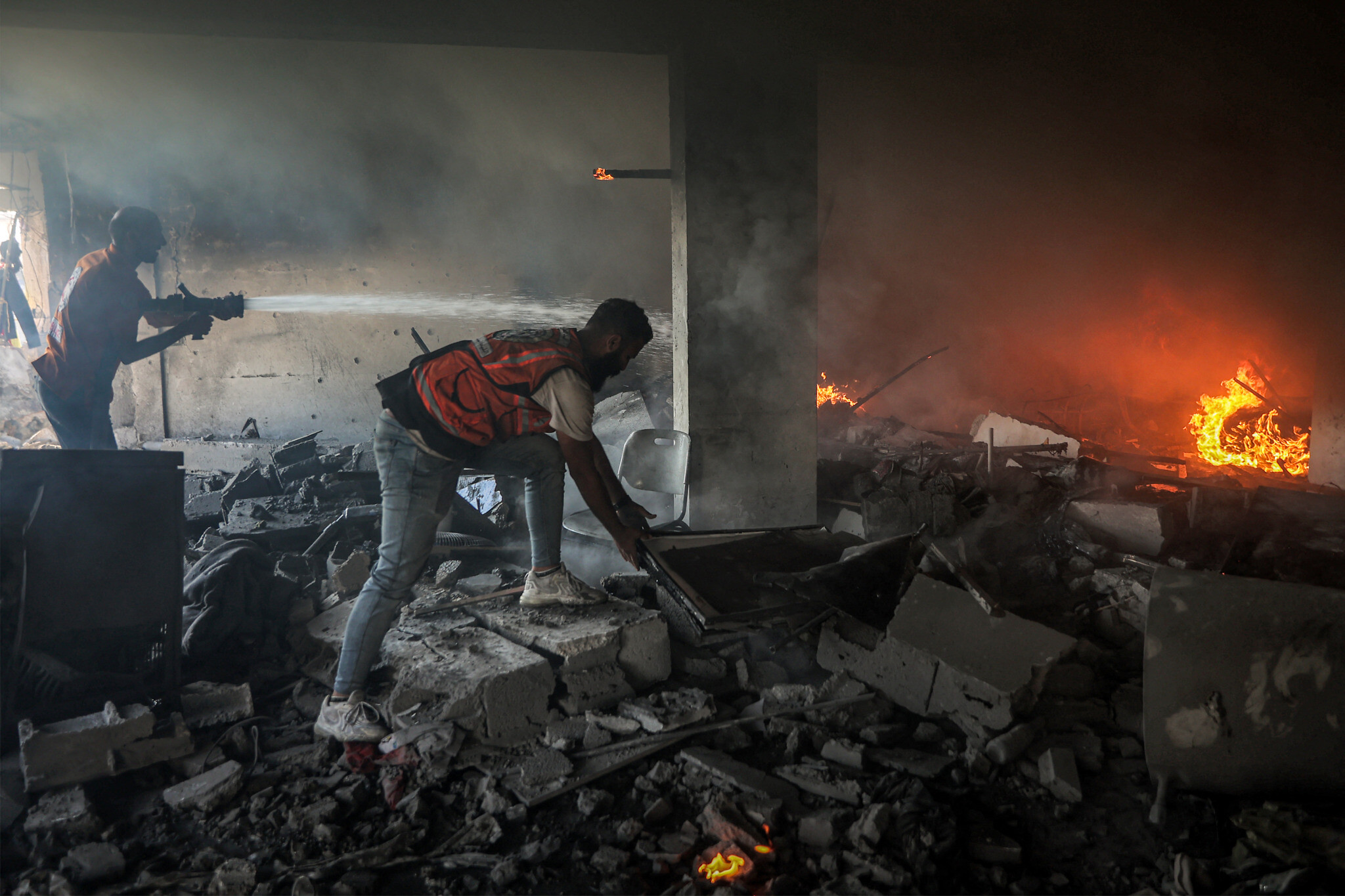
After an Israeli strike killed dozens, reportedly including many children, in a Gaza school-turned-shelter Monday, German Chancellor Friedrich Merz declared he “no longer understands” Israel’s objectives in the war-ravaged Palestinian enclave.

“The way in which the civilian population has been affected… can no longer be justified by a fight against Hamas terrorism,” he said.

The IDF said its strike on the school targeted Hamas and Islamic Jihad terrorists who had turned the facility into a command center. Israel accuses Hamas of embedding itself among civilians, increasing casualties among noncombatants.

Berlin’s stern new tone found an echo Tuesday in Brussels, where the German head of the European Commission, Ursula von der Leyen, denounced as “abhorrent” and “disproportionate” the past days’ attacks on civilian infrastructure in Gaza.

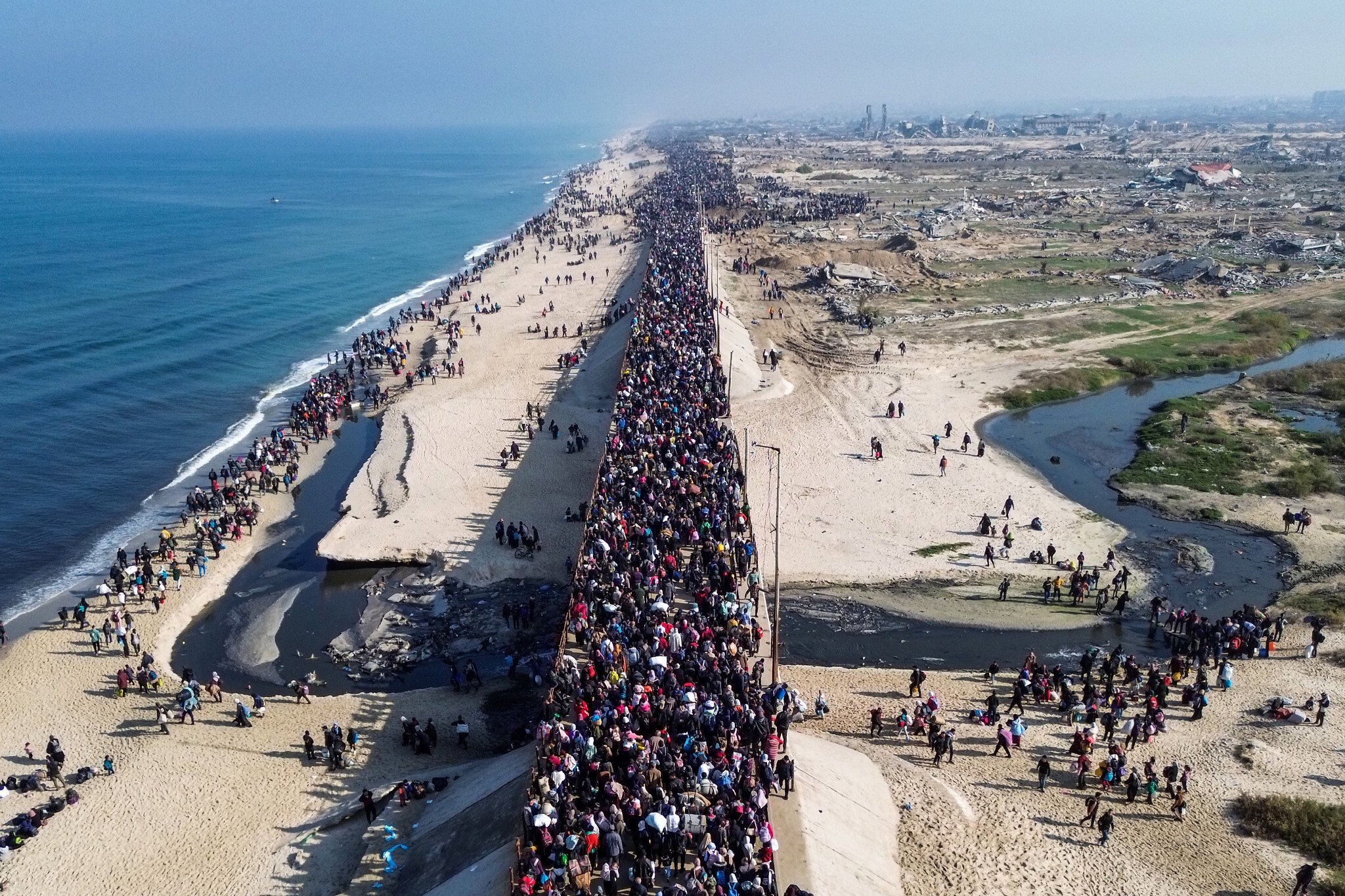
Palestinians transport their belongings as they flee the northern Gaza Strip toward the south, along the coastal al-Rashid road on May 25, 2025. (Omar AL-QATTAA / AFP)

An EU diplomat called such language both “strong and unheard of” coming from the commission chief, among the first to rally to Israel’s side in the wake of the October 7, 2023, Hamas attacks that triggered the Gaza war. On that day, the Palestinian terror group led over 5,000 attackers to invade southern Israel, killing 1,200 people and abducting 251 as hostages to Gaza.

The explanation? “Merz has moved the dial” in Brussels, said one EU official.

Translating talk into action is another matter, however.

Longstanding divisions

Germany, the main supplier of weapons to Israel after the United States, this week rebuffed calls to cut off arms sales to Prime Minister Benjamin Netanyahu’s government.

On Tuesday, however, in a barely veiled threat, its foreign minister warned Israel against crossing a line.

“We defend the rule of law everywhere and also international humanitarian law,” said Johann Wadephul. “Where we see that it is being violated, we will of course intervene and certainly not supply weapons that would enable further violations.”

German Chancellor Friedrich Merz takes part in a discussion on stage during the opening day of the ‘Re:publica 25’ digital conference in Berlin on May 26, 2025. (Odd ANDERSEN / AFP)

The European Union has long struggled to have an impact on the Mideast conflict due to longstanding divisions between countries that back Israel and those seen as pro-Palestinian.

Last week, the bloc launched a review to determine whether Israel is complying with human-rights principles laid out in its association agreement with the EU — a move backed by 17 of 27 member states.

EU top diplomat Kaja Kallas said Wednesday she hopes to present options on the next steps to foreign ministers at a June 23 meeting in Brussels.

Suspending the EU-Israel accord outright would require unanimity among member states — seen by diplomats as virtually unthinkable.

Berlin was among the EU capitals that opposed even reviewing the deal, as was fellow economic heavyweight Rome. Nonetheless, on Tuesday, Italian Foreign Minister Antonio Tajani called on Israel to end its military campaign in Gaza.

But Barnes-Dacey sees “the possibility of a qualified majority of states imposing some restrictions” under the trade component of the agreement.

The EU is Israel’s biggest commercial partner, with 42.6 billion euros ($48.2 billion) traded in goods in 2024. Trade in services reached 25.6 billion euros in 2023.

Germany’s Foreign Minister Johann Wadephul speaks with the media as he arrives for a meeting of EU foreign ministers at the European Council building in Brussels, Belgium, May 20, 2025. (Virginia Mayo/AP)

An EU diplomat said it is not yet clear whether there is sufficient support for the move, which needs backing from 15 member states, representing 65 percent of the bloc’s population.

A report last week said that Israel’s Ambassador to the European Union Haim Regev told Israeli journalists in Brussels, during a closed-door meeting, of a “diplomatic erosion” between Jerusalem and the EU.

For Kristina Kausch, a Middle East expert at the German Marshall Fund think tank, it is too soon to speak of a European policy shift.

“Even the review of the association agreement is only a review,” she said. “What counts is the action.”

Momentum to ramp up pressure is growing by the day, though, spearheaded by the most vocal critics of Israel’s assault, such as Spain, Belgium, and Ireland.

“My personal view is that it very much looks like genocide,” said Belgium’s foreign minister, Maxime Prevot. “I don’t know what further horrors need to take place before we dare use the word.”

Illustrative: The Israeli flag and the European Union flag are seen at EU headquarters in Brussels, on January 25, 2023. (Kenzo TRIBOUILLARD / AFP)

Accusations that Israel is committing “genocide” in Gaza have been leveled by rights groups, UN officials and a growing number of countries.

Israel rejects the charge, and in Europe, even the governments most sympathetic to the Palestinians are treading carefully.

One tangible next step could be the broader recognition of Palestinian statehood — with France seeking to move forward on the matter ahead of a UN conference in June.

“Will that have an immediate impact? Probably not,” said Barnes-Dacey.

“But I do think it will have an impact if Israel knows that it no longer has the free path that it’s had for so long.”

The Hamas-run Gaza health ministry says more than 53,000 people in the Strip have been killed or are presumed dead in the fighting so far, though the toll cannot be verified and does not differentiate between civilians and fighters.

Israel says it has killed some 20,000 combatants in battle as of January and another 1,600 terrorists inside Israel on October 7. Israel has said it seeks to minimize civilian fatalities and stresses that Hamas uses Gaza’s civilians as human shields, fighting from civilian areas including homes, hospitals, schools, and mosques.


Israel to establish 22 new settlements in Judea & Samaria

By David Rosenberg, World Israel News

Israel’s Defense Ministry announced on Thursday morning that 22 new Israeli towns will be established or legalized across Judea and Samaria, marking the largest single settlement expansion since Israel took control over the territories in June 1967.

The move was initiated by Defense Minister Israel Katz (Likud) and Minister within the Ministry of Defense Bezalel Smotrich (Religious Zionist Party), who also serves as Finance Minister.

Thursday’s announcement confirms reports this week that the Security Cabinet voted secretly to approval the establishment of 22 new towns in Judea and Samaria.

The decision provides full government recognition for the 22 communities as separate townships.

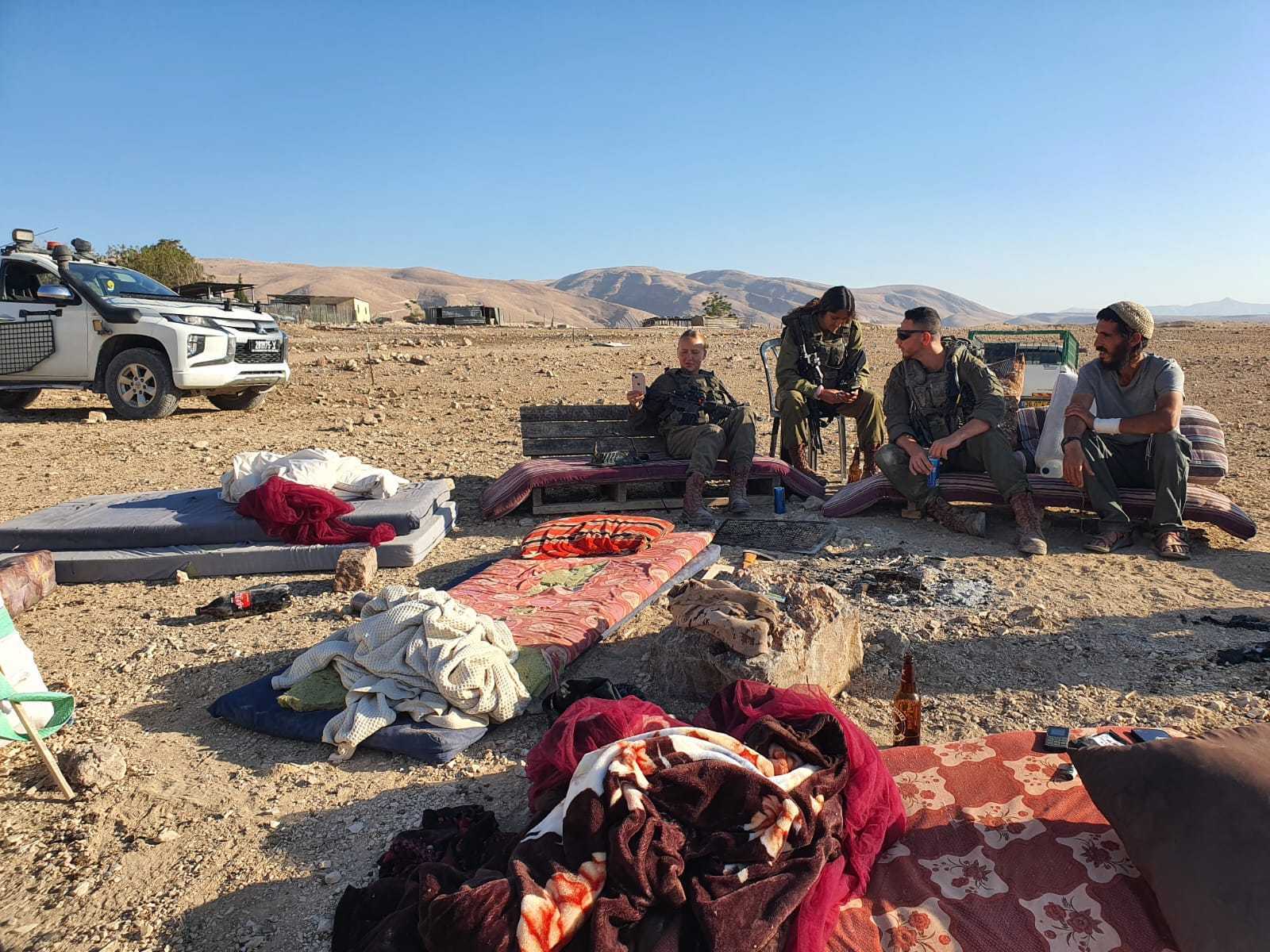
Some of the communities listed in the decision already have a Jewish presence, including a number of unauthorized outpost communities, as well as Homesh and Sa-Nur, two towns evacuated by the Sharon government in 2005 as part of the Gaza Disengagement Plan.

Located in northern Samaria, Sa-Nur was once a artist colony established in the ruins of an abandoned village. Most of the structures were left intact even after the 2005 Disengagement, while the three other towns evacuated in northern Samaria – Ganim, Kadim, and Homesh – were demolished.

  Israeli Cabinet votes to stop Palestinian takeover of Judea and Samaria

Settlement activists have established outposts in both Sa-Nur and Homesh.

The new government decision, however, is the first to legally sanction the resettlement of northern Samaria.

Several quasi-legal fledgling communities in Samaria – including Havot Yair, Adei Ad, and Ahiya, will also receive recognition as full-blown, legal towns.

The Defense Ministry added that four new towns will be built in the Jordan Valley area, while Israel Hayom reported this week that additional towns will be built along Route 443 – a highway linking Jerusalem and Tel Aviv via Samaria.

“All the new settlements are being established from a long-term strategic perspective, aiming to strengthen Israel’s presence in the territory, prevent the establishment of a Palestinian state, and secure development reserves for settlement over the coming decades,” the Defense Ministry said Thursday.

Defense Minister Katz hailed the move as “historic.”

“This historic decision to establish 22 new settlements in Judea and Samaria strengthens our hold on the region, anchors our historical right to the Land of Israel, and constitutes a resounding answer to Palestinian terror that seeks to harm and weaken the settlement enterprise.”

“Jewish settlement in Judea and Samaria is a vital shield for the security of Israel’s major population centers, and everything must be done to expand and reinforce this protective barrier.”

  WATCH: Netanyahu, defense minister and IDF chief view strikes on Yemen port

“The decision we made today not only strengthens the settlement in the eastern spine of the state – it is also a strategic move that prevents the establishment of a Palestinian state that would endanger Israel, and serves as a buffer against our enemies.”

Smotrich, a long-time settlement activist, said that the Security Cabinet’s decision marked “a great day for the settlement enterprise and an important day for the State of Israel.”

“Through dedicated effort and determined leadership, we have succeeded, thank God, in producing a deep strategic shift, bringing the State of Israel back to the path of building, Zionism, and vision.

“Settlement in the land of our forefathers is the protective wall of the State of Israel – today we took a huge step in strengthening it. The next step – sovereignty! We have not taken a foreign land but rather the inheritance of our ancestors.”


President Trump’s special envoy to the Middle East Steve Witkoff visits Hostage square in Tel Aviv, May 13, 2025.

According to the revised Whittaker plan released Thursday morning, the terrorist group Hamas would release 9 living hostages and 18 bodies, to be returned in two phases over the course of a week. This marks a reduction of one live hostage compared to the previous proposal.

Currently, 58 hostages are believed to be held in Gaza: 20 are confirmed alive, 35 have been declared dead, and three are in critical condition with their status officially unconfirmed.

As you may recall, President Trump’s envoy Steve Witkoff announced Wednesday night: “We’re on the precipice of sending out a new term sheet that hopefully will be delivered later today. The president is going to review it. I have some very good feelings about getting to… a temporary ceasefire and a long-term, peaceful resolution of that conflict,”

Just before Witkoff’s remarks, Hamas issued a statement claiming it had agreed to his outline, which included the release of 10 live hostages in two stages. However, Israel swiftly rejected the claim, stating, “This is unacceptable—both to us and to the American administration.”

One has to ask: is anyone verifying these proposals before they’re leaked to the media?

It was also reported that, in exchange for the release of the hostages, Israel would agree to a 60-day ceasefire. During this period, negotiations would take place aimed at ending the war. If no agreement is reached by the end of the 60 days, Israel would have the option to resume military operations or continue negotiations in exchange for the release of more hostages.

Additionally, the distribution of humanitarian aid will revert to the control of the United Nations, rather than being managed by the American company currently operating the distribution centers. This means Hamas would be getting a new lease on life, being able to resume its raids on the UN humanitarian aid facilities, sell the stolen food and medicine on the black market, and fund its recruitment efforts with the profits.


The IDF will withdraw from all the areas captured during Operation Might and Sword, which began on March 17.

Oh, and the number of terrorists with Jewish blood on their hands to be released in the exchange has not yet been disclosed.

This is an atrocious deal, reversing all of Israel’s gains over the past two and a half months of fighting and reviving the fast-declining Hamas.

At this stage, it remains unclear whether the new proposal has been formally presented to the involved parties. In recent days, Minister of Strategic Affairs Ron Dermer and Mossad Director Dedi Barnea held discussions with Steve Witkoff regarding the potential ceasefire deal in Gaza. One can only hope the plan will be buried deep beneath the ruins of Gaza where it belongs.