Israel-Saudi normalization could reset the entire regional balance of power in the Middle East.

 President Donald Trump and Saudi Crown Prince Mohammed bin Salman shaking hands while Prime Minister Benjamin Netanyahu looks on (illustrative). (photo credit: BANDAR ALGALOUD/COURTESY OF SAUDI ROYAL COURT/HANDOUT VIA REUTERS, Canva, REUVEN KASTRO, SHUTTERSTOCK)
President Donald Trump and Saudi Crown Prince Mohammed bin Salman shaking hands while Prime Minister Benjamin Netanyahu looks on (illustrative).
(photo credit: BANDAR ALGALOUD/COURTESY OF SAUDI ROYAL COURT/HANDOUT VIA REUTERS, Canva, REUVEN KASTRO, SHUTTERSTOCK)
There are plenty of reasons for Israel and Saudi Arabia to keep relations cool. The Saudis are demanding Israeli concessions to the Palestinians that Israel is not prepared to make right now, and US President Donald Trump sidelined Israel in his Mideast tour last week, while announcing that the US is selling Saudi Arabia a $142 billion arms package.

Full normalization between Israel and Saudi Arabia would be a historic turning point marking the end of the broader Arab-Israeli conflict – something Hamas considered so threatening that it inspired the terror group’s October 7, 2023, attack on Israel, according to recovered documents reported by The Wall Street Journal this week.

But even if full normalization, as desirable as it may be, is not immediately on the horizon, Israel and Saudi Arabia should nonetheless be actively striving for strategic cooperation. Israel, Saudi Arabia, and the United States all have much to gain.

Israel, as one of the region’s primary forces opposing totalitarian Islamism and a partner with Saudi Arabia in activities overseen by US Central Command (CENTCOM) in the context of combating this threat, can and should become a partner in a broader and more visible regional initiative for creating strategic cooperation. This would be a continuation of what we witnessed when Arab states directly helped thwart Iranian missile attacks in April and October 2024 and of the ongoing role played by the Saudis in intercepting Houthi launches.

 SAUDI CROWN PRINCE Mohammed Bin Salman speaks at the Saudi-US Investment Forum in Riyadh last week. Even if full normalization is not immediately on the horizon, Israel and Saudi Arabia should nonetheless be actively striving for strategic cooperation, the writer maintains.  (credit: Hamad Mohammed/Reuters)Enlrage image
SAUDI CROWN PRINCE Mohammed Bin Salman speaks at the Saudi-US Investment Forum in Riyadh last week. Even if full normalization is not immediately on the horizon, Israel and Saudi Arabia should nonetheless be actively striving for strategic cooperation, the writer maintains. (credit: Hamad Mohammed/Reuters)

Cultivating Israel-Saudi relations with the US

Across several fronts, Israel, Saudi Arabia and the US – as well as the United Arab Emirates – share common interests that can and should be translated into joint action.

• Preventing Iran from going nuclear: A decisive choice is approaching on whether to deny Iran the capability to obtain nuclear weapons through diplomatic or military means.

Iran’s ability to build nuclear weapons is a threat to all members of the “stability camp” and a challenge to global peace, as it would ultimately collapse the Nuclear Non-Proliferation Treaty (NPT). Coordinating a regional stance is crucial for effectively enforcing sanctions and, if necessary, using force with all the ensuing consequences.

• Working together against the Houthis in Yemen: Despite the Houthis’ hysterical declarations claiming that the United States has surrendered to their strength and their threats to continue attacking Israel, it would be unwise for Israel to act alone against this terror group as it has against Hezbollah.

Given the distance and the absence of detailed and long-standing intelligence and operational preparation that yielded results in Lebanon, a broader initiative is necessary. This initiative should strengthen the now weak and divided legitimate government in Yemen, enabling it to defeat the Houthis or at least force them to cease serving Iran’s interests. Achieving this requires detailed understandings with Saudi Arabia and the UAE.

• Supporting the new Syrian leadership: The entire “stability camp” has a shared interest in curbing Turkish President Recep Tayyip Erdogan’s neo-Ottoman ambitions, as he sees himself as the founder of a new Islamic caliphate.

At the same time, this camp should offer alternative support to the new Syrian leadership, which is desperately seeking political legitimacy and economic reconstruction – provided that Syrian interim President Ahmed al-Sharaa adheres to the principles put forward to him by President Trump and takes into account the Israeli security concerns. Once again, the deeper the cooperation of Israel and the US with Saudi Arabia and the UAE in this arena, the better.

• Weakening Hezbollah’s grip on Lebanon: Saudi Arabia has already engaged in active involvement, helping to translate Hezbollah’s defeat into a new political reality, including the election of a president and prime minister who are neither to Hezbollah’s nor Iran’s liking. Proper use of resources could potentially weaken Hezbollah’s grip on the Shia community, which the group’s actions have devastated in recent years.

It could also strengthen the small but nevertheless significant voices in the Druze community speaking against Lebanese Druze leader Walid Jumblatt’s current stance opposing Druze cooperation with Israel in Syria. The Lebanese arena requires patient, long-term efforts, but here as well coordination with Saudi Arabia and the UAE is a diplomatic lever with strategic implications.

• Blocking the Muslim Brotherhood’s path to power in Egypt and Jordan: Both Jordan and Egypt face severe economic challenges and are clearly part of the stability camp. It is essential to bring the Saudis on board to a long-term commitment alongside the massive investments the UAE has already begun to implement in Egypt.

The shared interest is to block the Muslim Brotherhood’s path to power as Hamas is an integral branch of the terror movement, and its aspirations are supported by Turkey and Qatar as well. Still, a lack of resources added to the fear that they may be left to face the situation on their own may yet push both countries, especially Egypt, toward a more ambiguous stance vis-a-vis Turkey – and even into China’s embrace. That makes it crucial to establish conditions for joint strategic actions by Israel, the US, Saudi Arabia, and the UAE while neutralizing Qatar’s influence as much as possible.

Other issues that are vital to Israel, Saudi Arabia, and the US, such as maritime security in the Red Sea and economic and technological collaboration, would greatly benefit from strategic cooperation, even without full normalization of relations between Israel and Saudi Arabia.

What’s at stake here is the entire regional balance of power.

Saudi-Israeli collaboration is critical, not only for Israel’s long-term security but also for a Middle East strategy that will harness military strength to diplomatic goals and increase stability across the Middle East.

The writer is vice president of the Jerusalem Institute for Strategy and Security (JISS) and a former deputy director for foreign policy and international affairs in Israel’s National Security Council. He is a colonel (reserves) in the IDF who held senior posts in the Military Intelligence Branch for over 20 years.


Flight of pro-Assad factions comes amid Trump’s demand that new regime crack down on Palestinian terrorism as a condition for sanctions relief

Palestinian members of Islamic Jihad stand in line holding Palestinian flags during a rally at the Yarmouk refugee camp south of Syria's capital Damascus on October 21, 2023. (LOUAI BESHARA / AFP)

Palestinian members of Islamic Jihad stand in line holding Palestinian flags during a rally at the Yarmouk refugee camp south of Syria’s capital Damascus on October 21, 2023. (LOUAI BESHARA / AFP)

Leaders of Iran-backed Palestinian terror groups in Syria close to former president Bashar al-Assad have left the country under pressure from the regime of Ahmed Al-Sharaa, who led the ouster of the Iran-backed strongman in December, Palestinian sources said Friday.

The armed factions’ flight comes amid a White House demand that Sharaa crack down on Palestinian terror groups as a condition for the removal of Washington’s sanctions on Damascus. There have also been unconfirmed reports that Syria’s new regime has held indirect talks with Israel on potential normalization between the two countries, despite Israeli leaders’ deep suspicion of Sharaa due to his jihadi past.

The crackdown did not appear to affect the Syrian presence of Gaza-based Hamas, which is also backed by Iran, nor that of Fatah, the secularist faction that dominates the West Bank-based Palestinian Authority.

The leader of one Iran-backed Palestinian group, who left Syria after Assad’s overthrow, said on condition of anonymity that “most of the Palestinian factional leadership that received support from Tehran has left Damascus” to countries including Lebanon. Another faction leader still in Damascus confirmed the development.

The first faction leader said “the factions have fully handed over weapons in their headquarters or with their cadres” to the authorities, who also received “lists of names of faction members possessing individual weapons” and demanded that those arms be handed over.

A third Palestinian faction source in Damascus said that after Assad’s overthrow, “we gathered our members’ weapons ourselves and handed them over, but we have kept individual light weapons for protection… with the [authorities’] authorization.”

In Yarmouk, a Palestinian refugee camp in the Damascus suburbs that was devastated during Syria’s civil war, factional banners usually displayed at the entrance were gone and party buildings were closed and unguarded, AFP photographers said. Factional premises elsewhere in Damascus also appeared closed.

A young girl waves a Palestinian flag as Palestinian members of an armed squad loyal to then-Syrian President Bashar Al-Assad take part in a military parade to mark the annual Quds (Jerusalem) Day commemorations, in the Yarmouk refugee camp in Damascus, Syria on April 5, 2024. (Louai Beshara / AFP)

Many Palestinians fled to Syria in 1948 following the creation of Israel, and from the mid-1960s Syria began hosting the leadership of armed Palestinian factions. Iran-backed Palestinian groups enjoyed considerable freedom of movement under Assad.

Washington, which designates some of the factions as terrorist organizations, last week announced it was lifting sanctions on Syria. The White House had earlier said the new Syrian regime would have to comply with demands, including suppressing terrorism and preventing “Iran and its proxies from exploiting Syrian territory.”

According to the White House, during a meeting in Saudi Arabia last week, US President Donald Trump gave Sharaa a list of demands that included deporting “Palestinian terrorists.”

The Iran-backed Palestinian factions in Syria, along with other terror groups from Lebanon, Iraq and Yemen, are part of Iran’s so-called Axis of Resistance, which is openly committed to Israel’s destruction. Some Axis members fought alongside Assad’s forces when civil war erupted in Syria in 2011.

In neighboring Lebanon, a government official told AFP that the disarmament of Palestinian camps, where factions usually handle security, would begin next month based on an accord with visiting Palestinian Authority President Mahmoud Abbas, who also met with Sharaa in Damascus last month.

A handout picture provided by the Syrian Arab News Agency (SANA) shows US President Donald Trump (L), Syria’s interim president Ahmed al-Sharaa (R), Saudi Crown Prince Mohammed bin Salman (C) posing for a picture in Riyadh on May 14, 2025 (SANA / AFP)

‘Unwelcome’

The Iran-backed Palestinian groups in Syria “did not receive any official request from the authorities to leave Syrian territory” but instead faced restrictions, the first faction leader told AFP.

Some factions “were de facto prohibited from operating,” or their members were arrested, he said, adding that the new authorities have seized property from “private homes, offices, vehicles and military training camps in the Damascus countryside and other provinces.”

Syrian authorities did not immediately provide a comment to AFP when asked about the matter.

Earlier this month, officials from the Popular Front for the Liberation of Palestine-General Command (PFLP-GC) said Syrian authorities briefly detained factional chief Talal Naji.

In April, Islamic Jihad said Syrian official Khaled Khaled and organizing committee member Yasser al-Zafri had been detained “without explanation.” A source from the group told AFP on Friday that they were still detained.

A banner bearing pictures of Iranian and pro-Iran leaders as well as flags hang on the facade of a damaged building, during a military parade to mark the annual Quds (Jerusalem) Day commemorations, in the Yarmouk refugee camp in Damascus on April 5, 2024. (Louai Beshara / AFP)

The second Palestinian faction leader, from a group that has remained in Damascus with limited representation, said there was “no cooperation between most of the Palestinian factions and the new Syrian administration.”

“The response to our contact is mostly cold or delayed. We feel like unwelcome guests, though they don’t say that clearly,” he added, also requesting anonymity.

A Hamas official in Gaza told AFP that it had “channels of communication with our brothers in Syria.”

Hamas has minimal representation in Syria, having left the country after the civil war there began. Hamas’s ties with the Assad regime had deteriorated amid the terror group’s support for opposition demands.

Yarmouk camp resident Marwan Mnawar, a retiree, said that “nobody knows what happened to the factional leadership,” adding that “people just want to live, they are exhausted” by the conflict and factional infighting.


US and Iran to hold nuclear talks amid clashing red lines

Figuring out the path to a deal is not rocket science: Zero nuclear weapons = we DO have a deal. Zero enrichment = we do NOT have a deal. Time to decide.” Araghchi posted on his personal X/Twitter.

 Donald Trump seen with a model of an Iranian missile (illustrative) (photo credit: MAJID ASGARIPOUR/WANA (WEST ASIA NEWS AGENCY) VIA REUTERS, REUTERS/Nathan Howard)
Donald Trump seen with a model of an Iranian missile (illustrative)
(photo credit: MAJID ASGARIPOUR/WANA (WEST ASIA NEWS AGENCY) VIA REUTERS, REUTERS/Nathan Howard)
Iranian and US negotiators will resume talks on Friday in Rome to resolve a decades-long dispute over Tehran’s nuclear ambitions, despite Iran’s supreme leader warning that clinching a new deal might be insurmountable amid clashing red lines.

The stakes are high for both sides. President Donald Trump wants to curtail Tehran’s potential to produce a nuclear weapon that could trigger a regional nuclear arms race. Iran, for its part, wants to be rid of devastating sanctions on its oil-based economy.

Iranian Foreign Minister Abbas Araghchi and Trump’s Middle East envoy Steve Witkoff will hold a fifth round of talks, through Omani mediators, despite both Washington and Tehran taking a tough stance in public over Iran’s uranium enrichment.

Although Iran insists the talks are indirect, US officials have said the discussions — including the latest round on May 11 in Oman — have been both “direct and indirect.”

Tehran and Washington have both said they prefer diplomacy to settle the standoff, but they remain deeply divided on several red lines that negotiators will have to circumvent to reach a new nuclear deal and avert future military action.

 US President Donald Trump seen over an illustrative image of American-Iranian ties (illustrative) (credit: Carl Court/Pool via REUTERS, SHUTTERSTOCK)Enlrage image
US President Donald Trump seen over an illustrative image of American-Iranian ties (illustrative) (credit: Carl Court/Pool via REUTERS, SHUTTERSTOCK)

US Secretary of State Marco Rubio said on Tuesday that Washington is working to reach an agreement that would allow Iran to have a civil nuclear energy program but not enrich uranium, while admitting that achieving such a deal “will not be easy.”

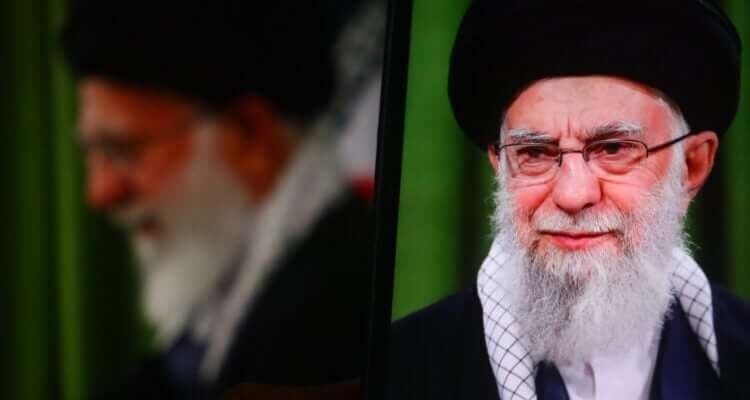
Supreme Leader Ayatollah Ali Khamenei, who has the last say on state matters, rejected Washington’s demands that Tehran stop enriching uranium as “excessive and outrageous,” warning that the talks are unlikely to yield results.

Among remaining stumbling blocks is Tehran’s refusal to ship all of its highly enriched uranium stockpile abroad or engage in discussions over its ballistic missile program.

Iran says it is ready to accept some limits on its uranium enrichment but needs watertight guarantees Washington would not renege on a future nuclear accord.

“Figuring out the path to a deal is not rocket science: Zero nuclear weapons = we DO have a deal. Zero enrichment = we do NOT have a deal. Time to decide…” Araghchi posted on his personal X/Twitter before traveling to Rome.


Trump, who has restored a “maximum pressure” campaign on Tehran since February, ditched a 2015 nuclear pact between Iran and six world powers in 2018 during his first term and reimposed sweeping US sanctions that have devastated Iran’s economy.

Iran responded by escalating enrichment far beyond the 2015 pact’s limits.

The cost of failure of the talks could be high. While Tehran says its nuclear work is for peaceful purposes, Iran’s arch-foe Israel has said it would never allow Iran’s clerical establishment to obtain nuclear weapons.

Araghchi warned on Thursday that Washington will bear legal responsibility in the event of an Israeli attack on Iranian nuclear facilities, following a CNN report that Israel might be preparing strikes on Iran.

While rising US-Iran tensions over Tehran’s uranium enrichment jeopardize nuclear talks, three Iranian sources said on Tuesday that the clerical leadership lacks a clear fallback plan if efforts to overcome the standoff collapse.

Jerusalem Post Staff contributed to this report.