Israel will retaliate to the Houthi missile strike on Ben-Gurion Airport on Sunday, Prime Minister Benjamin Netanyahu wrote in a post on X/Twitter later in the day, adding that it would do so at the time and place convenient to it.
President Trump is absolutely right!Attacks by the Houthis emanate from Iran. Israel will respond to the Houthi attack against our main airport AND, at a time and place of our choosing, to their Iranian terror masters. pic.twitter.com/eO4hyUzNsI
— Benjamin Netanyahu – בנימין נתניהו (@netanyahu) May 4, 2025
Netanyahu made the comment in response to a Truth Social post made by US President Donald Trump in March, in which he said all Houthi attacks “emanate from Iran.”
Sudan is no longer just a battlefield. It is rapidly becoming a terror hub, strategically positioned near Israel’s southern flank and the vital shipping lanes of the Red Sea.
MAY 4, 2025 13:11Updated: MAY 4, 2025 13:55Left to right: Amjad Taha, political strategist and global geopolitics analyst from the UAE; Eitan Neishlos, Dubai-based businessman and philanthropist(photo credit: courtesy (Amjad), Ziv Koren (Eitan))
As Israel marks its 77th Independence Day, it must confront a growing threat: Sudan’s Armed Forces have become the Hamas of Africa, and the armed wing of the Muslim Brotherhood.
Backed by extremists, fueled by ideology, and infiltrated by terrorists, this army may soon serve as the launchpad for the next October 7th-style assault, only this time from Africa.
Sudan, once seen as a promising partner under the Abraham Accords, is now collapsing into a stronghold for global jihadists. UAE intelligence recently foiled an illegal shipment of weapons destined for the Sudanese Armed Forces (SAF), which are openly aligning with radical Islamist groups. This same network has supported terrorists behind recent attacks in Kashmir, India; smuggled Iranian weapons to Hamas; and previously trained Osama bin Laden’s fighters, all under SAF’s protection.
Sudan is no longer just a battlefield. It is rapidly becoming a terror hub, strategically positioned near Israel’s southern flank and the vital shipping lanes of the Red Sea.
The Baraa ibn Malik Brigade, operating under SAF, openly venerates Sayyid Qutb, the ideological architect of jihadism. Its leader, Al-Musbah Abu Zaid, often referred to as the Yahya Sinwar of Sudan, poses with figures like Mukhtar Badri, notorious for anti-Semitic incitement and global terror ties.
Al Qaeda’s Abu Hudhayfah al-Sudani has resurfaced, urging a new generation of Sudanese youth to join global jihad. His calls for martyrdom and guerrilla warfare mirror the ideology behind Hamas’s October 7th massacre.
At the same time, Daesh (ISIS) fighters are exploiting Sudan’s chaos to launder money, move weapons, and target maritime chokepoints near Israeli shipping lanes. The Red Sea, crucial for global commerce and Israeli security, is now within their sights.
While General Abdel Fattah al-Burhan claims to support normalization with Israel, the facts on the ground tell a different story. Islamist figures like Ali Karti, seen by many as the Ismail Haniyeh of Khartoum, and Mohamed Ali al-Jazouli have re-entered Sudanese politics, using SAF as a platform to restore the Muslim Brotherhood’s influence in the region.
Iran as a central actor in Islamist resurgence
Iran is also a central actor in this Islamist resurgence. Port Sudan has quietly transformed into a key node in Tehran’s regional weapons network. Through covert maritime shipments and military contracts, Iran has begun supplying drones to the Sudanese Armed Forces, the same types used by the Houthis to target Israeli-linked vessels in the Red Sea.
This is no longer just a tactical partnership. It is a strategic expansion. Port Sudan is poised to become Iran’s logistical hub for arming proxies across Africa, from the Horn to the Sahel. Intelligence sources have already reported increased drone transfers through Iranian front companies operating near the port.
History provides a stark warning. In 2009 and 2012, Israel conducted airstrikes on Sudanese convoys smuggling Iranian weapons to Gaza via Egypt’s Sinai Peninsula. Known as Operation Blue and Operation Cloud, these missions exposed a deeply entrenched arms corridor between Iran, Sudan, and Hamas. That corridor is once again active, more sophisticated, more clandestine, and far more dangerous.
With Iran using Port Sudan to evade sanctions and arm extremist allies, the Red Sea is no longer just a geopolitical passage. It is becoming a battlefield.
Israel cannot afford to overlook this buildup. The convergence of Sudan’s Islamist revival and Iran’s drone diplomacy could redraw the security map of Africa and redefine Israel’s southern threat calculus.
This is not just Sudan’s internal crisis. This is Israel’s southern front. Africa’s Gaza in the making.
What must Israel and its allies do?
Israel and its allies must expose Sudan’s Islamist alliances and block their access to weapons and funding; Reframe Sudan’s war not only as a humanitarian disaster but as a strategic terror threat; and secure the Red Sea through intensified maritime surveillance and deterrence operations because the next wave of Hamas-style terror may not emerge from Gaza. It may rise from the Nile.
Israel’s 77 years of resilience must now be matched by foresight. And foresight begins with watching Sudan before it strikes.
Amjad Taha is an Emirati Political Strategist in the United Arab Emirates. Eitan Neishlos is a Dubai-based Jewish philanthropist.
Turkish F-16s sent warning signals to the Israeli jets using their electronic warfare systems, and a brief radio contact was made between the aircraft.
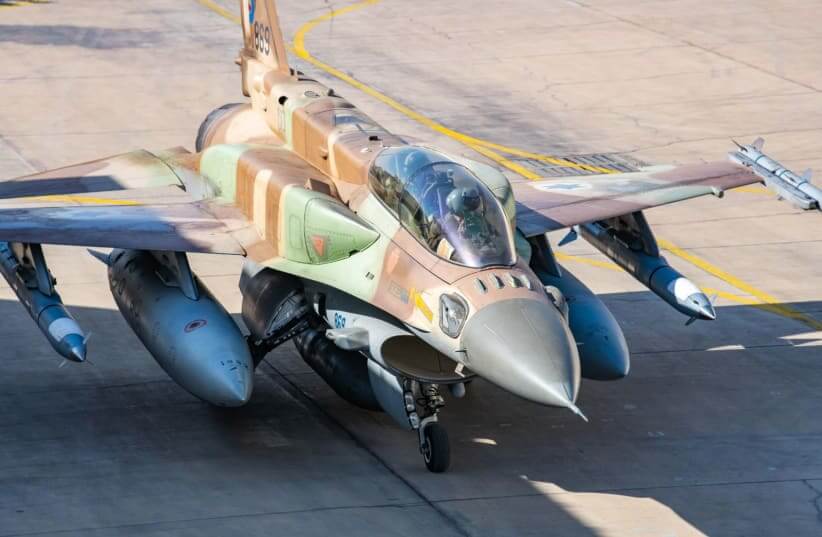
By AMICHAI STEIN, JERUSALEM POST STAFFUpdated: MAY 4, 2025 12:48An Israeli F-16I fighter jet takes off from Ramon Airbase for the strikes on military targets in Yemen. January 10, 2024.(photo credit: IDF SPOKESPERSON’S UNIT)
During the Israeli strike near the presidential palace in Damascus overnight on Thursday, Turkish fighter jets reportedly conducted reconnaissance flights in the area where Israeli aircraft were operating.
According to reports, the Turkish F-16s sent warning signals to the Israeli jets using their electronic warfare systems, and a brief radio contact was made between the aircraft, allowing both sides to avoid confrontation.
Turkish fighter jets reportedly crossed into Syrian airspace during a wide-scale Israeli strike and issued “warning messages” to Israeli aircraft, which had targeted forces affiliated with Turkey, N12 reported, citing Sozcu, a Turkish opposition-affiliated website.
The Israeli strike targeted multiple sites, including positions held by pro-Turkish Syrian militias, who reportedly receive weapons, logistics, and training from Turkey, N12 reported.
TURKISH PRESIDENT Recep Tayyip Erdogan meets with Syria’s interim President Ahmed al-Sharaa at the Antalya Diplomacy Forum in Antalya, Turkey. (credit: Murat Cetinmuhurdar/PPO/Reuters)
Turkey’s interest in supporting Syria’s new regime
The Turkish-Syrian connection has been tightening recently, including in the military field. A Western intelligence source told The Jerusalem Post in early April that Turkey wants to become Syria’s air defense provider, in part by establishing a presence at the T4 base, which was active during Assad’s regime.
The T4 base has been the target of several Israeli airstrikes in Syria in recent weeks. In late March, an Israeli defence official told reporters that the purpose of these strikes was to signal to Syrian President Ahmed al-Sharaa that Israel will not allow any reduction in its freedom of action in Syrian airspace.
According to the Western intelligence source, Turkey intends to convert the T4 base into a drone facility.