
In Quds Day speech, Naim Qassem says normalization with Jerusalem will never be accepted, threatens to pursue ‘other alternatives’ if diplomacy fails to uphold ceasefire
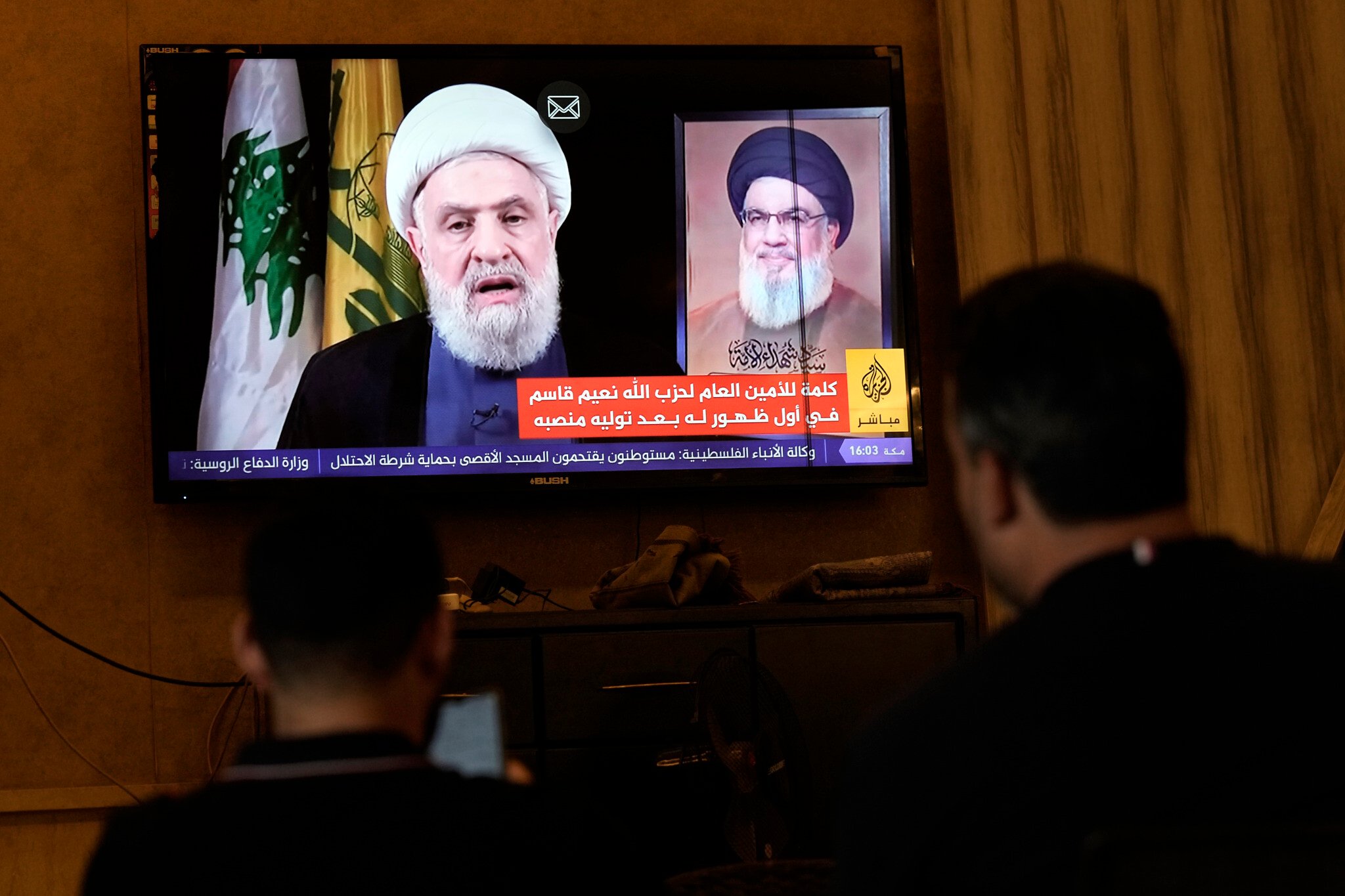
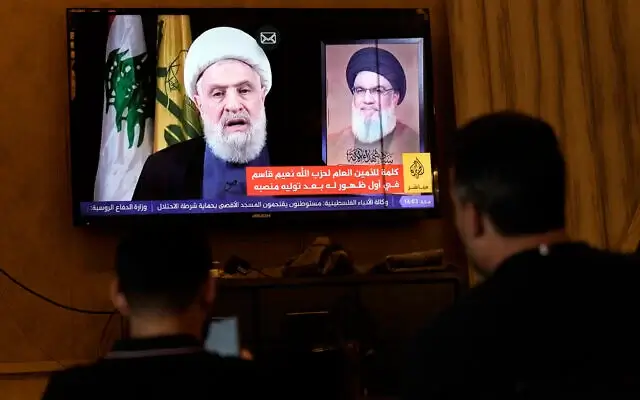
People watch Hezbollah's newly named leader Naim Qassem delivering a televised speech, in the southern port city of Sidon, Lebanon, October 30, 2024. (AP Photo/Bilal Hussein)

People watch Hezbollah’s newly named leader Naim Qassem delivering a televised speech, in the southern port city of Sidon, Lebanon, October 30, 2024. (AP Photo/Bilal Hussein)

Hezbollah chief Naim Qassem warned Saturday that if Israel continues to carry out strikes in Lebanon, and the Lebanese government does not act to stop it, then the terror group will take matters into its own hands.

His comments came a day after Israel carried out strikes in Beirut for the first time since a November ceasefire went into effect, after two rockets were fired at northern Israel from Lebanon on Friday morning.

In a speech marking Quds Day, Qassem insisted that Hezbollah was still committed to the November 27 ceasefire agreement that ended over a year of fighting between Israel and the Iran-backed terror group.

“We fully complied and we have no presence south of the Litani, but Israel did not abide,” Qassem declared. His comments contradict the IDF’s assessment that it has struck dozens of Hezbollah fighters operating south of the Litani River since the start of the ceasefire, in violation of the deal’s terms.

“Israel is carrying [out] aggressions every day. These are not violations. They are an aggression that crossed all limits,” the Hezbollah chief added.
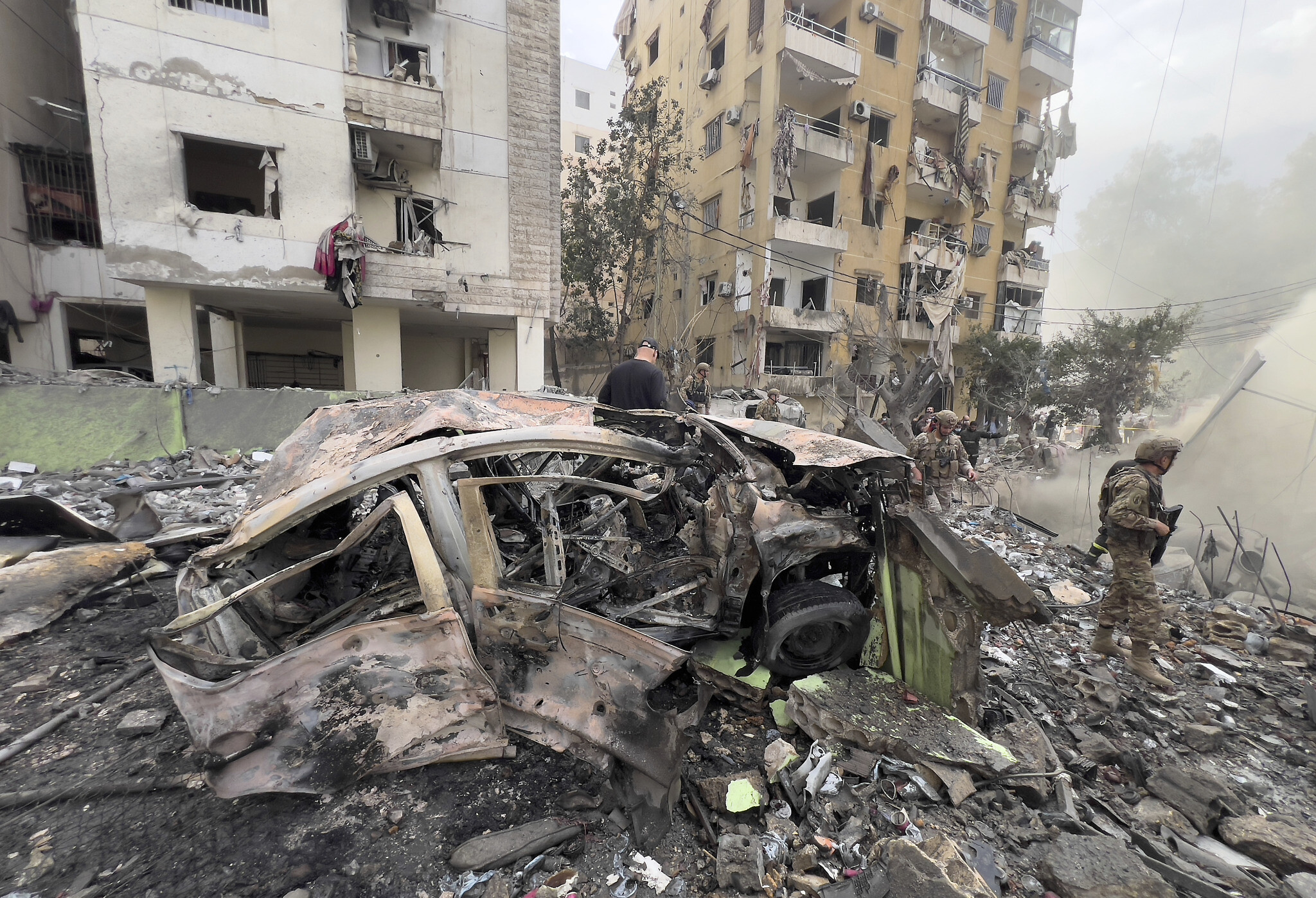
Lebanese army soldiers inspect the site that was hit by an Israeli airstrike in Dahiyeh, a southern suburb of Beirut, Lebanon, March 28, 2025. (AP/Hussein Malla)

An Israeli official claimed earlier this month that Jerusalem was seeking to establish full diplomatic relations with Beirut, after a military-to-military meeting in the United Nations peacekeeping headquarters in Naqoura in which Israel and Lebanon agreed to open negotiations to delineate the border between the two countries.

Israel and Lebanon do not recognize one another, but signed a short-lived peace agreement in 1983. Israel in the past enjoyed deep military and economic ties with Christian factions in Lebanon.

“Israel will not get during peace time what it was not able to achieve by war,” Qassem said. “Let everyone know that this resistance (Hezbollah) is present and ready and at the same time is committed to the agreement.”

Even while insisting that Hezbollah remained committed to the deal, Qassem reiterated that if Israel did not abide by the deal, and the Lebanese government failed to impose its implementation through political means, the terror group would “have to resort to other alternatives.”

His remarks appeared to be a threat that Hezbollah might return to fighting against Israeli troops still stationed in Lebanon, at five strategic locations.

“We will not allow anyone to deprive us from using our force and capabilities to confront this enemy,” said Qassem, adding that Hezbollah “is not weak in facing the projects of America and Israel.”

“Our patience so far aims to give a chance to solutions that could reduce the pains and casualties,” he finished.

Quds Day commemorations, when Iran and its allies organize marches in support of the Palestinians and call for Israel’s annihilation, were launched in 1979 by Iran’s revolutionary leader, Ayatollah Ruhollah Khomeini.
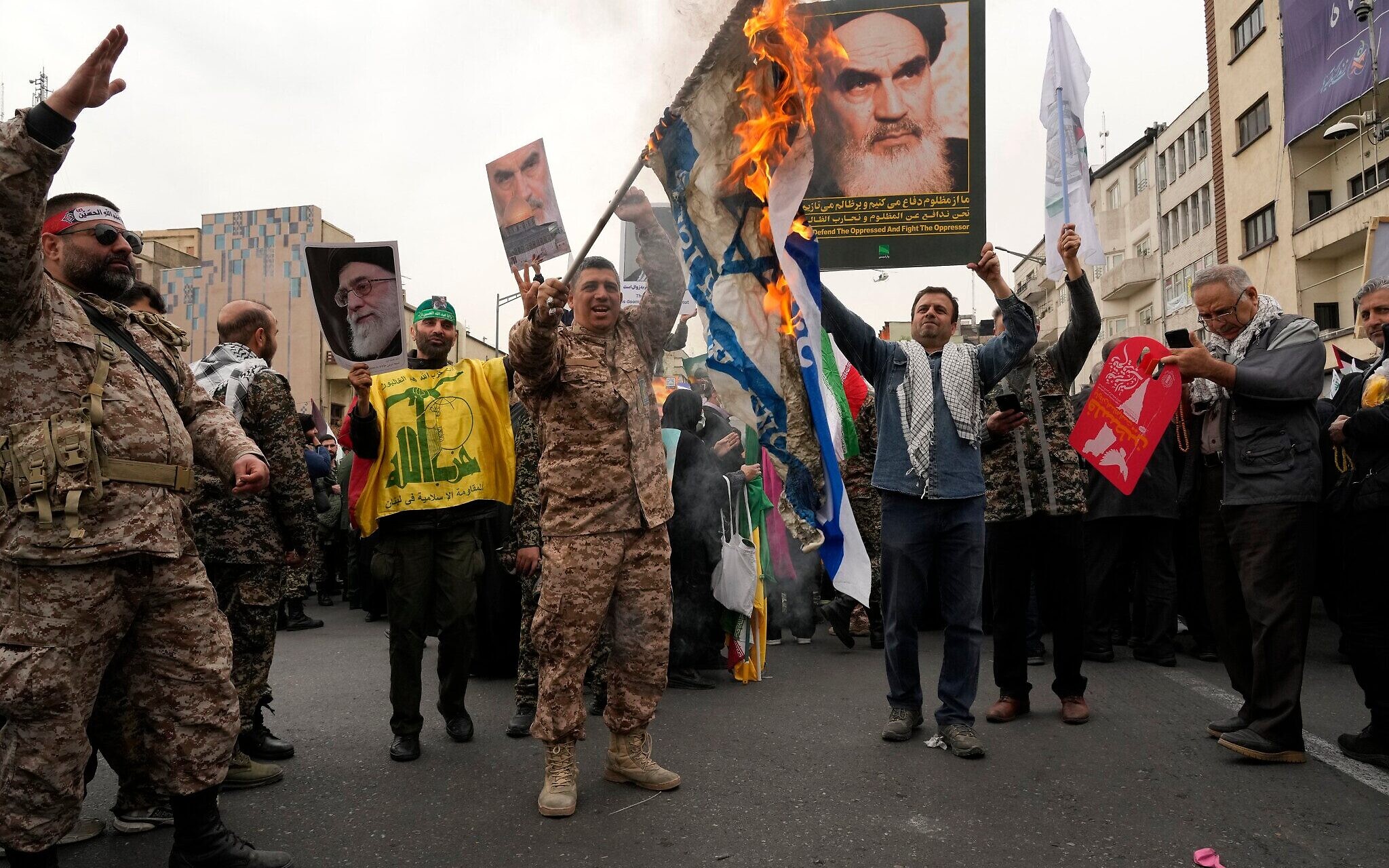
Iranian demonstrators burn a representation of the Israeli flag as they hold posters of the late Iranian revolutionary founder Ayatollah Khomeini and Supreme Leader Ayatollah Ali Khamenei, during the annual anti-Israeli Quds Day, or Jerusalem Day rally in support of Palestinians, in Tehran, Iran, March 28, 2025. (AP/Vahid Salemi)

Qassem’s speech came after a rise in tensions between Israel and the Iran-backed terror group on Friday, when two rockets were fired at northern Israel, triggering sirens in the city of Kiryat Shmona and the nearby communities of Tel Hai, Margaliot, and Misgav Am.

It was the second attack within the past week, after three rockets were fired at Metula on March 22, the first such incident since the November 27 ceasefire took effect.

As it had on March 22, Hezbollah denied having any connection to the rocket fire.

Following the attack, the IDF carried out a wave of strikes on what it said were Hezbollah targets in the south of the country, and later, on Friday afternoon, brought down a building it claimed was used by the terror group’s drone unit in southern Beirut, a Hezbollah stronghold known as Dahiyeh.

It was the first time that the IDF had targeted a building in Beirut since November.

The ceasefire between Israel and Hezbollah came into effect following two months of open war aimed at ending rocket attacks from the Iran-backed group that plagued the north for nearly a year.

Under the ceasefire, Hezbollah was obligated to pull its forces north of the Litani River, about 30 kilometers (18.6 miles) from the Israeli border, and dismantle any remaining military infrastructure in the south, while the Lebanese army deployed to control the area.

Israel, in parallel, was obligated to withdraw its forces from southern Lebanon, though it retains the right to respond to immediate threats.

Following an initial postponement, with US and Lebanese approval, of the deadline to withdraw, Israel pulled all its troops out of Lebanon in February, aside from five strategic posts along the border.
IDF mum on alleged attack in Alawite stronghold, but confirms carrying out strike in southern Lebanon on Hezbollah operatives moving weapons


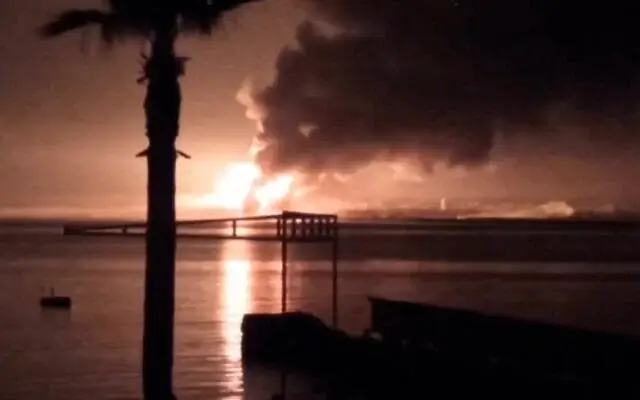
Screen capture from video purporting to show explosions in the Syrian port city of Latakia, March 27, 2025. (X: Used in accordance with Clause 27a of the Copyright Law)

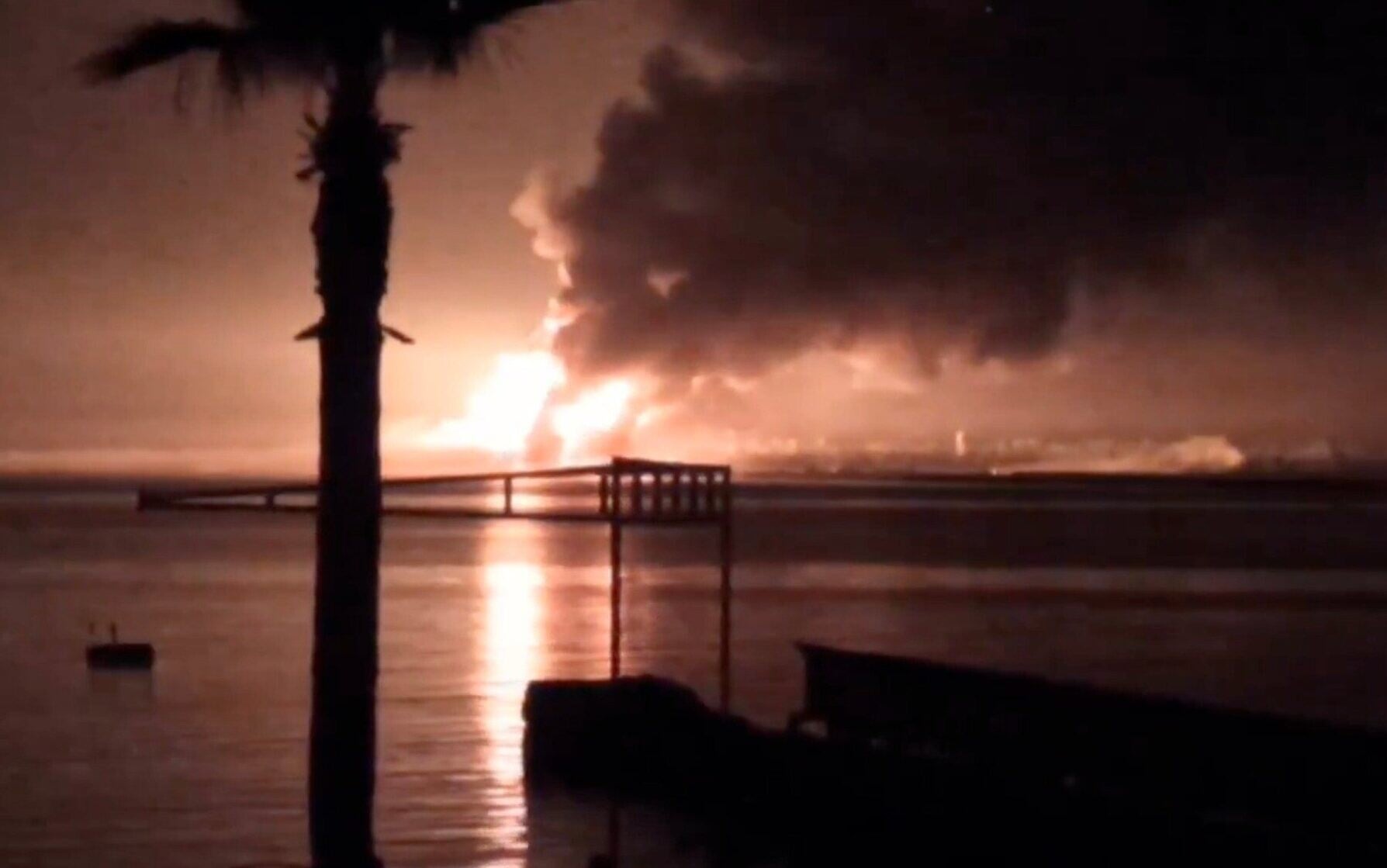
Screen capture from video purporting to show explosions in the Syrian port city of Latakia, March 27, 2025. (X: Used in accordance with Clause 27a of the Copyright Law)

Israeli jets bombed Syria’s Latakia port area overnight, with massive blasts rocking the area, according to Syrian and Lebanese media reports early Thursday.

Israeli airstrikes were also reported in Lebanon, including what the Israel Defense Forces said was an attack on a group of Hezbollah operatives and a second strike that reportedly killed one man.

Syria’s official SANA news agency reported that several airstrikes hit the Latakia port and the coastal city.

Israel’s military did not comment on the alleged strikes.

Sources told Lebanon’s Hezbollah-affiliated Al Mayadeen news outlet that jets hit several military positions in the port that are used by foreign factions linked to the Syrian Defense Ministry, including from Chechnya and Uzbekistan.

Sources also told Al Mayadeen that there were loud explosions at the same time north of Quneitra in the Syrian Golan Heights, where Israeli troops have been operating since late last year.

Following the collapse of Bashar al-Assad’s regime to Islamist-led rebels in December, Israel has vowed to destroy weapons in Syria it fears could fall into the hands of “hostile forces” that may seek to attack it. Israeli troops have also been stationed inside the buffer zone along the Israel-Syria border, which was manned by UN peacekeepers until the fall of Assad’s regime in December 2024.

On Tuesday, Israel said it bombed targets at two airbases in Syria.

The strikes in Syria have drawn condemnation and concern, including from Syria’s interim leader, Ahmed al-Sharaa, as well as the European Union.

In southern Lebanon, the IDF confirmed carrying out an airstrike Thursday morning on a group of Hezbollah operatives identified as moving weapons around in the Yohmor area.

Lebanese media reports casualties in the strike.

Lebanon’s Health Ministry said a man was killed in a separate alleged Israeli drone strike in the southern town of Maaroub, near Tyre.

Images from the scene show the destroyed vehicle in flames.

Israel has continued to carry out strikes on Hezbollah operatives and members of affiliated terror groups since a ceasefire in November, following two months of open war aimed at ending rocket attacks from the Iran-backed group that plagued the north for nearly a year.

The terror group started firing rockets and drones at Israeli communities and military posts on October 8, 2023, in support of fellow terror group Hamas, which had invaded Israel from the Gaza Strip a day earlier.

Israel says it targets Hezbollah military sites that violate the ceasefire agreement.

Strikes on Sunday and Monday killed Hezbollah members.

Under the ceasefire, Hezbollah was obligated to pull its forces north of the Litani River, about 30 kilometers (18.6 miles) from the Israeli border, and dismantle any remaining military infrastructure in the south, while the Lebanese army deployed to control the area.

Israel, in parallel, was obligated to withdraw its forces from southern Lebanon, though it retains the right to respond to immediate threats.

Following an initial postponement, with US and Lebanese approval, of the deadline to withdraw, Israel pulled all its troops out of Lebanon in February, except five strategic posts along the border.


by Corey Walker

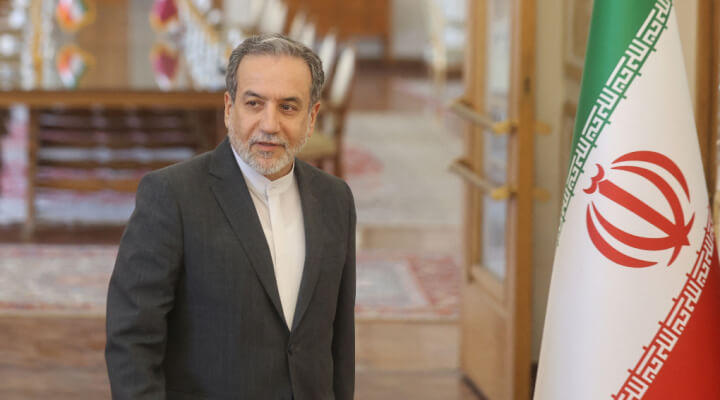
Iran’s Foreign Minister Abbas Araghchi looks on before a meeting with Qatar’s Prime Minister and Foreign Minister Sheikh Mohammed bin Abdulrahman Al Thani, in Tehran, Iran, Aug. 26, 2024. Photo: Majid Asgaripour/WANA (West Asia News Agency) via REUTERS

Iranian Foreign Minister Abbas Araghchi said on Monday that Iran is open to “indirect negotiations” with the US over its nuclear program if Washington drops its “maximum pressure” campaign against the regime.

“The way is open for indirect negotiations,” Araghchi said, claiming that Tehran will not be open to discussing its nuclear program with the White House “until there is a change in the other side’s approach toward the Islamic republic.”

US President Donald Trump last month reinstated his “maximum pressure” policy toward Iran, aiming to cut the country’s crude exports to zero and prevent it from obtaining a nuclear weapon through harsh sanctions.

Days later, however, Trump also expressed a willingness to talk to Iran’s leaders, stating his desire to reach a “nuclear peace agreement” to improve bilateral relations with Tehran while insisting that the Iranian regime must not develop a nuclear weapon.

Iran’s so-called “supreme leader,” Ayatollah Ali Khamenei, rejected the idea of negotiating with Washington, calling such a move “unwise” and “dishonorable.”

Araghchi similarly dismissed the possibility of nuclear talks with the United States.

“There will be no possibility of direct talks between us and the United States on the nuclear issue as long as the maximum pressure is applied in this way,” Araghchi said late last month during a joint press conference with his visiting Russian counterpart, Sergei Lavrov. “We will not negotiate under pressure, threat, or sanctions.”

Nonetheless, Trump earlier this month sent a letter to Iran’s leadership saying he wants to negotiate a nuclear deal with Iran and suggesting talks with the Islamic Republic.

Khamenei rejected Trump’s letter as deceptive, saying his demands would “tighten the knot of sanctions and increase pressure on Iran.” Iranian President Masoud Pezeshkian expressed similar sentiments.

However, Iranian officials have said a diplomatic response is coming.

“Trump’s letter was more a threat, but it claims to have opportunities. We paid attention to all points held in the letter and will consider both threat and opportunity in our response,” Araghchi said last week. “There is an opportunity behind every menace.”

On Monday, Iran’s top diplomat echoed those comments and promised a response soon.

“Letters and correspondence make part of diplomacy” he said, cautioning that they can also be “part of pressure and threats.”

Araghchi’s comments come on the heels of demands from White House National Security Adviser Mike Waltz for Tehran to dissolve the entire Iranian nuclear program or suffer severe “consequences.”

“This isn’t some kind of, you know, kind of tit-for-tat that we had under the Obama administration or [former US President Joe] Biden,” Waltz said. “This is the full program. Give it up or there will be consequences.”

In addition, Trump’s special envoy to the Middle East, Steve Witkoff, claimed on Sunday that although the Trump administration would prefer to negotiate with Tehran, the US would be willing to use military force if necessary to stop Iran from obtaining nuclear weapons.

“Our signal to Iran is let’s sit down and see if we can, through dialogue, through diplomacy, get to the right place. If we can, we are prepared to do that. And if we can’t, the alternative is not a great alternative,” Witkoff said.

Iran has claimed that its nuclear program is for civilian purposes rather than building weapons. However, the UN’s nuclear watchdog, the International Atomic Energy Agency (IAEA), reported last year that Iran had greatly accelerated uranium enrichment to up to 60 percent purity, close to the roughly 90 percent weapons-grade level.

At the time, the UK, France, and Germany said in a statement that there is no “credible civilian justification” for Tehran’s recent nuclear activity, arguing it “gives Iran the capability to rapidly produce sufficient fissile material for multiple nuclear weapons.”

The US government has for years described Iran, which is governed by an Islamist theocracy, as the world’s foremost state sponsor of terrorism, expressing deep concern about the potential ramifications if such a regime obtained nuclear weapons.