We have never been this vulnerable, and it may be our last chance to obtain one before it’s too late,” an official was cited as saying.

 Iranian supreme leader Ayatollah Ali Khamenei over an Iranian flag. (photo credit: Canva, OFFICIAL KHAMENEI WEBSITE/HANDOUT VIA REUTERS, SHUTTERSTOCK)
Iranian supreme leader Ayatollah Ali Khamenei over an Iranian flag.
(photo credit: Canva, OFFICIAL KHAMENEI WEBSITE/HANDOUT VIA REUTERS, SHUTTERSTOCK)
A number of senior Islamic Revolutionary Guard Corps (IRGC) commanders have urged Iran’s Supreme Leader, Ayatollah Ali Khamenei, to rescind a fatwa (religious decree) prohibiting nuclear weapons in the face of threats from the West, according to a Saturday The Telegraph report, citing Iranian officials.

In 2005, during an International Atomic Energy Agency (IAEA) convention, an official statement was made regarding a fatwa Khamenei signed which stated Islam banned nuclear weapons.

“The leader has forbidden negotiations with the Americans and the development of nuclear weapons, which seem to be the only ways for survival [of the regime], and he’s driving the regime toward collapse,” an official was cited as saying.

“We have been just a few button presses away from building a nuclear weapon for some time now, but the pressures and justifications for having one are greater than ever,” the official added.

The official described the “existential threat” he claimed his country faced from the West.

 U.S. President Donald Trump speaks during the annual National Prayer Breakfast at the U.S. Capitol in Washington, U.S., February 6, 2025. (credit:  REUTERS/Kevin Lamarque)Enlrage image
U.S. President Donald Trump speaks during the annual National Prayer Breakfast at the U.S. Capitol in Washington, U.S., February 6, 2025. (credit: REUTERS/Kevin Lamarque)

“We have never been this vulnerable, and it may be our last chance to obtain one before it’s too late,” an official was cited as saying.

“The existential threat we now face has led several senior commanders – who previously insisted on following the supreme leader’s guidance – to push for making an atomic weapon,” an official noted.

Officials have made similar statements in the past without commenting on the fatwa.

“We have no decision to build a nuclear bomb, but should Iran’s existence be threatened, there will be no choice but to change our military doctrine,” advisor to Iran’s Supreme Leader, Kamal Kharrazi, said back in May 2024.

Trump on Iran deal

Last week, US President Donald Trump said he would reinstate his “maximum pressure” policy on Iran.

He stated he wished to see a verified nuclear peace agreement with Iran, which would render the Islamic Republic non-nuclear.

On Wednesday, Iran’s Foreign Minister Abbas Araqchi addressed US fears regarding his country’s development of nuclear weapons.

“Iran’s position is clear: it is a member of the Non-Proliferation Treaty, and the Supreme Leader’s fatwa has already clarified our stance [against weapons of mass destruction],” Araqchi said.

Reuters contributed to this report.


The Iranian dictator also said that experience has proven that talks with the United States are “not smart, wise or honorable.”

 An illustrative image of Iran's Supreme Leader Ayatollah Ali Khamenei. (photo credit:  SHUTTERSTOCK/Office of the Iranian Supreme Leader/WANA (West Asia News Agency)/Handout via REUTERS)
An illustrative image of Iran’s Supreme Leader Ayatollah Ali Khamenei.
(photo credit: SHUTTERSTOCK/Office of the Iranian Supreme Leader/WANA (West Asia News Agency)/Handout via REUTERS)
Iran’s Supreme Leader Ayatollah Ali Khamenei said on Friday that if the United States violated the Islamic Republic’s security, it, in turn, would do the same to the US.

“If they threaten us, we will threaten them. If they actuate that threat, we will actuate ours. If they violate our nation’s security, we will violate their security without a doubt,” Khamenei said.

The Iranian dictator also said that experience has proven that talks with the United States are “not smart, wise or honorable.”

US President Donald Trump said on Wednesday he would like to have a verified nuclear peace agreement with Tehran.

Tehran’s 2015 nuclear pact

During his previous term in office in 2018, Trump pulled the United States out of Tehran’s 2015 nuclear pact with world powers and reimposed sanctions that have crippled the country’s economy.

Iranian Nuclear Facility (credit: gettyimages)Enlrage image
Iranian Nuclear Facility (credit: gettyimages)

The harsh measures prompted Tehran to violate the pact’s nuclear limitations.

A senior Iranian official told Reuters on Wednesday that Iran is ready to give the United States a chance to resolve disputes.


“The Saudis can create a Palestinian state in Saudi Arabia; they have a lot of land over there,” he said.

Israeli Prime Minister Benjamin Netanyahu and Saudi Arabian Crown Prince Mohammed Bin Salman (photo credit: MARC ISRAEL SELLEM/REUTERS)
Israeli Prime Minister Benjamin Netanyahu and Saudi Arabian Crown Prince Mohammed Bin Salman
(photo credit: MARC ISRAEL SELLEM/REUTERS)
Prime Minister Benjamin Netanyahu said that Saudi Arabia had enough land to provide the Palestinians with a state in a Channel 14 interview on Thursday.

“The Saudis can create a Palestinian state in Saudi Arabia; they have a lot of land over there,” he said.

When questioned about a Palestinian state as a condition of normalization, Netanyahu said he “would not make an agreement that would endanger the State of Israel.”

“Especially not a Palestinian state. After October 7? Do you know what that is? There was a Palestinian state, it was called Gaza. Gaza, led by Hamas, was a Palestinian state, and look what we got – the biggest massacre since the Holocaust,” the prime minister said.

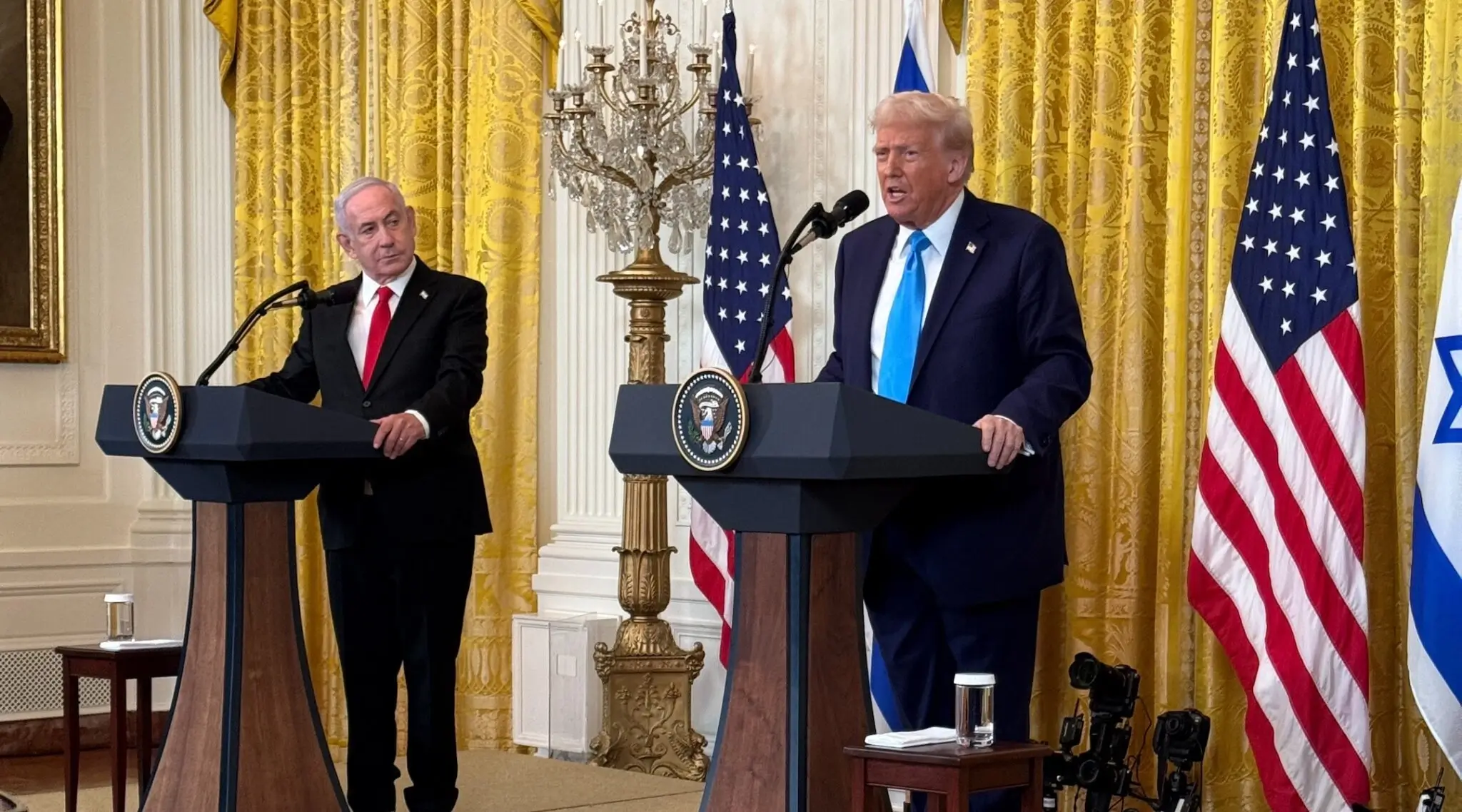
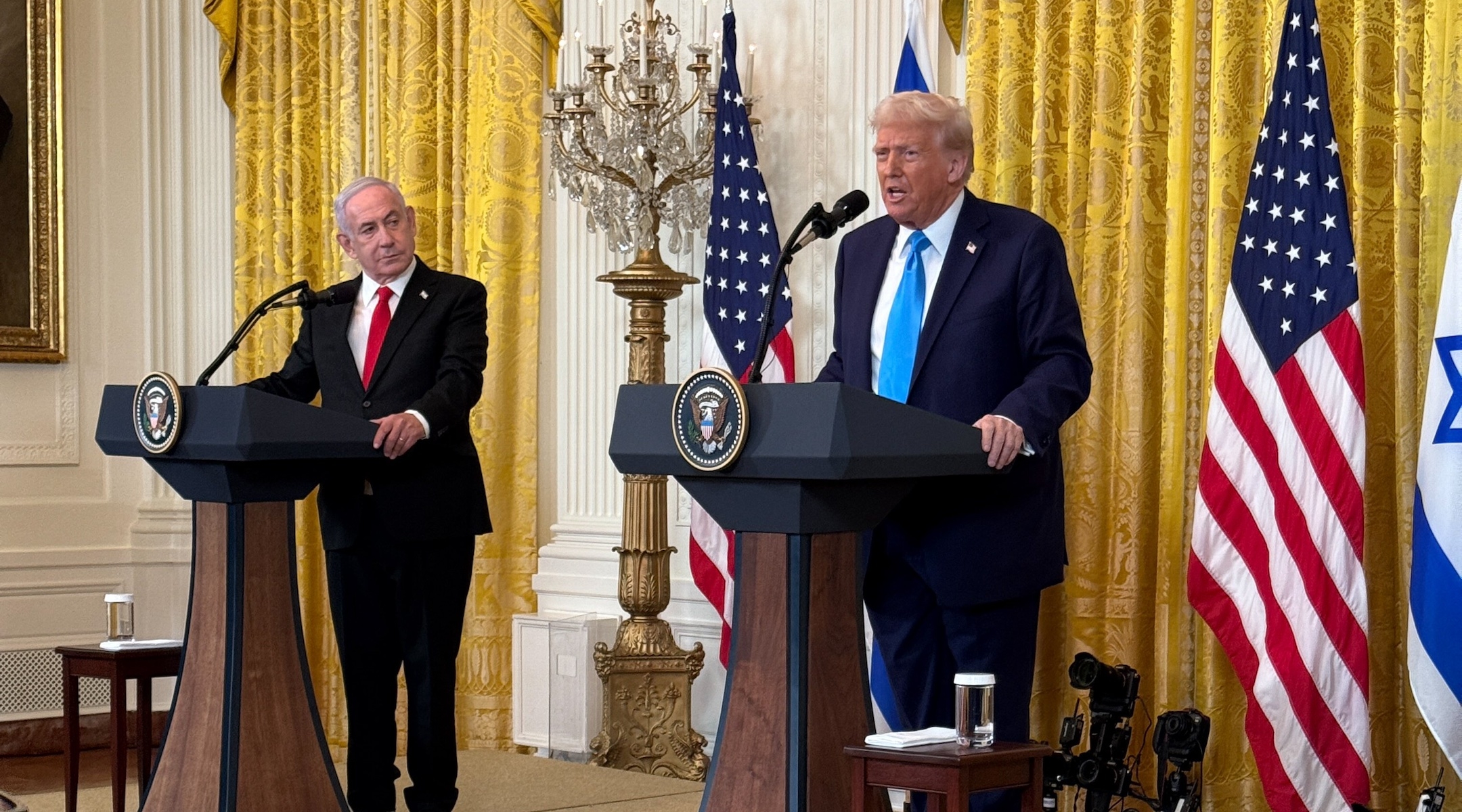
The interview was conducted during Netanyahu’s Washington visit, which began with a joint press conference with US President Donald Trump in which the president announced his plan for the US to control the Gaza Strip.

Additionally, the two discussed the potential for normalization with Saudi Arabia, with Netanyahu saying, “I think peace between Israel and Saudi Arabia is not only feasible, I think it’s going to happen.”

However, shortly after the press conference, the Saudi foreign ministry stated it would not discuss ties with Israel without the establishment of a Palestinian state.

Enlrage image

Trading the West Bank for a Palestinian state

Earlier this week, anonymous Israeli officials told The Jerusalem Post they feared Netanyahu would be willing to end the war in Gaza and delay annexation of the West Bank in favor of advancing a normalization deal with Saudi Arabia.

The officials feared that the prime minister would use a delay in annexation as a compromise in an attempt to sway Riyadh from demanding a pathway to a Palestinian state.

Amichai Stein and Reuters contributed to this report.