“During the five-hour mission, CENTCOM forces employed precision munitions against Iranian coastal defense systems, missile and drone sites, and maritime capabilities,” it announced.
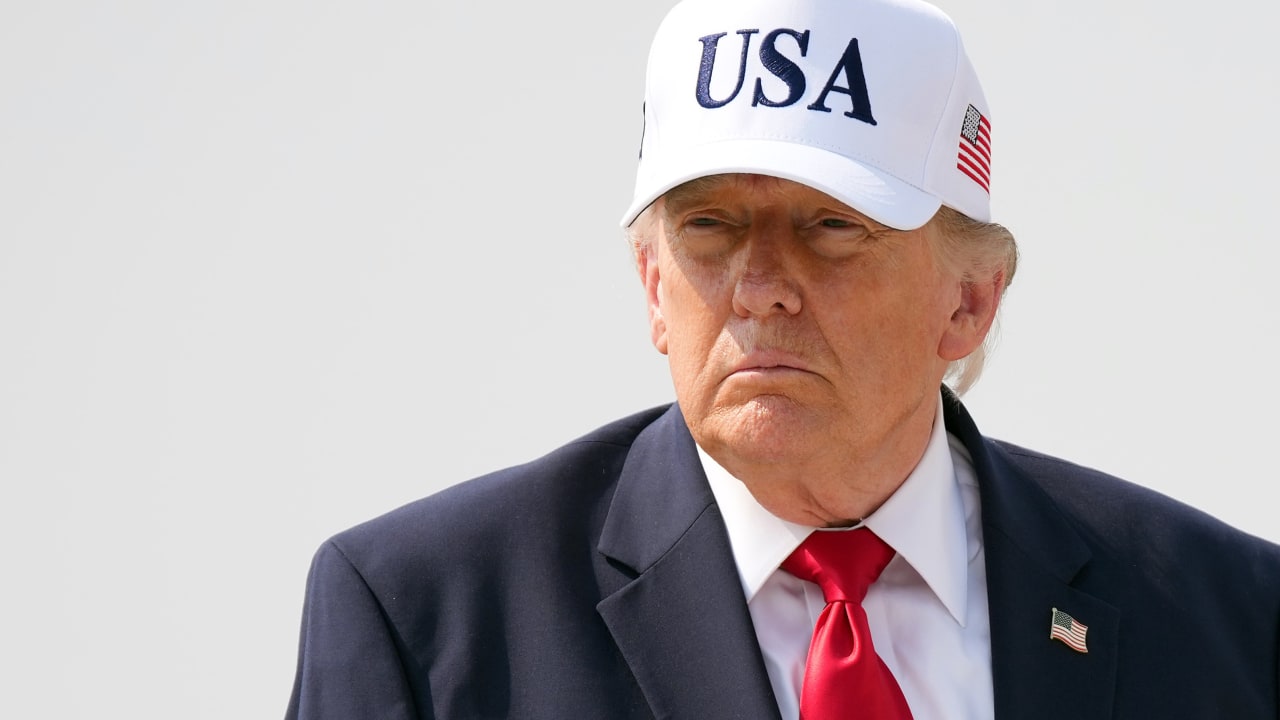
US President Donald Trump walks to board Air Force One as he departs Bismarck Municipal Airport on July 01, 2026; illustrative(photo credit: Andrew Harnik/Getty Images)ByESTHER DAVIS, ARIELLA ROITMAN Updated:
The US has “completed the latest wave of strikes against Iran” early Tuesday morning, US Central Command (CENTCOM) announced in a post on X/Twitter.
“During the five-hour mission, CENTCOM forces employed precision munitions against Iranian coastal defense systems, missile and drone sites, and maritime capabilities,” the post said.
CENTCOM confirmed strikes in Bushehr, Chah Bahar, Jask, Konarak, Abu Musa, and Bandar Abbas, areas in which Iranian media had reported explosions.
“More than 50,000 US service members are currently deployed across the Middle East. American forces remain vigilant, lethal, and ready,” the post said.
Trump vows to ‘hit Iran hard’
On Monday evening, US President Donald Trump had vowed that the US would “hit Iran hard tonight and tomorrow,” in a radio interview on the Hugh Hewitt show.
“We’re going to hit them very hard tonight, and we’re going to hit them hard tomorrow. And there’s not a damn thing they can do about it. They have nothing,” he said.
Shortly after Trump’s interview, CENTCOM announced on X that “US Central Command began launching the third consecutive night of strikes against Iran, at the Commander in Chief’s direction.”
Documentation of the American attacks on Iran. Video use under Section 27a of the Copyright Law/ via Maariv
Trump says US could target Iranian nuclear sites
Several areas in southwestern Iranian city of Omidiyeh were hit by US projectiles, Iranian semi-official Mehr News reported, adding that explosions had been heard in numerous areas around Iran.
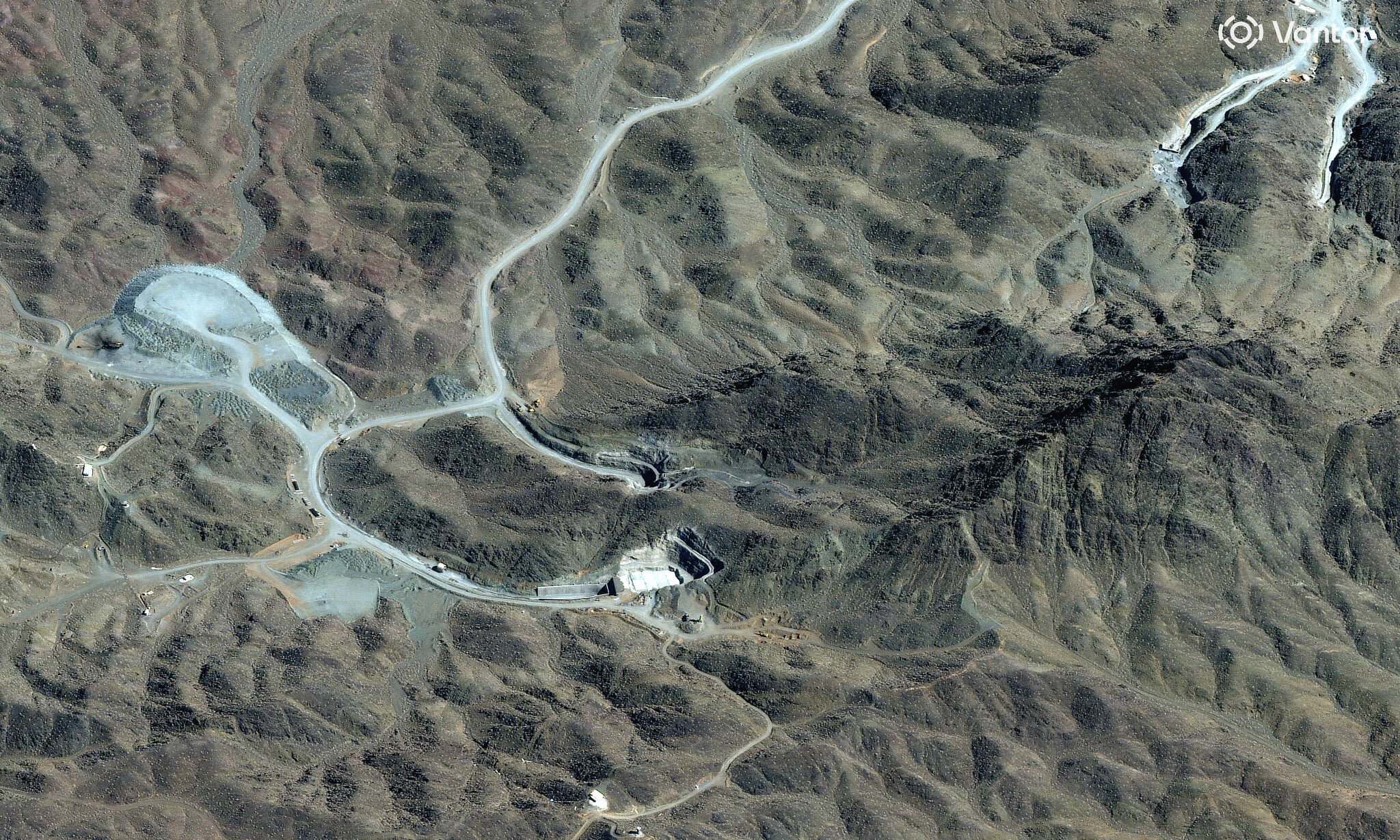
Speaking about Iran’s nuclear power, Trump explained that Pickaxe Mountain, a highly fortified nuclear site one mile south of the Natanz nuclear complex in Iran, “could be the target of a nice, big, fat, shot.”
He added that Iran “is not doing well with its nuclear situation. Every time we hear about it, we blow it up. But we’ll probably give Pickaxe a shot relatively soon.”
Pickaxe Mountain is a heavily fortified site that hosts two deeply buried tunnel complexes that experts assess as beyond the reach of the most powerful bunker-buster bombs in the US arsenal.
Trump also said that “the Memorandum of Understanding (MoU) was a test, and Tehran didn’t honor it,” adding that current US military action in Iran could last for two to three weeks.
Despite the escalation, Trump claimed a deal could still be reached, saying “they have been stalling for 47 years, but I still think an agreement is possible.”
The president said that he “was not interested in answering” a question about whether Israel will intervene in the strikes tonight. He added that he has a good relationship with Prime Minister Benjamin Netanyahu, and stated that without the US, “Israel would not be around today.”
Reuters contributed to this report.
Prime Minister Benjamin Netanyahu (Goldberg/Flash90)
Riyadh reportedly expressed willingness to join Abraham Accords and normalize ties with Israel – but only if Prime Minister Netanyahu is replaced and reversal of pro-settlement policies in Judea and Samaria.
By David Rosenberg, World Israel News
Saudi Arabia has signaled that it may be prepared to reopen negotiations over normalizing relations with Israel, but only after Prime Minister Benjamin Netanyahu is replaced and key policies advanced by Finance Minister Bezalel Smotrich in Judea and Samaria are reversed, according to an Israeli media report.
Israel Hayom reported Monday that representatives of Saudi Crown Prince Mohammed bin Salman had delivered the message several weeks ago to the White House, the State Department, and several members of Congress.
The newspaper cited three sources familiar with diplomatic discussions in Washington. Saudi Arabia, the White House and the Israeli Prime Minister’s Office had not publicly confirmed the reported conditions.
;According to the report, Riyadh’s two principal demands are that Netanyahu no longer serve as prime minister following Israel’s October election and that a future Israeli government cancel measures implemented by Smotrich in Judea and Samaria during the past three years.
American officials who received the Saudi messages reportedly concluded that Riyadh views the two demands as connected. Saudi officials are said to believe that Netanyahu will continue supporting Smotrich’s policies as long as he remains in power.
Graham Platner accuses ‘international fugitive’ Netanyahu of war crimes
The report did not provide a complete list of the measures Saudi Arabia wants reversed. Smotrich, who exercises authority over parts of Israel’s Civil Administration in Judea and Samaria, has promoted the establishment and recognition of additional settlements, accelerated housing approvals and supported changes intended to strengthen long-term Israeli control of the territory.
In June, after an Israeli planning committee approved more than 2,100 homes in three settlements, Smotrich said: “We are continuing to build the Land of Israel in practice.”
The Israeli government has also approved the establishment or recognition of dozens of settlements and restarted land-registration procedures in Area C.
;The reported Saudi conditions go further than Riyadh’s previously declared public position by appearing to link normalization to the identity of Israel’s next prime minister. Saudi officials have consistently demanded substantial movement toward Palestinian statehood, but they have generally avoided publicly endorsing or rejecting individual Israeli candidates.
Israel Hayom previously reported in October 2025 that a senior Saudi source had ruled out normalization with Israel’s current government after Smotrich made disparaging comments about Saudi Arabia.
“The ignorant minister’s words reflect the character of the current Israeli government,” the source said at the time.
Smotrich later apologized for the remark that prompted the dispute, saying it had been “ill-considered” and that he regretted the offense it caused.
Trump will ‘likely’ back Netanyahu in election, but ‘needs to know’ something
Saudi Arabia’s official conditions for diplomatic relations have centered on the Palestinian issue. The Saudi Foreign Ministry has said that “there will be no diplomatic relations with Israel unless an independent Palestinian state is recognized,” based on the pre-1967 lines with East Jerusalem as its capital.
;The ministry has also demanded an end to Israeli military operations in Gaza and the withdrawal of Israeli forces from the territory.
Crown Prince Mohammed bin Salman reinforced that position in a 2024 address, saying Saudi Arabia would continue working toward a Palestinian state and “will not establish diplomatic relations with Israel without that.”
Before the Hamas-led October 7, 2023, attack and the subsequent Gaza war, Riyadh and Washington had made significant progress toward a broader agreement involving Saudi recognition of Israel, a United States-Saudi defense arrangement and American assistance for a Saudi civilian nuclear program.
The Gaza war halted that momentum and increased the political price Saudi leaders attached to normalization. Riyadh subsequently moved from seeking limited Israeli concessions toward demanding a credible and irreversible route to Palestinian statehood.
Despite those obstacles, American officials have continued exploring a possible agreement. Axios reported Sunday that Sen. Lindsey Graham had been working shortly before his death on an initiative to revive Saudi-Israeli negotiations after Israel’s October 27 election and the United States’ November midterm elections.
Netanyahu: ‘With or without an agreement, Iran will not have nuclear weapons’
;Graham reportedly believed a deal would require Israel’s next government to accept meaningful measures toward the eventual creation of a Palestinian state. A proposed American defense treaty with Saudi Arabia would also need the approval of two-thirds of the US Senate.
Israel Hayom said Saudi Arabia had considered recognizing Israel several times during the war in exchange for major Israeli concessions, including an explicit declaration by Netanyahu that he was prepared in principle to accept a Palestinian state in the future. Netanyahu rejected those demands.
Some officials familiar with Saudi diplomacy cautioned that proposals of this kind can be intended “for the process, and not necessarily the result” — allowing Riyadh to demonstrate to Washington that it remains willing to discuss regional diplomacy without necessarily expecting an agreement under present political conditions.
American forces strike Iran for 3rd night in a row as Trump weighs hitting Pickaxe nuclear site; Iran targets Bahrain and Jordan, claims attack on UAE tankers that killed crewman
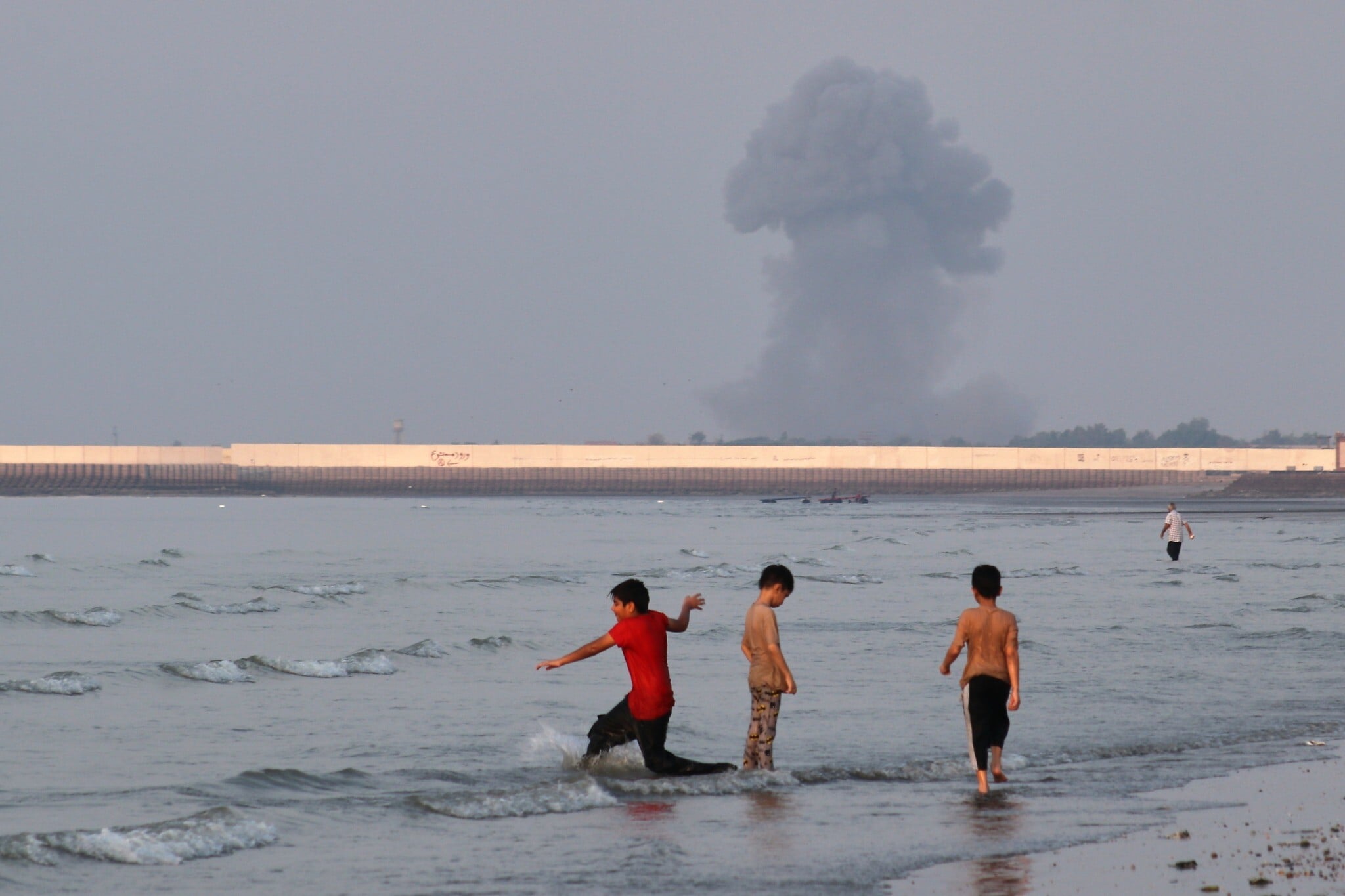
Three boys play in the shallow waters of the Strait of Hormuz, as a plume of smoke rises from an explosion in the background, off Bandar Abbas, Iran, Monday, July 13, 2026. (Razieh Poudat/ISNA via AP)
The US launched strikes on Iran early Tuesday morning, hours after President Donald Trump said Washington was “reinstating” a blockade on Iran in the Strait of Hormuz. Trump separately suggested the United States will charge other ships for safe passage, upending hundreds of years of American policy supporting freedom of navigation across the globe.
Iran responded with attacks targeting Bahrain, Jordan and two tankers associated with the United Arab Emirates traveling through the strait, killing one mariner and wounding eight. The Emirates threatened to retaliate against Iran, potentially drawing the nation that is home to Abu Dhabi and Dubai back into fighting with Tehran.
The attacks come as Iran and the US vie for control of the strait through which a fifth of all traded crude oil and natural gas once passed in peacetime. The price of benchmark Brent crude oil rose to a one-month high of over $84 in trading early Tuesday, still well below the nearly $120 reached at the height of the war but threatening to make costs everywhere higher.
It also further shredded a ceasefire in place from an interim agreement between Iran and the US to end the war. The accord is now almost halfway through the 60-day period in which they were supposed to negotiate a final accord, which also was meant to address Iran’s disputed nuclear program and other issues.
Attacks resume across the Mideast
A US air base in Jordan was targeted by Iranian ballistic missiles on Tuesday, Iran’s Islamic Revolutionary Guard Corps said, while calling on Jordanians to dismantle American bases in the kingdom.
“You know very well that not only do we not have any enmity with your country, but we also love you, the noble people, who understand the pain and oppression of the Palestinian people more than any other nation,” the IRGC said in a statement carried by Fars News.
Jordan’s armed forces said on Tuesday they intercepted and shot down four missiles that entered Jordanian airspace from Iranian territory, according to state news agency.
The United Arab Emirates’ Defense Ministry said early Tuesday that Iran attacked two tankers in the Strait of Hormuz, killing one mariner and wounding eight.
This picture shows ships sailing near the Strait of Hormuz off the eastern coast of the United Arab Emirates at Khor Fakkan on July 13, 2026 (AFP)
The Emirati Defense Ministry said Iran launched two cruise missiles at the tankers Mombasa and Al Bahiyah. The attacks set both tankers ablaze, though the fires were extinguished.
Iran’s paramilitary Revolutionary Guard claimed the attack on the tankers, saying the vessels “ignored repeated warnings.”
“They chose to pass through a minefield and were subsequently targeted and disabled,” the Guard said.
The Emirati Defense Ministry said the attack on the tankers killed one Indian national and wounded six Indians and two Ukrainians.
“The UAE reserves its full right to respond to this escalation and to take all necessary measures to protect its territory, its citizens and residents,” the Defense Ministry added.
The Emirates used similar language before launching attacks against Iran during the war. Fighter jets could be heard overheard Tuesday morning in Dubai.
Bahrain also came under renewed attack on Tuesday morning as Iran retaliated over the latest round of US airstrikes. Bahrain sounded its missile alert sirens three times, urging the public to seek shelter. Explosions were heard in the Bahraini capital Manama. There was no word on any damage or casualties from the attack.
Overnight, US forces completed their latest wave of strikes on Iran, which the US Central Command began earlier in the day at Trump’s direction.
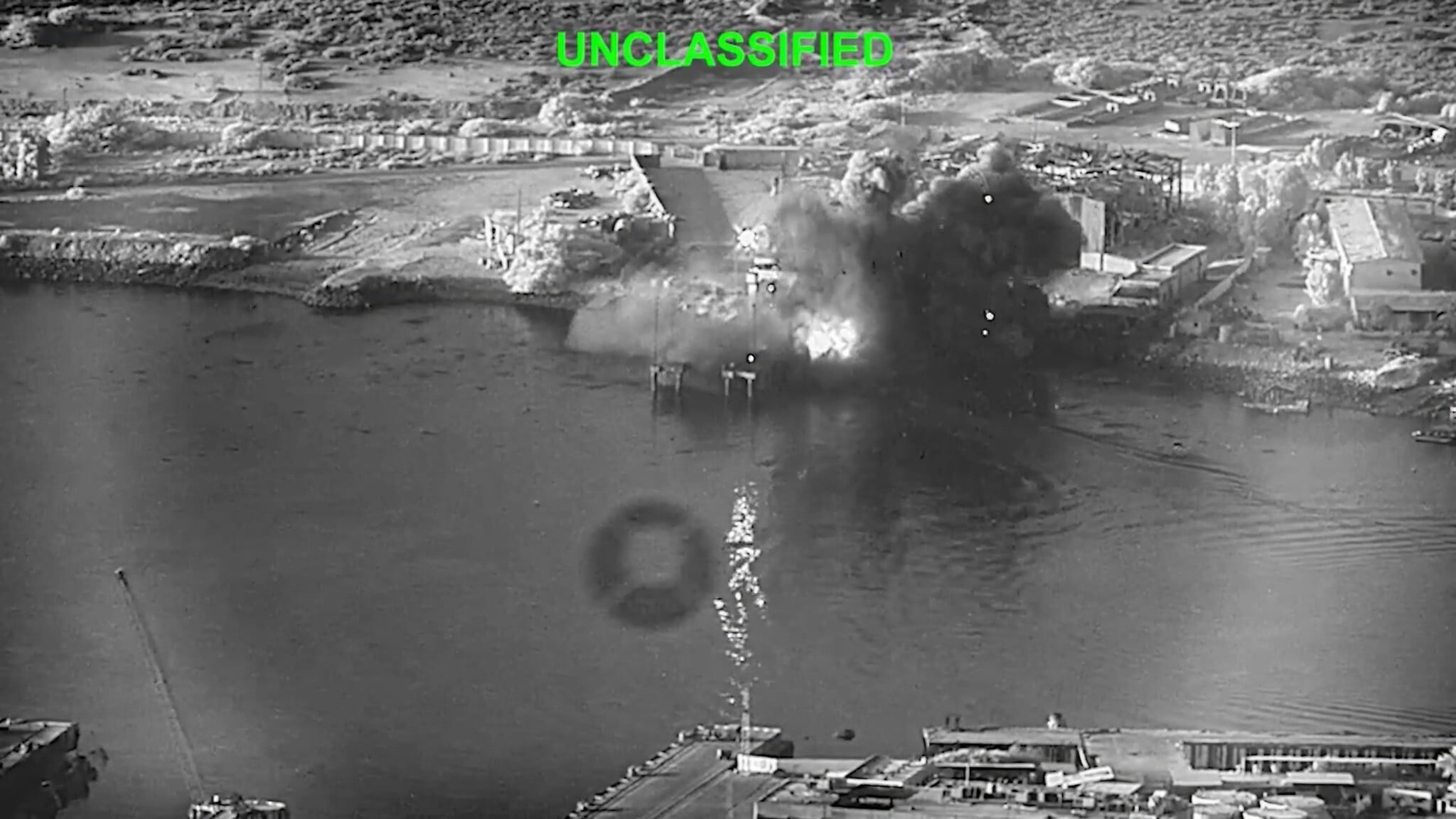
This image from video released by US Central Command, shows an explosion at Bandar Abbas Naval Base, Iran, as three Corsair unmanned surface vessels, also called one-way attack surface drones, fired by the US military, hit the port July 12, 2026. (US Central Command via AP)
The five hours of US strikes were the third consecutive night of attacks against Iran as Trump reinstated a blockade of Iranian shipping and proposed charging a 20% fee to guard the Strait of Hormuz.
Iranian media reported strikes on a number of the cities and said four people had been wounded and rescue operations were underway.
But on Tuesday, oil minister Mohsen Paknejad insisted Iran’s oil exports were continuing as usual.
‘They didn’t honor the test’
Trump earlier told the “Hugh Hewitt Show” on Monday that Iran would be hit “very hard tonight, and we’re going to hit them hard tomorrow. And there’s not a damn thing they can do about it.”
The latest hostilities come after Iran said at the weekend it was closing the Strait of Hormuz, casting further doubt on an interim deal to halt the war and driving oil prices higher.
Trump said Monday he would probably soon order a strike on the Pickaxe Mountain nuclear site.
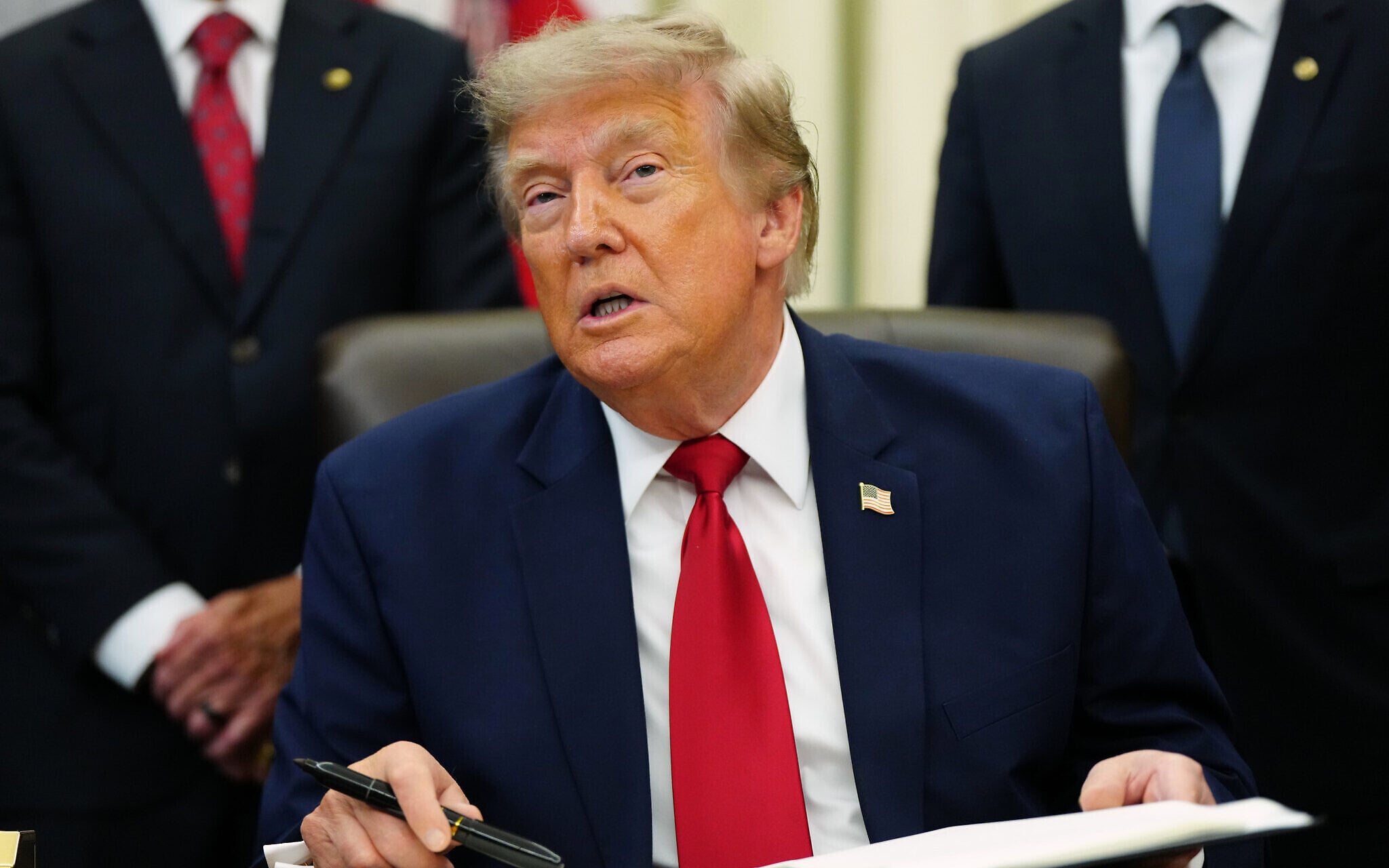
US President Donald Trump speaks in the Oval Office of the White House, July 13, 2026, in Washington, as he signs executive orders (AP Photo/Julia Demaree Nikhinson)
Asked about Pickaxe, which was not among the three nuclear facilities targeted by the US last year, Trump said the US was closely surveilling it.
“Pickaxe is a possible target for a nice big fat shot right near the front door,” he said. “We see no activity there. They’re not doing well with their nuclear situation… We’ll probably give Pickaxe a shot relatively soon.”
Satellite images released earlier this month showed recent construction and vehicle activity at Pickaxe, which is tunneled into a mountain near the main Natanz nuclear facility. The exact purpose of the site is not known, and inspectors from the International Atomic Energy Agency have never been granted access.
According to the Institute for Science and International Security, there has been persistent activity at Pickaxe since April, when a ceasefire was declared in the US-Israeli war with Iran. The think tank argued that any work carried out at the site violates the memorandum of understanding signed by Washington and Tehran.
In the interview Monday, Trump downplayed the importance of that MOU, saying it was just a “test” that did not mean very much because the US was dealing with dishonorable “sleazebags” who did not adhere to its terms. Trump said he questioned why the US was entering into a deal to create a ceasefire with Iran rather than moving toward a full deal first, after declaring last week the ceasefire was “over.”
“They didn’t honor the test,” he said.
Tehran lodged a similar accusation at the US, while claiming the MOU acknowledged its control over the Strait of Hormuz, legitimizing its demand that ships crossing through the channel follow its rules.
Asked to respond to claims by Israeli journalists that he has thrown Prime Minister Benjamin Netanyahu under the bus through the MOU, the terms of which have sparked profound concern in Israel, Trump insisted that was not the case, claiming that he gets along with the Israeli premier very well.
“Sometimes I disagree with him, and I let it be known, and I’ve been right,” Trump said, before reiterating that Netanyahu has done a good job as a “wartime prime minister” and that Israel would not exist today if the two of them were not in power.
With Israeli elections approaching, Trump was also asked whether someone in Israel could do a better job than Netanyahu. The US president said he did not know most of the alternatives, but that he had a good relationship with Netanyahu.
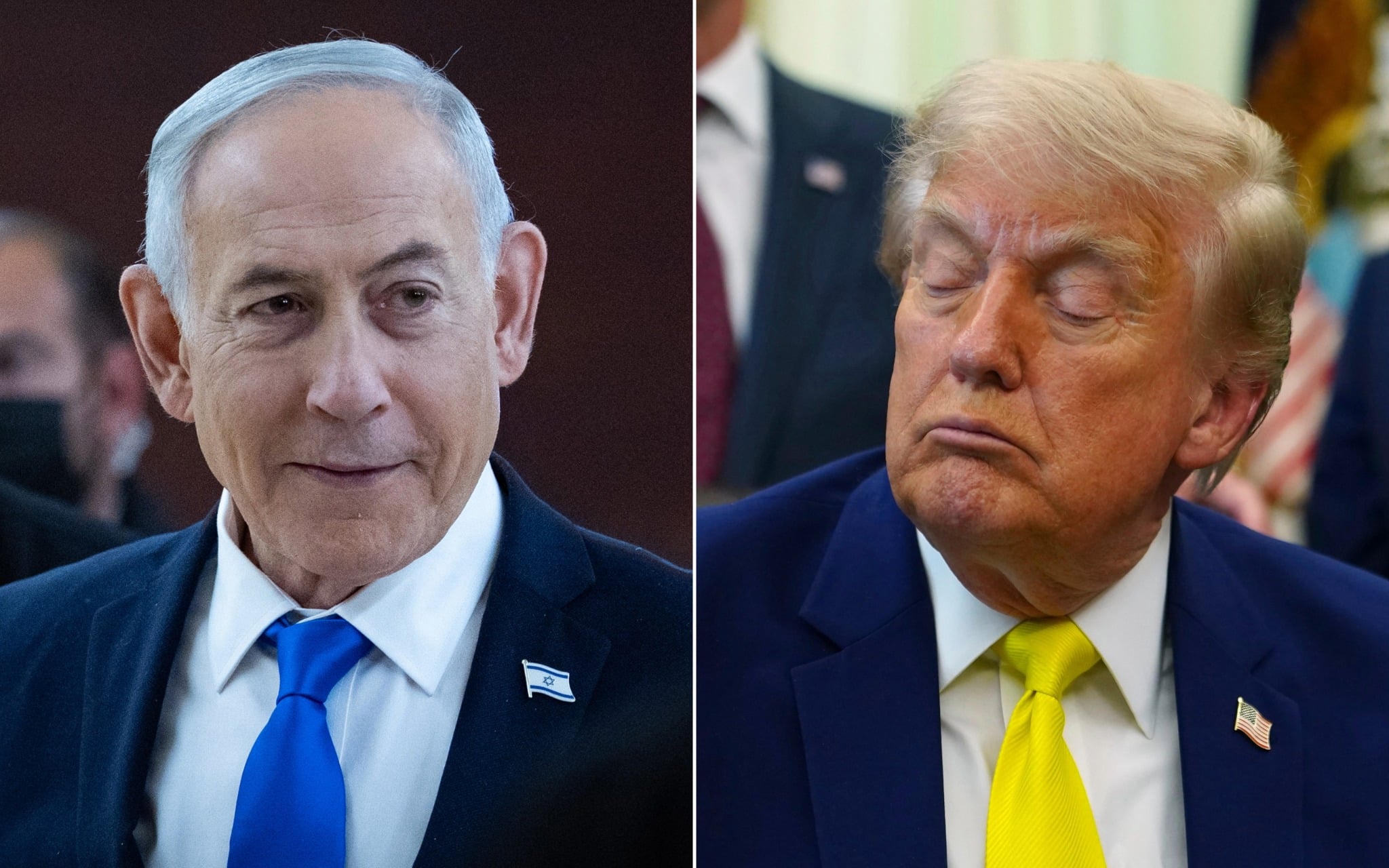
Left: Prime Minister Benjamin Netanyahu in the Knesset in Jerusalem, June 3, 2026. (Yonatan Sindel/Flash90); Right: US President Donald Trump in the Oval Office of the White House in Washington, June 4, 2026. (AP Photo/Julia Demaree Nikhinson)
Pressed on whether he should greenlight resumed Israeli conflicts Hamas and Hezbollah, Trump claimed the US has made a “lot of progress” toward getting Hamas to disarm and again touted the terror group for helping recover the bodies of slain Israeli hostages.
‘Reimbursed for protection’
Speaking later Monday at the White House, Trump said he wanted the US to be reimbursed by Gulf countries in the region for working to secure the Strait of Hormuz amid the ongoing Iranian attacks there, as he provided new details on his administration doing an about-face and suggesting it will charge tolls for ships going through the key waterway, after previously suggesting that it wouldn’t.
“I want to be reimbursed because we’re protecting a very rich portion of the world. We’re spending money, so… we are going to be reimbursed for protection,” Trump told reporters in the Oval Office, singling out Saudi Arabia, the UAE, Qatar, Bahrain and Kuwait as countries that the US has protected.
Many of those Gulf countries have privately faulted the US for launching a war against Iran without coordinating with them and without a plan for what it would do when Iran closed the Strait of Hormuz. Those countries have since found themselves bearing the brunt of Iran’s retaliatory strikes.
Trump spoke about the US “protecting allies… including Israel, including Saudi Arabia, including Qatar, including UAE. We’re protecting all of them, and we’ve done a very effective job.”
Asked if he thought that it would be possible to reach a settlement with Iran, Trump responded, “I never reached that conclusion. But we’re hitting them very heavy tonight.”
“They’re going to fight for a while… and we’ll see what happens,” he said.
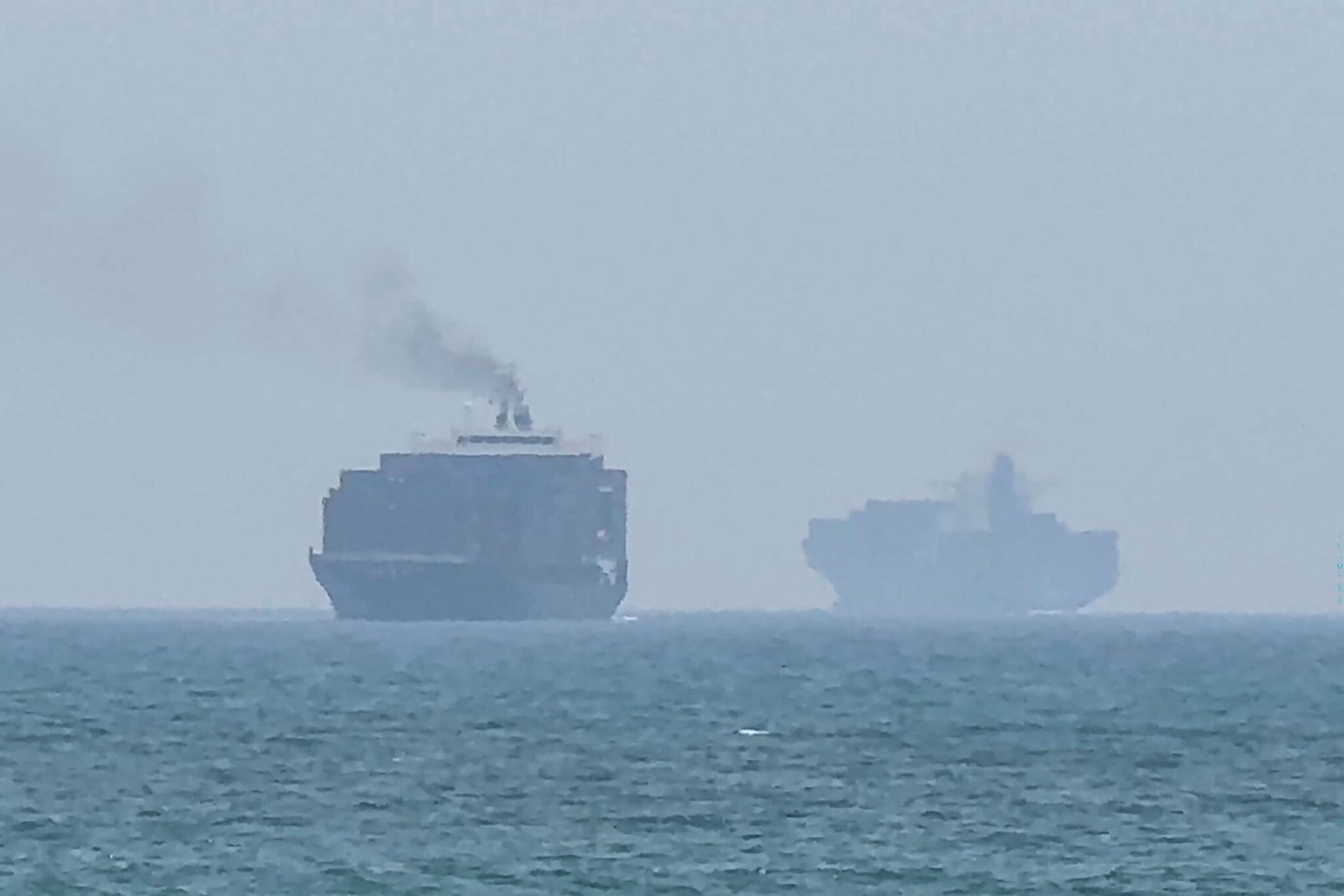
This frame grab taken from AFPTV video footage on July 12, 2026 shows cargo ships anchoring near the Strait of Hormuz off the eastern coast of the United Arab Emirates at Khor Fakkan (AFPTV/AFP)
The US military said its latest strikes were aimed at “imposing a heavy cost on Iranian forces and degrading their ability to attack innocent civilians and commercial shipping in the Strait of Hormuz.”
“During the five-hour mission, US forces successfully struck military targets across Iran including Bushehr, Chah Bahar, Jask, Konarak, Abu Musa, and Bandar Abbas to further degrade Iran’s ability to attack commercial shipping,” US Central Command later said in a statement. “CENTCOM forces employed precision munitions against Iranian coastal defense systems, missile and drone sites, and maritime capabilities.”