TEL AVIV—Israeli decision-makers plan to resume the Gaza war in four to six weeks with overwhelming force, sending in tens of thousands of troops to conquer the entire strip in a single coordinated offensive against Hamas.
Incoming military chief of staff Eyal Zamir has, at the direction of Prime Minister Benjamin Netanyahu and defense minister Israel Katz, started developing the plan, according to several current and former Israeli officials with knowledge of high-level discussions. Under the plan, Israel will deploy more troops to Gaza than it has to this point in the war—over 50,000—before relocating the civilian population to humanitarian zones and waging a ruthless ground campaign against Palestinian terrorists across the rest of the strip.
“We’re going to see four to five divisions simultaneously attack in the north, in the center, and in the south, to occupy every area and clear out the enemy,” said Hezi Nehama, a former Israeli colonel who co-authored the Generals’ Plan, an influential proposal for a staged siege of Gaza. “It will look different than what we saw in the war until now.”
“It’s going to be decisive,” said Amir Avivi, a former Israeli brigadier general who has advised the Israeli government and military during the war. “Israel will use every tool it has to conquer Gaza and eradicate Hamas.”
The plan starts with a wave of airstrikes on Gaza and a reduction of humanitarian aid to Gaza, the sources said. “There will be no aid outside the humanitarian zones,” said Kobi Michael, a former head of the Palestinian desk at the Israel’s Strategic Affairs Ministry and before that a senior Israeli military intelligence official. “This will prevent Hamas from continuing to steal all the humanitarian aid and will increase pressure on the group through the local population.”
Nehama said Israel plans to expand an existing humanitarian zone in Al-Mawasi in southern Gaza into a single giant refuge. Other sources said there would be several humanitarian zones.
The Israeli military raised its alert and readiness level along the Gaza border on Sunday, and Hamas has also reportedly started making preparations for renewed fighting. Zamir, the incoming military chief of staff, estimates that the plan, which he will present to Netanyahu and Katz after taking office next Thursday, can be completed in six months or less, according to Nehama. The plan could be paused if Hamas agrees to release more of the 59 Israeli hostages still held in Gaza, 35 of them confirmed dead, or to disarm and leave Gaza in exchange for an end to the war, the sources said. But Israeli decision-makers do not believe Hamas is ready to make such compromises.
Israel’s plan to resume the war comes on the heels of a string of military and diplomatic successes that leave the Jewish state less constrained than at any previous point in the past 17 months of war.
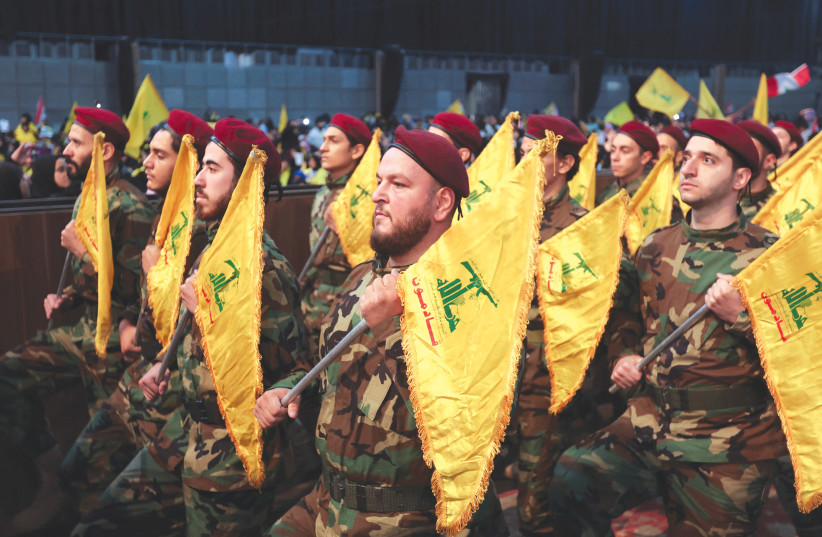
Hezbollah agreed in November to a humiliating ceasefire with Israel, easing pressure on Israel’s overstretched army.
“We always had divisions in the north, and now we don’t need divisions in the north because Hezbollah is not a threat,” said Nehama. “So we can take those divisions and put them all in Gaza at the same time, and this is very important.”
In January, President Donald Trump took office and began reversing former president Joe Biden’s efforts to restrain Israel and accommodate its genocidal enemies. Trump has aligned more closely with Israel against Hezbollah and Iran and ended Biden’s restrictions on U.S. military aid to the Jewish state. In Gaza, meanwhile, Trump has taken an even harder line than Netanyahu, pushing the prime minister to resume the war with Hamas and resettle Gazans abroad.
During Netanyahu’s visit to the White House earlier this month, Trump told the prime minister to “do whatever you need to do” to defeat Hamas, according to an Israeli military official who described the meeting on condition of anonymity. But, the official said, Trump gave Netanyahu just 150 days to finish the job.
Israel’s government, meanwhile, has replaced a number of top security officials who resisted deeper involvement in Gaza, including former defense minister Yoav Gallant and outgoing military chief of staff Herzi Halevi, with generals who are considered more hawkish.
An Israeli government official, speaking on condition of anonymity, said that in recent cabinet meetings, ministers have “completely rejected” Halevi’s approach to Gaza and accused him of “doing everything he can to prevent victory in the war.”
“Behind the scenes, there are discussions with Zamir, which are much more constructive,” the official said. “We hope to see him take leadership of the military and execute his plans.”
In a meeting earlier this month with Netanyahu, Katz and Yaron Finkelman, the head of Israel’s Southern Command, Zamir rejected Halevi’s latest proposal for the Gaza war as too timid, according to Nehama and another former Israeli military official, who spoke on condition of anonymity.
“The next chief of staff didn’t like what he heard,” Nehama said. “He told the prime minister and the defense minister that he would present them with another plan, much more aggressive and decisive with many more troops involved.”
In recent days, Israeli decision-makers have alluded to Zamir’s plan in public remarks.
“We are ready to return at any moment to intensive combat. The operational plans are ready,” Netanyahu said at a graduation ceremony for Israeli military cadets on Sunday. “All of our hostages, without exception, will return home. Hamas won’t rule Gaza. Gaza will be demilitarized, and its fighting force will be dismantled.”
Finance Minister Bezalel Smotrich suggested at an event on Tuesday that Israel’s return to war was just a matter of time.
“We are preparing, gaining capabilities, and when we feel we are ready, we will open the gates of hell on Hamas again,” he declared at a conference in Jerusalem. “It requires patience, but in the end we will bring about the desired outcome.”
The sources said that Zamir’s plan does not directly deal with the “day after” the war in Gaza. But they agreed that Israeli decision-makers are taking Trump’s call for mass resettlement of Gazans seriously despite international opposition to the idea.
Ohad Tal, a member of Israel’s parliamentary defense from Smotrich’s Religious Zionism party, said that “at the end of the day, Zamir’s plan is aligned with the government’s commitment to the Trump plan.”
“Removing the people of Gaza is the only solution that can really change the reality and create a better life for everybody,” Tal said. “So everything we are doing in Gaza should serve that goal.”
Spokesmen for Netanyahu, Katz, the Defense Ministry, and the military declined to comment.