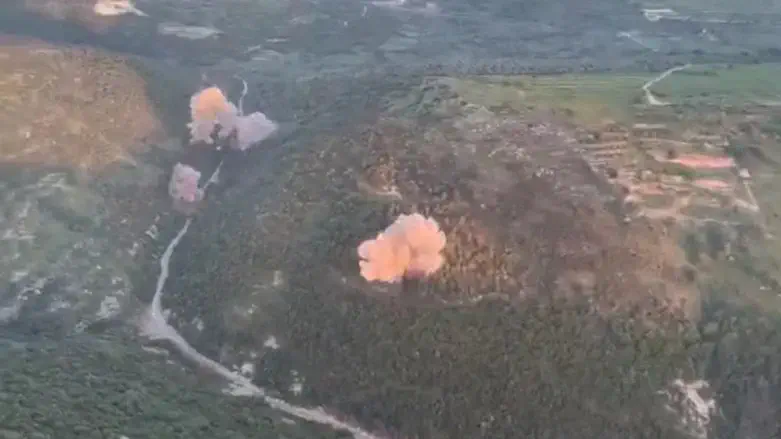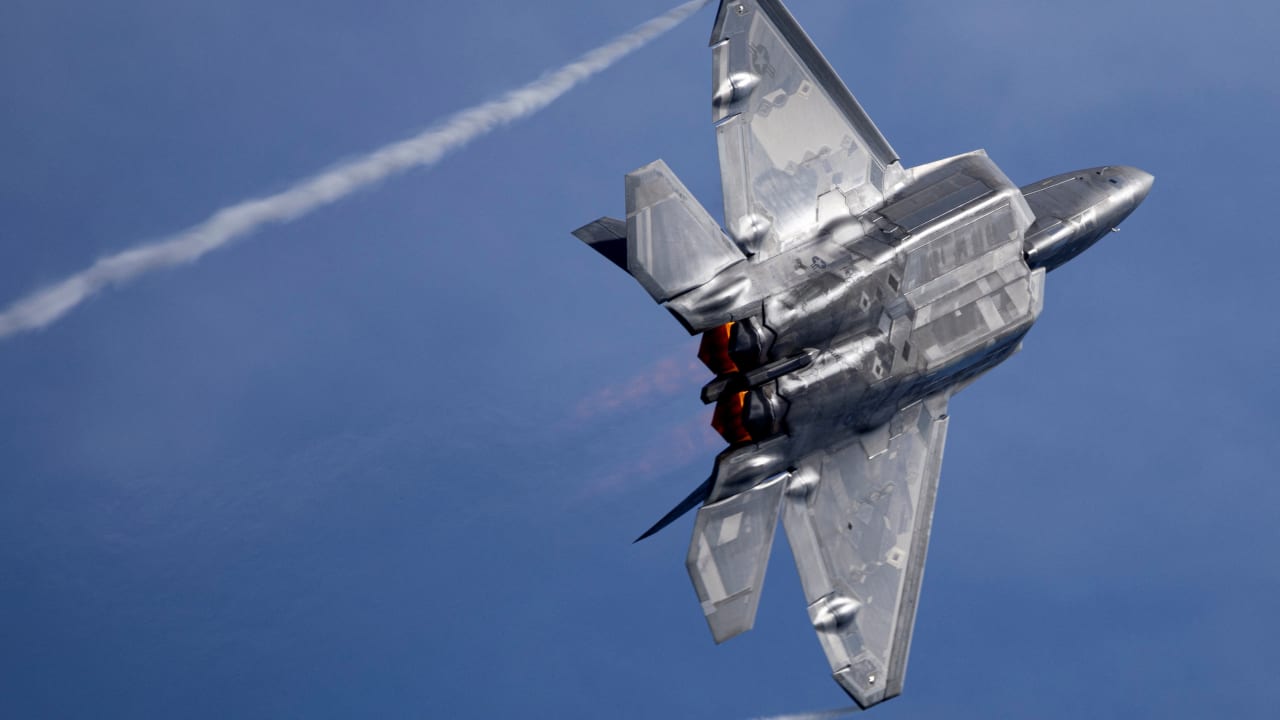
“We brought the people of Lebanon to the understanding that we’re not the enemy. Hezbollah is,” said Yechiel Leiter, Israel’s U.S. ambassador.
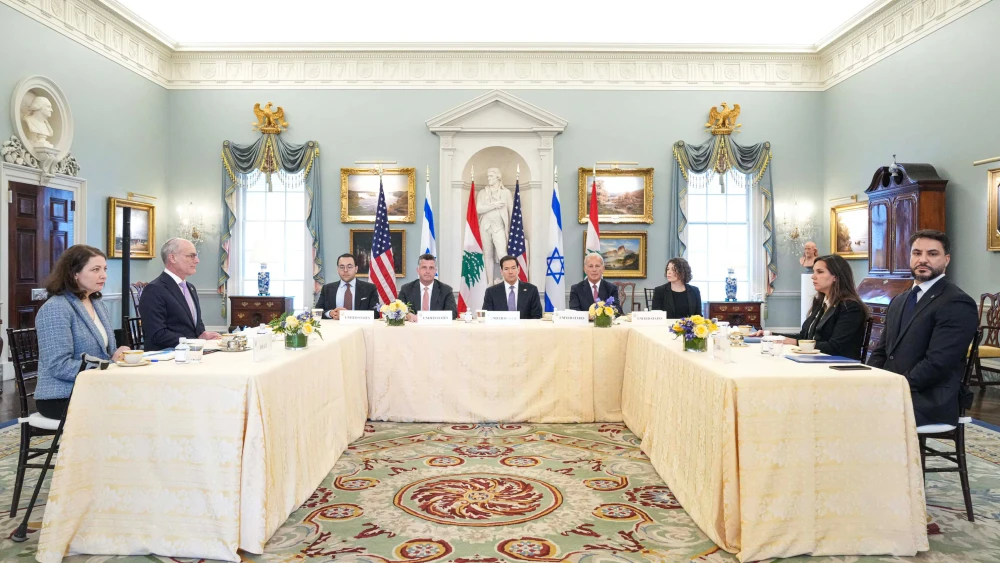
After a marathon negotiating session of over eight and a half hours at the U.S. State Department, Israel and Lebanon announced an agreement to “swiftly advance the creation” of so-called pilot zones to gradually drive out the Hezbollah terror organization from south of the strategic Litani River in southern Lebanon, and immediately replace control of those positions with Lebanese Armed Forces troops.
The agreement, brokered by the United States, came at the conclusion of the second day of the fourth round of the historic direct talks between Jerusalem and Beirut in Washington.
A ceasefire agreed to by the two sides is contingent on a “complete cessation of Hezbollah fire and the evacuation of all Hezbollah operatives from the South Litani Sector,” according to a joint statement released by the trilateral participants.
The completed steps “will enable progress towards a comprehensive peace and security agreement,” the statement reads.
“I think we achieved something today which is relatively unprecedented,” Yechiel Leiter, Israel’s ambassador to the United States, told the press. “We brought the people of Lebanon to the understanding that we’re not the enemy. Hezbollah is, and now we’re going to work together to rid the country of this Iranian proxy on Israel’s border, which deprives Israel of its security and the Lebanese people of their freedom.”
Leiter again led talks on behalf of Israel. Simon Karam, a former Lebanese ambassador to Washington and now a special presidential envoy, headed up the Lebanese side, with Dan Holler, State Department counselor, serving as lead mediator and facilitator.
In response to a query from JNS about how the pilot zones would work, Leiter said the 2,000 or so Hezbollah terrorists operating south of the Litani will be guaranteed safe passage north.
“But after a certain amount of time, which is not very long, if they don’t make their way back to the north, then they know exactly what’s coming, and Lebanon understands what’s coming,” said Leiter.
The pilot zone project will be “guided” by the United States, said Leiter, with special units in the Lebanese army to take control of various areas and gradually spread out throughout the south, “so we don’t go into another pattern where Israel leaves, Hezbollah comes back, and we go through the same thing for the past 40 years.”
Leiter said those involved in the talks “are full of hope that this time it will succeed, because we see that the people of Lebanon are committed to freeing their country from this malign influence of Hezbollah and Iran,” adding that there may be “some ups and downs, but we are determined together with Lebanon to implement this ceasefire.”
Hezbollah, he said, is “on their knees and they will continue to be, if not on their knees, on the floor,” and the LAF’ expansion in the south will allow Israel and Lebanon to “slowly reach a state of normalization.”
All sides said the future of the Israel-Lebanese relationship is not to be dictated by outside actors who would “hold Lebanon’s future hostage,” and that Jerusalem and Beirut, who have technically been in a state of war since 1948, “have no hostile intent toward one another and committed to continuing direct negotiations to build confidence, resolve all outstanding issues and work toward a comprehensive agreement.”
The three countries also condemned Iran’s attacks throughout the region and its ongoing destabilizing activities. Hezbollah serves as an Iranian proxy.
The statement said continued negotiations are not to run “through any separate track,” alluding to Iran’s demands that a ceasefire between Israel and Hezbollah be put in place as part of a potential deal between Washington and Tehran.
“The most important thing is to understand this: Iran is disconnected from what is happening in Lebanon,” said Leiter. “We insist on that. The United States insists on that, and we hope it stays that way.”
Israel and Lebanon are set to reconvene for a fifth round of U.S.-brokered talks on both the political and security tracks during the week of June 22, ”with a view toward reaching a comprehensive agreement.”
In response to a question from JNS, Leiter confirmed the next round of discussions will be held at the ambassadorial level. He added that a trilateral meeting between U.S. President Donald Trump, Israeli Prime Minister Benjamin Netanyahu and Lebanese President Joseph Aoun, which Trump teased weeks ago, but which was rejected by Aoun, is “something that we’re working on. We want to see it happen at the right time. We believe it’s going to happen. We want to have everything prepared and set the stage for it to succeed. So we’re working on it.”
Trump is “putting all his weight behind these attempts” to broker peace, said Leiter, dismissing comments Trump made this week expressing frustration at Netanyahu’s policies in Lebanon as a “lover’s spat” that doesn’t define their relationship.
“When we’re so close, we’re going to have conversations that sometimes are heated, but the bottom line is that America, Israel and Lebanon are united in keeping Iran out of the equation,” Leiter said. “We hope that we’re going to succeed, because we have this power when we operate together.”