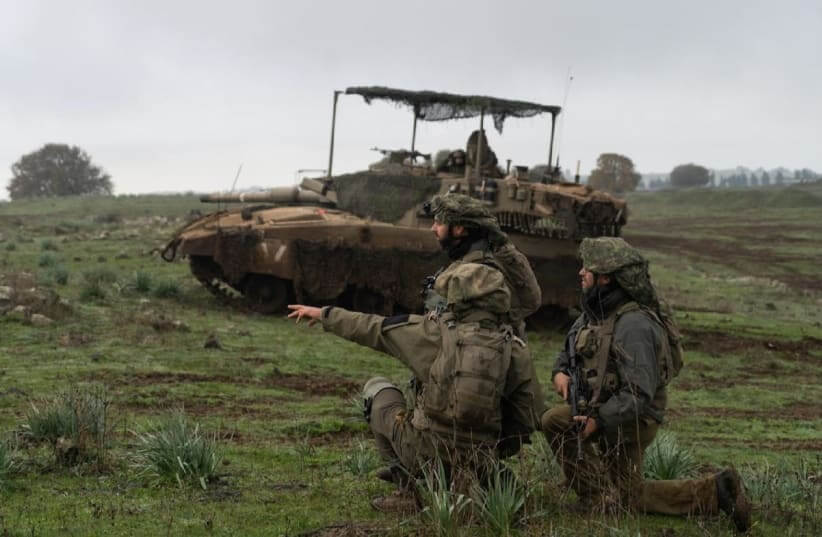
The IDF’s 162nd Division has severely disrupted Hamas’s attempts to rebuild its forces in the northern Gaza Strip.
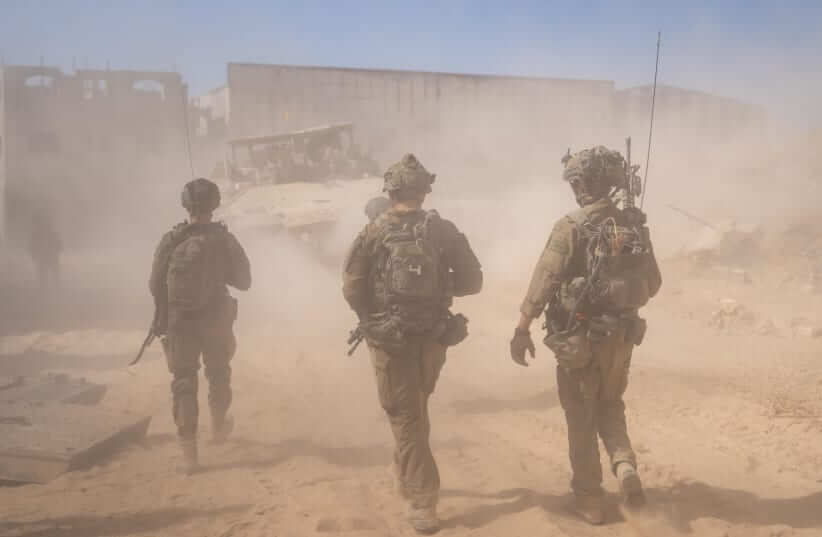
By AVI ASHKENAZIIDF troops operate in the Gaza Strip. November 3, 2024.(photo credit: IDF SPOKESPERSON’S UNIT)
Jabalya, in the northern Gaza Strip, has become a symbol of heroism for Hamas, and the IDF believes that the fall of the refugee camp could open the door to advancing a hostage deal.
The IDF’s 162nd Division has severely disrupted Hamas’s attempts to rebuild its forces in northern Gaza over the past two months.
Jabalya has become symbolic for Hamas, making the restoration of the Jabalya Battalion a priority for the terror group. It is estimated that approximately 3,000 terrorists regrouped in the camp.
The IDF‘s 162nd Division executed a tactical maneuver that resulted in encircling Jabalya from the south and creating a barrier between Hamas terrorists in Gaza City and those in Jabalya.
The thousands of terrorists were left with two choices: fight to the death or surrender to IDF troops.
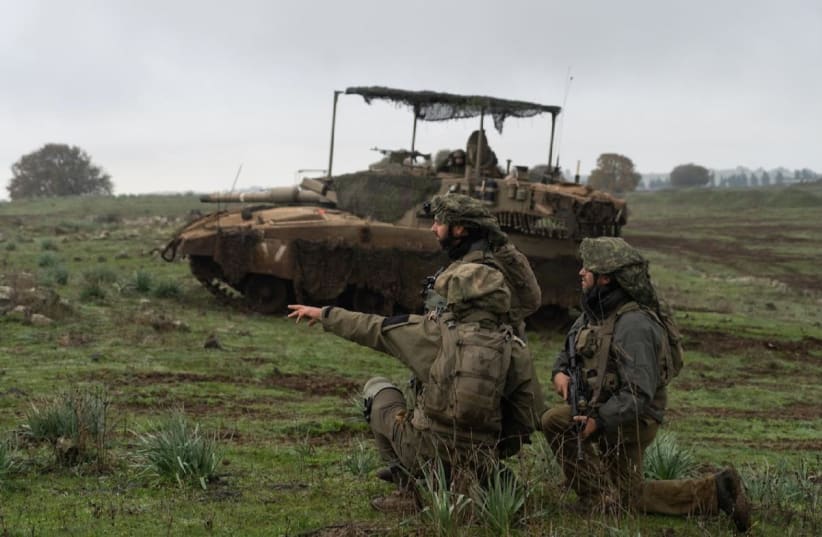
IDF troops operate in the Gaza Strip. November 3, 2024. (credit: IDF SPOKESPERSON’S UNIT)
So far, some 1,200 terrorists have been eliminated, and an equal number have surrendered to the IDF. Several dozen are believed to have escaped southward through the crossings.
The IDF’s current challenge is dealing with the most hardened core of Hamas terrorists — the “jihadists,” who are expected to fight to the last bullet.
The IDF is also learning lessons from the recent events in Jabalya and Beit Lahiya.
Any building identified as harboring terrorists or explosives is destroyed, either by air force strikes, tank fire, or combat engineers.
The IDF is detecting increasing action by the hardened core of terrorists that remain in Jabalya. This involves only a few hundred individuals, but the fighting against them is far more complex.
Hostage deal efforts
The IDF believes that the final fall of Jabalya will usher Hamas into a new era and ultimately enable the renewal of hostage deal efforts.
This is why Mossad chief David Barnea, Shin Bet head Ronen Bar, and the military leadership have been urging the political echelon in recent days to take advantage of the emerging situation in northern Gaza to advance efforts for the release of the 101 hostages held by Hamas.
Some of the rockets were intercepted, while crashes were reported in various locations across central Israel.
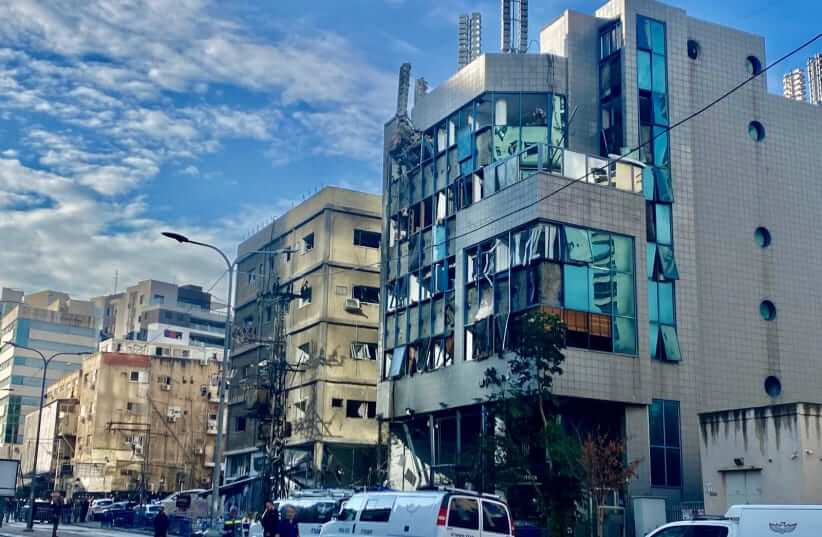
By MAYA GUR ARIEHUpdated: NOVEMBER 19, 2024 10:30A building impacted by a Hezbollah missile in Ramat Gan, November 18, 2024.(photo credit: AVSHALOM SASSONI/MAARIV)
After rocket sirens sounded across central Israel on Tuesday morning, including localities such as Herzliya and Netanya, five rockets were detected crossing from Lebanon into Israeli territory, the IDF reported.
Sirens were also triggered in the Upper Galilee, as ten rockets were identified crossing from Lebanon into Israel, the IDF said. Some of the rockets were intercepted, and the rest fell in open areas. Sirens also sounded at 9:50 a.m. after 25 rockets were fired from Lebanon into the Upper and Western Galilee, the military said on Tuesday morning.
Magen David Adom stated that response teams are en route to search areas where crashes were reported. Response teams from the United Hatzalah rescue service also searched areas where crashes were reported.
Two crashes in open areas were detected near Kfar Yona and Ra’anana, the Israel Police stated, and said that police were searching the area.
Four people were lightly wounded by glass while sheltering in a concrete building with glass windows that were shattered in the Sharon area, Israel’s emergency medical service Magen David Adom stated.
An interceptor intercepts a rocket from Lebanon. October 12, 2024. Photo by (credit: AYAL MARGOLIN/FLASH90)
An additional crash was detected in Batzra, a moshav in central Israel.
Magen David Adom teams treated a woman who was lightly wounded by rocket shrapnel in Karmiel, Ynet reported.
This attack follows a Hezbollah missile barrage on Monday that wounded five people in the Ramat Gan area in central Israel and caused damage to several buildings and an empty bus nearby.
“This is not just another routine agreement,” emphasized Prof. Baram. “This time, Israel is demanding more aggressive conditions.”
By SHAKED SADEHIsraeli soldiers operate near the northern border with Lebanon, on February 21, 2024(photo credit: IDF SPOKESPERSON’S UNIT)
Against the backdrop of the emerging US-brokered ceasefire agreement in the North, the challenges anticipated in its implementation, and the pressures on Hezbollah, Israel is at a pivotal juncture but must adopt a firmer stance against future threats, Professor Amatzia Baram, an expert in international relations and national security, told Maariv on Tuesday.
On Monday, the initial details of a ceasefire agreement being brokered by the United States and agreed upon by Israel were released.
The agreement includes significant changes to the existing arrangements, mainly addressing alterations to the composition of the international forces monitoring the border with Lebanon and stricter Israeli demands for the suppression of Hezbollah.
Amid these developments, US envoy Amos Hochstein is expected to arrive in Beirut.
Reports in Lebanese media indicated that the agreement involved a fundamental shift in the makeup of the international forces supervising the border. The new force will be led by the United States and France, departing from the UN Security Council Resolution 1701, which has been in effect since the Second Lebanon War. Moreover, Israel’s demands go beyond pushing Hezbollah north of the Litani River; they include the destruction of all the organization’s infrastructure beyond that line.
“This is not just another routine agreement,” emphasized Prof. Baram. “This time, Israel is demanding more aggressive conditions—not only to distance Hezbollah physically but to ensure that its facilities and infrastructure are completely destroyed. This is a significant escalation in Israel’s security doctrine against Hezbollah.”
Soldiers from the Commando Brigade operate in southern Lebanon, October 5, 2024. (credit: IDF SPOKESPERSON’S UNIT)
Hezbollah taking the proposal seriously?
Baram noted that Hezbollah faces a complex situation with this proposal. “I believe Hezbollah is taking the proposal seriously because they are under immense pressure—militarily, economically, and politically. They realize that the continuation of the conflict harms them more than it does Israel.”
He added that Hezbollah has made a significant concession by deviating from its leader Hassan Nasrallah’s unified approach to the Gaza and Lebanon arenas. “This is a major concession. Hezbollah, with Iran’s backing, is willing to separate the two fronts. Iran has even authorized Hezbollah to independently decide the terms. This crucial shift reflects the gravity of their situation.”
A key point of contention in the agreement is an American letter presented to Israel. It grants legitimacy to Israeli military actions in Lebanon in the event of violations.
“This letter is the cornerstone of Israel’s strategy,” Baram explained. “It is not an official part of the agreement that Hezbollah and Lebanon are required to sign but an annex allowing Israel to act militarily in case of arms smuggling or Hezbollah’s return to the border.”
The letter has drawn fierce opposition from Hezbollah.
“Hezbollah views this letter as a violation of Lebanese sovereignty,” said Baram. “However, Israel must ensure the letter remains in effect because, without it, preventing Hezbollah’s return to the border becomes impossible.”
Baram asserted that if Hezbollah continues to resist the agreement’s terms, Israel must intensify military pressure.”The principle is clear—heightened military pressure on the Shiite population in Lebanon could compel Hezbollah to capitulate and accept the terms. This is entirely different from Gaza, where military pressure does not lead to the release of hostages, but in Lebanon, it works.”
He suggested focusing military efforts on Hezbollah’s infrastructure and strategic areas.
“They might comply with the agreement for two or three weeks, but they will eventually resume smuggling weapons through Beirut or Syria to the border. The American letter is designed to allow Israel to act beyond the Litani line if necessary, including through air or ground forces.”
One crucial condition Israel must demand, according to Baram, is the prevention of residents from returning to the border villages. “These villages served as military outposts for all intents and purposes. Their return must not be allowed,” he stated. “The villages adjacent to the fence were hubs of Hezbollah activity, and Israel must ensure they do not return.”
Baram clarified that while this demand is not officially part of the agreement, it is critical for Israel’s security. “We must not repeat past mistakes where we allowed continuous violations out of fear of war. This time, Israel must take the risk and act decisively.”
In conclusion, Prof. Baram underscored the need for Israel to fully enforce the agreement, including securing US approval for military actions.
“The American letter is not just a document—it is the authorization enabling Israel to act. It is not enough for the letter to exist; we need a government determined to implement it and prevent any violations.”
He warned that Hezbollah will likely breach the agreement sooner or later. “What is decisive is not just the agreement itself but Israel’s willingness to fight for its implementation. We cannot afford to return to the 2006 scenario where we compromised on fundamental principles out of fear of another confrontation.”