Turkish president also says he will appeal to The Hague over killing of Turkish-American activist Aysenur Ezgi Eygi at a protest in the West Bank last week


Turkish President Recep Tayyip Erdogan speaks at the presidential palace in Ankara, Turkey, on September 4, 2024. (AP/ Francisco Seco)

Turkish President Recep Tayyip Erdogan speaks at the presidential palace in Ankara, Turkey, on September 4, 2024. (AP/ Francisco Seco)

Turkish President Recep Tayyip Erdogan on Monday urged the Organisation of Islamic Cooperation to convene an emergency summit to discuss the war in Gaza and what he called Israel’s attacks on Jerusalem.

Erdogan, who has been a vocal critic of Israel since the start of its war against Hamas, following the terror group’s October 7 attack, called on Islamic countries to form an alliance against what he described as Israel’s “expansionism.”

Speaking after a cabinet meeting in Ankara, Erdogan accused Israel of targeting the Al-Aqsa mosque on the Temple Mount in Jerusalem as part of its “expansionist” drive. Actions affecting the flashpoint site are Ankara’s “red line,” the president added.

The OIC has 57 member states, and claims to be the collective voice of the Muslim world.

“It is unthinkable for the OIC, whose duty is to take care of the Jerusalem cause, to remain indifferent to these attacks. It is urgent that the organization convenes at the leadership level without losing more time,” Erdogan said.

National Security Minister Itamar Ben Gvir visits the Temple Mount in Jerusalem, on Tisha B’Av, August 13, 2024. (Courtesy Otzma Yehudit)

On Monday, Netanyahu stated during the start of his cabinet meeting that ministers in his government should not visit the site without his prior approval, a day after a report emerged that security chiefs have warned that Palestinian anger over the Temple Mount issue could trigger a major escalation of violence.

The Temple Mount, considered the holiest place in Judaism and the third holiest in Islam, draws strong emotions and is frequently invoked as a motivation for religious violence.

Erdogan also said Monday that Turkey would apply to the International Court of Justice in The Hague over Israel’s killing of a Turkish-American woman, Aysenur Ezgi Eygi, at a protest in the West Bank last week.

“We will take every legal step for her blood not to remain on the ground,” Erdogan said. “The genocide-committing Israeli leadership will absolutely be held accountable for the crimes it has committed.”

According to the IDF, during operations near the town of Beita close to Nablus, troops opened fire at a “main instigator” who was hurling stones at the forces and had “posed a threat.” The military said it was investigating the matter further, while her family has demanded an independent probe into her death.


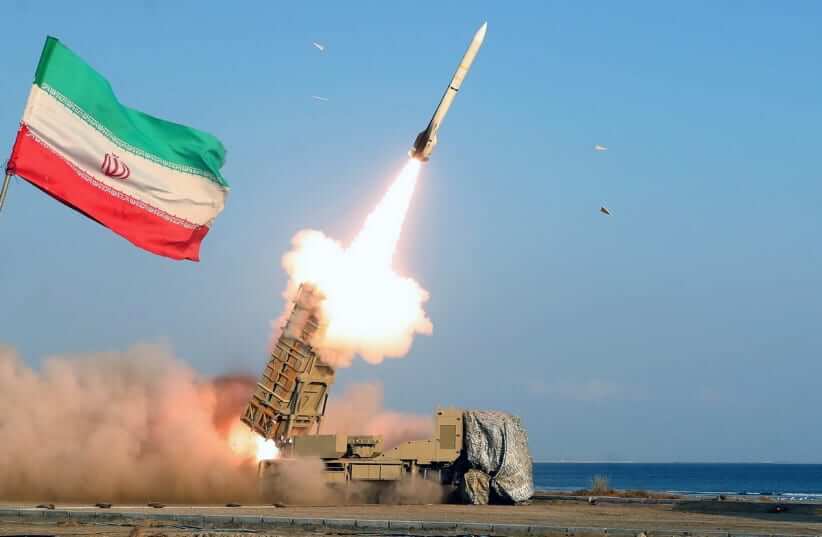
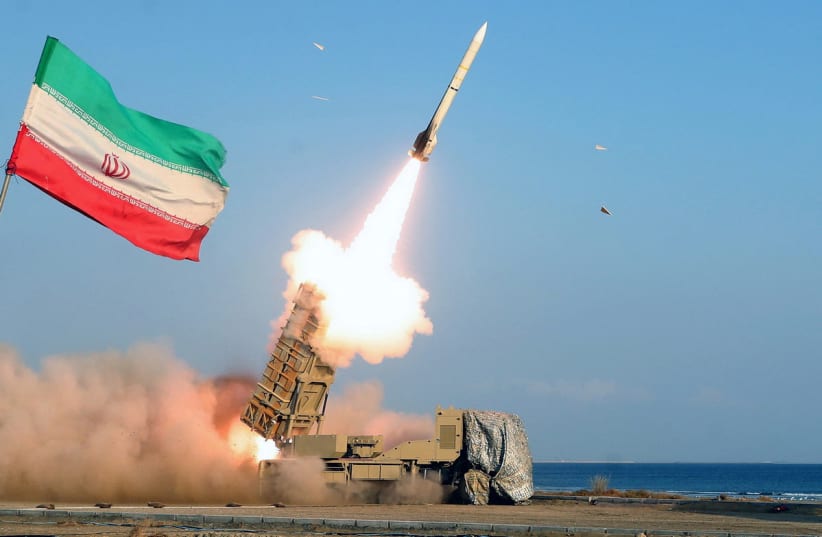
Russia on Monday called Iran “our important partner” while failing to explicitly deny reports that it received short-range ballistic missiles from Tehran to use in its war against Ukraine.

The comments were the latest indication of increased coordination between Moscow and Tehran, a burgeoning partnership that has alarmed Western countries including the US.

CNN and the Wall Street Journal reported last week that Iran had transferred the missiles to Russia, as Moscow continues to wage war in Ukraine after its 2022 invasion.

Kremlin spokesman Dmitry Peskov on Monday said of the reports that “this kind of information is not true every time.” However, he quickly touted Russia’s relationship with Iran and said the relationship would continue to grow.

“Iran is our important partner,” he told reporters. “We are developing our trade and economic relations. We are developing our cooperation and dialogue in all possible areas, including the most sensitive ones, and will continue to do so in the interests of the peoples of our two countries.”

Meanwhile, Iranian officials adamantly denied reports of supplying Russia with missiles.

“We strongly reject allegations about Iran’s role in sending weapons to one side of the war and we assess these allegations as politically motivated by some parties,” Iranian foreign ministry spokesman Nasser Kanaani said at a press conference.

Separately, a senior commander in Iran’s Islamic Revolutionary Guard Corps, an internationally designated terrorist organization, refuted the reports.

“No missile was sent to Russia and this claim is a kind of psychological warfare,” Fazlollah Nozari was quoted by the Iranian Labour News Agency as saying. “Iran does not support any of the parties to the Ukraine-Russia conflict.”

Despite the denials, Ukraine’s foreign ministry said on Monday it had summoned a senior Iranian diplomat to warn of “devastating and irreparable consequences” for bilateral relations if the missile reports were correct.

“Iran must completely and definitively stop providing weapons to Russia in order to prove with actions, not words, the sincerity of its political leadership’s statements about non-involvement in fueling the Russian war machine of death,” the ministry said in a statement on Saturday.

US officials expressed alarm over the idea of Iran supplying Russia with missiles.

“Any transfer of Iranian ballistic missiles to Russia would represent a dramatic escalation in Iran’s support for Russia’s war of aggression against Ukraine,” the White House said.

CIA Director William Burns warned of the growing and “troubling” defense relationship between Russia, China, Iran, and North Korea while speaking at a public event in London over the weekend. He said their increased coordination and cooperation threatened not only Ukraine but also Western allies in the Middle East.

The European Union (EU) described as “credible” information provided by allies indicating Iran has supplied short-range ballistic missiles to Russia to help Moscow wage war in Ukraine.

“We are aware of the credible information provided by allies on the delivery of Iranian ballistic missiles to Russia,” EU spokesman Peter Stano said. “We are looking further into it with our member states and, if confirmed, this delivery would represent a substantive material escalation in Iran’s support for Russia’s illegal war of aggression against Ukraine.”

Stano added that the EU “will respond swiftly and in coordination with international partners, including with new and significant restrictive measures against Iran.”

Western and Ukrainian officials have dismissed denials of Iranian weapons transfers in the past. Russia has been receiving Iranian-made Shahed drones since 2022 and using them against Ukraine, according to analysts and government officials.

Reuters and other media outlets also reported earlier this year that Iran sent ballistic missiles to Russia for use against Ukraine, indicating the latest reported missile transfer wasn’t the first.

Warming ties between Moscow and Tehran have extended beyond military matters. For the past two years, Iran and Russia have been working on a major comprehensive bilateral agreement to strengthen cooperation in a wide array of areas. Officials from both countries have said in recent months that the deal will be signed in the near future without elaborating.


Hirsch also noted that the war will not end under pressure. “There is a direct correlation between the international pressure on Israel and Hamas’ desire to negotiate.”

 MEAD conference (photo credit: Courtesy of MEAD Conference )
MEAD conference
(photo credit: Courtesy of MEAD Conference )
Israel’s chief negotiator for hostages and missing persons warned during the MEAD Conference in Washington that Hamas is murdering hostages in Gaza even as international mediation efforts continue.

“There is a direct link between international pressure on Israel and Hamas’ willingness to negotiate,” Gal Hirsch, Israel’s chief negotiator for hostages and missing persons, said in an interview on the main stage of the MEAD Conference, held in Washington, DC. “While our negotiating team is in Doha, Hamas continues to kill hostages in Gaza. The military pressure will not stop.”

Hirsch, speaking with Israel Hayom political commentator Ariel Kahana, discussed the complex dynamics of negotiations with Hamas. He expressed frustration with what he described as a false narrative that Israel is obstructing a deal. “Unfortunately, many have embraced the narrative pushed by Hamas — that we are the ones blocking the deal. This is false. We have never canceled any deal that was on the table. It simply hasn’t happened,” Hirsch said.

Hirsch emphasized that Hamas’ key demand, to halt the ongoing conflict, is not a viable option until all hostages are returned, Gaza is demilitarized, and its leadership is decentralized. “Hamas is holding on to its only remaining asset — 101 hostages,” Hirsch stated. “The war could end tomorrow, and I believe Gaza could be rebuilt, and I’m sure those concerned about Gaza’s situation would support this.”

 GAL HIRSCH, the government’s liaison on the issue of the hostages, arrives for a meeting earlier this month with families of those held in Gaza, and with hostages since released. (credit: AVSHALOM SASSONI/FLASH90)Enlrage image
GAL HIRSCH, the government’s liaison on the issue of the hostages, arrives for a meeting earlier this month with families of those held in Gaza, and with hostages since released. (credit: AVSHALOM SASSONI/FLASH90)

Despite the challenges, Hirsch remains committed to securing the hostages‘ release. “I believe we need to act to free all the hostages, and I am pursuing every possible avenue to achieve that goal. We are waiting for the final proposal from the mediators and the United States. At the same time, our teams are working on alternative plans B, C, and D.”

Hirsch also noted that the war will not end under pressure. “There is a direct correlation between the international pressure on Israel and Hamas’ desire to negotiate. When Israel is under pressure from its allies and other nations, Hamas feels it has achieved much without negotiating and recognizes the hostages as its most valuable asset right now.”

Details of the conference

The MEAD Conference is a global, apolitical event held for the first time this year in Washington, DC. It serves as a platform for strategic dialogue between the Middle East and the United States. Conference presidents Tom Nides, David Friedman, Dennis Ross, and Elliott Abrams are hosting a series of in-depth geopolitical discussions addressing the region’s evolving dynamics. Senior leaders from the US, Israel, and moderate Arab countries, along with experts in security, economics, diplomacy, and academia, are participating in these discussions.