BEIRUT, Lebanon — A source close to Hezbollah says the reported Israeli drone strike that targeted a vehicle in eastern Lebanon earlier killed an official from the Iran-backed terror group.
“A local Hezbollah official” was killed in an “Israeli drone” strike on a vehicle near the eastern city of Baalbek, the source close to the group says, requesting anonymity as they were not authorized to speak to the media.
Lebanon’s official National News Agency reports one person was killed when an “enemy drone” targeted a vehicle in the Shaat area, around 15 kilometers (nine miles) north of Baalbek.
The area is around 100 kilometers from Lebanon’s southern border with Israel.
The Hamas source said the proposal guaranteed a temporary ceasefire, aid delivery and the withdrawal of Israeli troops.
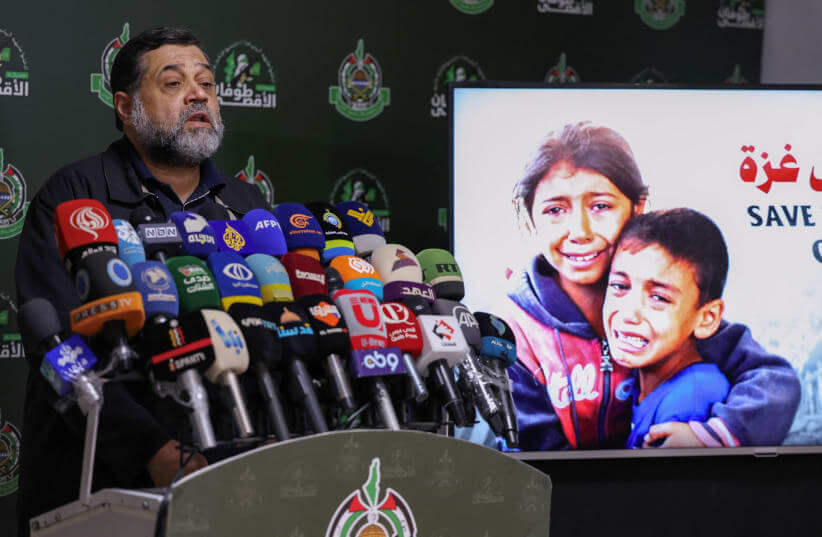
By REUTERS, MAARIVUpdated: JULY 6, 2024 09:39Hamas official Osama Hamdan speaks during a press conference, amid the ongoing conflict between Israel and Hamas, in Beirut, Lebanon June 29, 2024.(photo credit: MOHAMED AZAKIR/REUTERS)
A senior Hamas source said on Saturday that a revised Hamas-Israel deal proposal agreed that talks to release Israeli hostages, including soldiers and remaining men, would start in a 16-day period after the first phase of the agreement.
The source said that the proposal ensures that mediators would guarantee a temporary ceasefire, aid delivery, and withdrawal of Israeli troops as long as indirect talks continue to implement the second phase of the agreement.
The terrorist Islamist group has dropped a demand that Israel first commit to a permanent ceasefire before signing the agreement, and would allow negotiations to achieve that throughout a first six-week phase, the source told Reuters on condition of anonymity because the talks are private.
A Palestinian official close to the internationally mediated peace efforts had said the proposal could lead to a framework agreement if embraced by Israel and would end the nine-month-old war between Israel and Hamas in Gaza.
A source in Israel’s negotiating team, speaking on condition of anonymity, said there was now a real chance of achieving agreement. That was in sharp contrast to past instances in the nine-month-old war in Gaza, when Israel said conditions attached by Hamas were unacceptable.
Hamas informed Hezbollah of its agreement to the ceasefire proposal. Nasrallah welcomed the step.
Israeli officials show signs of deal acceptance
The Wall Street Journal reported that Mossad officials “believe that the cabinet will approve the latest proposal for a ceasefire”
Hostage families speak at a rally in Tel Aviv, 29 July 2024. (credit: Hostage and Missing Families Forum, Paulina Patimer)
Senior Hamas official Osama Hamdan told AFP “The movement expects a response from Israel to its proposals for a ceasefire in Gaza today or tomorrow. If the response is positive, we will discuss the proposals in detail. The movement’s military capabilities in the Gaza Strip are still in a good position for the continuation of the war.”
This week Mossad confirmed that the mediators in the abductee deal conveyed to the negotiation team Hamas’s reference to the outline of the hostage deal. “Israel is examining the reference and will return its answer to the mediators,” it was reported.
Efforts to secure a ceasefire and hostage release in Gaza have intensified over the past few days with active shuttle diplomacy among Washington, Israel and Qatar, which is leading mediation efforts from Doha, where the exiled Hamas leadership is based.
A regional source said the US administration was trying hard to secure a deal before the presidential election in November.
Netanyahu said on Friday that the head of Israel’s Mossad intelligence agency had returned from an initial meeting with mediators in Qatar and that negotiations would continue next week.
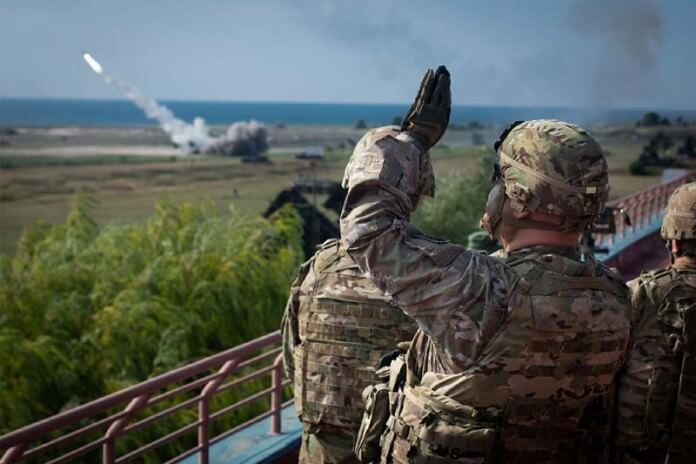
According to recent reports in the Financial Times, negotiations are underway regarding the potential transfer of Patriot air defense systems from Israel to Ukraine, via the United States. The proposed plan involves up to eight Patriot batteries, which would significantly enhance Ukraine’s air defense capabilities in its ongoing conflict with Russian forces.
This potential transfer, while still under discussion and not yet finalized, would proceed in two stages: first, moving the batteries from Israel to the US, and then from the US to Ukraine. If implemented, this move could provide substantial support to Ukraine’s efforts to defend against Russian military operations.
Russia’s UN envoy Vasily Alekseyevich Nebenzya. / president.tatarstan.ru
Needless to say, Russia’s UN envoy Vasily Nebenzya is not OK with this idea. He told a news conference on Monday that “The weapons, whoever they are sent by […] to Ukraine, will eventually be destroyed, just like other Western and US weapons. That is obvious. But I assume that this could of course have certain political consequences.”
Nebenzya assembled the press conference on July 1, to mark the fact that Russia had assumed the rotating presidency of the UN Security Council for one month.
Earlier this year, the Israeli Air Force revealed plans to phase out its Patriot batteries, citing their age and intentions to upgrade to more sophisticated, home-made air defense systems. Israel’s relationship with the Patriot system began during the 1991 Gulf War when the Bush I administration provided them to counter Iraqi Scud missiles. Notably, there were reports that the Patriots’ debris caused more urban damage in Israel than the Scuds themselves.
Despite these retirement plans, Israel has not yet fully decommissioned its Patriot systems. They remain active in the current war with Hamas, and Israel likely views them as a potential asset in case of escalated tensions with Hezbollah. This ongoing utility has delayed the complete phaseout of the Patriot batteries from Israel’s air defense network.