

US ‘satisfied’ with new Rafah invasion plan: Report

By World Israel News Staff

The Biden administration has signaled its approval of a revised Israeli military operation in Rafah, which is significantly less wide-scale than the original plan.

In recent weeks, Israel has evacuated nearly one million Gazan civilians from Rafah, which is widely seen as the last major stronghold for the Hamas terror group in the Strip.

Washington had repeatedly asserted that it was Israel’s duty to evacuate non-combatants from the city before beginning its operation.

“It’s fair to say, I think the Israelis have updated their plans. They’ve incorporated many of the concerns that we have expressed,” a senior Biden administration told media outlets, speaking anonymously.

“I have to say after coming out of Israel these past couple of days… it is pretty clear that the Israelis are taking those concerns seriously.”

Referencing a recent visit by State Department officials to Israel, which including meeting with Prime Minister Benjamin Netanyahu, the official said that Israel’s Rafah incursion is part of “an ongoing discussion, ongoing conversation. It’s been constructive.”

However, the official stressed that the ultimate responsibility for the outcome of the operation would fall on Israel.

“What matters is what actually happens,” the official added. “We don’t greenlight Israeli operations. It’s not our role.”

Earlier in May, Israel began targeted raids in Rafah’s eastern neighborhoods.

The prospect of an Israeli ground invasion of Gaza triggered intense pushback from the Biden administration, as Washington threatened to withhold military aid from Israel should it move forward with the incursion.

Netanyahu was forced to delay the operation several times as tensions with the U.S. continued to worsen.

It’s unlikely that the U.S. will give an official public approval for new Rafah plans, but it appears that the threat of cutting off military supplies is no longer relevant.
Norway recognizes Palestinian state, Ireland to follow

The Norwegian Government has decided that Norway will recognize Palestine as a state,” Prime Minister Jonas Gahr Støre said, as he explained that the move was his country’s response to the Gaza war.

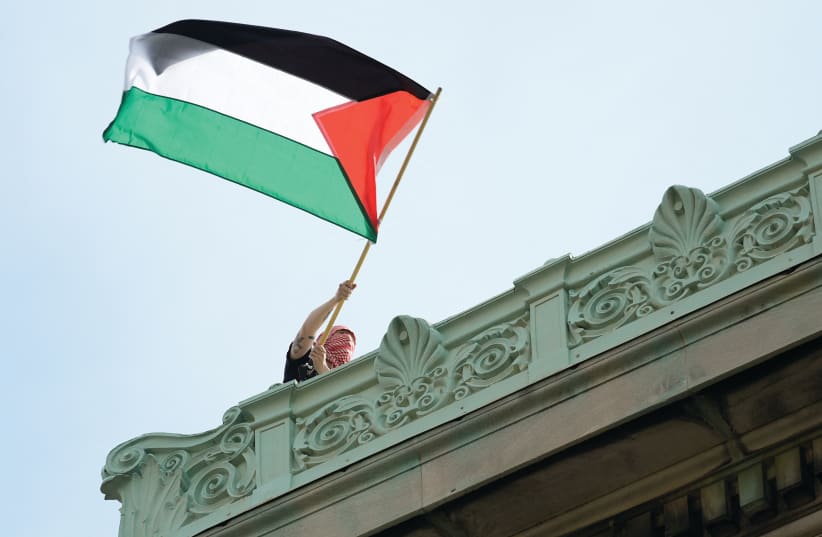
 A STUDENT protester waves a Palestinian flag above Hamilton Hall on the campus of Columbia University in New York, in late April. (photo credit: MARY ALTAFFER/REUTERS)
A STUDENT protester waves a Palestinian flag above Hamilton Hall on the campus of Columbia University in New York, in late April.
(photo credit: MARY ALTAFFER/REUTERS)
Norway announced its recognition of Palestine as a state on Wednesday morning and Ireland is expected to follow suit within the hour.

‘The Norwegian Government has decided that Norway will recognize Palestine as a state,” Prime Minister Jonas Gahr Støre said, as he explained that the move was his country’s response to the Gaza war.

“In the midst of a war, with tens of thousands killed and injured, we must keep alive the only alternative that offers a political solution for Israelis and Palestinians alike: Two states, living side by side, in peace and security,’ he explained.

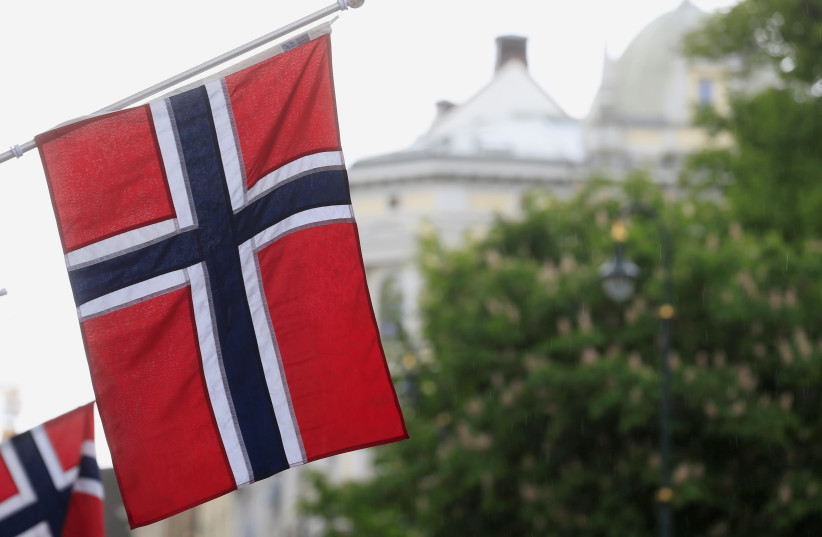
Norwegian flags flutter at Karl Johans street in Oslo, Norway May 31, 2017. (credit: REUTERS)Enlrage image
Norwegian flags flutter at Karl Johans street in Oslo, Norway May 31, 2017. (credit: REUTERS)

‘No two-state solution without a Palestinian state’

“The Palestinian people have a fundamental, independent right to self-determination. Both Israelis and Palestinians have a right to live in peace in their respective states,” he said.

“There will be no peace in the Middle East without a two-state solution. There can be no two-state solution without a Palestinian state. In other words, a Palestinian state is a prerequisite for achieving peace in the Middle East,’ Støre stressed.


Qatari officials have denied involvement with the altered deal, placing the blame squarely on Egypt.

 Palestinians react after Hamas accepted a ceasefire proposal from Egypt and Qatar, in Rafah, in the southern Gaza Strip, May 6, 2024. In Israel, protesters block a highway demanding the immediate release of hostages. (photo credit: REUTERS, REUTERS/SHANNON STAPLETON)
Palestinians react after Hamas accepted a ceasefire proposal from Egypt and Qatar, in Rafah, in the southern Gaza Strip, May 6, 2024. In Israel, protesters block a highway demanding the immediate release of hostages.
(photo credit: REUTERS, REUTERS/SHANNON STAPLETON)
Egypt altered ceasefire terms before handing agreements to Hamas, three anonymous sources told CNN News in a report published on Tuesday.

According to the report, Egypt changed the details of the deal submitted to the Hamas terrorist organization after it had been signed by Israel and before reaching Hamas. It was also reported that this move led to great anger among Israel, the US, and Qatar against the Egyptians.

One source even claimed that the Egyptians “deceived us all.”

Who was behind the altered agreement?

A senior Egyptian intelligence official named Ahmed Abdel Khalek was reportedly responsible for the change. A source claimed that Khalek had been telling Hamas one thing and Israel another.

Qatari Prime Minister Mohammed bin Abdulrahman bin Jassim Al Thani assured Mossad that Egypt had acted alone in making the changes, two of the informants told CNN.

 DEMONSTRATORS RALLY for the release of the hostages on Saturday night at Hostages Square in Tel Aviv. Prolonged exposure to darkness for several months can lead to eye and vision disorders which can have lasting, severe consequences, says the writer. (credit: AVSHALOM SASSONI/FLASH90)Enlrage image
DEMONSTRATORS RALLY for the release of the hostages on Saturday night at Hostages Square in Tel Aviv. Prolonged exposure to darkness for several months can lead to eye and vision disorders which can have lasting, severe consequences, says the writer. (credit: AVSHALOM SASSONI/FLASH90)

The ceasefire deal announced by Hamas on May 6 had not been the deal constructed by the US or Qatar, the sources said.

An Egyptian source told CNN that Egypt had received Hamas’s response and relayed it to Israel.

“Several alternatives and scenarios were proposed to overcome the main point of contention related to ending the war,” said the source.

“Hamas was telling their people, ‘We will have a deal in place tomorrow,’” the first source said. “All sides were under the assumption the Egyptians provided the same document” that Israel had signed off on.

CIA Director Bill Burns, who helped orchestrate the unaltered version of the hostage deal, was reportedly both angry and embarrassed that the deal had been altered without US, or Israeli knowledge.

Burns “almost blew a gasket,” said the source.