In this photo released by the Iranian Presidency Office, Iranian President Ebrahim Raisi, right, shakes hands with Hamas chief Ismail Haniyeh at his office in Tehran, Iran, March 27, 2024. (Iranian Presidency Office via AP)
The Palestinian Islamist terror group Hamas mourns the death of Iranian President Ebrahim Raisi, saying he had supported it during the ongoing war with Israel.
“These leaders supported the legitimate struggle of our people against the Zionist entity, provided valued support to the Palestinian resistance, and made tireless efforts in solidarity and support in all forums and fields for our people in the steadfast Gaza Strip during the Battle of Al-Aqsa Flood,” Hamas says referring to the current war with Israel which began on October 7 when Hamas launched a devastating assault on Israel, killing some 1,200 people and taking 252 hostages.
“They also made significant political and diplomatic efforts to stop the Zionist aggression against our Palestinian people,” says Hamas in a statement.
Lebanon’s Hezbollah terror group also mourns Raisi as a “protector of resistance movements.”
“Hezbollah in Lebanon extends its deepest condolences,” the group says in a statement, adding that it knew Raisi “closely for a long time” and that he was “a strong supporter, and a staunch defender of our causes… and a protector of the resistance movements.”
This does “nothing” for regime change, said Dr. Meir Javedanfar, an Iranian lecturer at Reichman University, as he explained that the impact would largely be domestic.
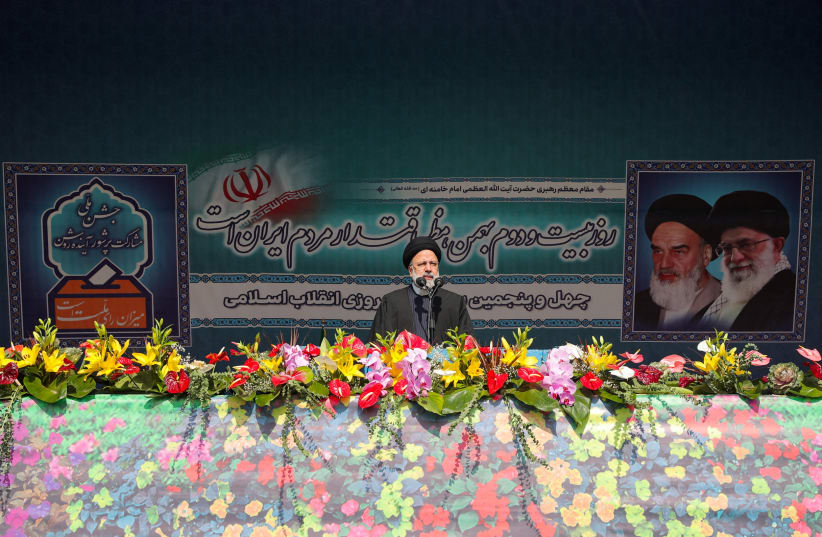
By TOVAH LAZAROFFUpdated: MAY 20, 2024 09:33Iranian President Ebrahim Raisi gives a speech during the 45th anniversary of the Islamic Revolution in Tehran, Iran, February 11, 2024.(photo credit: IRAN’S PRESIDENCY/WANA (WEST ASIA NEWS AGENCY)/HANDOUT VIA REUTERS)
With the death of Iranian President Ebrahim Raisi and Foreign Minister Hossein Amirabdollahian in Sunday’s helicopter crash, those hoping that their sudden demise would lead to a regime change in the Islamic Republic are likely to be disappointed, experts said.
This does “nothing” for regime change, said Dr. Meir Javedanfar, an Iranian lecturer at Reichman University, as he explained that the impact would largely be domestic.
Nor did experts believe that their deaths could impact Iran’s enmity with Israel, its support of the proxy groups Hamas and Hezbollah, who are at war with Israel, or its push to produce nuclear weapons.
Things expected to remain the same
All the regional and global aggression will continue, experts maintained.
Former national security adviser Maj.-Gen. Yaakov Amidror said that, at the end of the day, it is the Supreme Leader, Ayatollah Ali Khamenei, who sets the country’s policies.
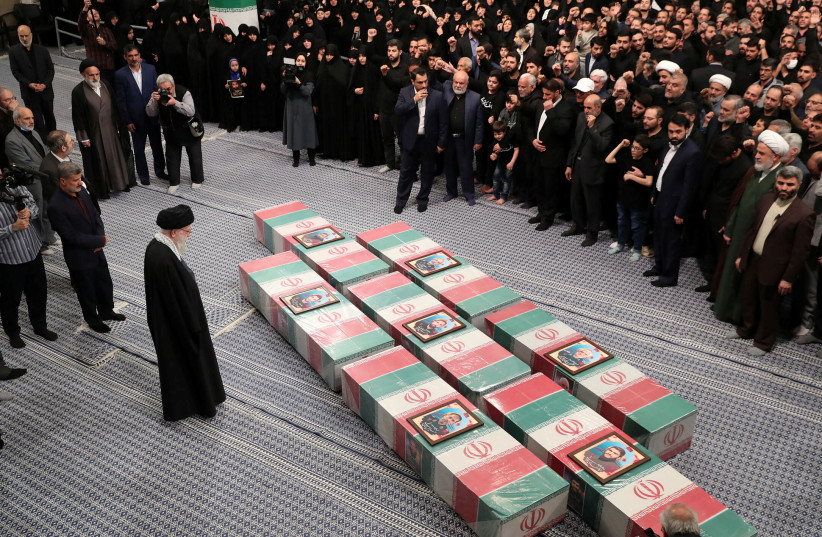
Iran’s Supreme Leader, Ayatollah Ali Khamenei looks at the coffins of members of the Islamic Revolutionary Guard Corps who were killed in the Israeli airstrike on the Iranian embassy complex in the Syrian capital Damascus, during a funeral ceremony in Tehran, Iran April 4, 2024. (credit: Office of the Iranian Supreme Leader/WANA (West Asia News Agency)/Handout via REUTERS)
In a post on X, he wrote, “We kiss the arms of heroic Hamas [in support] and all the brave resistance groups who are the pride of the world of Islam, and we salute the stalwart determination of the resistant people of Gaza.”
Amidror explained that Raisi’s and Amirabdollahian’s replacements will use different language, but in the end, “the decision-making process is not done by the president and not by the minister of Foreign Affairs.”
Elected to the presidency in 2021, the 64-year-old Raisi was believed to be a potential successor to Khamenei.“He is a former hanging judge. He sent a lot of people to the gallows in the late 1980s,” Amidror said.
“The only thing that made him stand out” was that a number of Iranian researchers outside of the country believed that he was “a potential successor,” he explained.
Details of the crash
Should foul play have led to the crash, then it was with an eye to the succession race. Foreign powers would not have had any reason to go after him, as he was not an influential player in the country’s defense establishment, Javedanfar explained.
The crash was likely due to technical problems or bad weather, he noted.
The helicopter “was flying in a very foggy area of the Iranian border with Azerbaijan. I mean, the place… is a very mountainous, foggy area. And Iran’s fleet of helicopters is very old,” Javedanfar said.
Amidror discounted the possibility that Israel was behind the crash.
“It’s a waste of energy” to take action against Raisi, Amidror determined.
“If you want to do something that will have influence either domestically or [externally],” then one would not target the president, he added.
Prime Minister Benjamin Netanyahu (L) meets with US National Security Adviser Jake Sullivan (R) in Jerusalem, May 19, 2024. (Kobi Gideon/GPO)
Visiting US National Security Adviser Jake Sullivan laid out to Prime Minister Benjamin Netanyahu the opportunity currently available for Israel to normalize relations with Saudi Arabia if Jerusalem agrees to a pathway to a future Palestinian state.
Sullivan arrived in Israel Sunday after holding “constructive” talks on the Biden administration’s “comprehensive vision for an integrated Middle East region” with Crown Prince Mohammed bin Salman in Dammam, Saudi Arabia, the White House says.
The effort appears to be a non-starter in Israel, with Netanyahu reiterating again yesterday that he would not accept a Palestinian state, even if it meant a Saudi normalization deal. Riyadh and Washington have been clear that they won’t sign onto a series of bilateral agreements without significant movement toward a two-state solution.
This did not stop Sullivan from again pitching the idea to Netanyahu, as he briefed him on his meetings in Saudi Arabia and on “the potential that may now be available for Israel, as well as the Palestinian people,” says the White House readout.
Sullivan also met with President Isaac Herzog, National Security Council chair Tzachi Hanegbi and Strategic Affairs Minister Ron Dermer, also discussing with them the ongoing efforts to secure the release of the hostages and “the enduring defeat of Hamas,” according to the White House.
The two goals appear at odds, given that the US is aiming to turn the hostage deal it is currently brokering into a permanent ceasefire that would likely leave Hamas in Gaza in some form.
But US officials told The Times of Israel last week that the diplomatic initiative it is advancing with international partners will marginalize the terror group and that it is the only alternative Israel has to permanently occupying Gaza without assistance from its Arab allies in stabilizing the enclave.