
Netanyahu spoke as a Hamas delegation was in Cairo for hostage talks with CIA Director William Burns and officials from the mediating countries Egypt and Qatar.
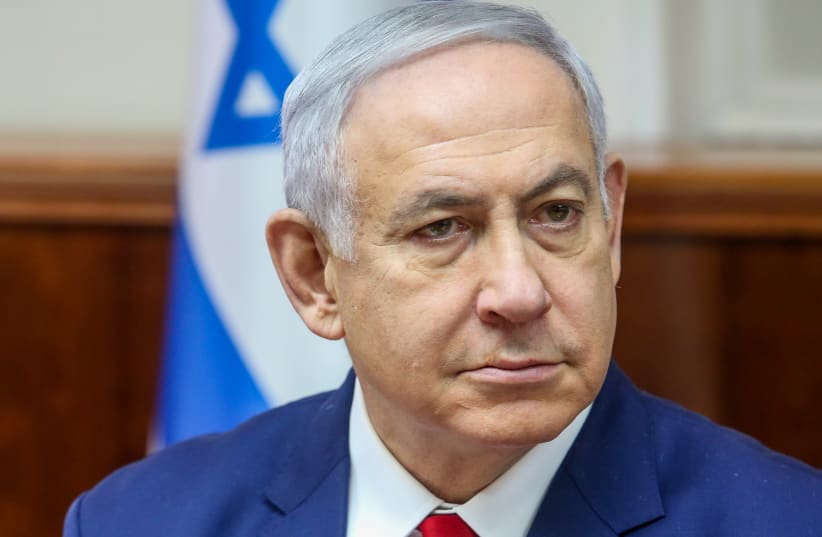
Prime Minister Benjamin Netanyahu at a weekly cabinet meeting, December 23rd, 2018 (photo credit: MARC ISRAEL SELLEM/THE JERUSALEM POST)
Prime Minister Benjamin Netanyahu at a weekly cabinet meeting, December 23rd, 2018
(photo credit: MARC ISRAEL SELLEM/THE JERUSALEM POST)
Israel is prepared to pause the Gaza war in exchange for a deal to release the hostages but is not willing to end it, Prime Minister Benjamin Netanyahu said during the weekly government meeting on Sunday.

“We are working in every possible way to free the hostages; this is our top priority.,” he said.

Netanyahu spoke as a Hamas delegation was in Cairo for hostage talks with CIA Director William Burns and officials from the mediating countries Egypt and Qatar.

Simultaneously, Hamas in Gaza fired rockets at the area of the Kerem Shalom crossing for goods into the enclave, injuring seven.
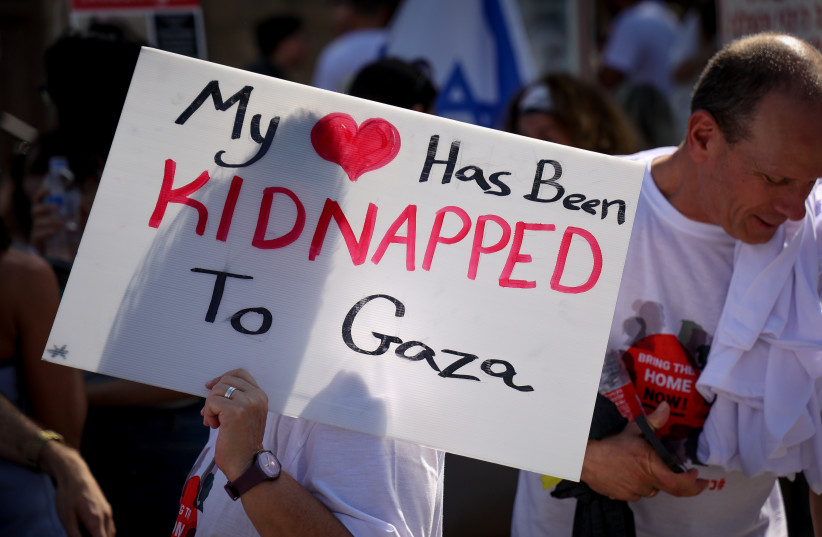
 Kfar Aza residents and People call on the release of Israelis held hostage by Hamas terrorists in Gaza, outside the Ministry of Defense in Tel Aviv. October 26, 2023. (credit: Jonathan Shaul/Flash90)Enlrage image
Kfar Aza residents and People call on the release of Israelis held hostage by Hamas terrorists in Gaza, outside the Ministry of Defense in Tel Aviv. October 26, 2023. (credit: Jonathan Shaul/Flash90)

Defense Minister Yoav Gallant told soldiers in the south that there were “troubling signs that Hamas does not mean to agree to any deal.”

At the government meeting, Netanyahu said that “Israel has been, and still is, ready for a pause in the fighting in order to free our hostages,” Netanyahu stressed as he explained that the IDF had already allowed for a week-long lull in the fighting in November to facilitate at hostage deal in which 105 captives were freed.

“This is what we are ready to do today,” he stated.

A deal is on the table, in which some 33 of the remaining 132 hostages would be freed over 40 days, in what would be the first phase of a three-part deal.

Hamas had reportedly agreed to the first phase, which would include a pause to the war, without an agreement to end the war, with the understanding that such a step would happen later in the process.

Netanyahu says not intent on relenting

Netanyahu, however, has clarified, including on Sunday, that he has no intention of relenting on the issue of a permanent ceasefire until Hamas has been destroyed. That can not happen until the IDF executes a military operation in Rafah.

“Israel will not agree to Hamas’s demands, which would mean surrender; it will continue fighting until all of its objectives are achieved,” he stated.

“In the last few weeks we have been working around the clock to forge an agreement for the return of the hostages,” Netanyahu said, adding that the negotiating team was given a very broad mandate about terms they could agree to.

“In recent weeks, we have been working around the clock to formulate an agreement that would return our hostages,” Netanyahu explained.

The negotiating team was given a “very broad mandate to move forward on the release. We did so out of a deep commitment to the hostages, and to end the terrible suffering of the families,” he stressed.

“Throughout the negotiations, Israel has shown a willingness for significant movement, which has been described by US Secretary of State Blinken and others as ‘very generous.’

“But while Israel has shown this willingness, Hamas has still held to its extreme positions, first and foremost the withdrawal of our forces from the Strip, the conclusion of the war and leaving Hamas intact,” Netanyahu said.

Israel can not accept a situation “in which Hamas’s battalions leave their tunnels, reestablish control over the Strip, rebuild their military industries and go back to threatening the citizens of Israel in the communities of the Western Negev, the cities of the south and throughout the country,” Netanyahu said.

In Cairo, Hamas leaders held a second day of truce talks with Egyptian and Qatari mediators, with no apparent progress reported as the group maintained its demand that any agreement must end the war in Gaza, Palestinian officials said.

Hamas leader Ismail Haniyeh said on Sunday that the Palestinian militant group was keen on reaching a comprehensive ceasefire that will end Israeli “aggression,” guarantee Israel’s withdrawal from Gaza, and achieve a serious hostage-swap deal.

Haniyeh, in his statement, also blamed Israeli Prime Minister Benjamin Netanyahu for “the continuation of the aggression and the expansion of the circle of conflict, and sabotaging the efforts made through the mediators and various parties.”

In Jerusalem, Netanyahu stressed that surrounding Hamas’s demands to end the war would only ensure that the terror group would, in the future, carry out another October 7-style attack.

Such a surrender would be a “great victory for Hamas, Iran, and the entire axis of evil” and would “exhibit terrible weakness to our friends and our enemies.”

 

A senior Hamas official insists terror group will “not agree under any circumstances” to a truce in Gaza that does not explicitly include a complete end to the war.

The official, who asked not to be named, also accuses Prime Minister Benjamin Netanyahu of “personally hindering” efforts to reach a truce agreement due to “personal interests.”


Netanyahu opted not to send a delegation without consulting with War cabinet ministers Benny Gantz and Gadi Eisenkot.

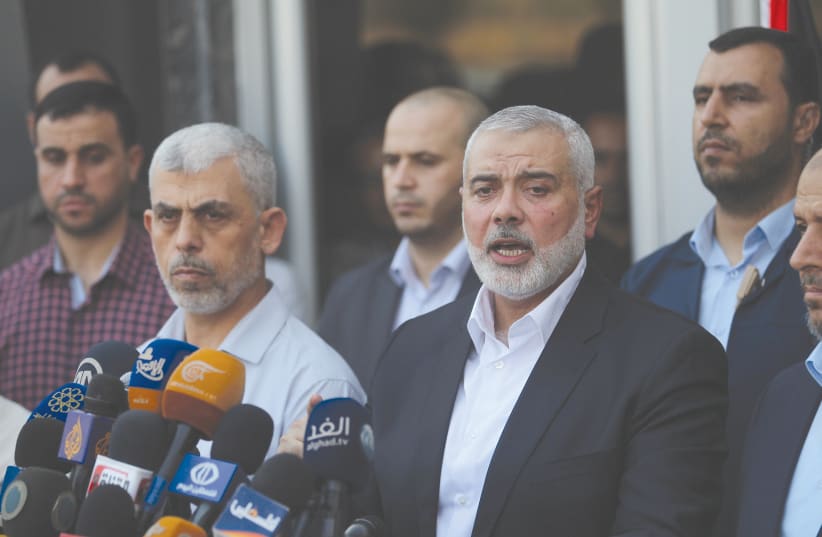
HAMAS CHIEF Ismail Haniyeh speaks to the press upon his arrival at the Rafah border crossing in the southern Gaza Strip in 2017. (photo credit: ABED RAHIM KHATIB/FLASH90)
HAMAS CHIEF Ismail Haniyeh speaks to the press upon his arrival at the Rafah border crossing in the southern Gaza Strip in 2017.
(photo credit: ABED RAHIM KHATIB/FLASH90)
Representatives from Hamas, Egypt, Qatar, and the United States met in Cairo on Saturday for talks on a possible hostage deal, while Israel delayed sending a delegation until the terror group gave a response to the latest proposal on the table.

Netanyahu opted not to send a delegation without consulting with War cabinet ministers Benny Gantz and Gadi Eisenkot, while Defense Minister Yoav Gallant and Strategic Affairs Mintier Ron Dermer were privy to the decision, according to media reports.

Egyptian sources said CIA Director William Burns arrived in Cairo already on Friday. KAN News reported that the US has pushed Israel to send a delegation to join the talks as protestors and relatives of the hostages rallied in Tel Aviv demanding that the government finalize a deal now.

The rally was held amid a flurry of media reports that expressed optimism and pessimism regarding the potential for a deal, in a process that appeared to hit a crucial point, even as it remained stymied over a basic disagreement as to whether a deal would include an Israeli promise to end the war.

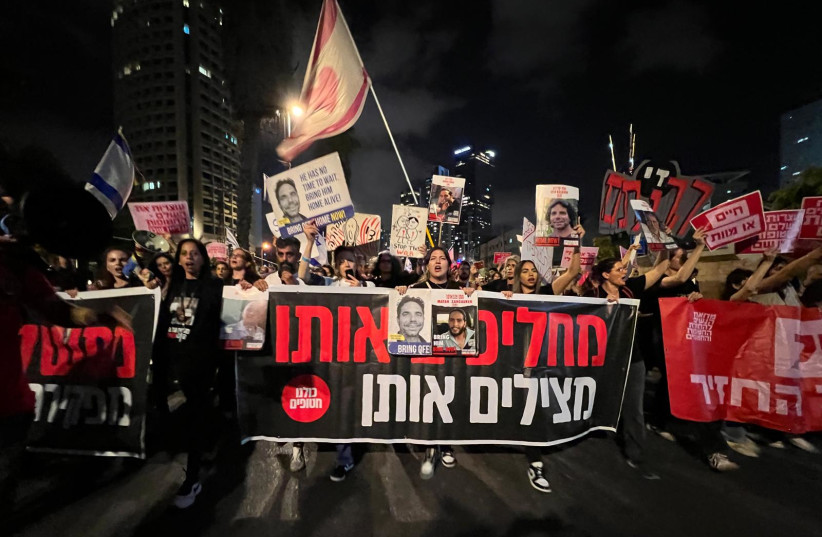
 Marching on Shaul Hamelech Boulevard in Tel Aviv. (credit: YAEL GADOT)Enlrage image
Marching on Shaul Hamelech Boulevard in Tel Aviv. (credit: YAEL GADOT)

Channel 12 reported that the US had given Hamas a guarantee that the deal would lead to the end of the war.

An Israeli diplomatic source emphasized that Israel was determined to continue the war, irrespective of any hostage deal.

Reports that “Israel agreed to the end of the war as part of a hostage deal or that Israel would allow the mediators to provide guarantees for the end of the war are not true,” the source stated.

“Up to this moment, Hamas has not given up its demand for an end to the war, thus thwarting the possibility of reaching an agreement,” the source said.

Earlier the source issued a similar message, stating that “Israel will under no circumstances agree to the end of the war as part of an agreement to release our hostages.”

“The IDF will enter Rafah and destroy the remaining Hamas battalions there – whether or not there will be a temporary lull for the release of our hostages,” the source stated.

The Wall Street Journal reported on Friday that Netanyahu has warned Hamas that Israel would embark on a military operation in Rafah within a week if there was no response to a hostage deal.

Israel has viewed a Rafah operation as an important pressure lever to sway Hamas to make a deal for the remaining 132 hostages. It has been presumed that the first phase of what would be a three-phase deal would see the release of 33 of the hostages over 40 days, with a focus on the female, elderly, and informed captives, including the female soldiers.

Taher Al-Nono, a Hamas official and advisor to Hamas chief Ismail Haniyeh, said on Saturday meetings with Egyptian and Qatari mediators had begun and Hamas was dealing with their proposals “with full seriousness and responsibility.”

However, he reiterated the group’s demand that any deal should include an Israeli pullout from Gaza and an end to the war, conditions that Israel has previously rejected.

“Any agreement to be reached must include our national demands; the complete and permanent ending of the aggression, the full and complete withdrawal of the occupation from Gaza Strip, the return of the displaced to their homes without restriction, and a real prisoner swap deal, in addition to the reconstruction and ending the blockade,” the Hamas official told Reuters.

The Hamas delegation arrived from the terror group’s political office in Qatar, which, along with Egypt, has tried to mediate a follow-up to an initial hostage deal in November, that saw a brief lull in the fighting.

Before the talks began there was some optimism over a potential deal.

“Things look better this time but whether an agreement is on hand would depend on whether Israel has offered what it takes for that to happen,” a Palestinian official with knowledge of the mediation efforts, who asked not to be named, told Reuters.

Washington has urged Hamas to agree to the deal.

Hamas said on Friday it would come to Cairo in a “positive spirit” after studying the latest proposal for a deal, little of which has been made public.

Israel’s reported preliminary agreements

Israel has given a preliminary nod to terms which one source said included the return of between 20 and 33 hostages in exchange for the release of hundreds of Palestinian prisoners and a weeks-long suspension of fighting.

That would leave around 100 hostages in Gaza, some of whom Israel says have died in captivity. The source, who asked not to be identified by name or nationality, told Reuters their return may require an additional deal with broader Israeli concessions.

“That could entail a de facto, if not formal, end to the war – unless Israel somehow recovers them through force or generates enough military pressure to make Hamas relent,” the source said.

Egypt made a renewed push to revive negotiations late last month, alarmed by the prospect of an Israeli assault against Hamas in the southern Gaza city of Rafah, where more than 1 million Palestinians have taken shelter near the border with Egypt’s Sinai Peninsula.

A major Israeli operation in Rafah could deal a huge blow to fragile humanitarian operations in Gaza and put many more lives at risk, according to UN officials. Israel says it will not be deterred from taking Rafah eventually and is working on a plan to evacuate civilians.

Saturday’s Cairo talks come as Qatar reviews its role as mediator, according to an official familiar with Doha’s thinking. Qatar may cease hosting the Hamas political office, said the official, who did not know if, in such a scenario, the Palestinian group’s delegates might also be asked to leave.

The war began after Hamas stunned Israel with a cross-border raid on Oct. 7 in which 1,200 people were killed and 252 hostages taken.

According to Hamas, more than 34,000 Palestinians have been killed since the war started. Israel has said that at least 13,000 of the fatalities are combatants.

Maya Gur Arieh contributed to this report.