Military says it targeted terror group’s infrastructure in Baalbek region, known to be a Hezbollah stronghold


The Israel Defense Forces said Wednesday that it carried out an airstrike against a site belonging to Hezbollah’s air defense unit in northeastern Lebanon’s Baalbek, hours after the terror group carried out an explosive drone attack on northern Israel, wounding 14 soldiers and four civilians,

In a short statement, the IDF said fighter jets struck Hezbollah air defense infrastructure north of the city of Baalbek, almost 100 kilometers (60 miles) from the Israeli border.

According to Lebanese media, the strike took place near the town of Iaat.

Baalbek has been identified in the past as a Hezbollah stronghold. The strike marked the sixth time amid the war in the Gaza Strip that Israel struck Hezbollah positions in the Baalbek area.

The airstrike deep in Lebanon came in response to the explosive drone attack in the northern border town of Arab al-Aramshe.

Hezbollah claimed responsibility for the attack, saying it targeted a building being used by the Israeli military with guided missiles and explosive-laden drones.

According to the IDF’s initial probe, Hezbollah fired two anti-tank missiles at the town, before launching the drones, which directly hit a community center.

Though the town has been largely evacuated, soldiers are stationed there and may have used the building as a gathering space.

The victims were taken to Galilee Medical Center in Nahariya, which said that one was listed in critical condition and four others were seriously wounded. The remaining victims were moderately and lightly hurt, the hospital added.

According to the Israel Defense Forces, 14 of the victims were soldiers, including the five listed in critical and serious condition. The four civilian victims were all lightly hurt.

The terror group said the attack was a response to the killing of three of its members, including two commanders, in Israeli strikes in southern Lebanon a day earlier.

Warning sirens did not sound. The IDF was investigating why the alarms were not activated before the strike, and why the drone was not intercepted.

Footage posted to social media showed the explosive-laden drone crashing down on the community center.

Not long after the strike, alarms warning of incoming rockets sounded twice in Arab al-Aramshe.

Following the attack, the IDF said it targeted the launch sites.

Fighter jets also struck buildings used by the terror group and where Hezbollah operatives were gathered, along with other infrastructure, in southern Lebanon’s Ayta ash-Shab, Naqoura and Yarine, the military added.

Since October 8, Hezbollah has attacked Israeli communities and military posts along the border on a daily basis with rockets, drones, anti-tank missiles and other means, saying it is doing so to support Gaza amid the war there.

The exchange of fire Wednesday came a day after Hezbollah launched two explosive-laden drones at northern Israel, wounding three people. Also on Tuesday, the IDF killed two top Hezbollah commanders and a third member of the terror group in airstrikes in southern Lebanon.

Israel has threatened to go to war to force Hezbollah away from the border if it does not retreat and continues to threaten northern communities, from where some 70,000 people were evacuated to avoid the fighting.

So far, the skirmishes on the border have resulted in eight civilian deaths on the Israeli side, as well as the deaths of 10 IDF soldiers and reservists. There have also been several attacks from Syria, without any injuries.

Hezbollah has named 278 members who have been killed by Israel during the ongoing skirmishes, mostly in Lebanon, but some also in Syria. In Lebanon, another 54 operatives from other terror groups, a Lebanese soldier and at least 60 civilians have been killed.
US, EU urge Israel not to spark regional war in Iran response

The US and the EU spoke out as the IDF has made a decision on how to respond but has not yet set the timing for when to take action.

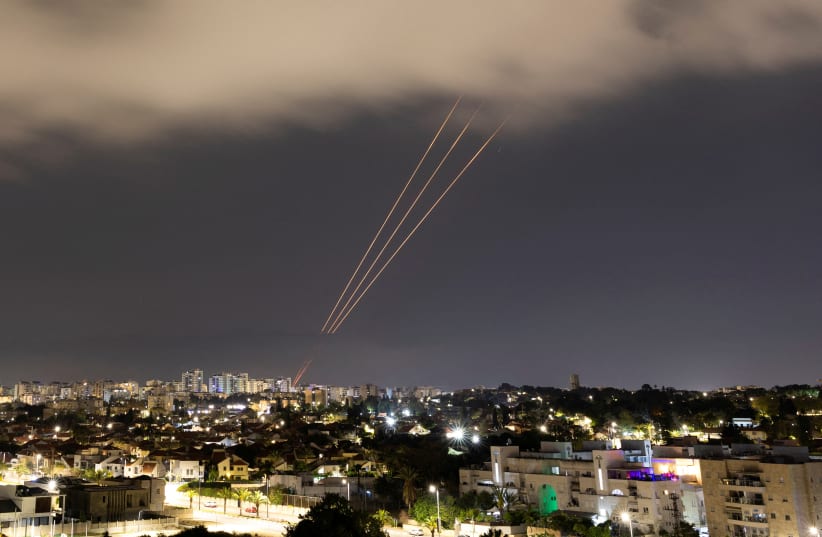
 An anti-missile system operates after Iran launched drones and missiles towards Israel, as seen from Ashkelon, Israel April 14, 2024. (photo credit: REUTERS/AMIR COHEN)
An anti-missile system operates after Iran launched drones and missiles towards Israel, as seen from Ashkelon, Israel April 14, 2024.
(photo credit: REUTERS/AMIR COHEN)
The United States and the European Union urged Israel to spark a regional war when it responded to Iran’s missile and drone attack against the Jewish state over the weekend.

US President Joe Biden “doesn’t want to see a war with Iran. He doesn’t want to see the conflict widen or deepen, National Security Communications Adviser John Kirby told reporters in a gaggle aboard Air Force One on Tuesday.

European Union foreign policy chief Josep Borrell called on Israel to constrain its response and refrain from taking escalatory steps.

“We are standing by Israel and supporting Israel against the Iranian attacks,” Borrell said on Tuesday.

He cautioned, however, that “every time another step is taken on that ladder, the intensity of the military response increases, and we will end up with a fully blown war which nobody wants.” Borrell spoke with reporters in Brussels as he reported on the results of an informal virtual meeting he held with the bloc’s 27 foreign ministers on Tuesday.

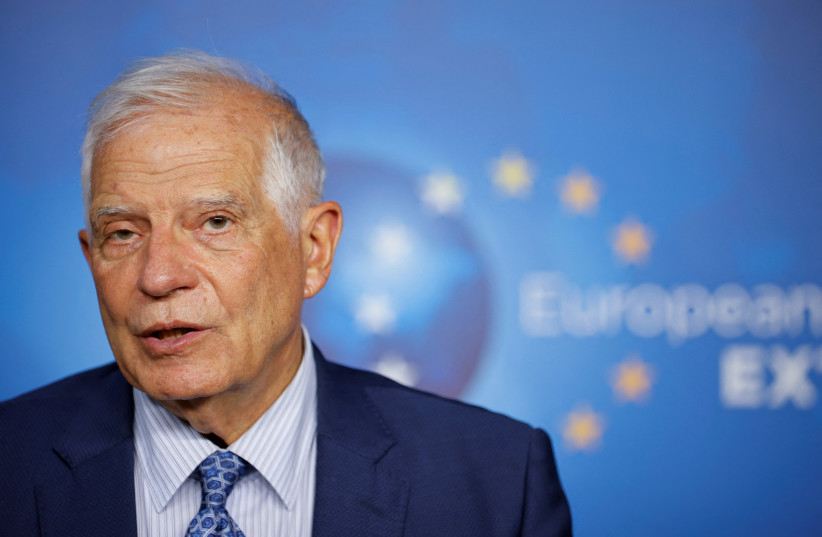
 European Union Foreign Policy Chief Josep Borrell speaks on the tensions between the neighbouring Western Balkan nations in Brussels, Belgium, August 18, 2022. (credit: REUTERS/Johanna Geron)Enlrage image
European Union Foreign Policy Chief Josep Borrell speaks on the tensions between the neighbouring Western Balkan nations in Brussels, Belgium, August 18, 2022. (credit: REUTERS/Johanna Geron)

“We have to mobilize all of our diplomatic means to avoid any move”  that would lead “us into a regional war. That is what we’re trying to avoid,” he stated.

The US and the EU spoke out as the IDF has made a decision on how to respond but has not yet set the timing for when to take action.

A war cabinet meeting that was scheduled for Tuesday, was delayed until Wednesday.

German Foreign Minister Annalena Baerbock flew to Israel on Tuesday. British Foreign Minister David Cameron was expected to arrive on Wednesday to discuss the need for a moderate Iranian response with Israeli officials.

British Prime Minister Rishi Sunak issued a similar message when he spoke by phone Tuesday with his Israeli counterpart Benjamin Netanyahu

“(Sunak) stressed that significant escalation was in no one’s interest and would only deepen insecurity in the Middle East. This was a moment for calm heads to prevail,” Sunak’s office said in a readout of the call.

Israel weathered the attack due to the combined efforts of a newly forged regional military coalition that involved the IDF as well as the British, French, Jordanian, and American armies. The leaders of those countries feel that they have a particular stake in a decision that Israel takes.

US Secretary of State Antony Blinken held an intense series of diplomatic conversations to avoid escalation, State Department spokesperson Matthew Miller told reporters in Washington.

Blinken spoke with the Prime Minister and Foreign Minister of Qatar on Tuesday and continued talks with members of the war cabinet, Miller said.

Blinken is delivering the same message in every conversation that the US does not want to see further escalation of the conflict.

Israel has not informed the State Department of any plans to respond to Iran, Miller said.

“We have been clear that we are committed to Israel’s defense, but we do want to see – as you’ve heard multiple members of the administration say – an escalation of this conflict,” Miller stressed

The State Department is working to ensure a “coordinated diplomatic response” to the escalatory actions taken by Iran, Miller said, as evidenced by Blinken and Biden’s conversations with G7 counterparts.

The G7 is expected to meet on Wednesday with US President Joe Biden participating.

In Brussels Borrel said, the EU’s foreign ministers and defense ministers will convene this coming Monday and will also meet with the members of the Gulf Cooperation Council.

The EU is looking to expand its restrictive measures against Iran as it relates to drones and missiles. It also plans to issue sanctions against those who help supply Iranian arms to proxy groups in the Middle East.

Borrell stressed the danger facing the region, as he explains that the weekend attack “represents a major escalation of an already very tense situation in the region.”

He echoed the words of UN Secretary-General Antonio Guterres when he stated that the region “was on the edge of an abyss.”

It was as if the region was engaged in a chess game that would end in a “full war.”

“If there is a regional escalation and the whole region is in war, then the war in Gaza will not stop, and the sufferings of the people in Gaza will increase,” he stated.

EU foreign ministers took a strong stand, asking “all actors in the region to move away from the abyss in order not to fall into it,” Borrell stated, as he stressed that the 27-member bloc supported Israel in its battle against Iran.

Turkish President Tayyip Erdoğan, however, blamed Netanyahu for the escalation with Iran, as he referred to the IDF strike on a building in the Iranian embassy compound that killed seven officers.

“Israel is trying to provoke a regional conflict, and its attack on Iran’s embassy in Damascus was the last drop,” he told a press conference in Ankara after a cabinet meeting.

He added that new regional conflicts were possible as long as the “cruelty and genocide” in Gaza continued and called on all parties to act with common sense. He also slammed the West for condemning Iran’s attack but not Israel’s strike on Iran’s embassy.

Vladimir Putin’s comments on the rising Middle East tensions

Russian President Vladimir Putin on Tuesday urged all sides in the Middle East to refrain from action that would trigger a new confrontation which he warned would be fraught with catastrophic consequences for the region, the Kremlin said.

Putin, who has forged much closer ties with the Islamic Republic since sending troops into Ukraine in 2022, spoke to Iranian President Ebrahim Raisi by phone about what the Kremlin called “retaliatory measures taken by Iran.”

Putin, in his first publicly aired comments on Iran’s attack, said the root cause of the current instability in the Middle East was the unresolved conflict between Palestinians and Israel.

“Vladimir Putin expressed hope that all sides would show reasonable restraint and prevent a new round of confrontation fraught with catastrophic consequences for the entire region,” the Kremlin said.

“Ebrahim Raisi noted that Iran’s actions were forced and limited in nature,” the Kremlin said. “At the same time, he stressed Tehran’s disinterest in further escalation of tensions.”

Tehran gave a slightly different readout of the call, with state media quoting Raisi as declaring that Iran would respond more severely, extensively, and painfully than ever to any action against Iran’s interests.

Iranian state media quoted Putin as characterizing Tehran’s response to Israel as the best way to punish the aggressor and a manifestation of the wisdom of Iran’s leaders.

“Both sides stated that the root cause of the current events in the Middle East is the unresolved Palestinian-Israeli conflict,” the Kremlin said of the call with Raisi.

Reuters contributed to this report.


President cautions any Israeli counter attack will be ‘met with a severe, extensive and painful response;’ deputy FM says Israel ‘must now reckon in seconds, not hours’


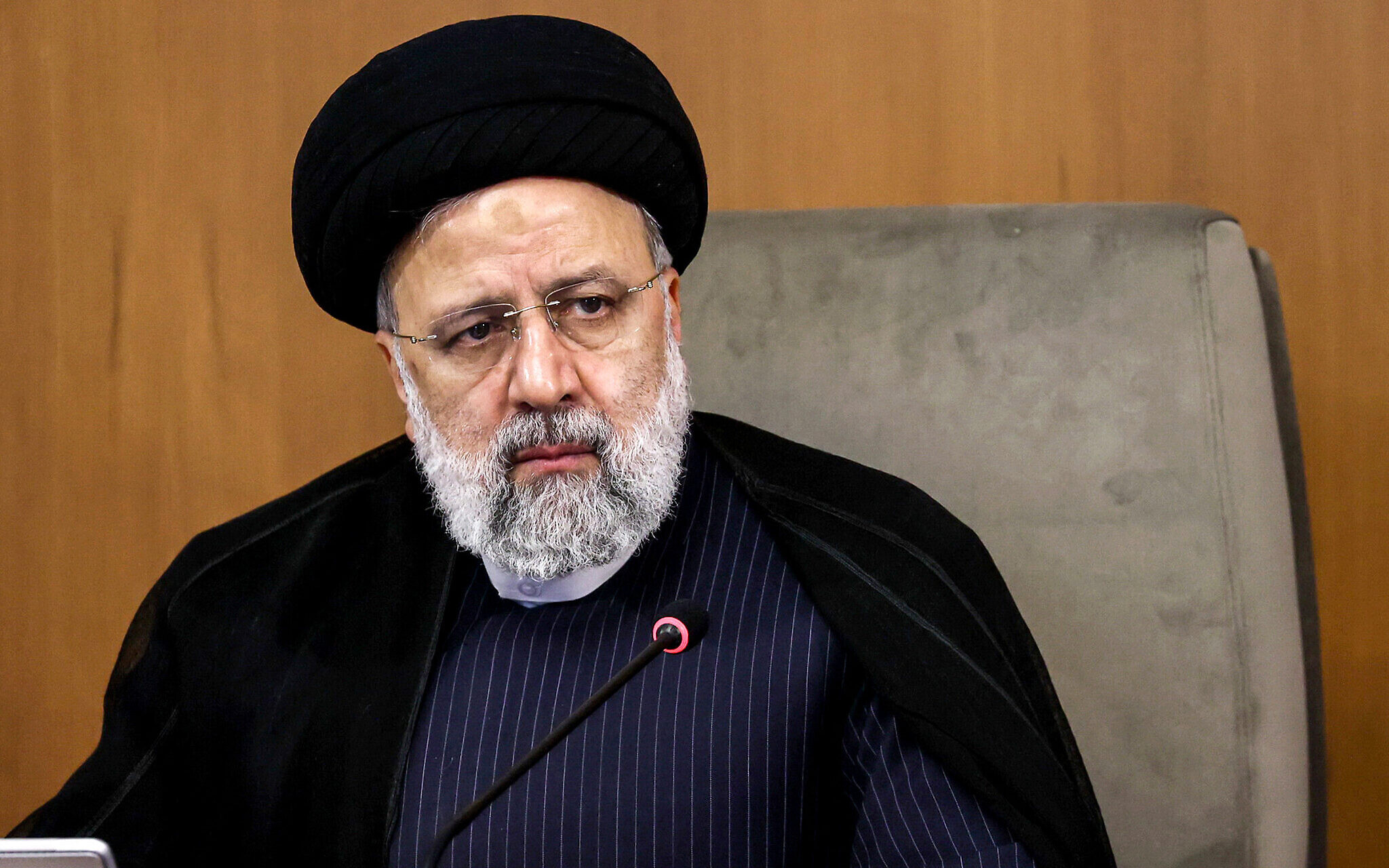
Handout picture of Iranian President Ebrahim Raisi chairing a cabinet meeting in Tehran on April 2, 2024. (Iranian Presidency/AFP)

Handout picture of Iranian President Ebrahim Raisi chairing a cabinet meeting in Tehran on April 2, 2024. (Iranian Presidency/AFP)

Iranian President Ebrahim Raisi has warned Israel it will face a “painful response” if it takes the “slightest action” in response to Iran’s unprecedented drone and missile barrage against the Jewish state over the weekend.

Iran’s first-ever direct attack on Israel on the night of Saturday-Sunday came in response to an April 1 air strike on Tehran’s embassy compound in Damascus that has been widely blamed on Israel.

The strike killed seven Revolutionary Guards, two of them generals.

“We firmly declare that the slightest action against Iran’s interests will definitely be met with a severe, extensive and painful response,” Raisi said in a call late Monday with Qatar’s emir, Sheikh Tamim bin Hamad Al Thani.

Raisi reiterated that Iran was acting in “self-defense,” saying the operation targeted Israeli bases used to carry out the Syria strike, a statement from his office said.

He criticized the support of some Western governments for Israel.

File: Iran’s chief nuclear negotiator and ddeputy foreign minister Ali Bagheri Kani leaves after talks at the Coburg Palais, the venue of the Joint Comprehensive Plan of Action (JCPOA) in Vienna on August 4, 2022. (Alex Halada/AFP)

Deputy Foreign Minister Ali Bagheri Kani also responded on the fraught situation with Israel, saying late Monday that the Jewish state would face a “resolute and hard response” if it takes further action against Iran.

Bagheri Kani said that “there will not be a 12 or 13-day gap between a Zionist regime move and Iran’s powerful response anymore. The Zionists must now reckon in seconds, not hours.”

Iran said it had informed the United States and given a 72-hour warning to neighboring countries ahead of what it called its “limited” attack on Israel.

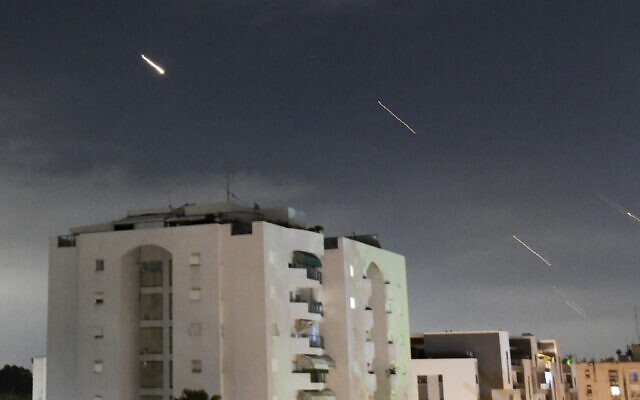
File: Israeli air defense systems intercept missiles fired from Iran, in central Israel, April 14, 2024. (AP/Tomer Neuberg)

IDF Chief of Staff Herzi Halevi vowed Monday to respond to the unprecedented attack, even after appeals for restraint poured in from world leaders fearing wider regional conflict.

“This launch of so many missiles, cruise missiles, and UAVs into the territory of the State of Israel will be met with a response,” Halevi told troops at Nevatim Airbase, which was hit in Iran’s Saturday night barrage.

The Israeli army has said the vast majority of the weapons were shot down — with the help of the United States and other allies — and the attack caused only minimal damage.

“We cannot stand still [in the face of] this kind of aggression,” IDF spokesman Rear Adm. Daniel Hagari told reporters on Tuesday, while displaying the remains of an intercepted ballistic missile at Julis Base near Kiryat Malachi. “Iran will not get [off] scot-free with this aggression.”

Israel’s high-level war cabinet met Tuesday for the third time in three days to discuss a response to Iran’s first-ever direct attack, which left one child in southern Israel with serious injuries and caused minor damage to a military base.

Handout picture released by the IDF showing army chief Lieutenant General Herzi Halevi (C) attending a situational assessment with members of the General Staff Forum at the Kirya military base in Tel Aviv, April 14, 2024. (Israeli Army/AFP)

The US and other allies have urged restraint, amid fears that an Israeli reprisal could spark a wider conflict and fragment the US-led coalition that came together to take down Iran’s aerial attack. Despite worries of a larger conflagration breaking out, Israeli hardliners argue the country must mount a response to restore deterrence.

US President Joe Biden has stressed that “the United States is committed to Israel’s security” and wants to prevent the conflict from spreading.

Washington, Israel’s top ally and arms supplier, has made clear it will not join Israel in any attack on Iran, a senior US official said.