A Palestinian woman and a child look on at the site of an Israeli air strike on a building, amid the ongoing conflict between Israel and the Palestinian Islamist group Hamas, in Rafah, in the southern Gaza Strip March 9, 2024. Photo: REUTERS/Mohammed Salem
Efforts to secure a deal on a ceasefire between Israel and Hamas in Gaza were still ongoing, according to a statement by Israel‘s intelligence agency Mossad on Saturday, despite dimming hopes for a truce during the Muslim holy month of Ramadan.
Mossad chief David Barnea met on Friday with his U.S. counterpart William Burns to promote a deal that would see hostages released, Mossad said in a statement distributed by Israeli Prime Minister Benjamin Netanyahu’s office.
“Contacts and cooperation with the mediators continue all the time in an effort to narrow the gaps and reach agreements,” Mossad said.
Israel and Hamas, the Islamist terror group that rules the Palestinian enclave, have traded blame over the apparent deadlock in talks in the run-up to Ramadan, which begins on or around March 10.
A Hamas source told Reuters the group’s delegation was “unlikely” to make another visit to Cairo over the weekend for talks.
Egypt, the United States and Qatar have been mediating truce negotiations since January. The last deal led to a week-long pause in fighting in November during which Hamas released more than 100 hostages and Israel freed about three times as many Palestinian prisoners.
Hamas blames Israel for the impasse in negotiations for a longer ceasefire and the release of 134 hostages believed still held in Gaza – saying it refuses to give guarantees to end the war or pull its forces from the enclave.
Mossad said Hamas was digging its heels in and aiming for violence in the region to spiral during Ramadan. Israeli officials have said that the war will end only with the defeat of Hamas, whose demands Netanyahu has called “delusional.”
In a statement on Saturday marking Ramadan, Hamas chief Ismail Haniyeh vowed the Palestinians will continue to fight Israel “until they regain freedom and independence”
The war was triggered by an Oct. 7 attack by Hamas on southern Israel, in which 1,200 people were killed and 253 taken hostage, according to Israeli tallies.
Stepping up pressure on the last area of Gaza it has not yet invaded with ground forces, Israel struck one of the largest residential towers in the southern city of Rafah.
The 12-floor building was damaged in the strike, and residents said dozens of families were made homeless, though no casualties were reported. Israel‘s military said the block was being used by Hamas to plan attacks on Israelis.
One of the 300 residents of the tower, located near the border with Egypt, told Reuters Israel gave them a 30-minute warning to flee the building at night.
“People were startled, running down the stairs, some fell, it was chaos. People left their belongings and money,” said Mohammad Al-Nabrees, adding that among those who tripped down the stairs during the panicked evacuation was a friend’s pregnant wife.
The strike raised alarm among residents of a wider Israeli assault on Rafah, where more than half of Gaza’s 2.3 million people are sheltering.
AID SHIP
Hamas on Saturday named four Israeli hostages as having died in Israeli strikes in the enclave, though it offered no evidence. The Israeli military, which declined to comment, has previously said such videos by Hamas were psychological warfare.
Israel‘s offensive has plunged Gaza into a humanitarian catastrophe. Much of the coastal enclave is reduced to rubble and most of its population is displaced, with the U.N. warning of disease and starvation.
A ship laden with relief supplies for Gaza was preparing on Saturday to depart Cyprus. The European Commission has said a maritime aid corridor between Cyprus and Gaza could start operating as early as this weekend in a pilot project run by an international charity and financed by the United Arab Emirates.
(JNS) During his State of the Union address on Thursday, U.S. President Joe Biden announced an “emergency mission” to establish a port in the Gaza Strip to deliver humanitarian supplies.
“Tonight, I’m directing the U.S. military to lead an emergency mission to establish a temporary pier in the Mediterranean on the Gaza coast that can receive large ships carrying food, water, medicine and temporary shelters,” the president said.
The port, which will be set up in “a number of weeks,” will allow the equivalent of “hundreds” of truckloads of aid to enter Gaza daily, senior administration officials told reporters ahead of Biden’s speech.
Speaking on background, the officials said that Washington coordinated with Israel and Cyprus, with the shipments arriving from the island country. U.S. troops will not participate in the operation on the ground in Gaza, and Washington will coordinate security for the port with Jerusalem.
“The president has directed that we look at all options, that we not wait for the Israelis, and that we are pursuing every channel possible to get assistance into Gaza,” one of the officials said.
The Biden administration has increasingly described Israel as an obstacle to aid entering Gaza and has said that it was considering opening a maritime corridor. The U.S. military began airdropping food supplies directly to Gazan civilians on Saturday, but it has acknowledged that the tens of thousands of meals delivered in each airdrop are only a small supplement to the aid requirements of more than two million Gazans.
Once maritime aid arrives in Gaza, the United Nations and “other humanitarian partners” will deliver it, the senior officials said.
Biden allotted a part of the speech to discuss the Israel-Hamas war and his administration’s vision for the Middle East, calling the last five months since the Hamas-led massacre of Oct. 7 “gut-wrenching.”
“Israel has a right to go after Hamas,” Biden said.
“Hamas could end this conflict today by releasing the hostages, laying down arms, and surrendering those responsible for October 7th,” the president continued.
“Israel has an added burden because Hamas hides and operates among the civilian population. But Israel also has a fundamental responsibility to protect innocent civilians in Gaza.”
White House Chief of Staff Jeff Zients said in an interview with Politico on Thursday that Biden’s State of the Union would address Gaza “head-on.”
“The president is working hour by hour to negotiate an immediate and sustained cease-fire in Gaza over a period of at least six weeks, as part of a deal that would release hostages and get significantly more humanitarian aid in,” Zients said.
“He wants enduring peace in the region so that Palestinians and Israelis can live with security, dignity in two states—something he is actively working towards every day,” Zients added.
During his address, Biden said that “we’ve been working non-stop to establish an immediate ceasefire that would last for at least six weeks. It would get the hostages home, ease the intolerable humanitarian crisis, and build toward something more enduring.”
In his speech, Biden parroted statistics released by Hamas, “This war has taken a greater toll on innocent civilians than all previous wars in Gaza combined. More than 30,000 Palestinians have been killed. Most of whom are not Hamas.”
SOTU guests
In his State of the Union remarks Thursday evening in Washington, Biden addressed at least 17 family members of American hostages held by Hamas in Gaza. Some of the hostages have been released. The 17 relatives are the invited guests of a bipartisan group of members of Congress.
“Here in the chamber tonight are American families whose loved ones are still being held by Hamas,” the president said.
“I pledge to all the families that we will not rest until we bring their loved ones home.”
Eight of the Americans whom Hamas terrorists kidnapped and took to Gaza on Oct. 7 remain in the Strip, including two who are known to be dead.
Rep. Josh Gottheimer (D-N.J.) and 14 other House members from both parties, spoke at a Wednesday press conference in the Cannon House Office Building. Family members of hostages joined them.
“This was an attack on America, and, as a reminder, as much as they hate Israel, they also hate us,” said Gottheimer, who organized the event. “They are Iranian-backed proxies who continue to wage attacks on our bases, on Americans and our families.”
“We want to make sure that no American forgets that Americans are still being held hostage as we speak,” Gottheimer added. “Despite Israel’s agreement to terms of a temporary pause, Hamas refuses to agree to the negotiated terms.”
Rep. Frederica Wilson (D-Fla.) asked why the Israeli hostages in Gaza haven’t received worldwide attention and support as did the nearly 300 Nigerian school children, whom Boko Haram kidnapped. (Wilson was a leading advocate of the “Bring Back Our Girls” campaign.)
“I am demanding the same kind of worldwide advocacy for the release of the Israeli hostages kidnapped by the terrorist group Hamas,” she said. “Bring back the hostages. The time to act is now. We cannot allow these families to endure endless suffering, living each day in the shadow of uncertainty, not knowing whether their loved ones are even alive, much less what conditions they are in.”
Wilson called on fellow members of Congress to wear blue each Wednesday in solidarity with the hostages and to promote the cause on social media. (She wore red weekly on Wednesdays for seven years as part of the Bring Back Our Girls campaign.)
Members of Congress can invite a guest to attend the president’s annual address to Congress, with congressional leadership and the White House allotted additional invites. Sixteen senators and congressmen extended invites to the hostage family members, including Speaker of the House Mike Johnson (R-La.) and Minority Leader Hakeem Jeffries (D-N.Y.).
“This has to stay in front of politicians. It has to stay in front of the media, and it has to stay in front of the public,” stated Ronen Neutra, father of American hostage Omer Neutra, who with his wife Orna Neutra will be a guest of Rep. Tom Suozzi (D-N.Y.) at the State of the Union.
“This is one of the biggest stages of the year,” Neutra said. “We are hopeful that President Biden will mention us and our dear ones in his speech, and I know he cares deeply about the situation.”
Biden has said that he wants a ceasefire-for-hostages deal in place in time for the start of Ramadan, which is expected to begin Sunday at sundown.
The senior officials said on the press call on Thursday that there was no hard deadline for the deal, acknowledging that Hamas leaders have directly called for violence during Ramadan. “I think Hamas has said what their intentions might be,” one official said.
Two-state solution
Biden also said that a Palestinian state next to Israel is “the only real solution,” despite it being rejected by the political leadership in Jerusalem and, according to polling, large swathes of the Israeli and Palestinian public.
“As we look to the future, the only real solution is a two-state solution. I say this as a lifelong supporter of Israel and the only American president to visit Israel in wartime,” the president said.
“There is no other path that guarantees Israel’s security and democracy. There is no other path that guarantees Palestinians can live with peace and dignity. There is no other path that guarantees peace between Israel and all of its Arab neighbors, including Saudi Arabia,” he continued.
Iranian threat
The president also briefly addressed threats posed by the regime in Tehran, touting the U.S.-led coalition to counter Houthi attacks to shipping interests in the Red Sea.
“Creating stability in the Middle East also means containing the threat posed by Iran,” the president said.
“That’s why I built a coalition of more than a dozen countries to defend international shipping and freedom of navigation in the Red Sea. I’ve ordered strikes to degrade Houthi capabilities and defend U.S. Forces in the region. As Commander in Chief, I will not hesitate to direct further measures to protect our people and military personnel.”
The October 7, 2023 Hamas assault on Israel changed the conversation about the Middle East.
Just days prior to the attack, the White House believed its policy ameliorating Iran was successful. “The Israeli-Palestinian situation is tense, particularly in the West Bank, but in the face of serious frictions, we have de-escalated crises in Gaza and restored direct diplomacy between the parties after years of its absence,” National Security Advisor Jake Sullivan wrote in Foreign Affairs.
While President Joe Biden initially supported Israel’s right to defend itself and eradicate the terrorist threat, his top aides increasingly reverse course.
Sullivan and Secretary of State Antony Blinken seek to coerce Israel to pause if not end her fight in Rafah, where many Hamas leaders and terrorists shelter.
Three factors motivate the White House turn against Israel.
First is ideology. Biden may be sincere in his affinity for the Jewish state, but top aides like Blinken, Sullivan, and top Sullivan deputy Jon Finer do not share his affection.
Bias runs deep in the State Department and Central Intelligence Agency, both of which blame Israel’s creation as an original sin in the region.
Biden’s political strategists confuse the vocal fringe with their base.
The second is political calculation. While the U.S. campaign to liberate Iraqi and Syrian towns and cities from the Islamic State was as destructive if not more as the Israeli campaign in Gaza, the White House counsels that Israel essentially snatch defeat from the jaws of victory for the sake of Biden’s political convenience.
‘SUICIDE DRONES’ ATTACK US ARMY BASE IN SYRIA AS PAYBACK FOR US AIRSTRIKE IN BAGHDAD
Third is a belief in Washington that ameliorating the majority trumps moral clarity.
Two decades ago, presidents and politicians understood leadership sometimes meant standing alone for principle.
In 2001, for example, Mary Robinson, the United Nation’s High Commissioner for Human Rights, allowed radical groups and rejectionist regimes to transform her Durban “Conference against Racism, Racial Discrimination, Xenophobia and Related Intolerance” into an orgy of antisemitism.
Most countries joined Robinson’s shame but, rather than accede to the mob, President George W. Bush’s administration withdrew.
Many countries today turn against Israel because it is easy and popular with intelligentsia and the global south.
Some also find it easier to endorse radical causes in the naïve belief that it will immunize themselves from being targets themselves.
That Biden’s team believes being a finger in the dyke of antisemitism is somehow improper diplomacy will be a stain on their legacy.
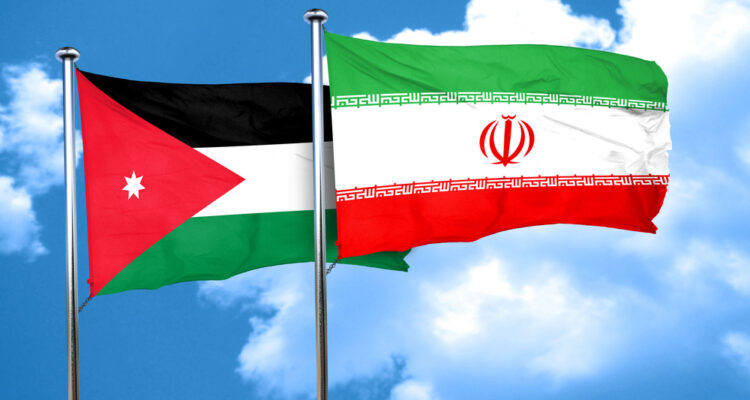
The White House and Congress obsession with Israel and Biden’s personal dislike of Israeli Prime Minister Benjamin Netanyahu, however, may blind Washington to a looming crisis whose reverberations will be far more damaging than the war in Gaza: the fall of Jordan.
For decades, the United States has relied on Jordan as an intelligence and diplomatic partner and force for stability in the region.
Seldom does Washington question the stability of Jordan’s century-old monarchy though, increasingly in the region, Arab analysts and officials say the United States should.
King Abdullah II is far more popular outside the Kingdom than inside, a situation akin to the discrepancy between Mikhail Gorbachev’s popularity in the West versus inside the Soviet Union.
Americans, for example, may find his obsession with Star Trek endearing.
Abdullah II even worked his way into a cameo role in one of Star Trek’s spin off series.
Islamists, however, find science fiction sacrilege, though, as only God can know the future.
Last year’s royal wedding between Crown Prince Hussein and Princess Rajwa stroked the ego of think tankers, journalists, and former officials, too many of whom refrain from critical analysis in order to maintain access.
Jordanians resent the Abdullah II’s corruption.
While Queen Rania’s Palestinian roots in theory could unite Jordanian East Bank Bedouin and post-1967 Palestinian influx, her conspicuous consumption and spendthrift ways antagonize poor Jordanians.
The same corruption is fodder for the Muslim Brotherhood and Jordanian Islamists.
Iranian Supreme Leader Ali Khamenei completes the perfect storm. Neither Iranian support for Hamas nor Hezbollah is enough to threaten the Jewish state’s existence.
Jordan’s 300-mile frontier with Israel and the West Bank is different. Khamenei views Jordan as a domino that must fall in order to fulfill his goal to eradicate Israel.
WATCH: BLINKEN ADDRESSES HOSTAGE DEAL EFFORTS, INCLUDES WARNING TO ISRAEL
If Iran can establish a land bridge through Jordan into the West Bank, the operational environment in Israel changes significantly.
That land bridge is now possible. Jordan today faces pressure from both the resurgent Assad regime in Syria, on the rebound after its civil war victory, and Iraq, where Iranian-directed militias have free rein.
Both flood militant Sunnis opposed to the monarchy and sympathetic to Hamas with cash and weaponry.
As Palestinians prepare for their 88-year-old chairman Mahmoud Abbas’ death, Iran seeks to hijack transition.
Abdullah II recognizes the tenuousness of his rule.
While Israel has long helped Abdullah II and his father Hussein neutralize threats to the monarchy, Abdullah II’s rhetoric embrace of Hamas post-October 7 reflects his fear of the groups popularity on the Jordanian street.
Rania’s advocacy for Hamas during recent conversations on Capitol Hill alarmed friends.
The tragedy of the Biden team’s obsessive focus on Netanyahu is they do not recognize that Israel is a bridgehead in a larger civilizational battle that they cannot afford to discard.
For Hamas, Gaza is the first battle.
The West Bank looms as its next ambition. Jordan, however, remains the big prize and for the Muslim Brotherhood and other extremists, it has never been more attainable.