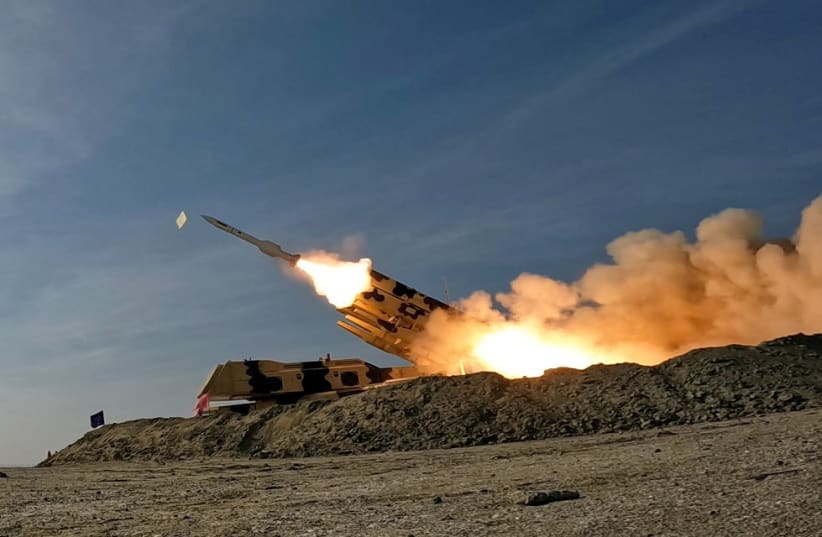
Iranian media said the Arman missile system “can simultaneously confront six targets at a distance of 120 to 180 km.”

 A missile is launched during a military exercise in an undisclosed location in the south of Iran, in this handout image obtained on January 19, 2024 (photo credit: IRANIAN ARMY/WANA/REUTERS)
A missile is launched during a military exercise in an undisclosed location in the south of Iran, in this handout image obtained on January 19, 2024
(photo credit: IRANIAN ARMY/WANA/REUTERS)
Iran unveiled new weaponry on Saturday including what it said was the locally made Arman anti-ballistic missile system and the Azarakhsh low-altitude air defense system, the official IRNA news agency reported.

The announcement came amid heightened tensions in the region, with Yemen’s Iran-backed Houthi militants carrying out a string of attacks on vessels linked to the US, UK and Israel in the Red Sea in a show of solidarity with the Gaza Strip.

Gaza has been under military assault by Israel since Hamas’s attacks on Israel’s south on Oct. 7.

In response to the Houthi attacks, the US has targeted sites inside Yemen as well as facilities of Iran-backed groups in Iraq and Syria. In turn, US military bases have been attacked in Syria and Iraq. Israel has also struck Iranian targets in Syria.

Unveiling the new weapons

Saturday’s unveiling ceremony of the two vehicle-mounted systems took place in the presence of Iranian Defense Minister Brigadier General Mohammad Reza Ashtiani.

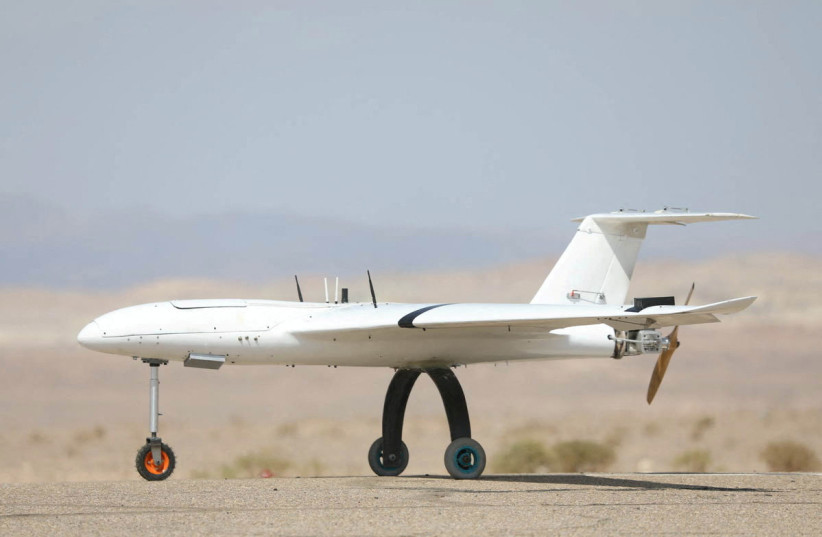
 A drone is seen during a military exercise in an undisclosed location in Iran, in this handout image obtained on October 4, 2023 (credit: IRANIAN ARMY/WANA (WEST ASIA NEWS AGENCY) VIA REUTERS)Enlrage image
A drone is seen during a military exercise in an undisclosed location in Iran, in this handout image obtained on October 4, 2023 (credit: IRANIAN ARMY/WANA (WEST ASIA NEWS AGENCY) VIA REUTERS)

“With the entry of new systems into the country’s defense network, the air defense capability of the Islamic Republic of Iran will increase significantly,” IRNA said.

It said the Arman missile system “can simultaneously confront six targets at a distance of 120 to 180 km”, while the Azarakhsh missile system “can identify and destroy targets… up to a range of 50 km with four ready-to-fire missiles”.

In June Iran presented what officials described as its first domestically made hypersonic ballistic missile, named Fattah, with a range of 1,400 km.


Iranian oil minister insists disruption caused by attacks on gas pipelines was minor, but NYT report says the blasts caused major outages across five provinces


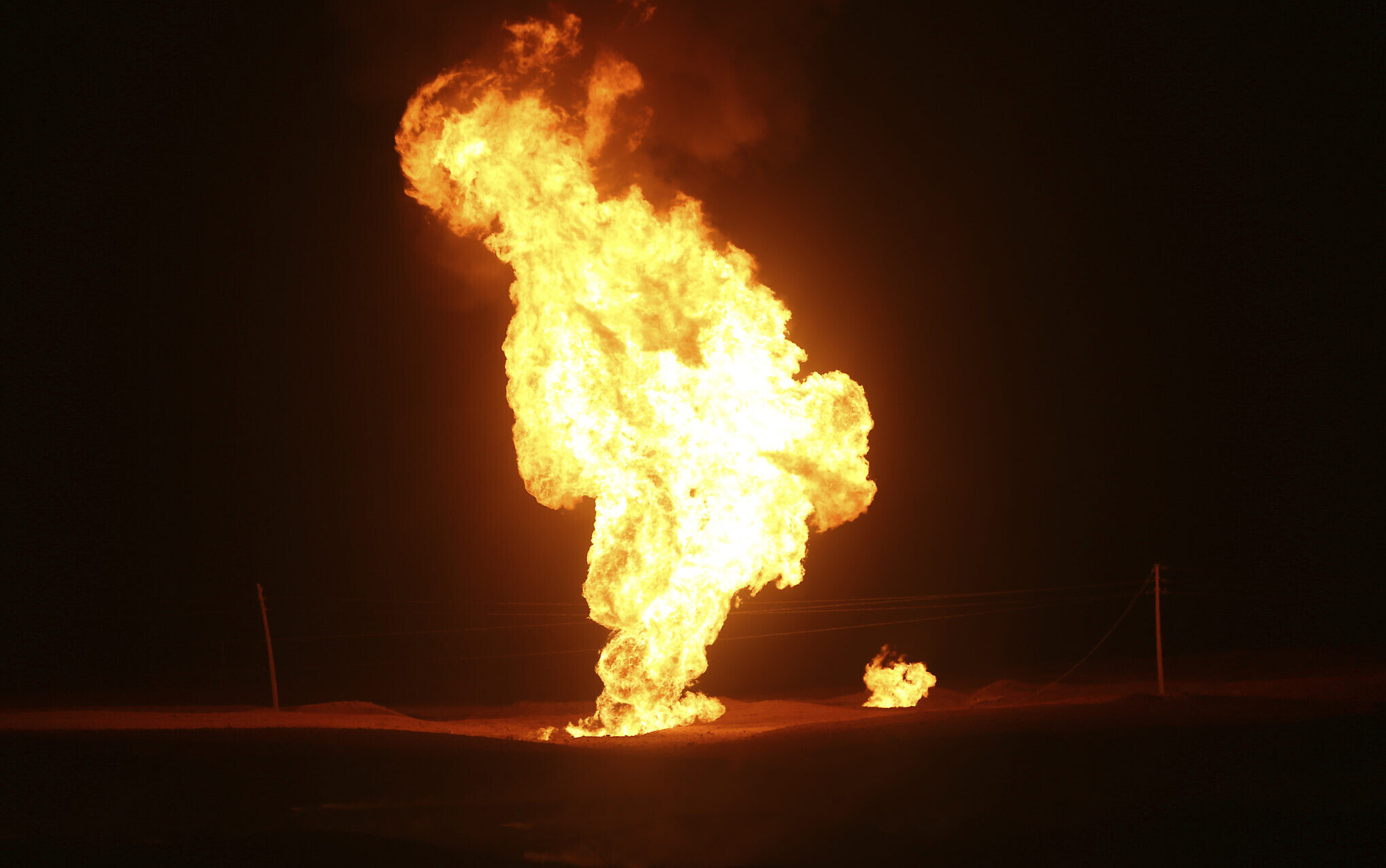
Flames leap into the air after a natural gas pipeline explodes outside the city of Boroujen in the western Chaharmahal and Bakhtiari province, Iran, early February 14, 2024. (Reza Kamali Dehkordi/Fars News Agency via AP)

Flames leap into the air after a natural gas pipeline explodes outside the city of Boroujen in the western Chaharmahal and Bakhtiari province, Iran, early February 14, 2024. (Reza Kamali Dehkordi/Fars News Agency via AP)

Israel was behind a pair of attacks on major gas pipelines inside Iran this week, which disrupted the flow of gas to millions of people, The New York Times reported Friday, citing two Western officials and a military strategist affiliated with Iran’s Islamic Revolutionary Guard Corps.

If confirmed, the strike would amount to an escalation by Israel, which has been linked to numerous strikes in Iran over the years, but primarily against the country’s nuclear program, as well as assassinations of senior figures.

“The enemy’s plan was to completely disrupt the flow of gas in winter to several main cities and provinces in our country,” Iran’s oil minister, Javad Owji, told Iranian media in comments on the “sabotage and terrorist attacks.”

He avoided publicly blaming Israel for the blasts, which he said were aimed at damaging Iran’s energy infrastructure and stirring public upheaval.

A Western official told NYT that the strike was largely symbolic, causing minimal harm and being easy to repair, but sent a message that Israel can cause significant damage.

Owji also said the disruption caused by the blast was minor, but Iranian governors and officials at the state gas company reported widespread outages across five provinces that led to the closure of some government buildings.

Iran’s Minister of Petroleum Javad Owji attends the opening session of the 24th ministerial meeting of the Gas Exporting Countries Forum (GECF), in Cairo on October 25, 2022. (Photo by Khaled DESOUKI / AFP)

The natural gas pipeline that was targeted runs from Iran’s western Chaharmahal and Bakhtiari Province up north to cities on the Caspian Sea. The roughly 1,270-kilometer (790-mile) pipeline begins in Asaluyeh, a hub for Iran’s offshore South Pars gas field.

There are no known insurgent groups operating in that province, home to the Bakhtiari, a branch of Iran’s Lur ethnic group.

The two Western officials said Israel was also behind another blast Thursday inside a chemical factory on the outskirts of Tehran. However, local officials quoted by the Times said the explosion was due to an accident in the factory’s fuel tank.

There has been no comment from Israel on the blasts, which came amid the ongoing war in Gaza triggered by the Hamas-led October 7 onslaught in which Palestinian terrorists killed around 1,200 people, mostly civilians, and took 253 hostages.

Iranian leaders have denied Tehran was behind the Hamas attack but have praised the massacres and boasted of Iran’s support for the Gaza-ruling terror group and other armed proxy organizations opposed to Israel that it backs. The US also has said Iran was not directly responsible for the onslaught but that it continues to fund, arm and train proxies who have been targeting the Jewish state.

There have been worries of a wider regional conflict since the Hamas atrocities and Israel’s subsequent offensive aimed at eliminating the terror group in Gaza and returning the hostages, with Lebanon’s Hezbollah launching daily attacks on northern Israel, the Houthi rebels in Yemen striking shipping in the Red Sea and Iranian-backed militias in Iraq and Syria targeting US forces stationed in those countries.


But top UN court notes Jerusalem remains bound to comply with existing measures — namely the need to protect civilians from harm and to allow humanitarian aid into Gaza

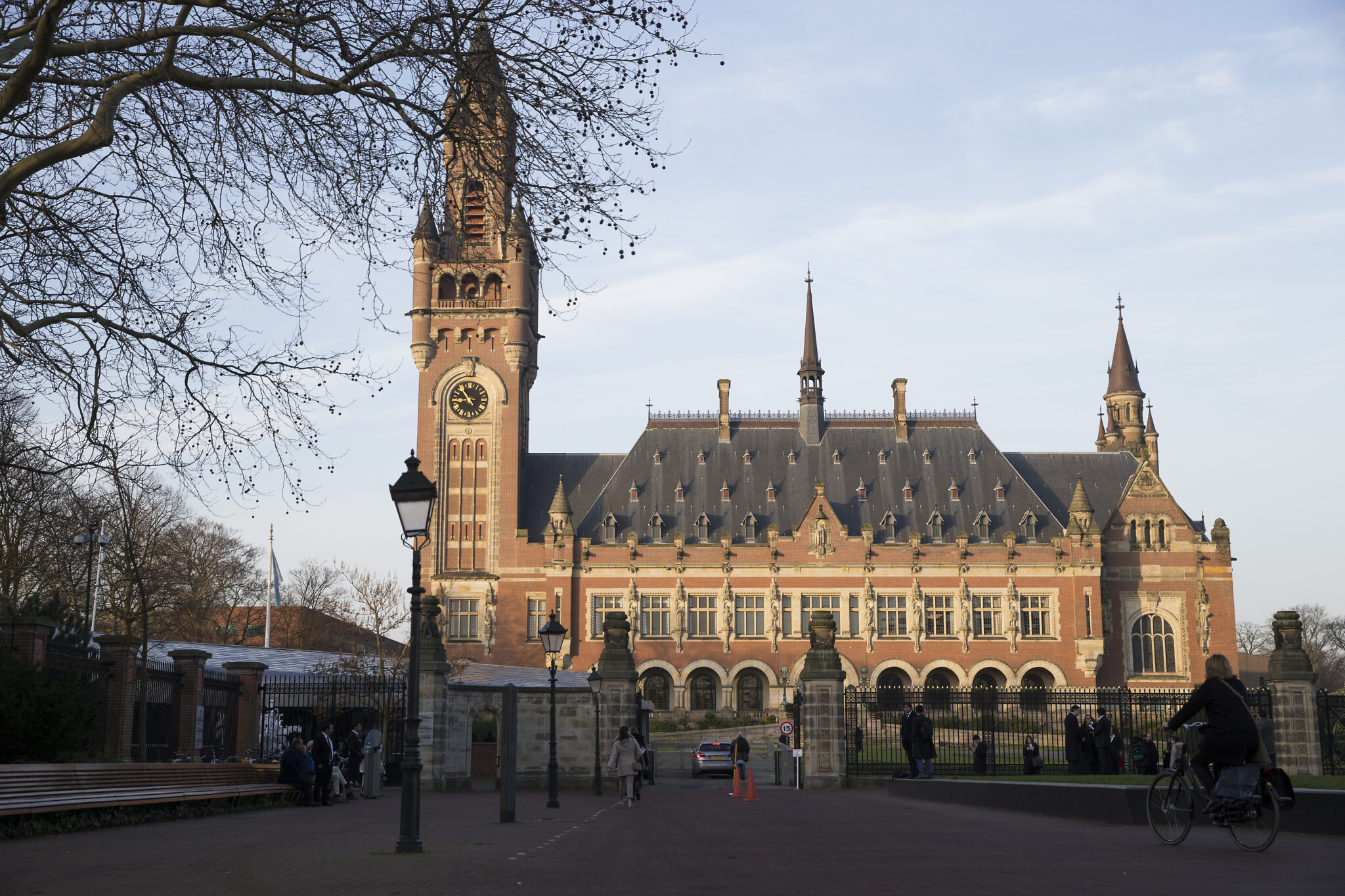
File: This photo shows an exterior view of the Peace Palace, which houses the International Court of Justice, or World Court, in The Hague, Netherlands on February 18, 2019. (AP/Peter Dejong)

THE HAGUE, Netherlands — The UN’s top court on Friday rejected South Africa’s request to put more legal pressure on Israel to halt a threatened offensive against Hamas in the Gaza city of Rafah, saying it was “bound to comply with existing measures.”

South Africa had requested urgent measures to safeguard Rafah amid Israeli plans for a campaign in the city, Hamas’s last bastion in the enclave.

Pretoria has already filed a complaint against Israel in the International Court of Justice (ICJ) in The Hague, alleging that its assault on Gaza amounts to a breach of the Genocide Convention. The court has yet to rule on the underlying issue, but on January 26 it ordered Israel to ensure it took action to protect Palestinian civilians from further harm and to allow in humanitarian aid. It declined to grant South Africa’s central request to order Israel to halt its military campaign.

The ICJ said in a Friday statement that the “perilous situation” in Rafah “demands immediate and effective implementation of the provisional measures indicated by the Court in its Order of 26 January 2024, which are applicable throughout the Gaza Strip, including in Rafah, and does not demand the indication of additional provisional measures.”

The World Court added that Israel “remains bound to fully comply with its obligations under the Genocide Convention and with the said Order, including by ensuring the safety and security of the Palestinians in the Gaza Strip.”

South Africa announced Tuesday that it had lodged an “ urgent request ” with the International Court of Justice to consider whether Israel’s military operations targeting the southern Gaza city of Rafah breach provisional orders the court handed down last month in a case in which Pretoria alleged genocide in the Strip.

On Thursday, Israel urged the court to reject what it called South Africa’s “highly peculiar and improper” request.

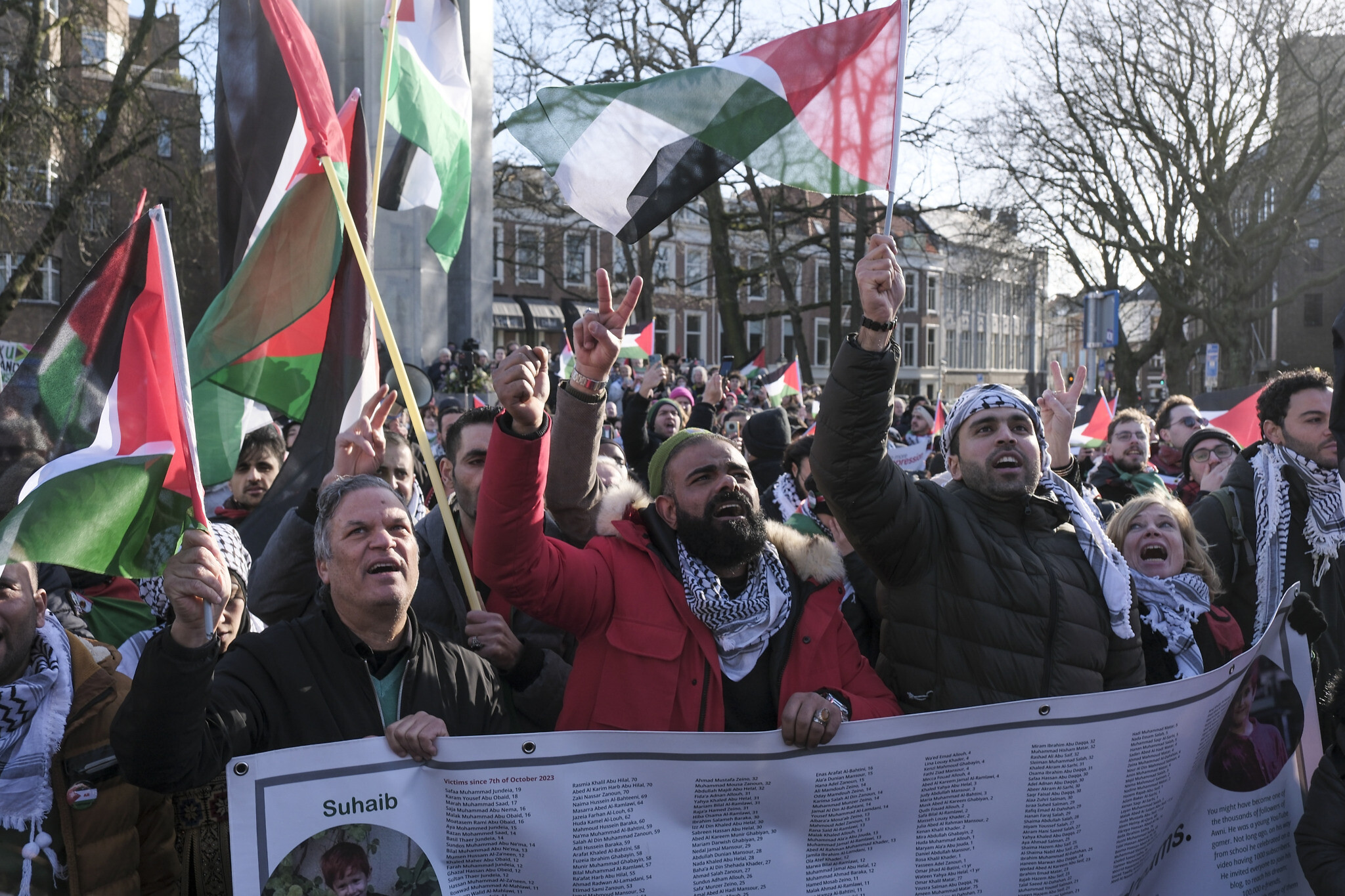
Illustrative: Pro-Palestinian activists in The Hague, Netherlands, January 26, 2024. (Patrick Post/AP)

Israel says it does all it can to spare civilians and is only targeting Hamas terrorists. It says Hamas’s tactic of embedding in civilian areas makes it difficult to avoid civilian casualties.

Even so, the court last month ordered Israel to do all it can to prevent death and destruction in Gaza, but stopped short of ordering an end to the military offensive that has laid waste to the Palestinian enclave.

On Thursday Israel assailed South Africa’s latest attempt to have the ICJ halt its campaign against Hamas, and accused Pretoria of abusing the Genocide Convention to protect the Islamist terrorist group.

In a short document, Israel described Pretoria’s entire application as “unfounded in fact and law” and “morally repugnant.”

Israel insisted that there had been no change in the situation in Gaza on the ground since the ICJ heard South Africa’s genocide allegations in January, and said that the “unprecedented military offensive in Rafah” of which Pretoria spoke “in fact has not happened.”

Israel described South Africa’s claims of an “unprecedented military operation” in Rafah on February 11 to rescue two Israeli hostages — which Hamas said killed dozens of Palestinians — as an “outrageous distortion,” and asserted that it was Hamas that was demonstrating “contempt for the law” by failing to accede to the ICJ’s call for the immediate and unconditional release of all remaining hostages.

Pro-Palestinian activists wave flags during a session of the International Court of Justice, or World Court, in The Hague, Netherlands, January 26, 2024. (AP Photo/Patrick Post)

Israel also pointed out that South Africa’s request for ICJ intervention, based on supposed concerns of impending genocide, actually cited comments by Prime Minister Benjamin Netanyahu “that make clear that any potential military operation is intended to target Hamas battalions in Rafah,” and noted that Netanyahu had himself spoken of the necessity of evacuating civilians from the city.

“This announcement is in line with Israel’s enduring commitment under international humanitarian law to minimize harm to civilians, even as Hamas — in its utter contempt for life and for the law — continues its abhorrent strategy of seeking to maximize such civilian harm through its ongoing attacks against Israeli civilians and through its use of Palestinian civilians and civilian objects as shields in Gaza itself,” Israel insisted forcefully in its submission.

Jerusalem said that South Africa’s use of Netanyahu’s statement that clearly emphasized Hamas was Israel’s target “exposes yet again an intention to abuse the Genocide Convention” and have the court “micro-manage” the conflict, the conduct of which is governed not by the Genocide Convention but by international humanitarian law over which the court has no jurisdiction in this war.

“It is evidence of a renewed and cynical effort by South Africa to use provisional measures as a sword, rather than a shield, and to manipulate the Court to protect South Africa’s longtime ally Hamas, a genocidal terrorist organization, from Israel’s inherent right and obligation to defend itself, in accordance with the law, from the terrorist assault it faces and to pursue the release of over 130 hostages,” declared Israel.