Arab countries are trying to balance the desire to help the US deter Iran, while also assuaging their citizens’ anger toward Israel.
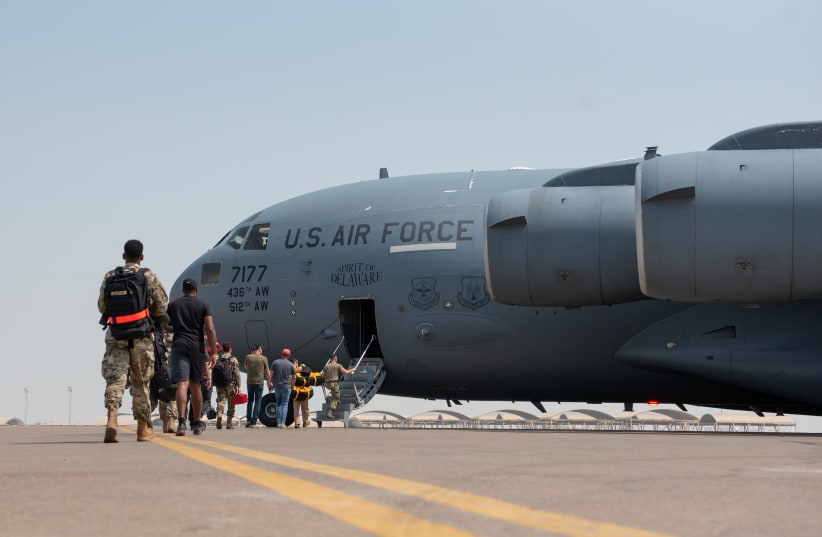
By JERUSALEM POST STAFFMembers of the 4th Expeditionary Fighter Squadron, board a C-17 Globemaster III to forward deploy to an undisclosed location in Southwest Asia in support of exercise Agile Lightning from Al Dhafra Air Base, Abu Dhabi, United Arab Emirates.(photo credit: Chris Thornbury/US Air Force/Handout via REUTERS)
The United Arab Emirates and other Arab countries are restricting the US’s use of military facilities in their territory to launch airstrikes against the Iranian axis, people familiar with the issue told Politico on Wednesday.
The restrictions come as Arab countries attempt to balance the desire to help the US deter Iran and its proxies, while also assuaging their citizens’ anger toward Israel.
Arab countries “attempting a detente with Iran” are “increasingly restricting” the US and other allies from conducting retaliatory strikes from their soil against targets in Iraq, Syria, and the Red Sea, a US official told Politico. The official did not state exactly how many countries are implementing these restrictions.
A Western official told Politico that the UAE specifically is implementing the restrictions because “they don’t want to appear like they’re against Iran and they don’t want to appear too close to the West and Israel for public opinion reasons.”
The US has several bases in the Gulf and the region where it operates from, including the Al Dhafra Air Base in the UAE.
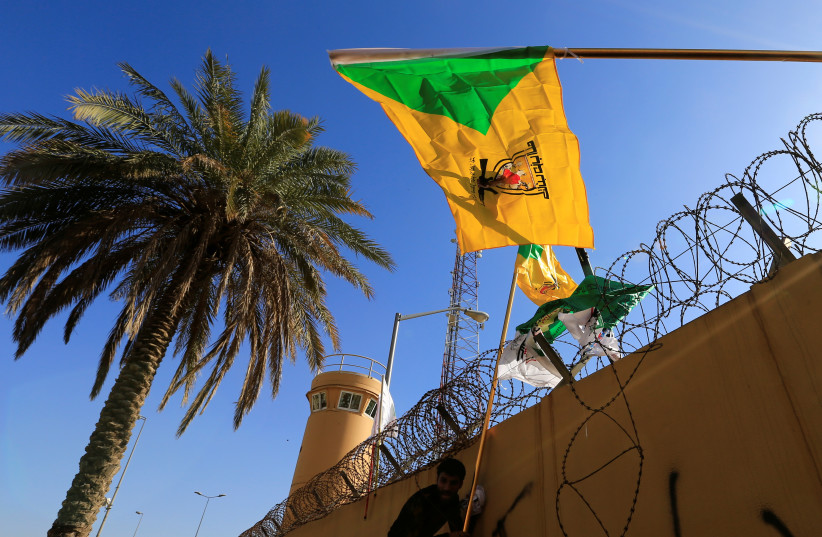
A member of Hashd al-Shaabi (paramilitary forces) holds a flag of Kataib Hezbollah militia group during a protest to condemn air strikes on their bases, outside the main gate of the U.S. Embassy in Baghdad, Iraq December 31, 2019. (credit: REUTERS/THAIER AL-SUDANI)
Iranian proxies threaten US bases in region
Several Iranian proxies have threatened to attack Arab states that the US uses to launch strikes from.
In October, just a few weeks after the Israel-Hamas war began, Alwiyat al-Waad al-Haq, an Iran-backed militia believed to be linked to the Iraqi Kataib Hezbollah militia, threatened to target bases where American forces are housed in Kuwait and the UAE.
The militia has claimed attacks against Gulf states in the past, including a drone attack in which three drones were intercepted by the UAE in February 2022, although most drone and missile attacks toward Saudi Arabia and the UAE in recent years have been claimed by the Iran-backed Houthi militia in Yemen, which has also launched a series of attacks against international shipping in the area since the war between Israel and Hamas began.
Hezbollah leader Hassan Nasrallah may have assumed the war in Gaza would be short and the status quo restored after a ceasefire. But that isn’t what happened.
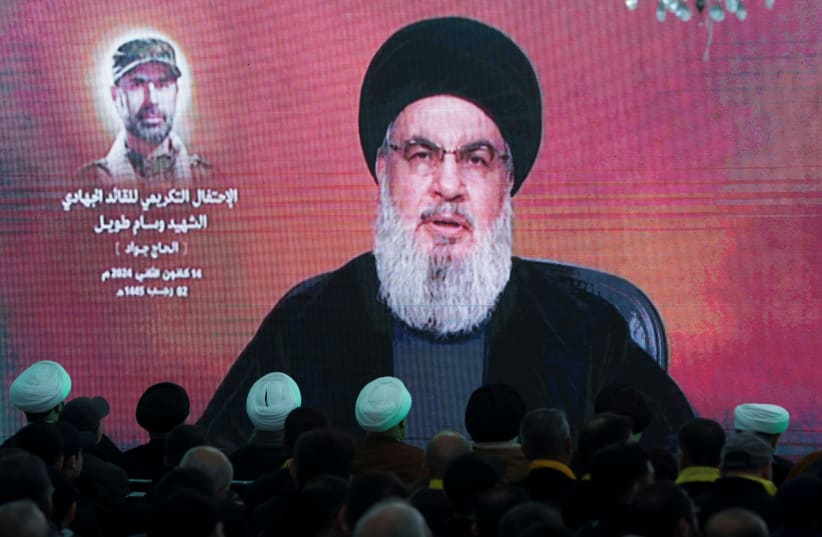
By PROF. EYAL ZISER, SHAKED SADEHLebanon’s Hezbollah leader Sayyed Hassan Nasrallah gives a televised address at a memorial ceremony to mark one week since the killing of Wissam Tawil, a commander of Hezbollah’s elite Radwan forces, in Khirbet Silem, southern Lebanon, January 14, 2024(photo credit: REUTERS/AZIZ TAHER)
One day after Hamas attacked Israel on October 7, 2023, Hezbollah rushed to join the fighting. However, since the beginning and even until today, the “support” it provides to Hamas is limited and even just symbolic.
The organization attacks IDF positions and Israeli towns along the border, but takes care not to escalate the conflict into a full-scale war. While Israel has evacuated northern residents from their homes and suffered losses, it strikes Hezbollah with a force unprecedented in the past, and so far, the organization has lost nearly 200 terrorists in IDF strikes.
It is possible that when Hezbollah leader Hassan Nasrallah ordered his men to join the fighting alongside Hamas, he assumed that the war in Gaza would be short and end, like in the past, with a ceasefire that preserves Hamas’s rule in the Gaza Strip. But that’s not what happened.
In the 130 days of fighting, the IDF gained control over large parts of Gaza, weakened Hamas’s military power, and is now approaching Rafah, Hamas’s last stronghold.
This is an uncomfortable reality for Nasrallah, who finds himself under a harsh spotlight in the Arab world, as many accuse him of not doing enough for Gaza. After all, he could have launched an all-out campaign against Israel and used his forces, including Hezbollah’s Radwan Force.
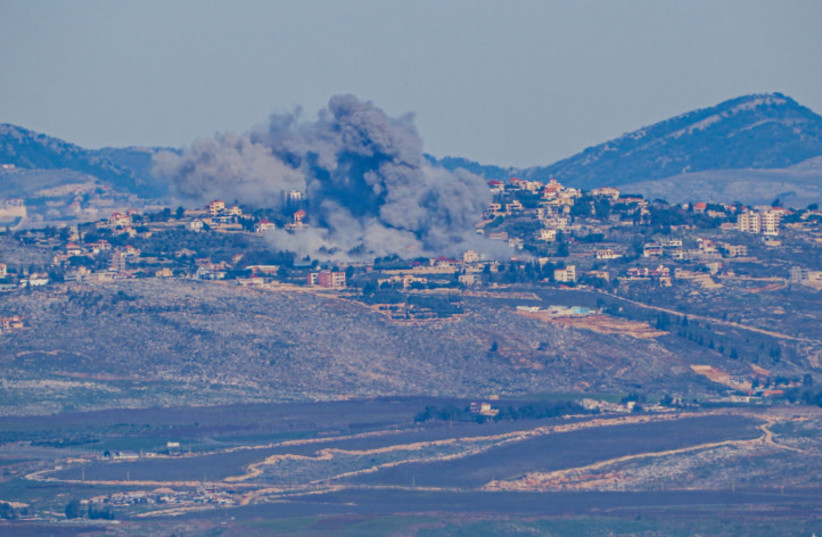
Smoke rises after an Israeli air strike in southern Lebanon, as it seen from the Israeli side of the border, February 8, 2024 (credit: AYAL MARGOLIN/FLASH90)
Additionally, in Lebanon, there is growing concern that they will be next after Israel finishes dealing with Hamas.
Israeli officials hinted and explicitly threatened that Israel’s patience is running out and that there will come a time when it will act to change the situation in the North, whether through diplomacy or military action.
We have heard speeches like this several times in recent months since the war began. Nasrallah praised his victories and achievements to boost morale and reassure worried listeners in Lebanon that Hezbollah is ready for war and that it still intimidates Israel, which does not dare to act against it deep in Lebanon. He also promised that the organization will not stop attacking Israel before a ceasefire in Gaza and that it will not agree to withdraw its forces north of the Litani River, as the American and French mediators hope.
Nasrallah’s speech was not new or very truthful. He did not tell his listeners about the reality in Gaza, although it can be assumed that everyone in Lebanon knows what Hamas has brought upon the people under their rule, and everyone in Lebanon is also concerned that the same fate will happen to Beirut.
Nasrallah also did not tell his listeners about the heavy blows the IDF struck against Hezbollah, even though they insist on reporting the casualties in their ranks almost every evening.
For the first time, the ball is no longer in Nasrallah’s court, but in Israel’s hands, as it is the one to decide whether it wants to add and intensify its efforts in Gaza and maintain the conflict in Lebanon with a small fire, or perhaps turn its attention to escalation on the northern border as well. Nasrallah knows this and all he can do is try to calm his supporters and try to intimidate the Israelis so they won’t even consider going for a full-scale war against Hezbollah.
From Nasrallah’s speech, it seems that he is not convinced that Israel is truly willing to go all the way. He believes, or at least hopes, that the reality that prevailed on the northern border before October 6 will return after the end of the fighting in Gaza, meaning the presence of armed Hezbollah terrorists on the border.
Perhaps for this reason, he did not leave a door open in his speech for the diplomatic effort that Washington and Paris are trying to promote in order to reach an agreement and prevent escalation.
What he meant was that the limited confrontation will continue in the North as long as the fighting in Gaza persists and Hezbollah’s determination does not allow Israel to change the security reality on the northern border.
Nasrallah said his piece. Now we have to wait for the Israeli leadership to say its part and finally decide to put an end to the impossible reality on the northern border and restore security to the North and the residents to their homes in the northern communities, as it promised in recent weeks.
The report stated that the attack was carried out by an unmanned aerial vehicle (UAV) and allegedly targeted specifically a vehicle.
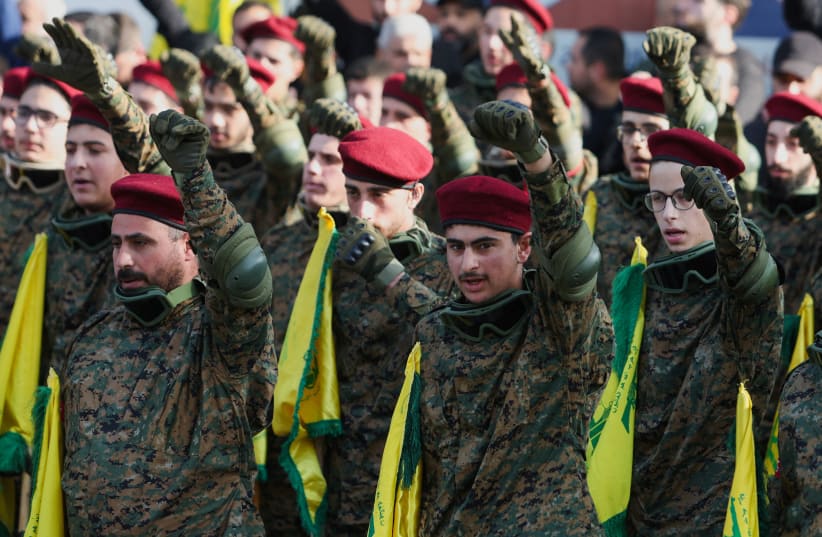
By JERUSALEM POST STAFFUpdated: FEBRUARY 12, 2024 12:00Members of Hezbollah attend the funeral of Wissam Tawil, a commander of Hezbollah’s elite Radwan forces in Lebanon, January 9, 2024(photo credit: REUTERS/AZIZ TAHER)
An Israeli drone carried out a targeted attack in Bint Jbeil in Lebanon, according to Arab reports.
The report stated that the attack was carried out by an unmanned aerial vehicle (UAV) and allegedly targeted specifically a vehicle.
The target of the attack was Mohammed Alawiya, a senior member of Hezbollah and responsible for the Maroun al-Ras region, according to the Saudi “Al Hadith” network and Sky News in Arabic.
Alaviya survived the attack, according to media outlet Al Jazeera.
Two targeted attacks in recent days
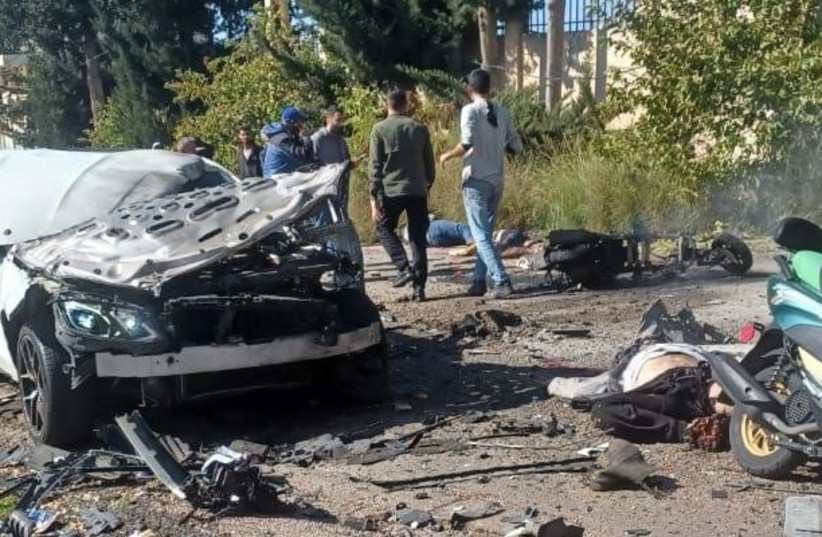
An image taken from a Hezbollah Telegram channel purporting to show the targeted vehicle. (credit: Hezbollah Telegram)
Last week, an additional targeted attack was carried out by a UAV on a car in Sidon in southern Lebanon. Among the three people killed was a Hezbollah fighter, Reuters said, citing Lebanese security sources.
According to Israeli media, the target of the attack was Hamas-affiliated Bassel Saleh, whose condition is unknown.