Hamas on Tuesday submitted its response to a framework for a hostage deal proposed by Qatar last month, appearing to maintain its demand for a permanent ceasefire, a non-starter for Israel, which has vowed to destroy the terror group.
Nonetheless, Qatar’s Prime Minister Mohammed bin Abdulrahman bin Jassim Al Thani said Doha was “optimistic” after receiving the terror group’s “positive response.” US President Joe Biden, on the other hand, said Hamas’s reply was “a little over the top,” while noting that negotiations were ongoing.
Prime Minister Benjamin Netanyahu’s office said Israel’s Mossad spy agency had received Hamas’s response through Qatari mediators and was reviewing the proposal. The Kan public broadcaster quoted an unnamed government source who said Israel would “not accept any conditions for ending the war,” which will enter its fifth month on Wednesday. Netanyahu has repeatedly declared that the war will not end without total victory over Hamas.
Hamas took over a week to respond to the Qatari proposal, whose details have not been publicized but is thought to feature an extended pause in the fighting in exchange for the staggered release of the remaining 136 Israeli hostages by Hamas and the release of a large number of Palestinian security prisoners by Israel.
The proposal was reportedly approved by Israel on January 29, but is only a framework for negotiations. The sides would still have to agree on much thornier issues, including the length of the truce and the number of security prisoners Israel would have to release.
This could risk toppling Netanyahu’s coalition, where right-wing elements have expressed opposition to the release of large numbers of Palestinian terrorists, even as pressure from the families of the hostages and large swaths of the public grows for the government to strike a deal to save the hostages before it is too late. The Israel Defense Forces confirmed Monday that at least 31 of the 136 hostages held in Gaza are no longer alive. The New York Times said another 20 are also feared dead; the IDF did not confirm this.
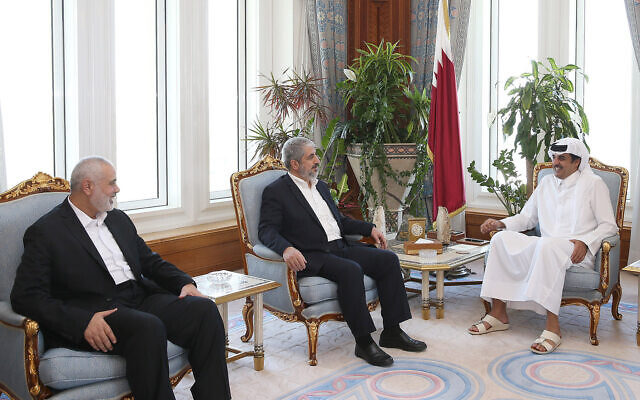
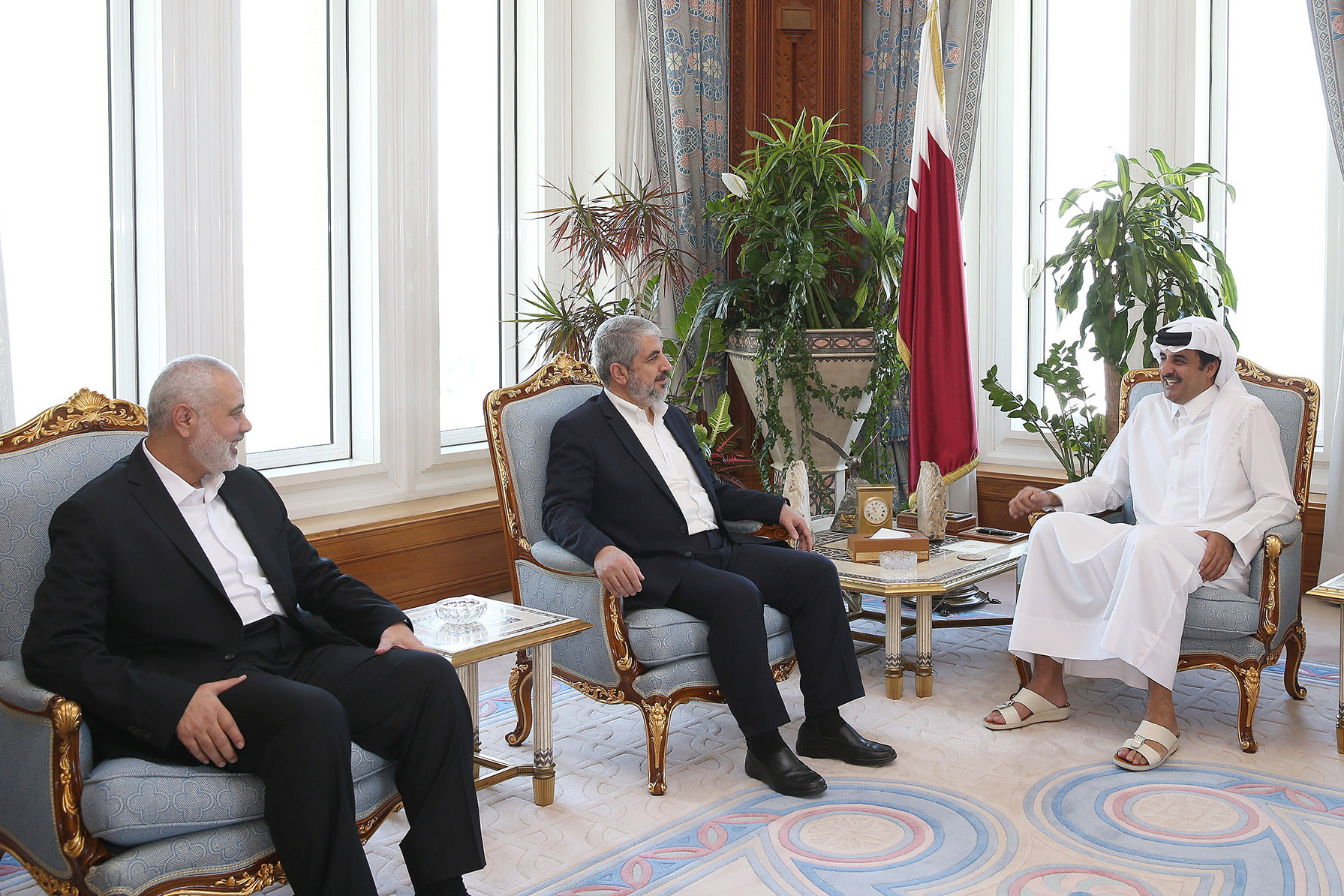
Emir Tamim bin Hamad Al Thani (L), ruler of Qatar since 2013, in a meeting with Hamas leaders Ismail Haniyeh (R) and Khaled Mashal in Doha, October 17, 2016. (Qatar government handout)
Hamas’s response was issued while US Secretary of State Antony Blinken was in the midst of his fifth Mideast diplomacy tour since the start of the war, which was sparked by Hamas’s terror onslaught that killed some 1,200 Israelis and saw another 253 people taken hostage.
Israel subsequently launched a counter-offensive aimed at dismantling Hamas and returning the hostages, which has killed more than 27,000 Palestinians, according to the Hamas-run health ministry, whose figures cannot be independently verified and do not distinguish between civilians and combatants. They include some 10,000 Hamas terrorists Israel says it has killed in battle.
In its statement announcing its response to the hostage framework, Hamas said it engaged “positively” with the proposal “in order to ensure a complete and comprehensive ceasefire,” an end to the Israeli military campaign, the entry of more humanitarian aid, the reconstruction of Gaza, the lifting of Israel’s blockade over the Strip and the release of Palestinian security prisoners.
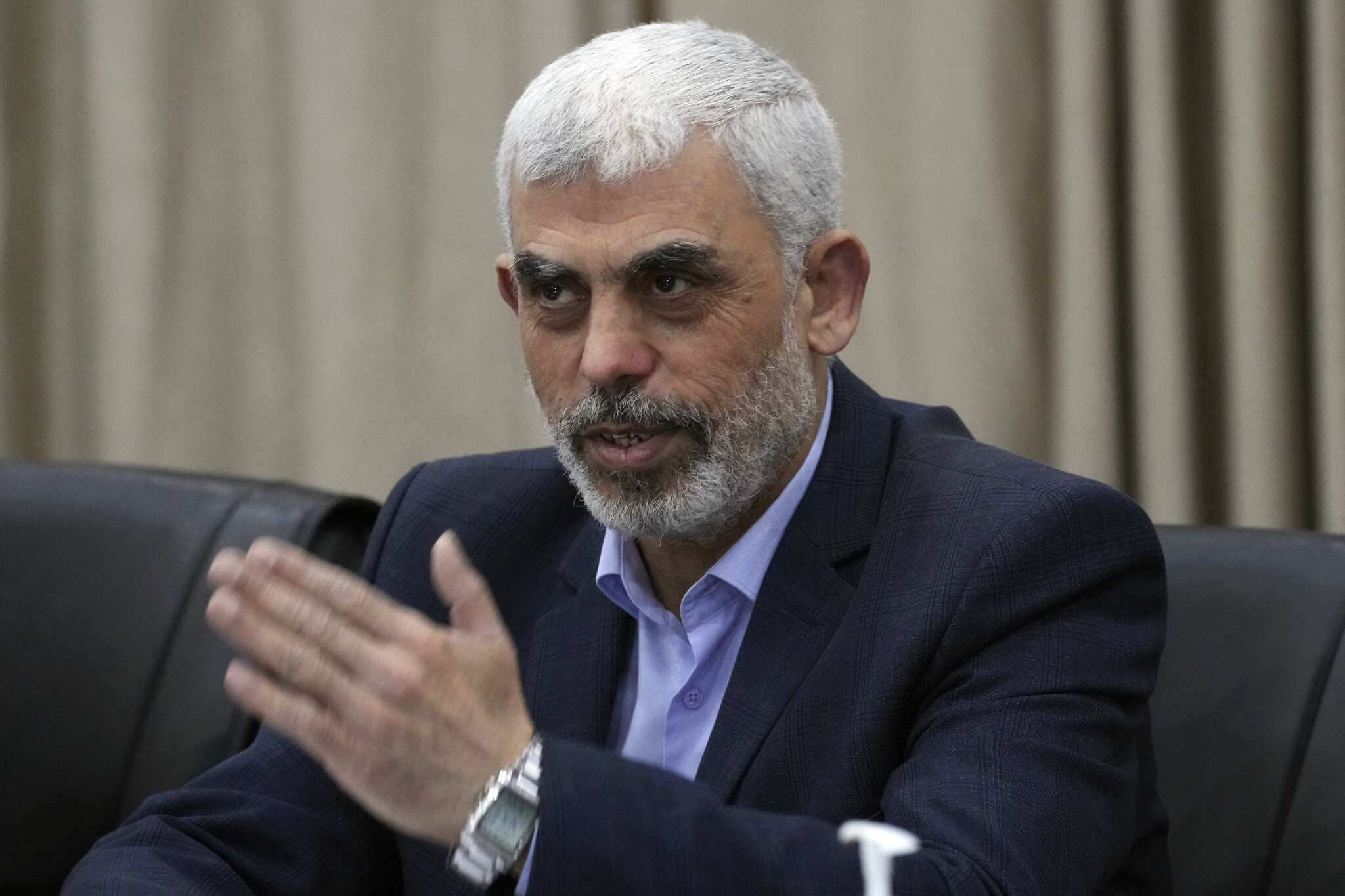
Senior Hamas official Ghazi Hamad told Reuters that the terror group is seeking the release of the largest number possible of Palestinians imprisoned by Israel.
“Netanyahu is trying to make everyone believe that he has or will achieve victory to preserve his coalition government,” Hamad said, adding that it took Hamas some time — over a week — to issue a response because “many of [the agreement’s] issues were unclear and ambiguous.”
Asked by reporters for a status update on the talks at the end of a White House press conference regarding the supplemental funding bill stuck in Congress, Biden confirmed that there’s been “some movement.”
“There’s been a response from the opposition… from Hamas, but it seems to be a little over the top… There’s a continuing negotiation right now,” he added.

US President Joe Biden walks off after delivering remarks on the Emergency National Security Supplemental Appropriations Act in the State Dining Room of the White House, Tuesday, Feb. 6, 2024, in Washington. (AP Photo/Evan Vucci)
During his prepared remarks, Biden slammed Republican lawmakers for refusing to back a bipartisan spending package, noting that the bill “also provides Israel with what it needs to protect its people and defend itself against Hamas terrorists, and it will provide the necessary life-saving humanitarian assistance for the Palestinian people.”
“By opposing this bill, they’re denying aid to the people who are really suffering and desperately need help,” he added.
Qatari Prime Minister Mohammed bin Abdulrahman bin Jassim Al Thani was more bullish about Hamas’s response. “The reply includes some comments, but in general it is positive,” he said at a Doha press conference alongside the visiting Blinken. He declined to elaborate further but said Qatar was “optimistic.”
Blinken said Washington was reviewing the response and that he would discuss Hamas’s response with Israeli officials when he visits the country on Wednesday.
“There’s still a lot of work to be done, but we continue to believe that an agreement is possible, and indeed essential,” he said.
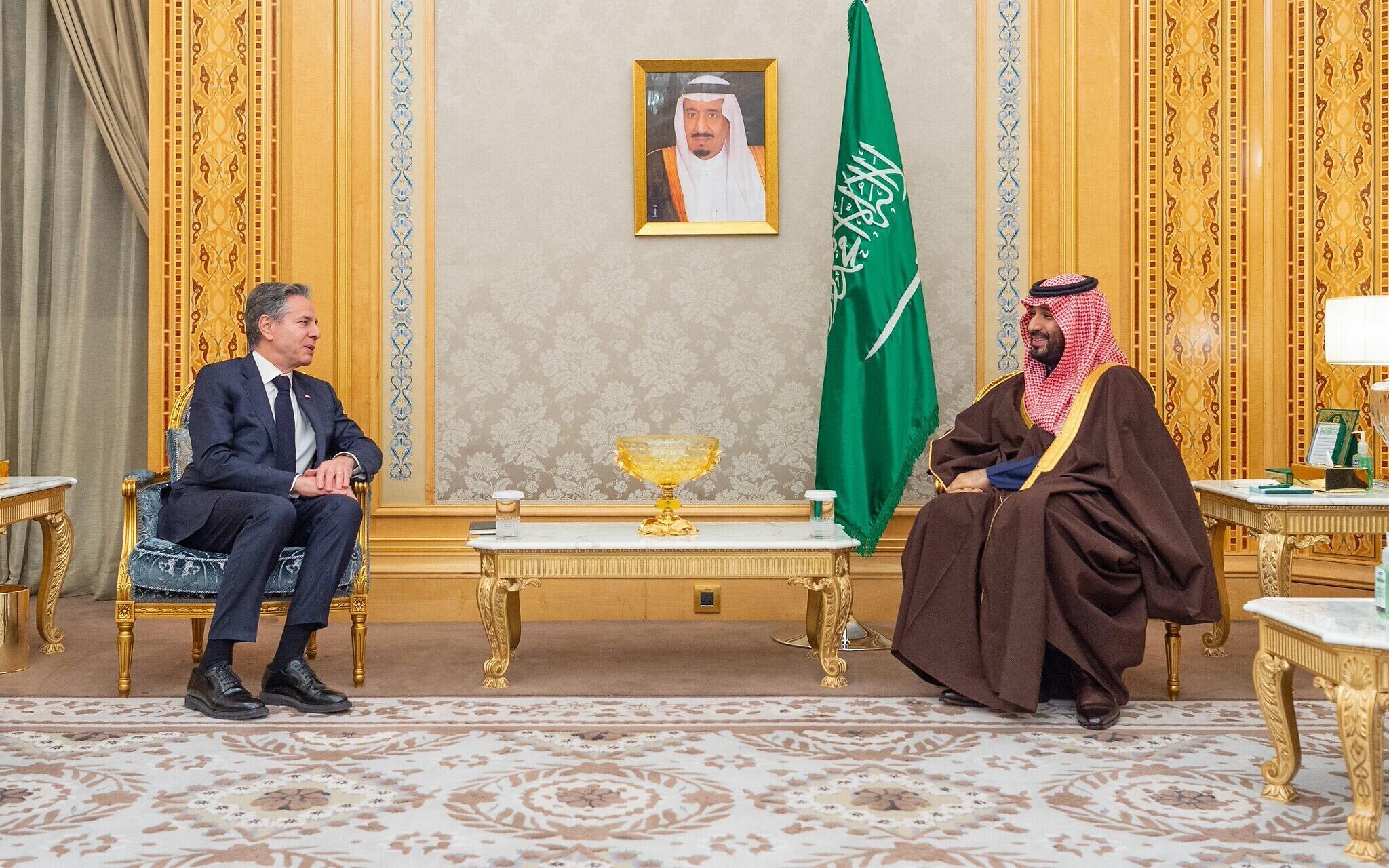
The Doha stop was the third of five that Blinken will be making in the region this week. He met with Egyptian President Abdel Fatah el-Sissi in Cairo earlier Tuesday and sat down with Saudi Crown Prince Mohammed bin Salman in Riyadh on Monday. He landed in Israel late Tuesday night and will hold meetings there and in the West Bank on Wednesday and Thursday before returning to the US.
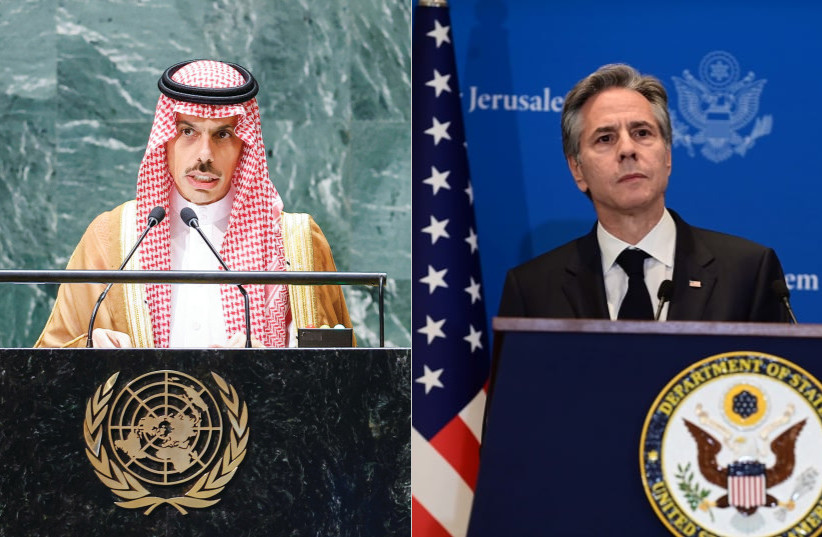
US Secretary of State Antony Blinken meets with Saudi Arabia’s Crown Prince Mohammed bin Salman in Riyadh on February 5, 2024. (Saudi Foreign Ministry/X)
Blinken is using the trip to advance a hostage deal on which much of the administration’s policy regarding the war hinges. It views the extended pause that it would entail as essential for winding down the war, addressing the humanitarian crisis in Gaza, jumpstarting planning for who will govern the territory after the war and creating new regional alliances to better combat the growing threat from Iran.
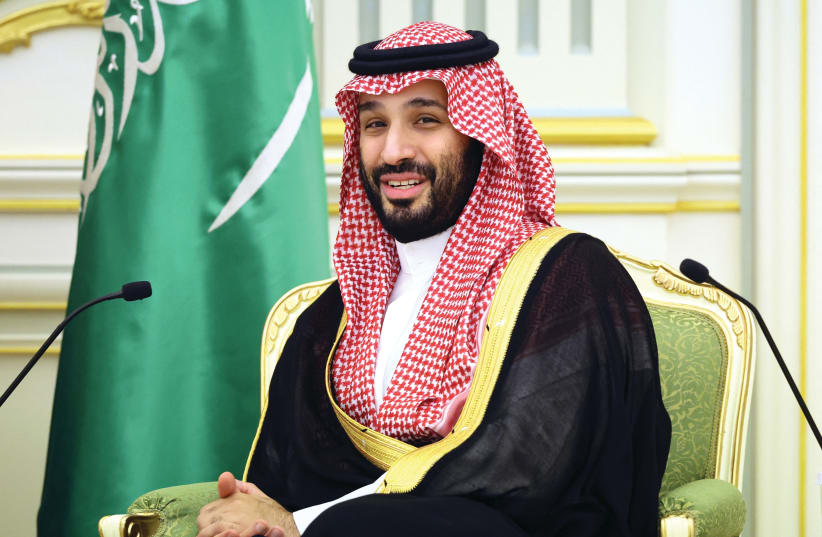
The primary partnership it’s seeking to build — as it did in the months leading up to October 7 — is one between Israel and Saudi Arabia. Blinken said at the Doha press conference that bin Salman reiterated an interest in ties with Israel during their meeting in Riyadh on Monday but wants an end to the Gaza conflict and a pathway to a Palestinian state.
“The crown prince reiterated Saudi Arabia’s strong interest in pursuing [normalization]. But he also made clear what he had said to me before, which is that in order to do that, two things will be required: an end to the conflict in Gaza, and a clear, credible time-bound path to the establishment of a Palestinian state,” Blinken said.
During Blinken’s respective meetings with Sissi, Qatar’s Emir and its prime minister, the sides agreed to continue coordination to increase humanitarian assistance to civilians in Gaza and to urge the broader protection of civilians, the US State Department said.

US Secretary of State Antony Blinken, center left, flanked by US Ambassador to Egypt Herro Mustafa Garg, left, meets with Egyptian President Abdel Fattah el-Sissi, at Al-Ittihadiya Palace, in Cairo, Tuesday, Feb. 6, 2024. (AP Photo/Mark Schiefelbein, Pool)
Blinken also “reiterated the US rejection of any forced displacement of Palestinians from Gaza and underscored the US commitment to establishing durable peace in the Middle East, including the establishment of a Palestinian state that ensures security for Israelis and Palestinians alike,” it said.
US opposition to the forced displacement of Palestinians is not new but was highlighted by the State Department just over a week after a Jerusalem conference attended by nearly a third of the Israeli cabinet where organizers called for encouraging Palestinians to emigrate from Gaza.
Pressed on how the US plans to advance its broader regional initiatives amid resistance from Israel, where Netanyahu has all but rejected a Saudi proposal conditioned on a political horizon for the Palestinians, Blinken avoided criticizing the premier. However, he said Israel’s leaders will have to make “hard decisions” on whether it wants to forgo the possibility of being further integrated into the region and pass on an offer that the US believes will be best for Jerusalem’s long-term security.
On Monday, a senior US official told The Times of Israel that while the Biden administration is not publicly calling for a permanent ceasefire, it is hoping to use the still-elusive extended pause to negotiate a more permanent cessation of hostilities in Gaza.