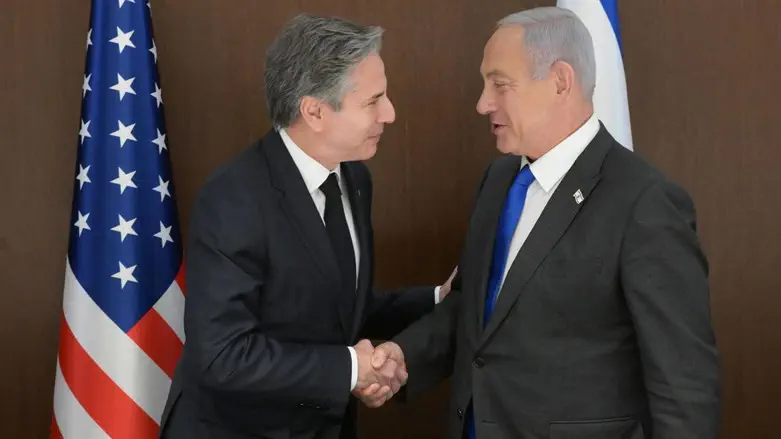
PM Netanyahu speaks with US Sec. of State Blinken, emphasizing bilateral cooperation and discussing Iranian threat.

Netanyahu and Blinken

Netanyahu and BlinkenAmos Ben Gershom/GPO

Israeli Prime Minister Benjamin Netanyahu on Thursday evening spoke by telephone with US Secretary of State Antony Blinken, discussing military cooperation and intelligence, and the Iranian threat.

In the conversation, Netanyahu expressed his appreciation for the military and intelligence cooperation between Israel and the US, which is at an all-time peak.

The two also discussed the challenges and opportunities in the region.

Prime Minister Netanyahu then expressed his appreciation for the sincere talks that have been held recently in Washington between both countries’ teams on the close bilateral cooperation. The Prime Minister also suggested advancing Israeli-American cooperation on artificial intelligence.

During their conversation, the two also discussed the Iran issue at length. Prime Minister Netanyahu reiterated his consistent position that returning to the nuclear agreement with Iran would not stop the Iranian nuclear program and that no arrangement with Iran will obligate Israel, which will do everything to defend itself.


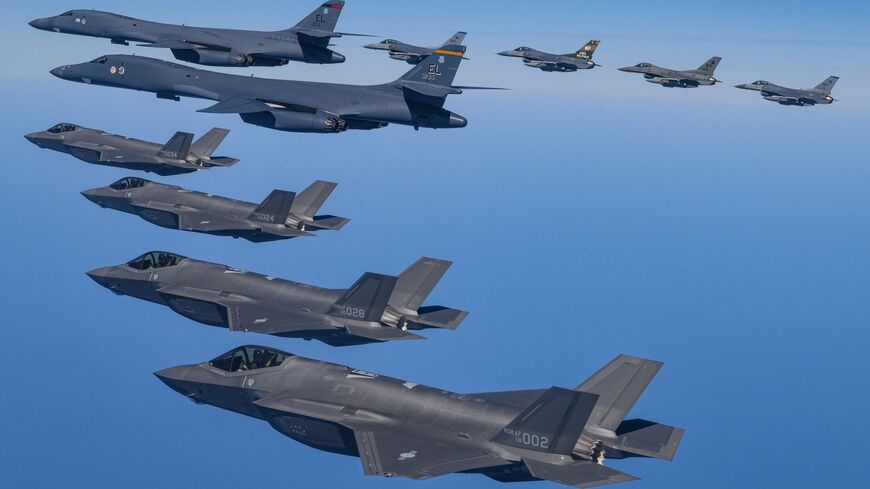
Two US Air Force B-1B bombers dropped munitions at target ranges in Jordan and Saudi Arabia before returning to Europe in the Pentagon’s latest regional exercise aimed at deterring Iran.
B-1B

Combat aircraft from Israel, Jordan and Saudi Arabia took part in a display of force alongside US nuclear-capable B1 bombers over the Middle East on Thursday in the Pentagon’s latest demonstration to Iran.

Aircraft from five Middle Eastern militaries linked up with a pair of US Air Force B1-B Lancers at various stages as they transited the Persian Gulf region after taking off from the UK, US military officials said.

The demonstration culminated with the American bombers dropping live munitions at training ranges in Saudi Arabia and Jordan before flying back to base in Spain. The B-1Bs dropped air-launched AGM-158A JASSM cruise missiles and 550-pound GBU-38 bombs on “multiple simulated targets” during the exercise, a defense official told Al-Monitor.

Start your PRO membership today.

Join the Middle East’s top business and policy professionals to access exclusive PRO insights today.

The Pentagon is withholding the identity of two of the Middle Eastern countries that took part in the exercise at their request, officials said.

Why it matters: The US has periodically sent nuclear-capable bomber task force missions over the Middle East in recent years in a bid to deter attacks by Iran, which US officials say continues to seek to expel American forces from the region.

Arab and Israeli pilots have flown alongside US strategic bombers in recent years since additional Arab governments – so far the UAE, Bahrain and Morocco – have begun establishing formal ties with Israel.

But dropping various types of live munitions on simulated targets in multiple countries marks a new step, the deputy commander of US Air Force units in the Middle East, Maj. Gen. Mark Slocum, told Al-Monitor.

“These missions demonstrate the credibility of our forces to address a global security environment that is more diverse and uncertain than at any other time in our history, and that’s significant,” Slocum said.

“The timing of this is meant to demonstrate we as a team can deliver overwhelming combat power at a moment’s notice,” the general added.

The show of force comes as top US diplomat Antony Blinken visited Saudi Arabia amid Washington’s push for the kingdom to normalize ties with Israel.

The Biden administration has struggled to dispel concerns among Arab leaders that Washington has been abandoning its defense commitments in the region as the Pentagon diverts military forces to deter Russia and China. Blinken led a US delegation in meetings with ministers from Gulf Cooperation Council countries in Jeddah on Thursday.

“These bomber missions represent the US’s commitment to our partners and showcase our ability to deliver overwhelming power at a moment’s notice,” the top commander of US Air Force units in the Middle East, Lt. Gen. Alexus Grynkewich, said in a statement.

“Together, we are operationalizing concepts designed to make us more agile in our execution, more strategic in our deterrence, and more resilient in our capability,” Grynkewich said.

In January, US B-52 bombers escorted by Israeli fighter jets dropped live bombs on mock targets in Israel’s Negev Desert during a long-range strategic air exercise which former senior US officials described to Al-Monitor as indicative of the Pentagon’s tactics to potentially knock out Iran’s nuclear sites.

Senior military officials under the Biden administration have said they hope to include other militaries in the Middle East in similar air exercises, but there remains reluctance among top officials the region to being seen as part of a US- and Israeli-led bloc oriented against Iran.

Know more: The bomber overflight comes as military forces from the US and Gulf Cooperation Council countries are participating in a two-week series of exercises to integrate air and missile defense cooperation.

American defense officials have made strides in convincing Arab counterparts to share air defense data and partake in maritime security patrols in a bid to thwart Iran’s attacks. But trust remains low between some countries in the Gulf region, inhibiting cooperation which Pentagon officials say is necessary.

The commander of all US forces in the Middle East, US Army Gen. Michael “Erik” Kurilla, discussed ways forward on multinational military cooperation with top regional defense chiefs in Saudi Arabia, Israel, the UAE, Iraq, Qatar, Kuwait and Jordan during a two-week tour of the region last month.

Kurilla also met with Emirati President Mohamed bin Zayed Al Nahyan, Qatari Emir Tamim bin Hamad Al Thani and Iraqi Prime Minister Mohammed Shia al-Sudani during stops in those countries.

What’s next: The US and GCC plan to hold working group meetings on integrated air and missile defense and maritime security later this year, according to a State Department readout of today’s meeting in Jeddah.

Editor’s note: This story has been updated since publication to include additional quotations.


Nuclear deal approaches, Iran’s terror continues

It is foolish to cut a deal with Iran. It is also unforgivable to ignore its terrorist acts and the hostages imprisoned there. Op-ed.

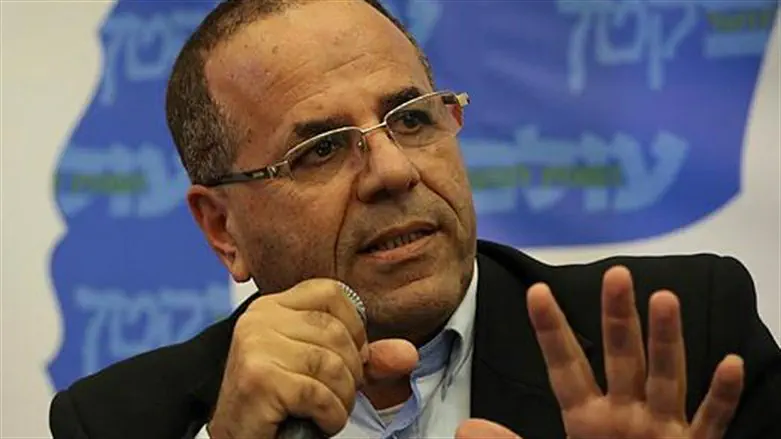
Ayoub Kara
In the wake of talk that a new Iranian nuclear deal can be signed within a few weeks and Iran’s announcement that it created a new hypersonic missile that can evade all air defenses, it was recently reported that Azerbaijani student Farid Safarli was arrested in Tehran on false espionage charges.


Safarli, age 27, is a student at the University of Jena and traveled to Tehran to meet his girlfriend. Although he was expected to return to Germany last March, it was recently reported that he was arrested on fabricated charges of espionage and is presently being held hostage in Tehran.


What Iran hopes to gain by holding Safarli hostage remains to be seen. However, this is the same country that recently attempted to execute Azerbaijani Iranian dissident Ahmad Obali and his son Deniz, attempted to assassinate an Azerbaijani member of parliament and murdered an Azerbaijani security guard in an attack upon the Azerbaijani Embassy in Tehran on International Holocaust Memorial Day earlier this year.


This latest attack against Azerbaijan comes after the Iranians were increasingly critical of Azerbaijan for opening up an embassy in Tel Aviv. In addition, Iran stands to lose much influence in the Caucuses in the wake of a proposed peace agreement between Armenia and Azerbaijan. Based on past precedent, it is likely that the Iranians seek to utilize Safarli as leverage against Azerbaijan in order to prompt them to change their policies.


This is not the first time that Iran has held hostage foreign citizens who visited their country. British Iranian aid worker Nazarin Zaghari-Ratcliffe was arrested in 2016 on fabricated espionage charges and was not released until 2022. “The Iranian authorities deliberately and shamelessly deprived Nazanin Zaghari-Ratcliffe of her freedom. They used spurious national security charges and sham judicial proceedings against her with the aim of exerting pressure on the UK government to settle its debts,” said Diana Eltahawy, Deputy Director for the Middle East and North Africa at Amnesty International. She was released only after the British government paid a bribe for her freedom.


Similarly, Anoosheh Ashoori, a 67-year-old retired British-Iranian engineer, was held hostage alongside Ratcliffe and was released together with her after the British government paid a bribe to the Iranians.


Today, Swedish Iranian academic Ahmadreza Djalali remains in Iranian custody on false charges and is now at risk of being executed.


According to Amnesty International, “Mounting evidence strongly indicates that the Iranian authorities are committing the crime of hostage-taking against Ahmadreza Djalali, and threatening to execute him in order to compel third parties to swap him for former Iranian officials convicted and/or on trial abroad as well as to refrain from future prosecutions of Iranian officials.”


And in 2008, Iran arrested another Azerbaijani, Rashad Aliyev, on false charges as well.


None of the above includes the Iranian hostage crisis, where for 444 days, 52 American citizens were held hostage inside of the US Embassy in Tehran in 1979.


In light of Iran’s rogue behavior consisting of taking hostages, support for terror organizations in Yemen, Lebanon, Syria, Gaza and Iraq, and considering their technical advancements in weapons technology including nuclear ones even in the midst of sanctions, it would be folly for the world to make a fresh nuclear deal with Iran. Such a deal would only worsen the plight of poor Safarli and others who are presently held hostage in Tehran.