“The Mossad is not hiding this,” the FM said, referring to involvement in protests. “They are calling on the Iranian people to rise up against the regime through their internet and Twitter accounts.
Turkish Foreign Minister Hakan Fidan speaks during an interview with Reuters at the 23rd edition of the annual Doha Forum, in Doha, Qatar, December 6, 2025(photo credit: REUTERS/IBRAHEEM ABU MUSTAFA)ByELI LEONUpdated: Turkish Foreign Minister Hakan Fidan accused the Mossad of using ongoing protests in Iran to destabilize the Islamic Republic in a Saturday interview.
In an extended interview with Turkish television, Fidan addressed recent developments in Iran and mounting regional tensions, repeatedly criticizing Israel for what he described as its involvement in the unrest. He argued that Israel is deliberately working to take advantage of Iran’s internal challenges, including economic hardship, to weaken the regime, actions he said are being carried out openly.
“The Mossad is not hiding this,” Fidan said, referring to the protests. “They are calling on the Iranian people to rise up against the regime through their internet and Twitter accounts.”
Turkish FM claims Netanyahu aims for regional war
He also claimed that Netanyahu is interested in triggering a broader military conflict, but only with American approval.
“Everyone knows Netanyahu has such a desire; it’s no secret,” Fidan said.
He alleged that Netanyahu would not proceed without guarantees from major allies, chiefly the United States, and that lobbying efforts for a “green light” have included his visit to the White House in late December.
Turning to Iran’s internal state, Fidan noted that the country has endured economic sanctions for nearly three decades, describing the toll on the Iranian people as severe. He characterized the population as “dynamic and sophisticated,” particularly its younger generations, and said that while they are eager for a better life and economic opportunity, the sanctions have imposed major structural burdens.
These issues, he said, are the root cause of recurring protests, including mass demonstrations in 2019 and again in 2023. While the current unrest is more limited in scale, Fidan emphasized that some of the protest activity is being manipulated from outside.
“Alongside the authentic reasons for protest, there is clear external manipulation by Iran’s adversaries,” he said.
On the diplomatic front, Fidan said Turkey seeks to prevent harm to Iranian civilians and supports resolving tensions between Iran, the United States, and other Western powers through negotiations. He claimed that Iran is, at times, confronted with preconditions that are meant to sabotage the possibility of talks, and warned that such tactics serve only to isolate Tehran while providing justification for potential Israeli military action.
He emphasized that reaching a negotiated agreement is vital for regional stability and would also remove what he called “international cover” for an Israeli strike.
In his closing remarks, Fidan said he was relaying a message from Turkish President Recep Tayyip Erdogan to Iran’s leadership. That message, he said, called on Tehran to open a new chapter in its relations with neighboring Arab states and to engage with them in a “genuine and sincere” manner.
Iran, he said, should “set aside past grievances” and prioritize its responsibilities to the peoples of the region. He also urged Iran to embrace the possibility of shared leadership in stabilizing the Middle East.
In a recent Maariv column, Israeli military analyst Alon Ben-David also addressed comments from an account claiming to be the Mossad. He noted that a Persian-language Mossad-linked account had tweeted at the start of the unrest: “We are with you, the protesters, everywhere.”
Later in the week, the same account claimed that “thousands of activists in the Basij militia and security forces have joined the protesters,” though the post was later deleted.
Ben-David wrote that the unit within Mossad responsible for psychological operations and influence is headed by a former candidate for the agency’s top post, identified only as “A.,” who now serves as deputy to Mossad director Roman Gofman.
According to Ben-David, the two tweets reflected poor judgment, and the deletion of one suggested a measure of reconsideration. He argued that Israel should avoid inserting itself, verbally or digitally, into every unfolding situation, even when developments may seem advantageous.
“The Mossad would be better served by operating more discreetly and tweeting less,” Ben-David concluded.
Iran condemns “the ongoing, unlawful, and irresponsible conduct of the United States of America, in coordination with the Israeli regime,” Iran’s UN Ambassador Amir Saeid Iravani wrote.
Iranians attend a protest in the city of Rasht, northern Iran, January 8, 2025(photo credit: SOCIAL MEDIA/VIA SECTION 27A OF THE COPYRIGHT ACT)ByREUTERS, ALEX WINSTON, JERUSALEM POST STAFF Updated: The United States is to blame for “the transformation of peaceful protests into violent, subversive acts and widespread vandalism” in Iran, the country’s United Nations ambassador told the Security Council on Friday.
Iran condemns “the ongoing, unlawful, and irresponsible conduct of the United States of America, in coordination with the Israeli regime, in interfering in Iran’s internal affairs through threats, incitement, and the deliberate encouragement of instability and violence,” Iran’s UN Ambassador Amir Saeid Iravani wrote in a letter, seen by Reuters.
He accused Washington of “destabilizing practices” that undermine the founding UN Charter, violate fundamental principles of international law, and threaten the foundations of international peace and security.
IRAN’S AMBASSADOR to the United Nations Amir Saeid Iravani addresses the General Assembly during a ceremonial tribute to Iran’s president Ebrahim Raisi, after the president was killed in a helicopter crash, in May. (credit: EDUARDO MUNOZ / REUTERS)
Khamenei accuses protestors of acting on foreign interests
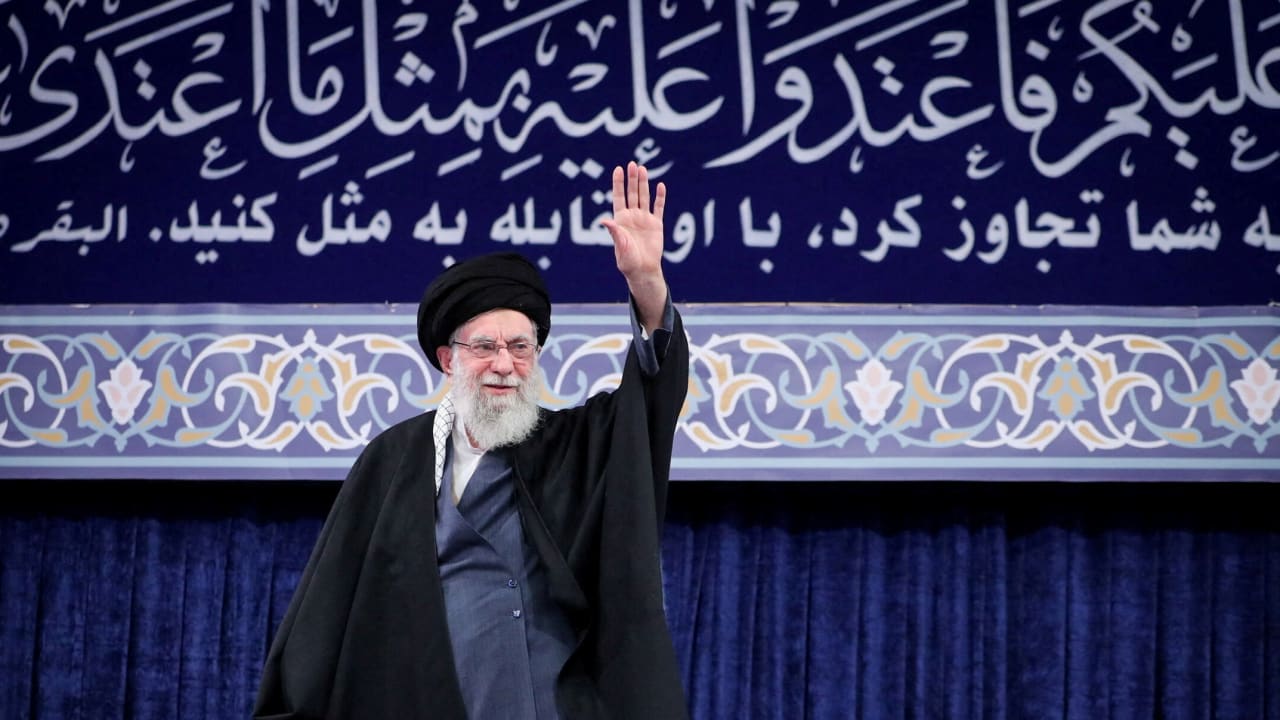
In a speech broadcast in Iran on Friday, Iranian Supreme Leader Ayatollah Ali Khamenei accused protesters of acting on behalf of US President Donald Trump.
In his speech, Khamenei called on protesters to “preserve unity,” warning that Tehran would not tolerate people acting as “mercenaries for foreigners.”
With Iran’s anti-government unrest evolving rapidly and foreign pressure mounting, the clerical establishment appears unable, for now, to tackle what has become a crisis of legitimacy at the heart of the Islamic Republic.
When asked in an interview on Thursday at what point the US would intervene, given that over 30 protestors have been killed so far, Trump claimed that many protestors have been “killed by problems with crowd control” and that he “isn’t sure [he] can necessarily hold somebody responsible for that.”
On Friday, Trump said that the US was watching what was happening very closely and that “if they start killing people like they have in the past, we will get involved. We’ll be hitting them very hard where it hurts.”
Trump clarified that “that doesn’t mean boots on the ground, but it means hitting them very, very hard where it hurts.”
IDF soldiers were deployed to the scene in the outskirts of Jalud, a village under the jurisdiction of the Samaria Brigade, but found no suspects.
People examine cars damaged and vandalized by attackers in the Arab village of Ein Rafa, near Jerusalem, January 8, 2026(photo credit: JAMAL AWAD/FLASH90)ByTZVI JASPER, SHOSHANA BAKER Updated:
The IDF on Friday announced a series of strikes against Hezbollah targets in Lebanon “in response to Hezbollah’s continued violations of the ceasefire understandings.”
The IDF also announced that, in collaboration with the Shin Bet (Israel Security Agency), it had struck several Hamas sites in the Gaza Strip on Thursday night.
The strikes targeted Hamas terrorists, rocket launch sites, and additional terrorist infrastructure.
This attempted launch was in direct violation of the ceasefire agreement between Israel and Hamas.
Hamas terrorists targeted, and killed
Following the strikes, the IDF confirmed the following terrorists had been identified and confirmed as eliminated in the operation.
Kamal Abd al-Rahman Muhammad Awad served as the head of the anti-tank missile unit within the Hamas terrorist organization. Ahmad Thabet was the head of a weapons workshop in a Hamas department, and Ahmad Abd al-Fattah Saeed Maghdalawi who was a member of the Nukhba terrorist unit in the Nuseirat Battalion.
Maghdalawi infiltrated Israel and participated in the deadly massacre on October 7th, which included the attack on the Nova music festival.
The IDF also reported the discovery of a rocket launcher on thursday with two loaded rockets that were ready to be launched toward Israel during continued operations to dismantle terrorist infrastructure within the Yellow Line border in the northern Gaza Strip.
IDF responds to settler violence in West Bank
Additionally, the IDF on Thursday night responded to a report that Israeli citizens had vandalized a Palestinian school building and its contents.
Soldiers were deployed to the scene on the outskirts of Jalud, a village under the jurisdiction of the Samaria Brigade, but found no suspects.
Additional reports were received of Israeli citizens vandalizing Palestinian property, including setting cars on fire.