Archaeologists discover mysterious ancient Egyptian tomb

The identity of the figure interred within the tomb is still unknown, but Egyptian experts think it may belong to someone from the 18th Dynasty.

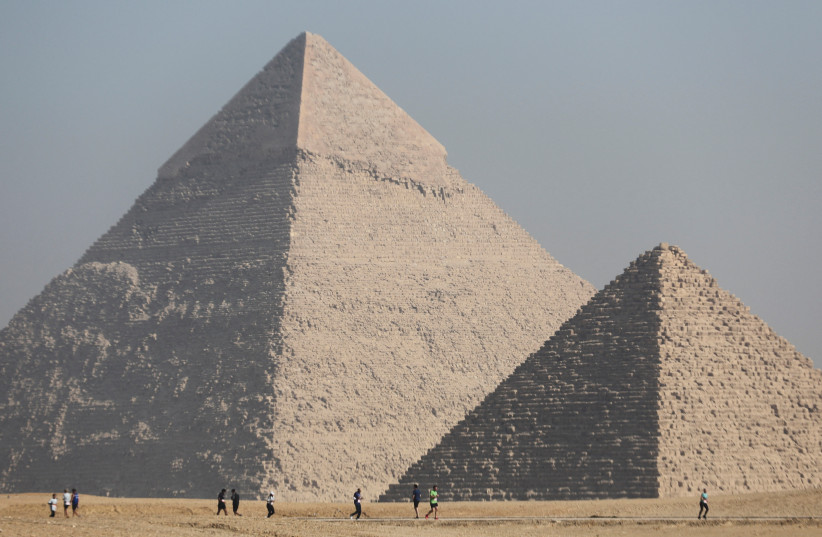
 View of the Great Pyramids of Giza during  the fourth annual Pyramids Half Marathon named "Race Through History" in 2022, in Giza, Egypt December 10, 2022.  (photo credit: REUTERS/AMR ABDALLAH DALSH)
View of the Great Pyramids of Giza during the fourth annual Pyramids Half Marathon named “Race Through History” in 2022, in Giza, Egypt December 10, 2022.
(photo credit: REUTERS/AMR ABDALLAH DALSH)

An ancient Egyptian tomb dating back to at least 3,500 years ago was recently uncovered in the Nile River’s west bank in Luxor, Egyptian authorities announced on Facebook on Saturday.

The identity of the figure interred within the tomb is still unknown, but according to Egypt’s Supreme Council of Antiquities head Mostafa Waziri, it may belong to someone from the 18th Dynasty.

This would put the pharaoh as part of the New Kingdom, considered by many to have been the greatest of Egypt’s golden ages.

The excavation itself was conducted by researchers from Egypt’s Supreme Council of Antiquities and archaeologists from the University of Cambridge.

 Heads of Akhenaten and Nefertiti stucco Amarna Dynasty 18 1340 BCE (credit: Wikimedia Commons)Heads of Akhenaten and Nefertiti stucco Amarna Dynasty 18 1340 BCE (credit: Wikimedia Commons)

What do we know about this ancient Egyptian tomb?

The reason it is believed to be a tomb for someone from the 18th Dynasty during the New Kingdom era is due to certain elements in the tomb.

This is further supported by claims from the head of the British research mission at the site, Piers Litherland, who said the tomb could potentially be the final resting place of a royal wife or princess from the 18th Dynasty.

Also known as the Thutmosid Dynasty, this era lasted from 1550 BCE to 1292 BCE and started the New Kingdom. Its name derives from four of its pharaohs being named Thutmose, though it also famously included other iconic pharaohs such as the “heretic” Akhenaten and the two reigning pharaohs queens Hatshepsut and Nefertiti. Its sixth pharaoh, Thutmose III, is remembered as one of Egypt’s greatest and has often been given the title of Thutmose the Great.

However, the nature of the “18th dynasty characteristics” inside this newly discovered tomb aren’t exactly clear, since the interior of the tomb itself was in poor condition.

According to Egyptian archaeologist Dr. Mohsen Kamel, parts of the burial chambers were filled with sand and limestone sediment by ancient floods, which impacts the condition of the interior, including some of the inscriptions.

But the researchers are undeterred, with the joint Egyptian-British mission, led by Dr. Fathi Yassin, continuing to complete the excavation and documentation of the site.

It is hoped that this will further support the idea that this was an 18th-dynasty tomb.

Archaeology and Egypt: A hope to revitalize tourism

With a history going back tens of thousands of years and home to one of the oldest civilizations on Earth, ancient Egypt is home to a wide variety of archaeological sites.

As such, Egypt has placed its archaeology as a major part of its drive to boost tourism.

Currently, tourism in Egypt accounts for 10% of its total GDP and two million jobs, according to AFP.


Biden administration blunders, rewrites Mideast history -opinion

The Biden Administration is pushing fabricated narratives instead of building on the advances in the Middle East through the Abraham Accords.

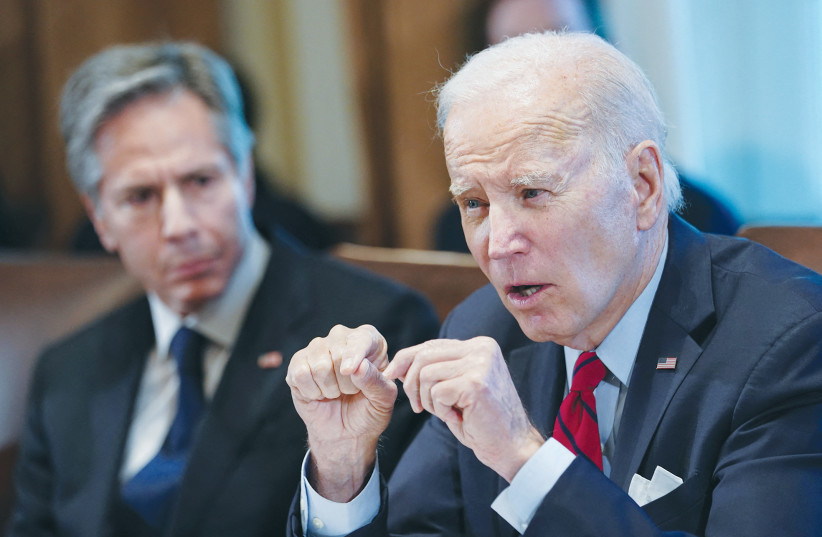
 US PRESIDENT Joe Biden speaks during a cabinet meeting at the White House, as Secretary of State Antony Blinken looks on, earlier this month. (photo credit: KEVIN LAMARQUE/REUTERS)
US PRESIDENT Joe Biden speaks during a cabinet meeting at the White House, as Secretary of State Antony Blinken looks on, earlier this month.
(photo credit: KEVIN LAMARQUE/REUTERS)

An ancient spoon may not seem a likely subject of diplomatic catastrophe. Yet, in the short span of a week, the Biden Administration turned it into one, as it did with its comments about the Temple Mount and its adoption of the Turkish pronunciation of the country name.

With these forays into Middle East history and culture, the Biden Administration started off 2023 falling into the failed habits of prior administrations and broke new ground in ostracizing America’s allies.

These steps not only complicate any goodwill it seeks to make, whether with Israel or other allies in the region, but also risk undermining credible American engagement in the region.

Biden administration blunders

The latest move came on January 5, when the Biden administration handed over a 2,700-year-old spoon that was originally found in Hebron, located within the West Bank, where the Palestinian Authority is based. The modern Palestinian identity dates back to the 20th century and the spoon dates back to the Iron Age. And yet, the US official overseeing the handover described it as “an example of Palestinian cultural patrimony,” parroting a top Palestinian Authority talking point that falsely ties today’s Palestinian identity with the ancient Middle East.

Whoever used the spoon was likely not today’s Palestinians or their progenitors, so calling it their cultural patrimony is not true.

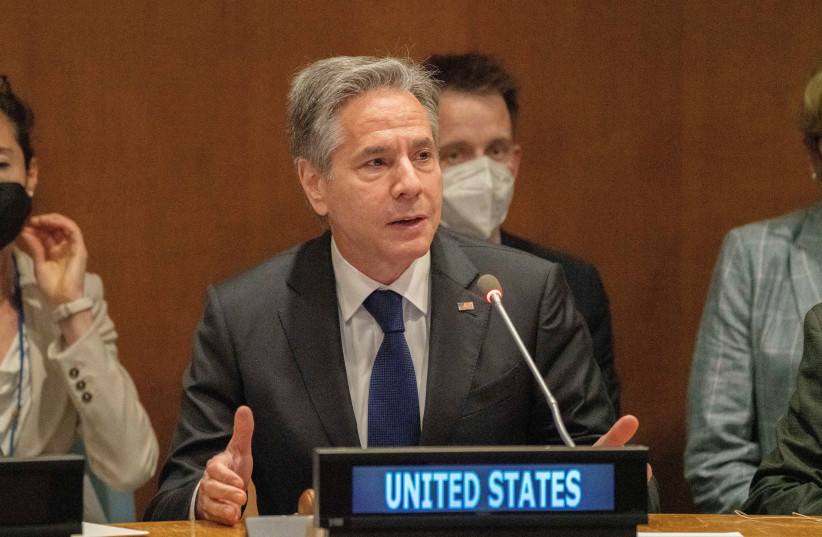
 US Secretary of State Antony Blinken speaks at a sideline meeting of the Nuclear Non-Proliferation Treaty review conference in New York City, New York, US, August 1, 2022. (credit: REUTERS/DAVID 'DEE' DELGADO)US Secretary of State Antony Blinken speaks at a sideline meeting of the Nuclear Non-Proliferation Treaty review conference in New York City, New York, US, August 1, 2022. (credit: REUTERS/DAVID ‘DEE’ DELGADO)

The US turning over a spoon may sound like a trivial matter but the Palestinian media quickly capitalized on the moment, describing it as “repatriat[ion]… to the Palestinian Authority,” implying the object validates the Palestinian roots in antiquity. The New York Times seized on this description, noting that this was “the first time the United States had repatriated a stolen relic to the Palestinian government.”

This moment comes atop other Biden administration blunders in Middle East history. The week began with a call on January 2, from Secretary of State Antony Blinken with his new Israeli counterpart, Eli Cohen. The brief readout filled with typical diplo-speak left out two key words, Abraham Accords. Instead, it concludes with the following sentence: “[t]he Secretary emphasized the continued US commitment to a two-state solution and opposition to policies that endanger its viability.”

The next day, Biden administration officials condemned Israel’s new Minister of National Security, Itamar Ben-Gvir, over his visit to the Temple Mount, saying that it was likely to provoke violence (a single rocket was fired from Gaza into Israel in response to the visit) and that it undermined the status quo of the site (it did not as the terms of the “status quo” arrangement do not prohibit visits by Jews to the site). Not only was this criticism inaccurate but it was also highly inappropriate for the US to publicly denounce a cabinet member from one of its closest allies for visiting an area that is legally part of his country.

False narratives

STATE DEPARTMENT spokesperson Ned Price and others in the administration trafficked in false narratives in voicing these criticisms and depicting the visit as a unilateral action to upend the status quo of the site. Not only was the criticism false but, as I noted in a tweet, it was also offensive, given that the Temple Mount is the holiest site for the Jewish people and Ben-Gvir’s visit coincided with the Jewish fast day of the 10th of Tevet, which marks the date of the Babylonian siege of the First Temple that led to its destruction.

Another less prominent moment happened on January 5, 2023, when the State Department conceded to the Turkish Embassy’s request to change references to their country from “Turkey” to “Türkiye” on all official US communications. In press reporting and official Turkish statements, the interest in changing the name ostensibly had to do with being confused with the festive bird eaten on Thanksgiving.

Again, although some might regard this as a trivial matter, several Turkey watchers noted another significant reason – Turkey’s presidential election this year. As Francesco Siccardi of Carnegie Europe explained, this change represents “another strategy deployed by the Turkish government to reach out to the nationalist voters in a crucial year for Turkish politics,” noting that this timing is crucial.

While linguistically correct, the name was described by Turkish President Recep Tayyip Erdogan in 2021 as the best representation and expression of the Turkish people’s culture, civilization, and values. Siccardi interpreted Erdogan’s push to change the name as intended to energize Turkish voters and turn their attention away from economic problems at home.

Indeed, instead of “Turkey” or “Republic of Turkey,” the State Department now uses the words “Türkiye” and “Republic of Türkiye.”

A Soviet saying goes “much harder than predicting the future is predicting the past.” In the same spirit, the Biden Administration is pushing fabricated narratives of other parties about the ancient and modern Middle East instead of building on the advances in the Middle East that took shape in its more recent history through the Abraham Accords.

In the Middle East, at least, history is not an academic exercise but is the language of diplomacy and warfare. Without clarity about American interests or those of America’s allies, the Biden Administration once again finds itself on the wrong side of history.

The writer is a historian of the Middle East who served as an adviser in the office of former US vice president Mike Pence. He currently serves as the director of the Center for American Security and of the center’s Middle East Peace Project at the America First Policy Institute.

50,000 Israelis gather in Tel Aviv for massive anti-gov’t protest

Protest leaders and organizers called on Saturday on police officers to ensure the security of demonstrators.

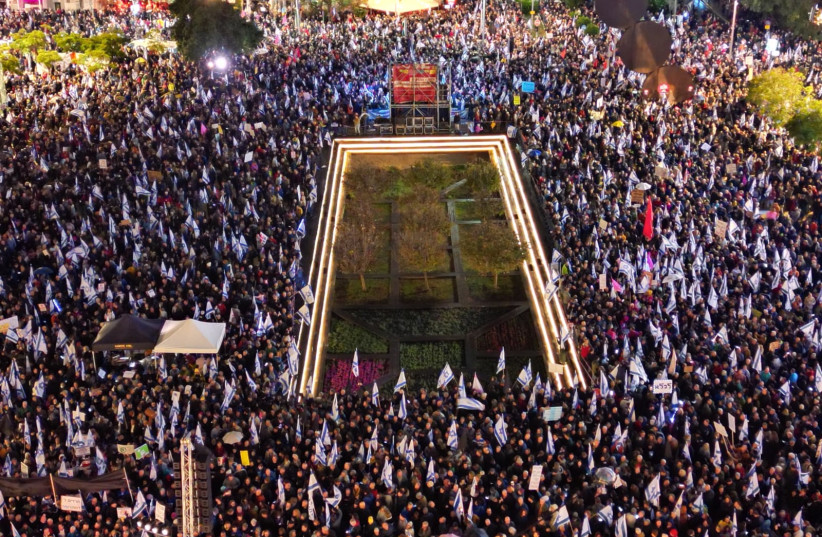
 Israeli protestors gather at Habima Square in Tel Aviv for mass demonstrations against the government on January 14, 2022 (photo credit: Amir Goldstein)
Israeli protestors gather at Habima Square in Tel Aviv for mass demonstrations against the government on January 14, 2022
(photo credit: Amir Goldstein)

Around 50,000 Israeli protesters gathered at Tel Aviv’s Habima Square on Saturday evening as part of massive anti-government protests, according to Maariv. The police are turning away arriving protesters because of heavy congestion in the area.

Meanwhile, 1,500 protesters joined a similar protest in Jerusalem.

Former Prime Minister Ehud Barak joined the protesters at Tel Aviv’s Habima Square, Maariv reported.

Earlier in the evening, the Black Flags Movement issued a statement vowing to fight against “[Prime Minister Benjamin] Netanyahu’s coup d’etat.

“The Jewish people will not give up their freedom for the tyranny of Bibism,” the statement read. “Netanyahu’s dangerous actions carried out through Justice Minister Yariv Levin are putting the Zionist vision at risk.”

The protest group further called on Israel Police officials to “act sharply against provocateurs who will be planted by the fascist camp. Ensure a democratic protest – we are also fighting for you and your families,” it added.

Protest leaders and organizers continued to call on Saturday for police officers to “ensure the security of the protestors and allow them to fully exercise their rights to protest and their freedoms of speech.”

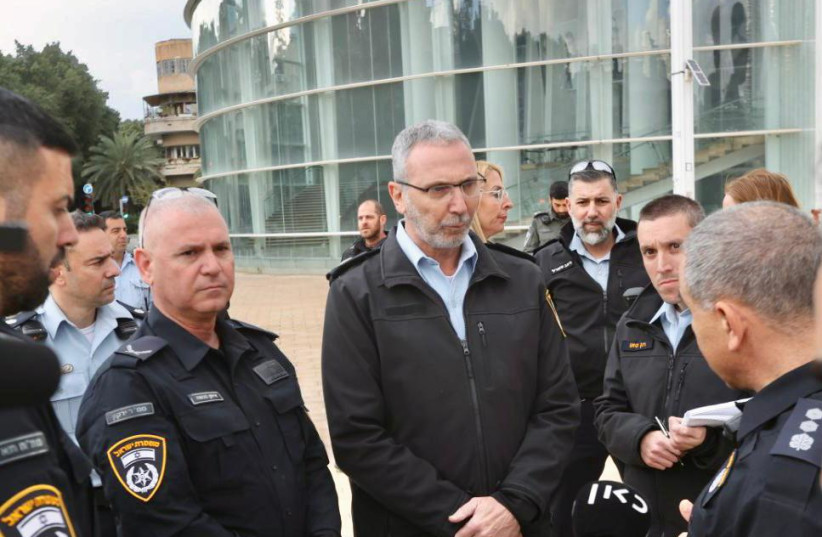
Police officers were seen surveying Habima Square in Tel Aviv, where tens of thousands are set to gather later on Saturday to protest the government’s planned judicial reforms.

 Israel Police officials survey Habima Square in Tel Aviv ahead of planned protests on Saturday, January 14, 2023 (credit: AVSHALOM SASSONI/MAARIV)Israel Police officials survey Habima Square in Tel Aviv ahead of planned protests on Saturday, January 14, 2023 (credit: AVSHALOM SASSONI/MAARIV)

Michaeli calls on police to not be ‘tools’ in Ben-Gvir’s game

Labor leader MK Merav Michaeli, who previously confirmed her intention to attend the demonstrations, also called on police to allow for peaceful protests to occur, adding that this is “a struggle of truth and of values. A fight for rights and for freedom.”

“I will be there together with MKs and members of the Labor Party to ensure that your rights as demonstrators are protected,” Michaeli added. “We cannot run this protest by remote control.

“I also call on the police to act responsibly and professionally. You are not tools in anyone’s game. Even if the National Security Minister [Itamar Ben-Gvir] tries very hard to police you, you are the police.

“You are the public’s gatekeepers and your responsibility is to protect the public, not to act against it,” Michaeli said in a message to police officers.

According to reports from earlier in the week, Ben-Gvir instructed police to arrest protesters who block roads or riot at the protests.