Hamas publishes a memoir written by archterrorist Hassan Salameh about several bus bombings he was behind.

By World Israel News Staff

A senior Hamas official said the terror group was “headed toward another round of resistance and conflict” with Israel on Thursday, during an event marking the 27th anniversary of the killing of its chief bombmaker.

Saleh Arouri, deputy head of the Hamas’ politburo who is currently based in Lebanon, boasted that Hamas was readying itself for another victory.

“We are going through a phase in which the acts of resistance are escalating. We are headed toward another round of resistance and conflict with the occupier; we are headed toward a new victory,” Arouri was cited as saying by The Jerusalem Post.

He added that Hamas would do everything in its power to secure the release of all the Palestinian prisoners held in Israeli jails.

The event included a book launch of a Hamas-published work titled, “The Buses are Burning,” referencing Israeli buses targeted by suicide bombers. The book was authored by Hassan Salameh, who is serving 46 consecutive life sentences for orchestrating three large-scale terror attacks in Israel.

The memoir recounts how Salameh and his accomplices planned the attacks.

It’s launch, which was organized by Hamas’ armed wing, the Izz ad-Din al-Qassam Brigades, coincided with the anniversary of the killing of Yahya Ayyash, who was known as “The Engineer” because of his expertise in bombmaking. Ayyash was killed by the Shin Bet security agency with a cellphone that exploded during a phone call with his father in 1996.

Thereafter, Salameh was entrusted by the terror group to carry out terrorist attacks in Israel to avenge Ayyash’s death, according to the report.

  ‘FAILURE’: DUMP TWO-STATE SOLUTION, NOT IN EU’S INTERESTS, SAYS EUROPEAN THINK TANK

Salameh said in a message from his prison cell that the terror attacks he was behind “will remain immortal in history and tell Palestinian generations the story of a will that transcended the impossible, performed miracles and exposed the Zionist entity’s fragility to the whole world.”

“We set out on a path fraught with dangers,” Salameh added. “We only had a few explosives and a few thousand dollars.”


Is the US leaving the Quartet on the Middle East?

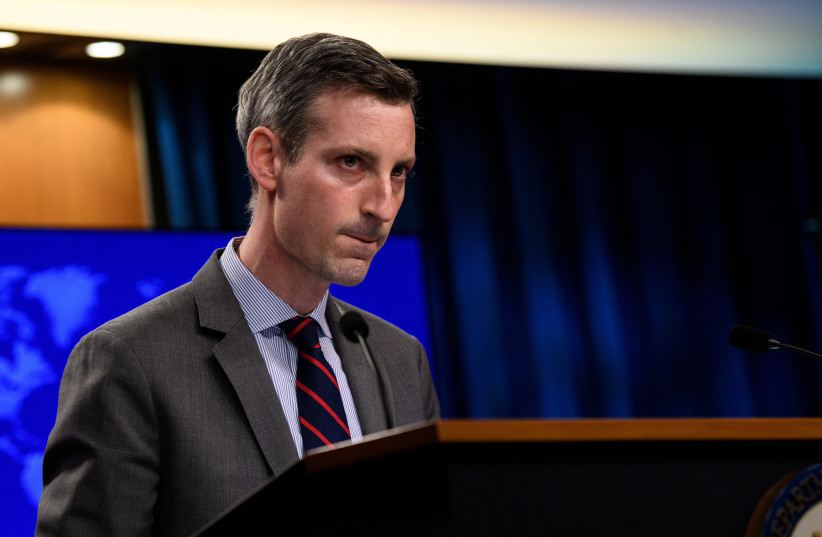
Ned Price talks Israeli-Palestinian conflict and attempts at reaching a two-state solution during a press briefing.

 US State Department spokesman Ned Price speaks during daily press briefing at the State Department in Washington, DC, US, February 22, 2021 (photo credit: NICHOLAS KAMM/POOL VIA REUTERS)
US State Department spokesman Ned Price speaks during daily press briefing at the State Department in Washington, DC, US, February 22, 2021
(photo credit: NICHOLAS KAMM/POOL VIA REUTERS)

US Department of State Spokesperson Ned Price said on Wednesday during the department’s daily press briefing that he is “not aware that we’ve made any formal decision regarding the Quartet or any formal statement regarding the Quartet.”

He later clarified that Israeli-Palestinian issues are nevertheless central to the Biden administration, which has been, according to him, “doing what we can in the interim to help set the conditions: re-engaging with the Palestinian Authority, re-engaging with the Palestinian people, continuing to maintain our ironclad commitment to Israel’s security, continuing to advance and deepen our partnership with Israel, all in ways that over time we hope will help create the conditions for meaningful progress towards that ultimate end goal of a two-state solution.”

Nevertheless, the Biden Administration does not see the Israeli-Palestinian conflict reaching some kind of understanding anytime soon. “We are not on the precipice of any meaningful engagement between Israelis and Palestinians towards that two-state solution.”

“We are not on the precipice of any meaningful engagement between Israelis and Palestinians towards that two-state solution.”

US Department of State Spokesperson Ned Price

This came in response to a question by the press which claimed that Vladimir Safronkov, the Russian Foreign Ministry’s special representative for the Middle East, claimed that the US “is withdrawing itself from the work of the Quartet, the Middle East settlement.”

Quartet on the Middle East

The Quartet on the Middle East is a grouping of the United Nations, the United States, the European Union and Russia meant to work together to mediate the Israeli-Palestinian peace process. It has been working to strengthen Palestinian groups, opening an office in East Jerusalem to help the Palestinian economy, all while attempting to reach a two-state solution.

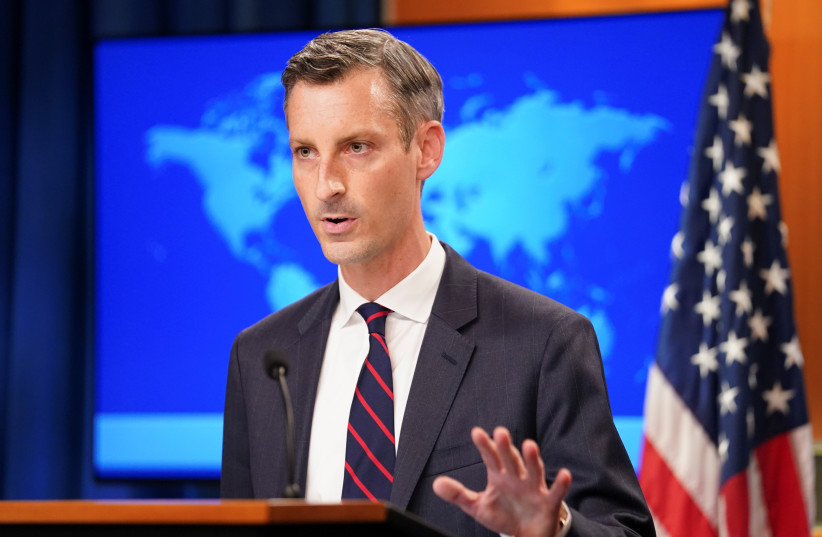
 US State Department spokesman Ned Price holds a press briefing on Afghanistan at the State Department in Washington, U.S., August 16, 2021. (credit: REUTERS/Kevin Lamarque/POOL)US State Department spokesman Ned Price holds a press briefing on Afghanistan at the State Department in Washington, U.S., August 16, 2021. (credit: REUTERS/Kevin Lamarque/POOL)

On the Israeli front, the Quartet has been relatively silent in recent years.

Price further spoke about the US’s opposition to Israeli plans to rebuild the Homesh West Bank settlement during the press briefing. To read more on the story, click here.


Tom Nides talks Temple Mount and the Jerusalem Pride Parade during a morning radio show.

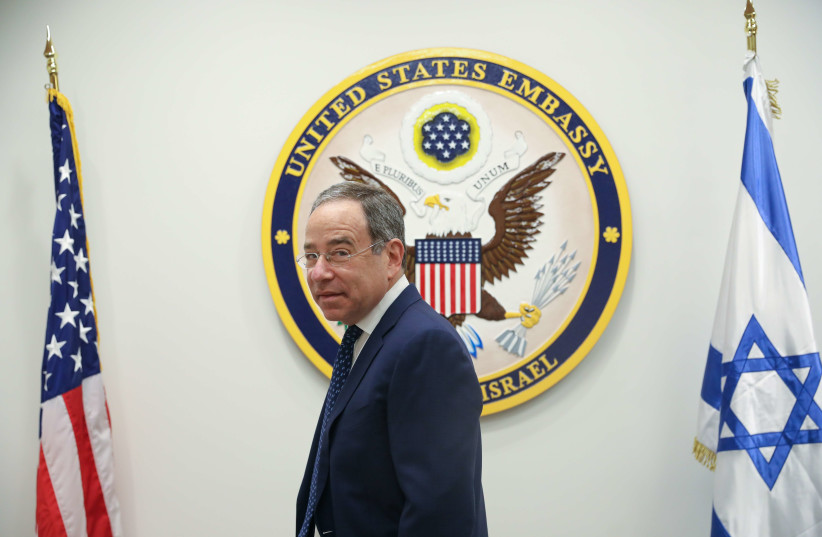
 Tom Nides, the influential US ambassador to Israel. (photo credit: MARC ISRAEL SELLEM)
Tom Nides, the influential US ambassador to Israel.
(photo credit: MARC ISRAEL SELLEM)

US Ambassador to Israel Tom Nides said on Thursday morning that “actions that are obviously provocative” are not particularly liked by the United States, referring to National Security Minister Itamar Ben-Gvir’s notable trip to the Temple Mount on Tuesday morning.

Speaking with Ilana Dayan on Army Radio, Nides said that the particularly big concern surrounding Ben-Gvir’s actions is not one relating to Prime Minister Benjamin Netanyahu’s control over his coalition, but rather that “we got up in the morning and saw many of Israel’s allies and friends… voicing a huge amount of concern about this.”

He clarified that the main concern is about Israel keeping relations calm with the surrounding countries with which it is at peace, including the Abraham Accords countries.

“We support maintaining the status quo on the Temple Mount, period, full stop,” he said. “This is a democracy. If there are values that we believe are contrary to the values that we share… friends will differ. Friends have arguments.”

“We support maintaining the status quo on the Temple Mount, period, full stop.”

US Ambassador to Israel Tom Nides

Ben-Gvir’s controversial visit to the Temple Mount on Tuesday, his first since the November election, was faced with broad criticism worldwide. This also led to threats of violence by Palestinian factions who saw Ben-Gvir’s actions as an escalation on behalf of Israel.

 MK Itamar Ben-Gvir visits the Temple Mount, in May. (credit: Sinan Abu Mayzer/Reuters)MK Itamar Ben-Gvir visits the Temple Mount, in May. (credit: Sinan Abu Mayzer/Reuters)

Netanyahu, in the meantime, was briefed on Ben-Gvir’s trip prior to its occurrence and did not express any opposition.

Pride parade concerns

Nides was additionally asked about his position on the right-wing government members who have expressed vocal opposition to Israel’s pride parades, in particular, that which takes place in Jerusalem.

The homophobic Noam Party, represented in the coalition by party head MK Avi Maoz, has been outspoken in its hatred for the LGBTQ+ community and has voiced, alongside other coalition members, its desire to cancel Jerusalem Pride Parade.

“Will you march?” Nides was simply asked by Dayan on Thursday morning.

“Of course I’m gonna march,” he said. “I’ll march at the front of the parade. I’ll march in Jerusalem and I’ll march in Tel Aviv, and I’m 100% certain this march will happen in Jerusalem, it will happen in Tel Aviv, Bibi Netanyahu has said that.”

MK Maoz received control, according to his coalition agreement with the Likud, over a branch in the Education Ministry that is responsible for all of the external programs that are offered to schools in Israel’s public school system.

Concerns over homophobia in the current government have only intensified after the Likud’s coalition agreements with both United Torah Judaism (UTJ) and the Religious Zionist Party (RZP) included a clause that would enable discrimination in private businesses. This, of course, includes prejudice due to religious affiliation, including refusing business from LGBTQ+ people.

“These are provocative comments,” Nides said. “I’m not into provocateurs.”