
SECURITY AFFAIRS: Iran’s missiles against the US and Israel amid the next stage of the nuclear showdown
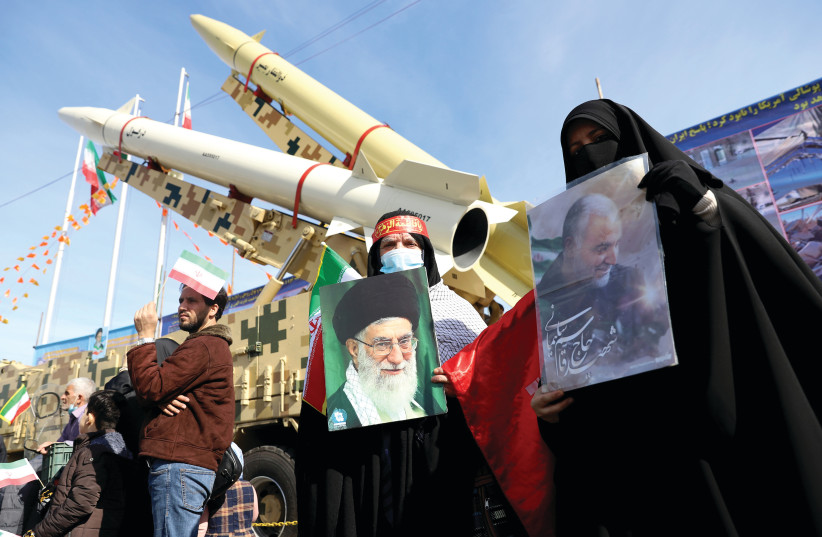
IRANIAN WOMEN hold pictures of Supreme Leader Ayatollah Ali Khamenei and the late Iranian Lt.-Gen. Qasem Soleimani, during the celebration of the 42nd anniversary of the Islamic Revolution, in Tehran on Wednesday.
(photo credit: MAJID ASGARIPOUR/WANA (WEST ASIA NEWS AGENCY) VIA REUTERS)
Iran’s satellite launch of the Zoljanah last week had nothing to do with Israel and everything to do with the US.
And that will also be how the test and the Islamic Republic’s ballistic missiles program ripple through the nuclear negotiations and in its future actions.
Along with that test, in recent media interviews by US President Joe Biden and US Secretary of State Antony Blinken, a press briefing by IDF Military Intelligence chief Maj. Gen. Tamir Heyman, multiple statements from Iranian officials and The Jerusalem Post’s consultation with Israeli defense sources – there is wide confirmation that the great divide on Iran between the US (and the EU-3) and Israel comes down to: the three years versus the three months dilemma.
The Islamic Republic may be three months away from threatening Israel with enough enriched material for a nuclear bomb, but is probably three years away from threatening the US, and a good deal more than three months from threatening the EU-3 (Germany, France and the UK).
Top arms control expert Jeffrey Lewis has recently estimated, both on Twitter and to the Post, that Tehran may be three years away from developing intercontinental ballistic missiles armed with a nuclear warhead which would have a long enough range to strike the US.
In contrast, a wide array of experts says that the ayatollahs may be as little as three months from having sufficient enriched uranium for a nuclear weapon, and they have had medium-range missiles that could reach Israel for decades.
Many experts said that Iran’s message from the timing of last week’s launch – as it engages in a public campaign vis-à-vis the US about resolving the nuclear standoff – was to show it would not stop its ballistic missile development program.
