
US doesn’t disclose who will be impacted by the sanctions, but ramifications of decision appear limited as Palestinian officials already need waiver to enter US
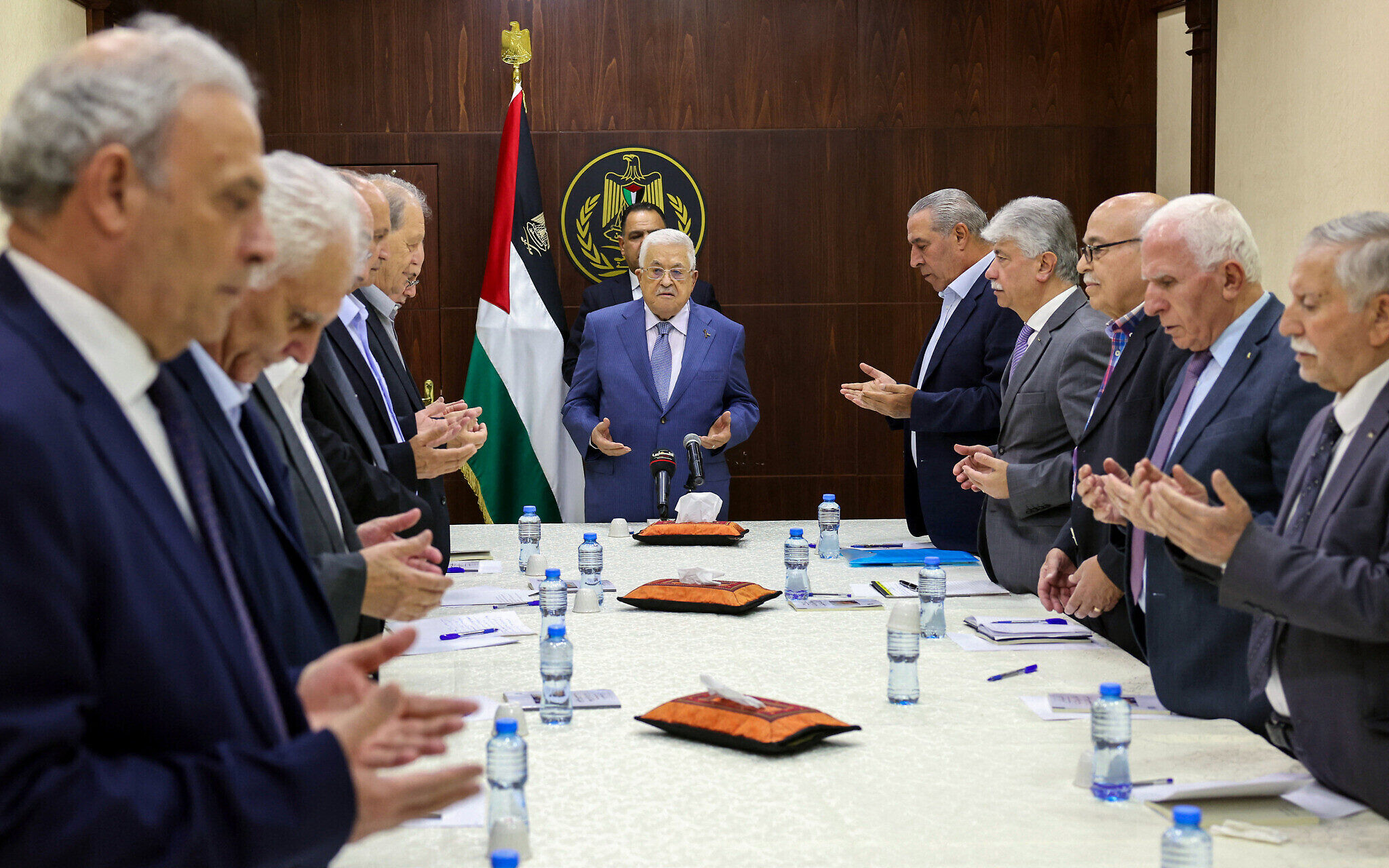
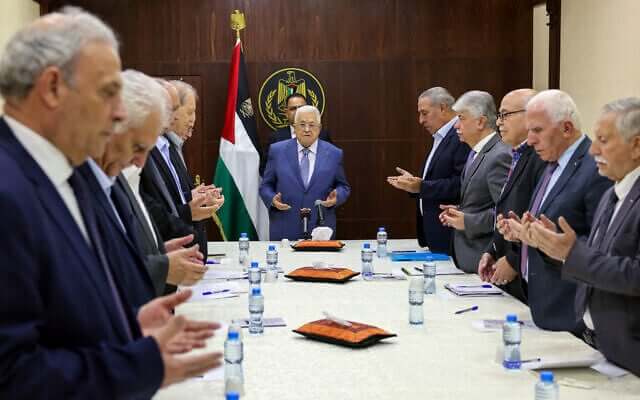
The United States announced Thursday that it will deny visas to Palestinian Authority officials, saying that the move was triggered by Ramallah’s efforts to prosecute Israel in global forums, which placed the PA in violation of US law.
A statement from the State Department on the move did not specify who was being targeted, only saying it would “deny visas” to “members” of the Palestine Liberation Organization and “officials” from the Palestinian Authority.
The ramifications of the announcement may be limited, as Palestinian officials are already required to receive waivers from the US in order to enter the country on official government business, according to Congressional legislation, which also allows PA officials to visit and work at the UN as part of Washington’s international obligations.
While the sanctions could be used to bar PA officials from attending the UN General Assembly in September when a growing number of Western countries have announced that they will unilaterally recognize a Palestinian state, such visa denials would come under significant scrutiny if leaders of countries that are far more adversarial to the US are allowed to attend the confab in New York.
The announcement appears to be the first relatively punitive step that Washington has taken in response to France, the UK and Canada advancing Palestine recognition plans — a move encouraged by Ramallah. The Trump administration, for now, appears to prefer punishing Ramallah directly, as going after more powerful Western governments may be more difficult. However, Trump did float blowing up trade talks with Canada over its decision.
The State Department announcement said that the PA and PLO are in violation of two separate US laws due to actions taken to “internationalize” the conflict in bodies such as the International Criminal Court (ICC) and the International Court of Justice (ICJ).
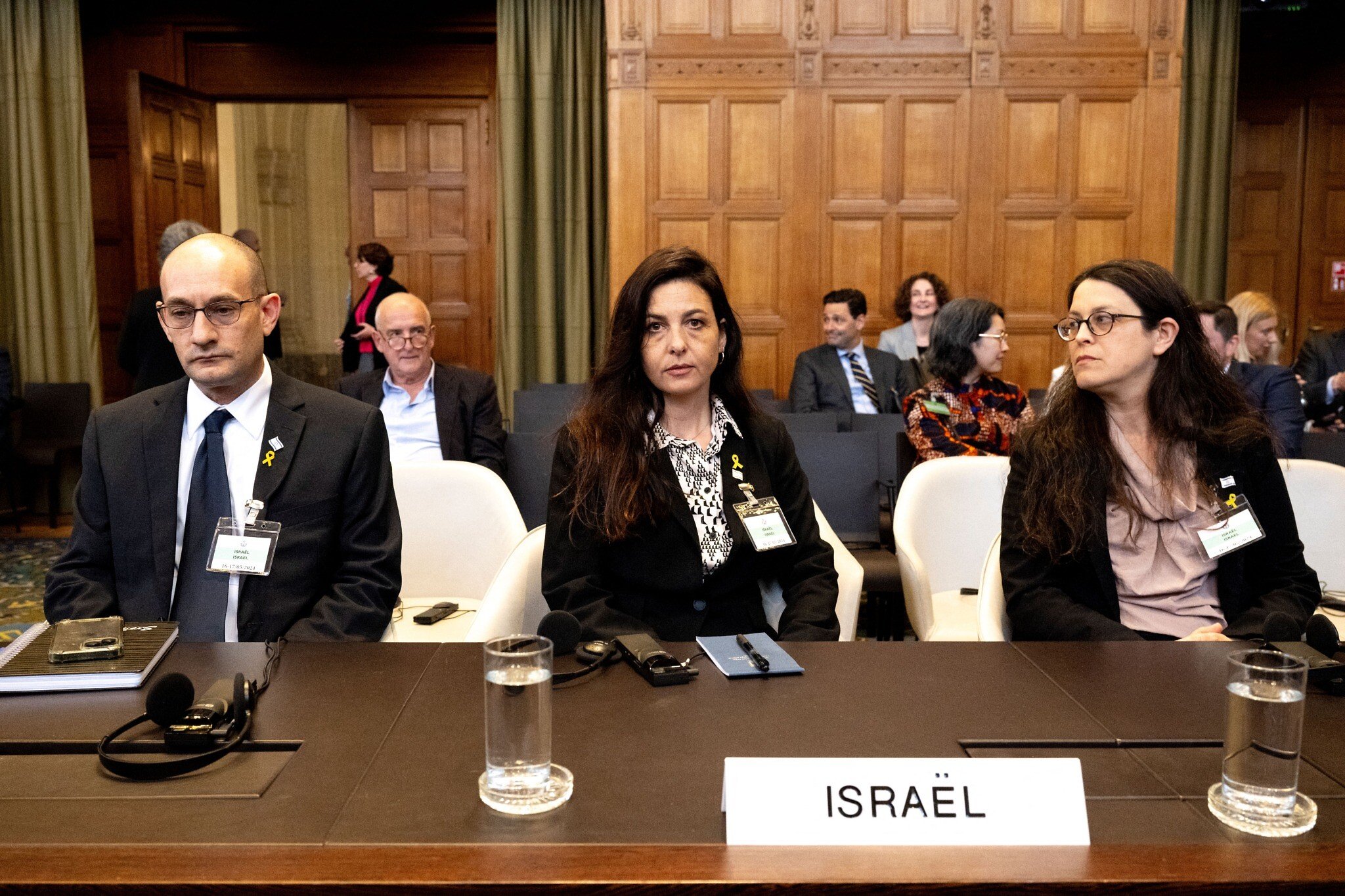
The ICC has issued arrest warrants against Prime Minister Benjamin Netanyahu and former defense minister Yoav Gallant for war crimes and crimes against humanity, while Israel is being charged with committing genocide in the ICJ, which is also adjudicating claims that Israel’s policies in the territories amount to apartheid.
The US has traditionally argued that a Palestinian state should only be formed as a result of negotiations with Israel — something successive Israeli governments for over a decade have not been interested in. PA President Mahmoud Abbas has also been accused of rejecting or stonewalling earlier negotiations.
The more forceful option that the US could have taken was to designate the PA as a foreign terrorist organization, which would have exposed Ramallah to crippling sanctions.
Among other reasons cited by the State Department for the visa denials were claims that the PA continues to support terrorism and provides payments to Palestinian terrorists and their families.
But Abbas signed a decree in February canceling legislation that conditioned welfare payments on the length of one’s prison sentence, with over 1,000 Palestinian security prisoners reporting that they were no longer receiving stipends. The PA even invited the US to come to Ramallah and certify that the Palestinians comply with congressional legislation that barred such payments. Two months have passed since the invitation was extended, and the US has yet to send a delegation.
State Department spokesperson Tommy Pigott later clarified that the decision to announce Wednesday’s sanctions was based on a biannual review of the PA’s compliance with the 2002 legislation, which was completed in January 2025 — a month before Abbas announced his reform of what critics have dubbed “pay-to-slay.”
Pigott also noted that the Biden administration was the one that completed the most recent report that found the PA out of compliance with the 2002 legislation but decided against taking any punitive measures against Ramallah — a decision that the Trump administration reversed on Wednesday.
Still, the State Department announcement said, “It is in our national security interests to impose consequences and hold the PLO and PA accountable for not complying with their commitments and undermining the prospects for peace.”
Foreign Minister Gideon Sa’ar hailed Washington’s “moral clarity” after the State Department announcement.
The PA “must pay a price for its ongoing policy of paying terrorists and their families for carrying out attacks, and for its incitement against Israel in schools, textbooks, mosques, and the Palestinian media,” he said.
“This important action by [US] President [Donald] Trump and his administration also exposes the moral distortion of certain countries that rushed to recognize a virtual Palestinian state while turning a blind eye to the PA’s support for terror and incitement,” Sa’ar added.
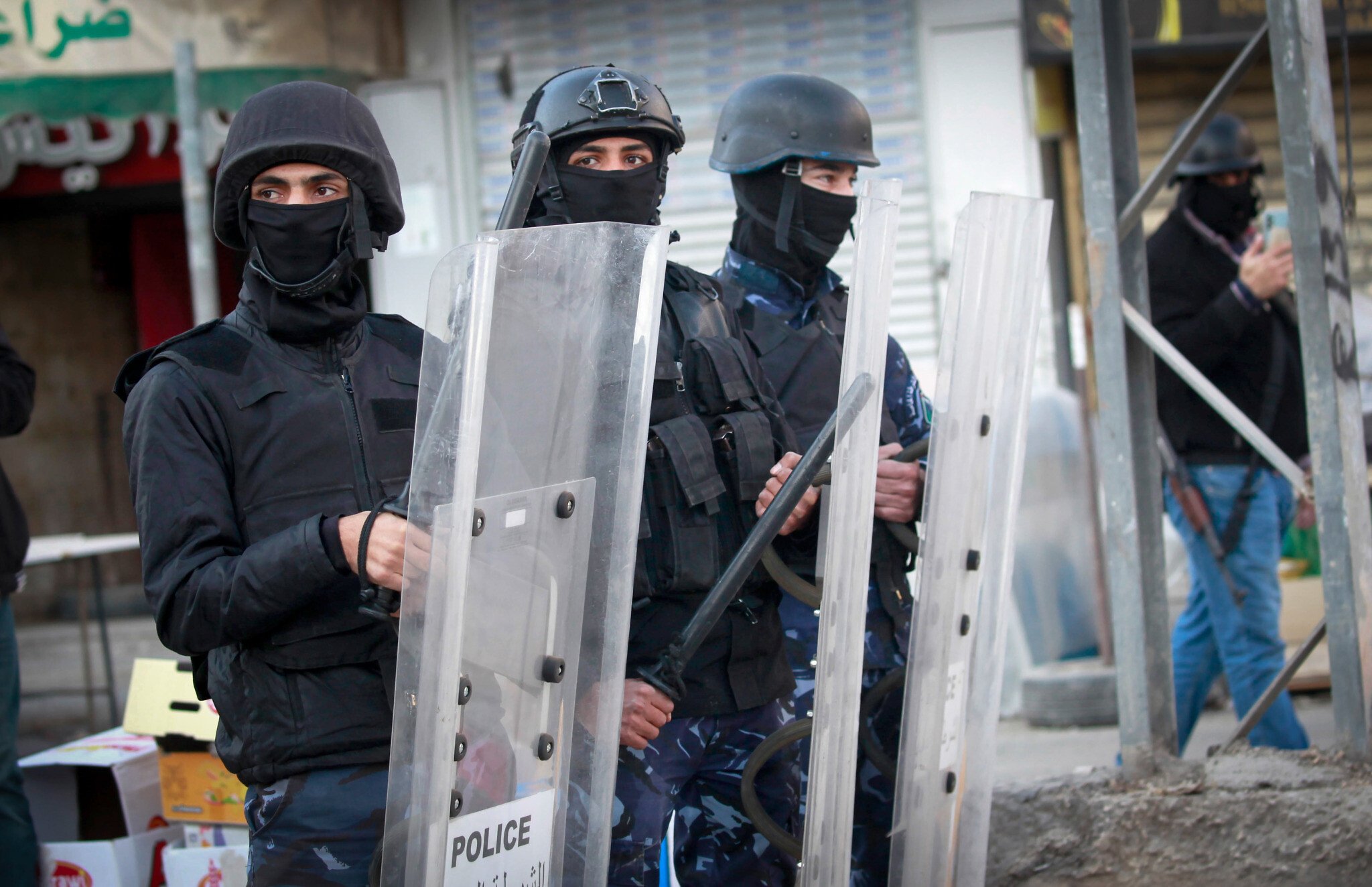
Despite Sa’ar’s criticism, the PA is regularly credited by the Israeli security establishment for maintaining stability in the West Bank by cracking down on other armed Palestinian factions.
The PLO is the internationally recognized representative of the Palestinian people and oversees the Western-backed PA, to which Israel granted limited autonomy in less than half of the West Bank. Abbas has led both entities for two decades after being democratically elected in 2005, but has refused to hold elections since. He pledged earlier this year to hold elections in 2026.
The PA has been under pressure from Arab and Western states to undergo significant reform as they push for the body to replace Hamas as Gaza’s governing authority. Prime Minister Benjamin Netanyahu has ruled out a future role for the PA in governing Gaza, but has failed to advance any alternative amid pressure from his far-right partners who want to establish settlements in the Strip.
