

Iran-backed group’s defense minister, chief of staff reportedly among top officials targeted in separate attack Thursday on Sanaa apartment, while gathered to watch leader’s TV speech
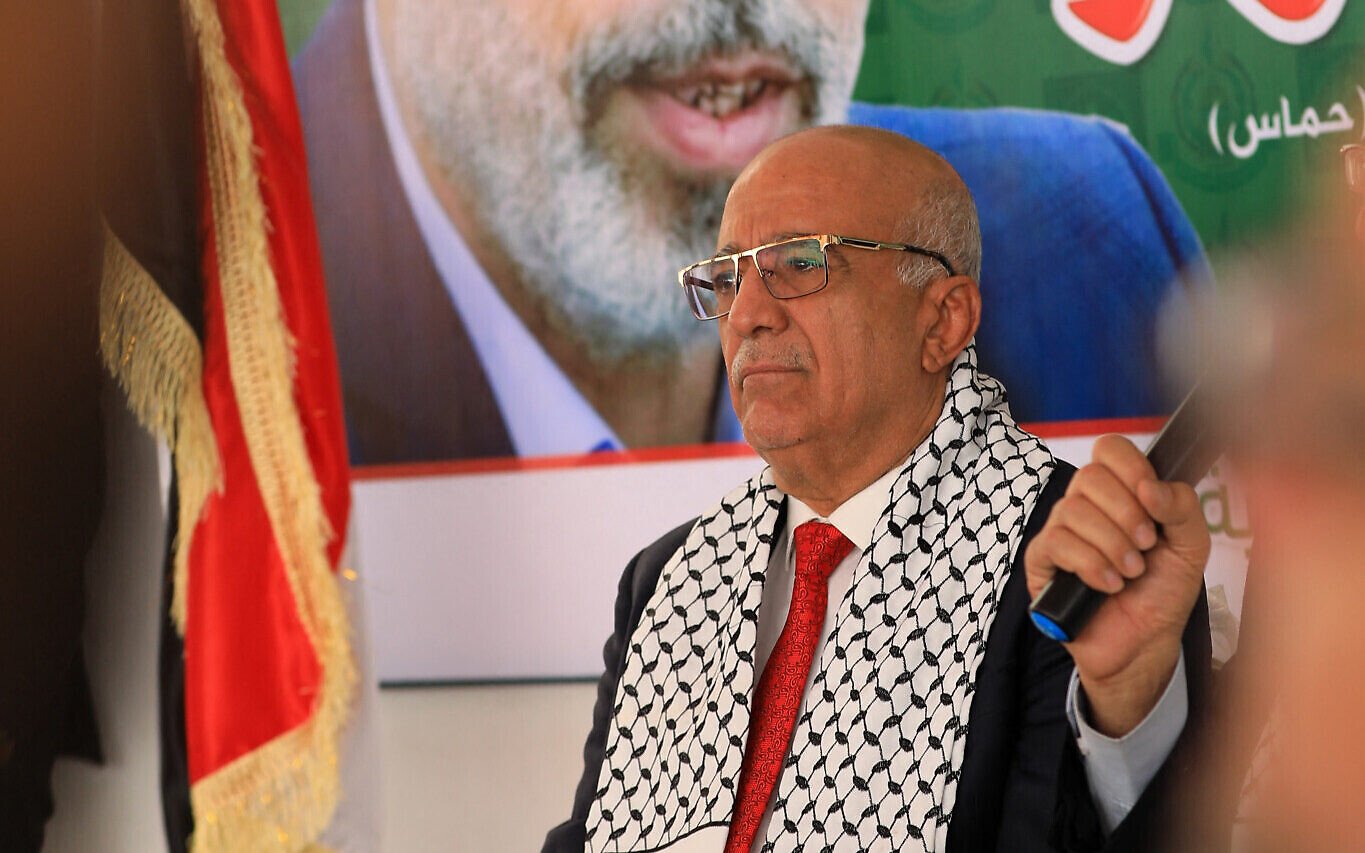
The prime minister of the Iran-backed Houthi group in Yemen was reportedly killed during Israel’s airstrikes on Thursday in the capital city of Sanaa.
Yemen’s Al-Jumhuriya channel and the Aden Al-Ghad newspaper reported that Houthi prime minister Ahmed al-Rahawi was killed in an Israeli attack on an apartment, with the latter reporting that several of his companions were killed as well.
There was no immediate confirmation by Israel.
The outcome of that strike has yet to be fully determined, although political sources cited Thursday by Israel’s Channel 13 news claimed that “the direction [of the assessments] is positive, it seems the attack succeeded,” and Ynet reported that “the assessment that the entire military and governmental elite of the Houthis was eliminated in the attack is growing.”
As al-Houthi delivered his address, Israel reportedly monitored it to see whether he realized senior officials were being targeted, and he gave no indication of being aware, the reports said.
Among the Houthi officials targeted were the Houthis’ defense minister and military chief of staff.
He was said to have established a close relationship with Iran’s Revolutionary Guards and with Hezbollah, and to be directly involved in operations against Israel.
Also targeted was Houthi chief of staff Muhammad Al-Ghamari, who was reportedly seriously hurt, but not killed, by an Israeli strike in Yemen in June, carried out while the war against Iran was ongoing.
An unnamed senior official told Channel 12 on Thursday that Israel had been ready to target Houthi leadership as part of a different strike on Sanaa on Sunday, but ultimately waited until Thursday.
Officials have cast the strike in dramatic terms. Previous Israeli actions in Yemen have failed to halt the Houthis’ continued drone and missile attacks during the ongoing war, though the earlier attacks usually targeted infrastructure, rather than hitting specific officials based on precise intelligence.
A source from the Houthi defense ministry denied that any members of the group had been targeted in the attack, and insisted that Israel was attacking “civilian targets and the Yemeni people because of their positions supporting Gaza.”
Thursday’s strikes marked the 16th time that Israel has attacked the Iran-backed rebel group in Yemen, located some 1,800 kilometers (1,100 miles) away.
The Houthis — whose slogan calls for “Death to America, Death to Israel, [and] a Curse on the Jews” — began attacking Israel and maritime traffic in November 2023, a month after the October 7 Hamas massacre in southern Israel.
Since March 18, when the IDF resumed its offensive against Hamas in the Gaza Strip, the Houthis in Yemen have launched 72 ballistic missiles and at least 23 drones at Israel. Several missiles have fallen short.
In response to the Houthi attacks, Israel and a United States-led coalition bombarded rebel-held areas in Yemen, including Sanaa and the strategic coastal city of Hodeida. Israeli strikes knocked the Sanaa airport out of service in May.
US President Donald Trump’s administration in May announced a deal with the Houthis to end the airstrikes in return for an end to attacks on shipping. The terror group, however, said the agreement did not include halting attacks on targets it believed were aligned with Israel.
Stav Levaton contributed to this report.
