
US president insists he and Netanyahu are almost completely aligned as gaps emerge on Syria, Turkey and West Bank; also says he would back IDF strike if Iran advances its missile and nuclear programs
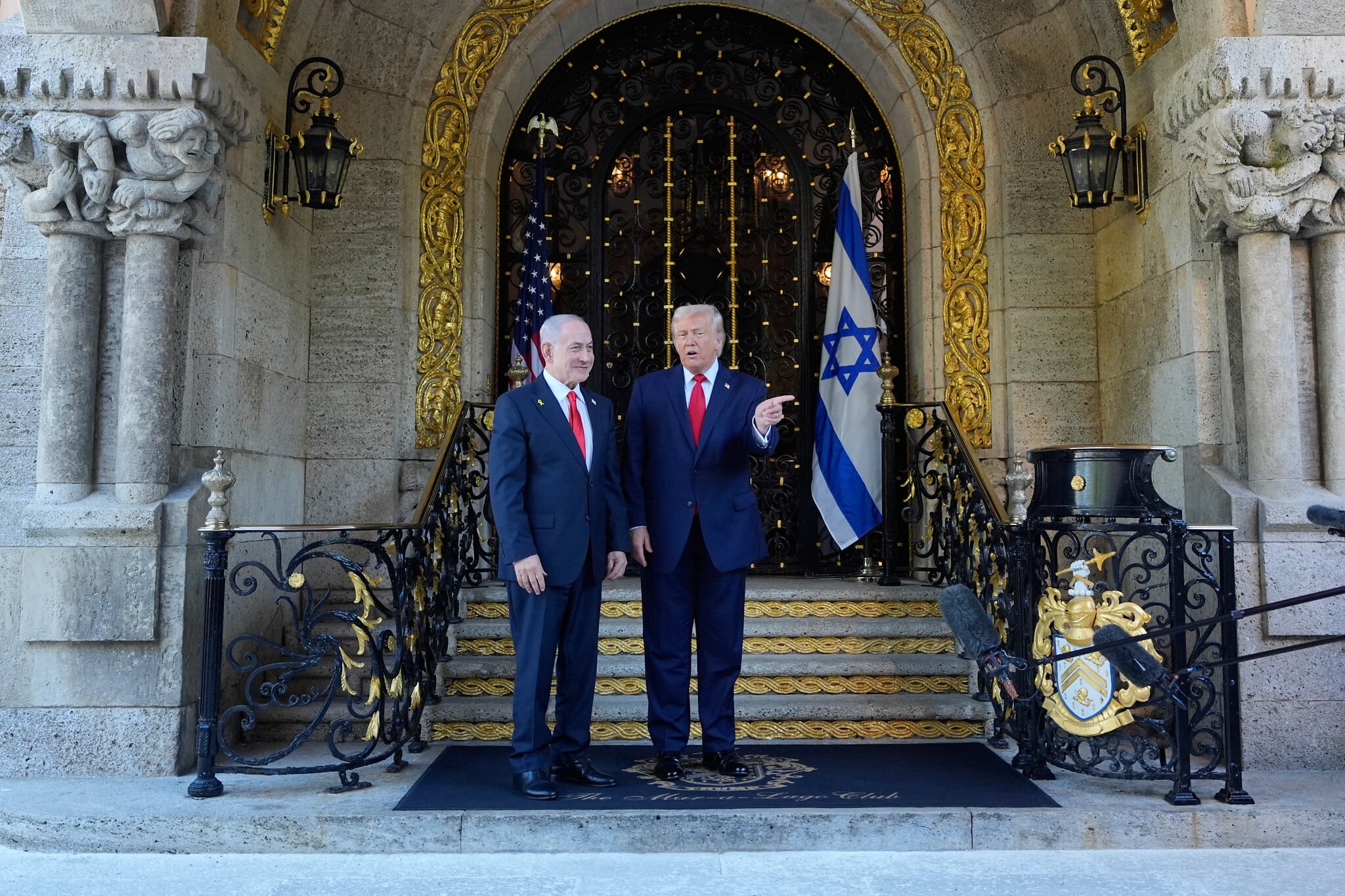
US President Donald Trump on Monday threatened Hamas with “hell to pay” if it does not disarm within a “very short period,” in remarks delivered alongside Prime Minister Benjamin Netanyahu after their meeting at the Mar-a-Lago resort in Florida.
Hamas “will be given a very short period of time to disarm,” the US president said during a press conference. “If they don’t disarm, as they agreed to do… then there will be hell to pay for them.”
The warning was part of a series of remarks on key regional issues that Trump made to the press before and after the lunchtime meeting with Netanyahu and his team, including an assertion that the US would back an Israeli attack on Iran if the latter continues to advance its nuclear and ballistic missile programs. He also made comments praising the leaders of Turkey and Syria, both of which Israel has sparred with in recent months.
Trump said he intends to move to the second phase of the Gaza plan “as quickly as we can” but stopped short of offering a firm timeline for the process, which has stalled as both Israel and Hamas have chafed at implementing various portions of the 20-point proposal presented in September, the last time Netanyahu was in the US.
During that visit, Netanyahu embraced Trump’s plan, which included the potential for a pathway to a future Palestinian state — something he and his coalition partners have long rejected. Ultimately, though, Israel and Hamas signed on to a separate document that only pertained to the first phase of the ceasefire: Israel’s initial pullback from the Gaza Strip to a newly established Yellow Line, a hostage-prisoner swap and a surge in humanitarian aid.
While US officials have claimed that Hamas also agreed to disarm during an 11th-hour meeting before the phase one deal was signed on September 9, Hamas has repeatedly denied this and insists it will only give up its weapons through talks resulting in the establishment of a Palestinian state.

The US has reportedly held discussions with the Gaza ceasefire’s Mideast mediators — Egypt, Qatar and Turkey — about coaxing Hamas to agree to a gradual decommissioning of weapons in a process that would first see the terror group give up its heavy arms, but Israel has chafed at the idea.
Lack of progress on this issue has marred efforts to transition to phase two of the ceasefire, which is supposed to include the creation of a transitional government of Palestinian technocrats that will manage day-to-day affairs in the Strip until the Palestinian Authority has implemented reforms necessary to take over. The government would be assisted by an International Stabilization Force that would help stabilize Gaza and advance the demilitarization of the Strip. Each of these bodies would be overseen by a Board of Peace made up of various world leaders and headed by Trump.
The US was hoping to announce a transition to phase two last month, but it is now unclear whether enough consensus has been reached to even do so in January.
The lack of Israeli buy-in to Trump’s Gaza plan is said to have angered his aides, who have been working to convince Netanyahu to show more restraint in Gaza, where over 400 people have been reported killed in Israeli military operations since the ceasefire commenced. Jerusalem says the vast majority of those strikes were in response to Hamas violations of the ceasefire.
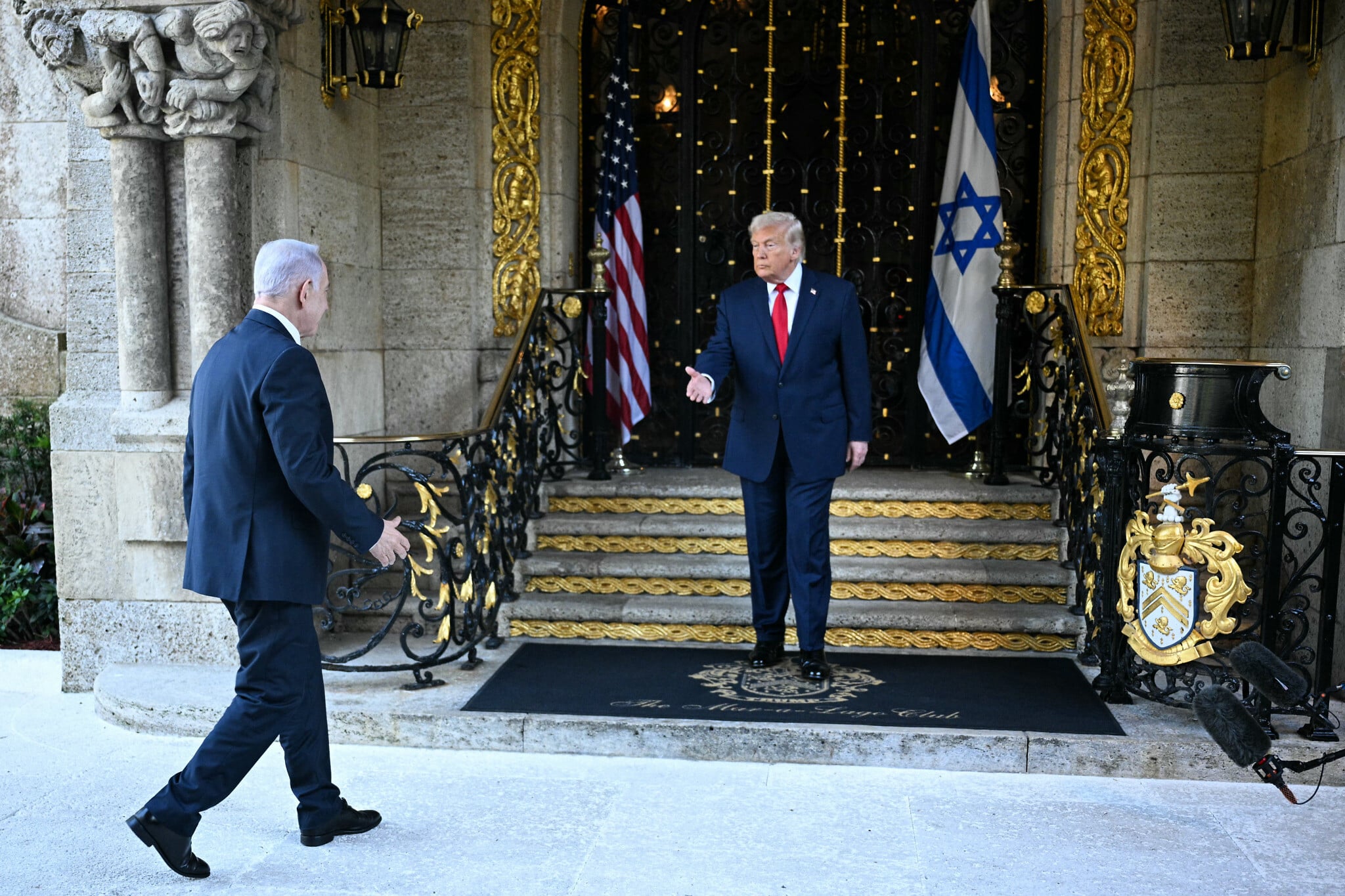
There was no indication on Monday however that those frustrations had extended to Trump himself, as he repeatedly praised Netanyahu and insisted that they are aligned on almost all issues.
In a press conference after their meeting, Trump said that the two sides “came to a lot of conclusions” and that there was “very little difference” regarding “where we want to go.”
Trump said his relationship with the premier “has been extraordinary.” He has met with Netanyahu six times this year, more than any other world leader.
“He can be very difficult on occasion, but you need a strong man. If you had a weak man, you wouldn’t have Israel. With most other leaders, [Israel] would not exist today. Now they’re stronger than ever,” Trump said.
Disarming Hamas and phase two
Continuing his remarks after the meeting, Trump said that White House envoys Steve Witkoff and Jared Kushner, who also participated in the summit, will be in charge of the Hamas disarmament effort on the US side. He reiterated that if the terror group refuses to disarm, “it will be horrible, horrible for them. It’s going to be really, really bad.”
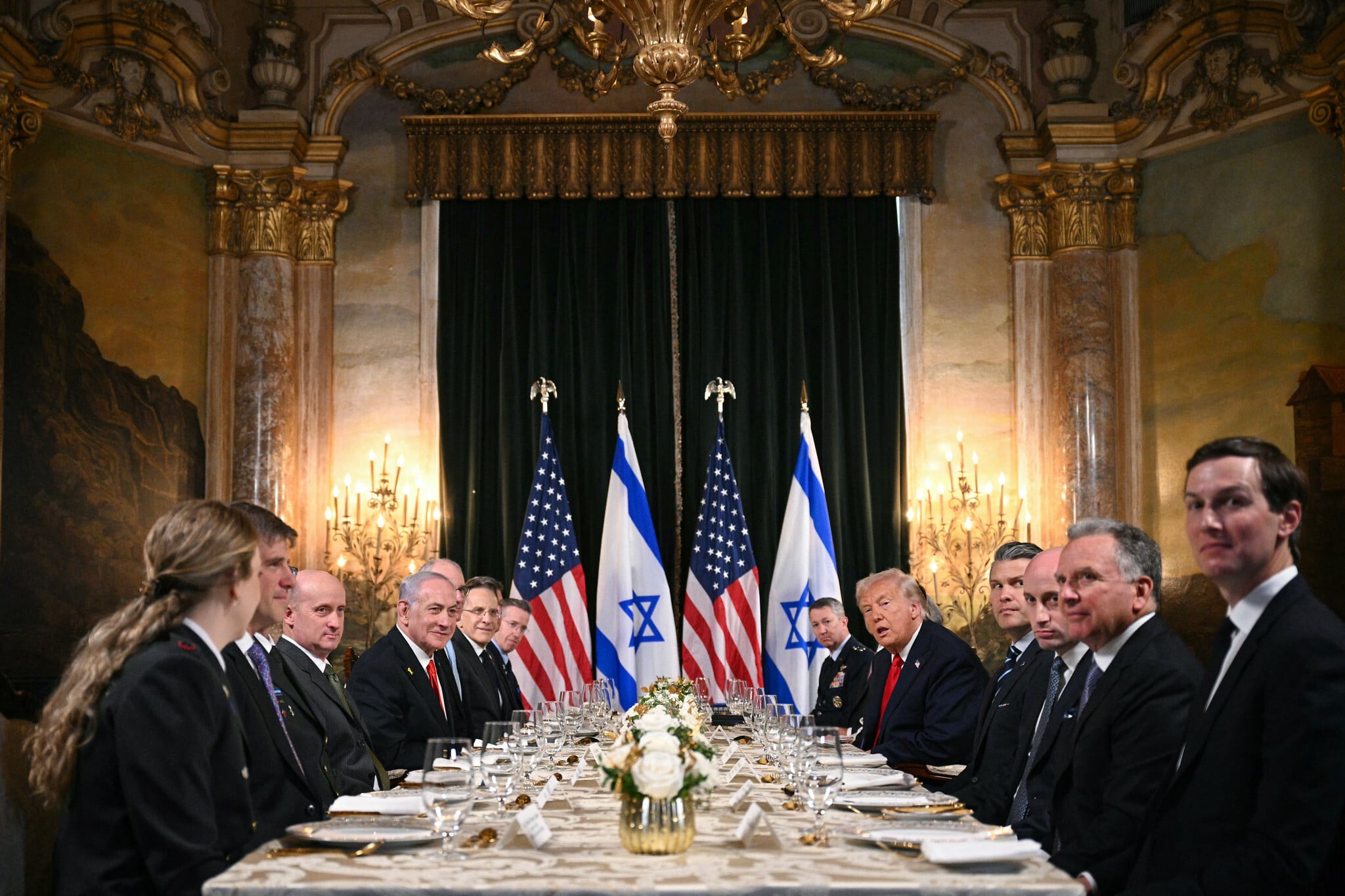
The president also repeated his claim that other countries are willing to disarm Hamas.
While Trump has made this claim several times in recent months, no country has announced that it will join the ISF, with several saying that the US has not clarified what the force’s mandate will be. Moreover, they specifically said that they are not interested in playing a role in disarming Hamas and would rather be given more modest tasks, such as securing Gaza’s borders.
Trump also said that Israel has “lived up to the [Gaza] plan” and that he was “not concerned about anything Israel is doing.”
At the same time, Trump said that sometimes Israel “doesn’t understand that when someone violates something, you want to give them a second chance. We’ve given them a couple of second chances,” he said, pointing at Netanyahu, appearing to imply Israel has committed some sort of violation.
A US official told The Times of Israel as much earlier this month, taking particular issue with the IDF strike on December 13 that killed senior Hamas commander Raed Saad. Trump has publicly avoided making the same acknowledgement, telling reporters that the US was looking into whether the strike had been a violation by Israel.
Taking questions from reporters earlier while greeting Netanyahu as the premier arrived at Mar-a-Lago, Trump avoided answering directly whether he would allow the reconstruction of Gaza to commence before Hamas has been disarmed: “I think it’s going to begin pretty soon.”
“We’re already starting certain things. We’re doing things with sanitary conditions,” Trump claimed.
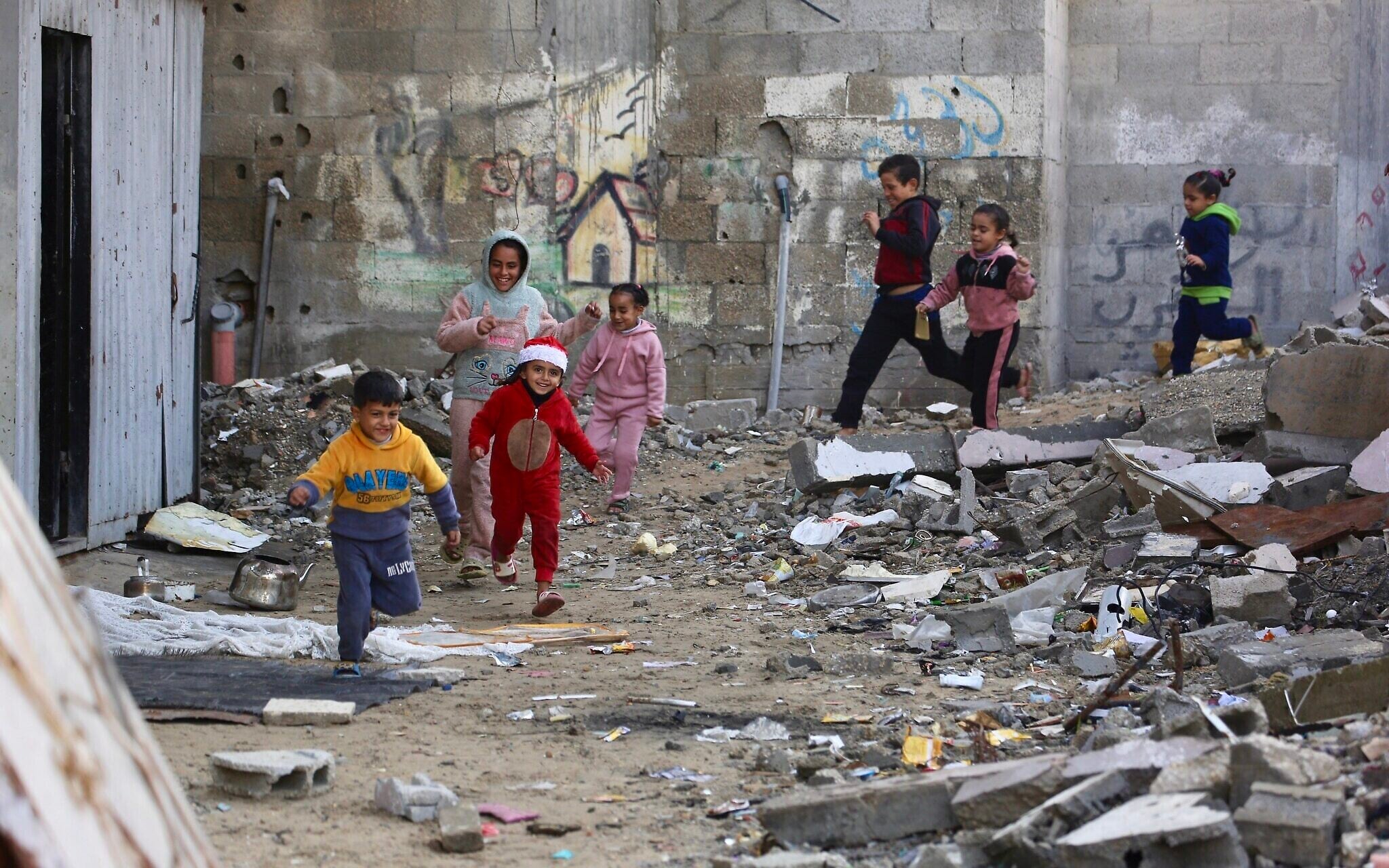
Asked twice whether he would allow for the commencement of the second phase before the return of the final hostage in Gaza, slain Master Sgt. Ran Gvili, Trump also declined to answer directly.
“He’s the only one left, and we’re doing everything we can to get his body back,” Trump said, adding that he met with his parents, who accompanied Netanyahu to Florida in order to raise awareness of their son’s case.
‘We’ll knock the hell out of them’
In additional remarks ahead of the meeting, Trump stated that he would back another Israeli attack on Iran if Tehran continues with its nuclear or ballistic missile programs.
“If [Iran] will continue with the missiles — yes. [And if they continue with] the [production of] nuclear [capabilities] — fast. One will be yes, absolutely. The other, we’ll do it immediately,” he said.
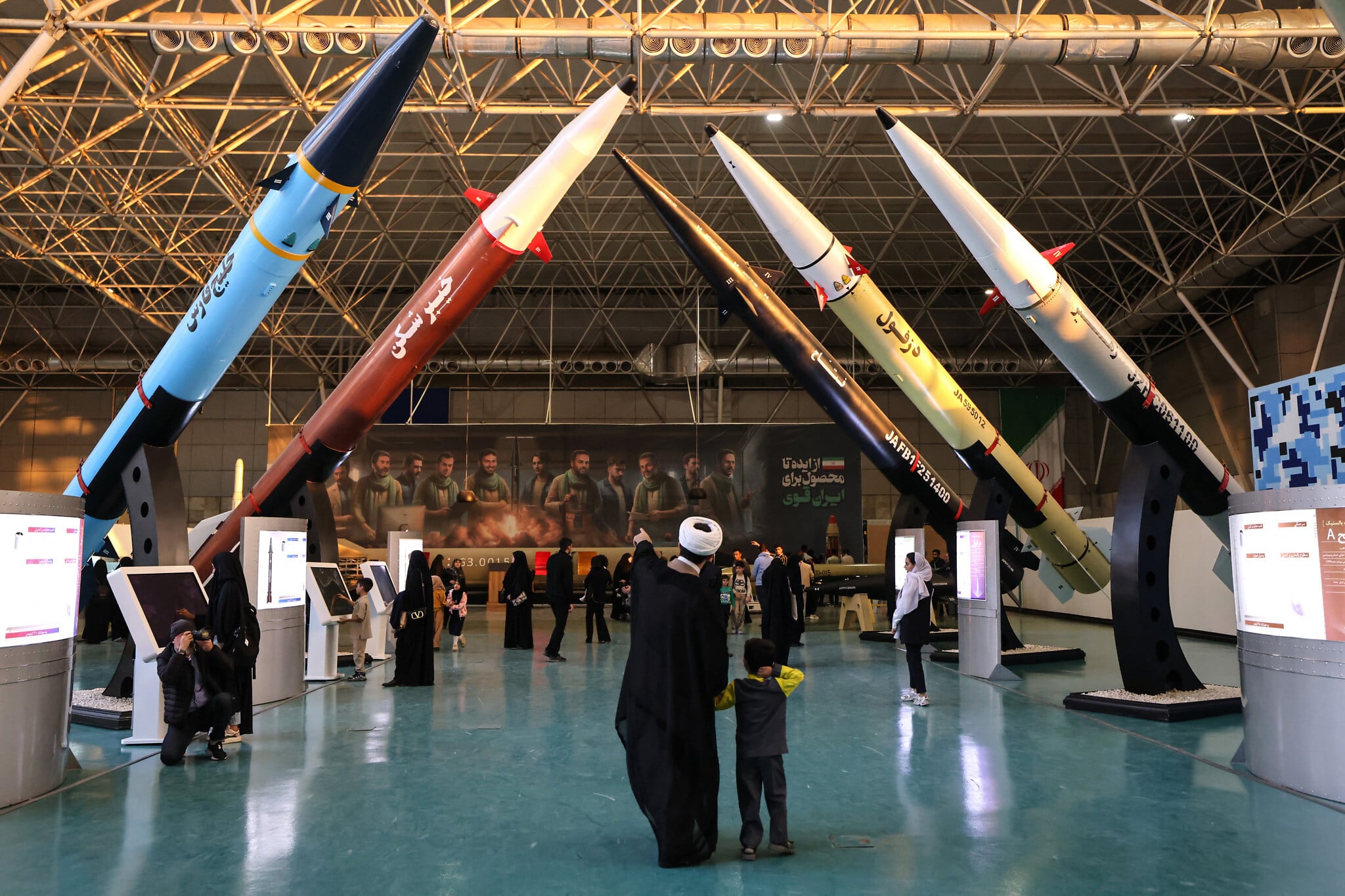
Trump said he and Netanyahu were “extremely victorious” during the 12-day war in June, which the US joined in by bombing three of Iran’s nuclear facilities. “Now I hear that Iran is trying to build up again, and if they are, we’re going to have to knock them down. We’ll knock the hell out of them,” Trump said, before adding that “hopefully that’s not happening.”
He claimed that Iran “wants to make a deal, but sometimes that doesn’t happen,” noting that this was the case before the June attack. “They decided not to make the deal. They wished they made that deal.”
While Israeli officials briefly spoke about toppling the Islamic Republic during the June war, Trump said Monday that he would not publicly entertain the idea.
“They’ve got a lot of problems in Iran. They have tremendous inflation. Their economy is bust… and their people aren’t happy,” he said. “Every time they have a rioter or someone forms a group, little or big, [the regime] starts shooting people.”
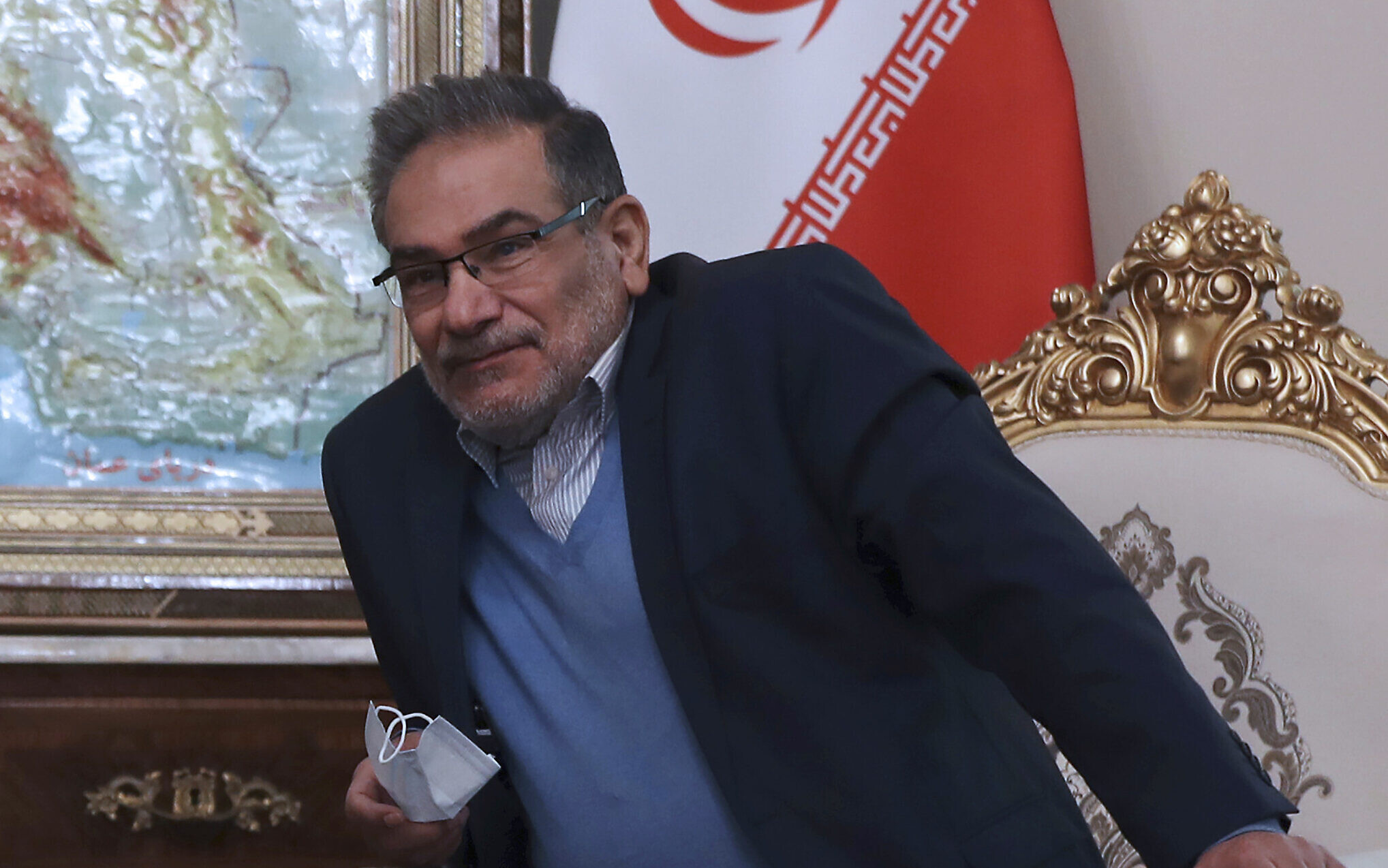
Ali Shamkhani, a top adviser to Iran’s Supreme Leader Ali Khamenei, responded defiantly to Trump’s remarks, tweeting that “Iran’s #Missile_Capability and defense are not containable or permission-based” and that “Any aggression will face an immediate #Harsh_Response beyond its planners’ imagination.”
Disarming Hezbollah
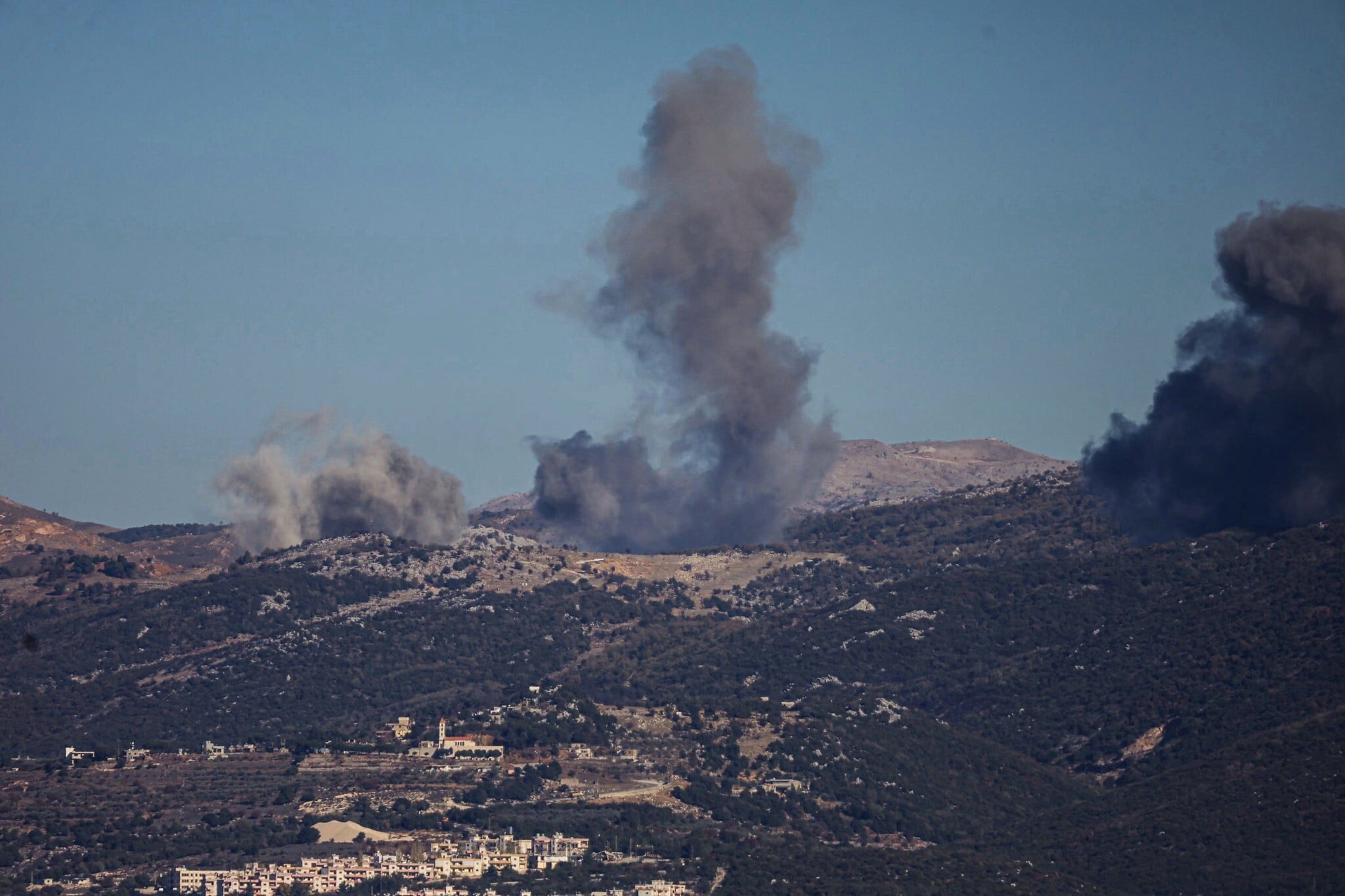
Addressing the disarmament of another terror group in the region, Trump remained vague on how the US would handle Hezbollah’s refusal to give up its weapons — something the Iran-backed Lebanese organization was supposed to do by the end of 2025.
Asked during the press briefing if Israel should strike Hezbollah in Lebanon over its refusal to disarm, Trump said: “We’re going to see about that.”
“The Lebanese government is at a little bit of a disadvantage with Hezbollah,” he continued, adding that Hezbollah “has been behaving badly.”
Playing nice with Turkey and Syria
While Netanyahu and Trump appeared aligned on how to handle threats from Hamas and Iran, there seemed to be more daylight on issues related to Turkey and Syria.
Answering questions from reporters after the meeting, Trump said he was considering selling top-end F-35 fighter jets to Turkey, a prospect feared by Israel. Just last week, in a thinly veiled reference to Turkey’s quest to receive the jets from the US, Netanyahu promised that Israel will “prevent whoever must be prevented from receiving these instruments.”
Asked about the potential sale on Monday, Trump said, “We’re thinking about it very seriously… [But] I promise they’ll never use them on [Israel].”
Washington barred Turkey from receiving the F-35, a top-of-the-line stealth plane, in 2019 after the NATO ally went ahead with purchases of the S-400 air defense system from Russia. Trump, however, has warm relations with Turkish President Recep Tayyip Erdogan, despite the veteran Islamist-rooted leader’s longtime support of Hamas and fiery denunciations of Israel over the Gaza war.
Israel has expressed concern in the past over the potential sale of the advanced F-35 fighter jets to Turkey and other Middle Eastern countries, as it is anxious to preserve its military edge in the region.
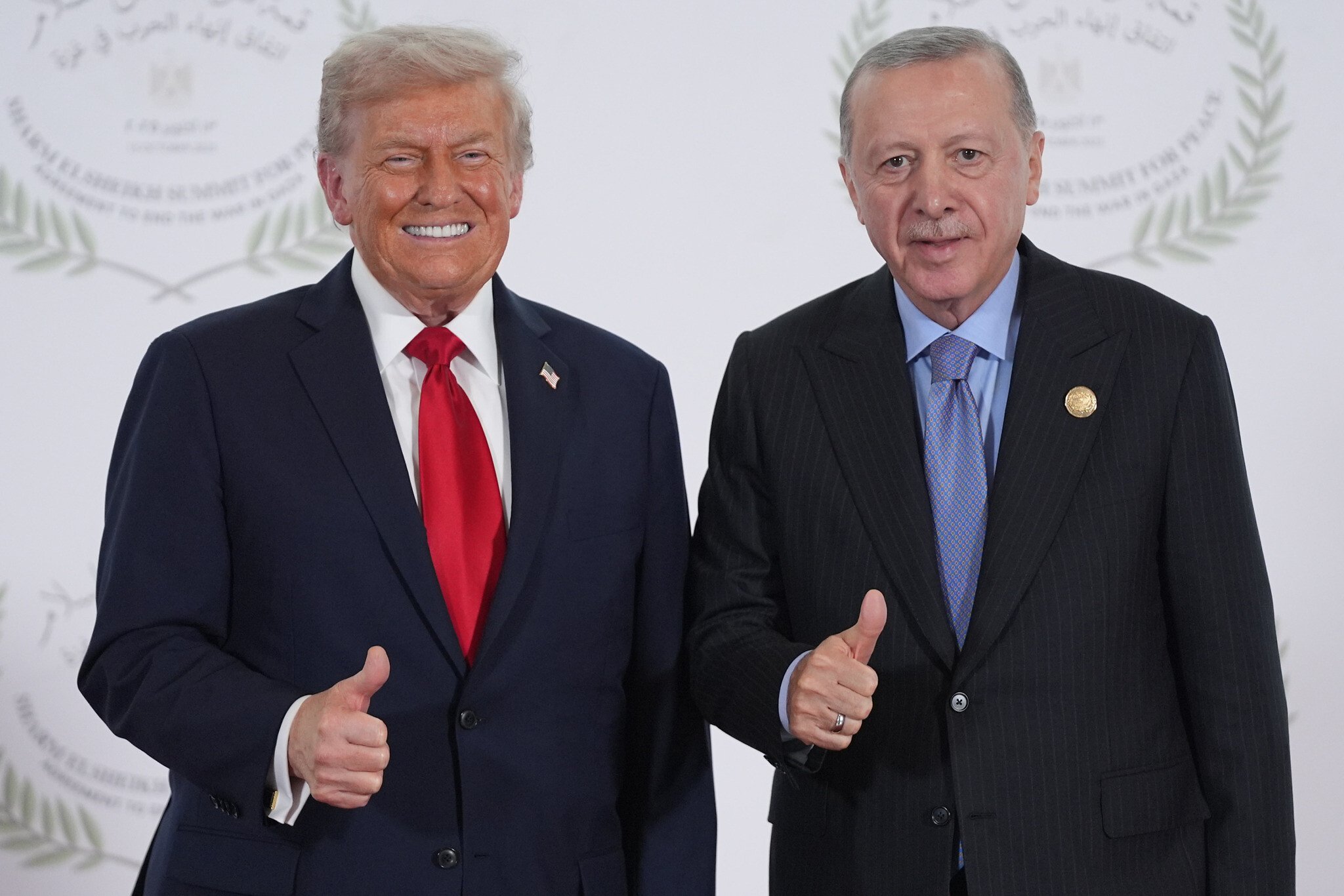
Pressed on the potential for conflict between Israel and Turkey, Trump called Erdogan “a very good friend,” insisting that “We’re not going to have a problem” between the countries.
Trump added that Netanyahu “respects” Erdogan and that “he’s done a fantastic job… I’m with him all the way, I’m with Bibi all the way.”
Ahead of the summit, pressed on the possibility of Turkish troops in Gaza — another scenario Netanyahu opposes — Trump said, “We’ll be talking about it, and if it’s good, I think that’s good.”
Turning to Damascus, which has been holding US-mediated talks with Israel for months on a potential security arrangement, Trump claimed that Israel and the US “do have an understanding on Syria.” He did not elaborate.
Trump again heaped praise on Syrian President Ahmed al-Sharaa, a former jihadist commander, who “has been with us all the way.”
“I’m sure that Israel and him will get along,” he continued. “I will try and make it so that they do get along.”
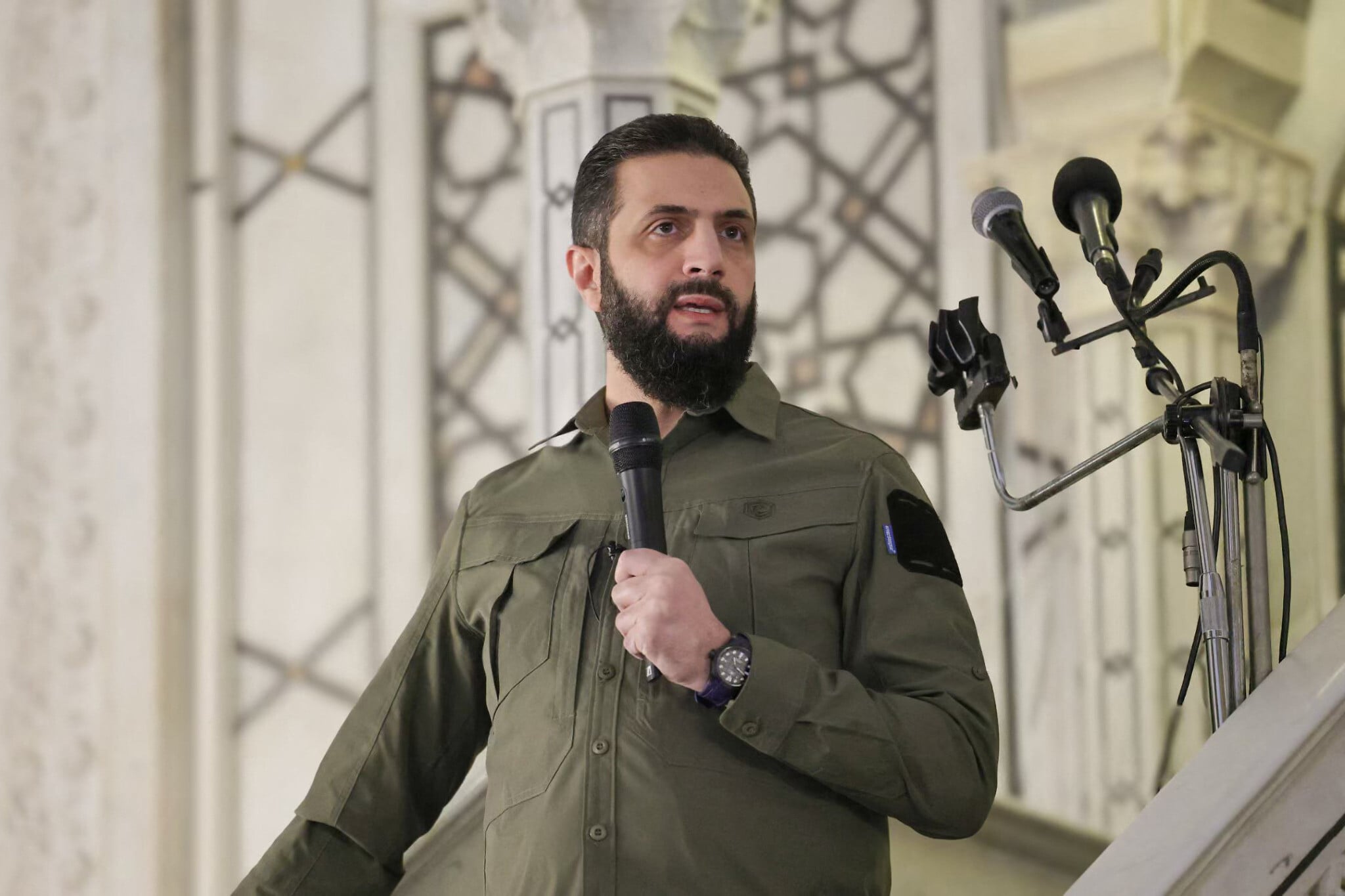
For his part, Netanyahu said Israel’s interest “is to have a peaceful border with Syria,” as well as to protect Druze and Christians in the country.
Trump interjected to add that it was Erdogan who helped topple Bashar al-Assad’s regime in Syria, claiming that Netanyahu agreed with that assertion. Netanyahu however has sought to claim credit for himself for starting the “historic” process resulting in Assad’s fall.
Disagreements on the West Bank
The two leaders exchanged high praise for each other during the press briefing, with Trump hailing Netanyahu as a “wartime prime minister” who has “done a phenomenal job.”
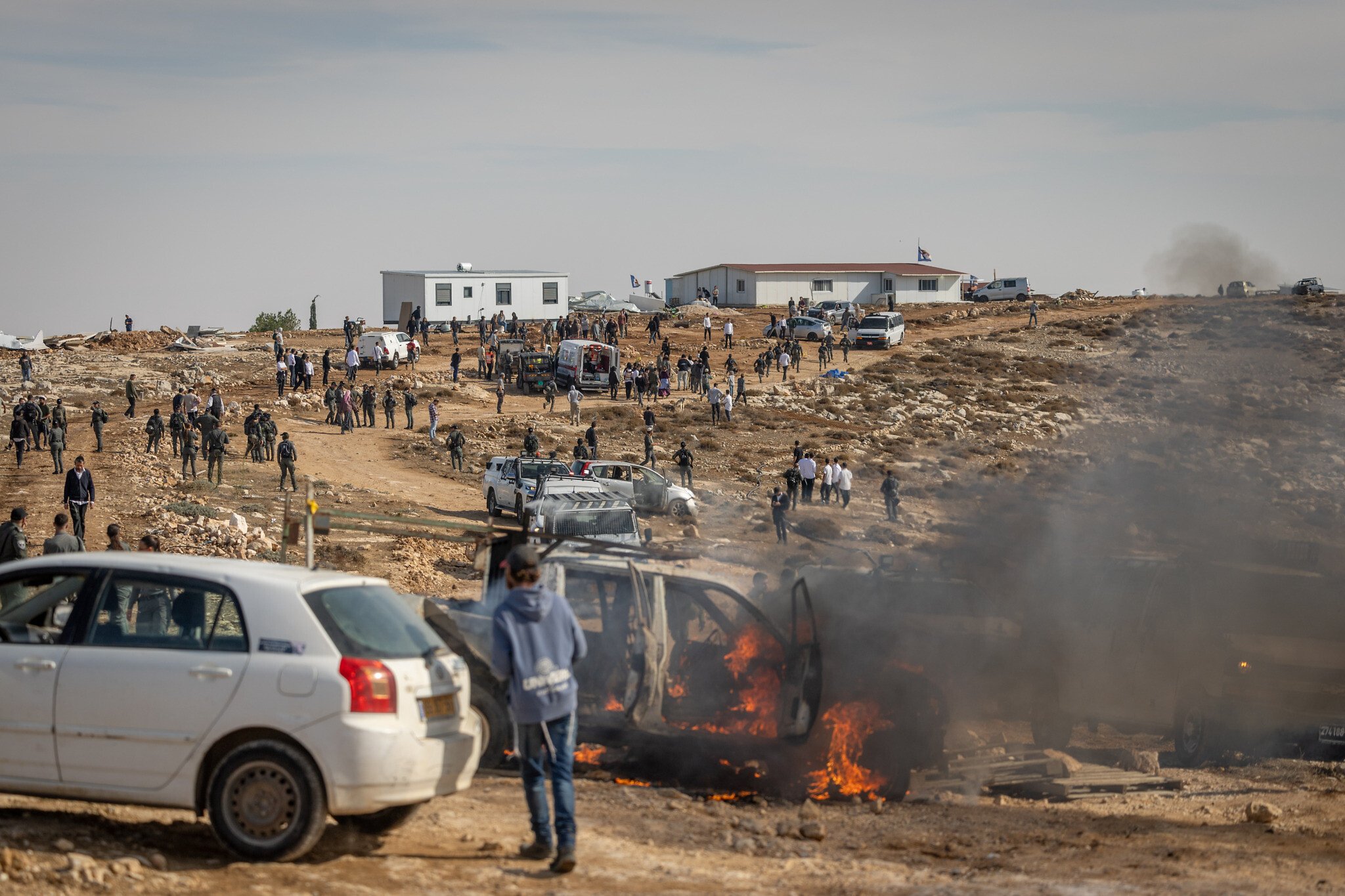
But Trump also acknowledged some disagreement, including on the West Bank. Asked about rising settler violence in the area, Trump said: “We have had a big discussion for a long time on the West Bank, and I wouldn’t say we agree on the West Bank one hundred percent. But we’ll come to a conclusion on the West Bank.”
The US is said to also be pushing Israel to release several billion dollars in clearance revenues that Jerusalem is withholding from Ramallah, bringing the Palestinian Authority to the brink of collapse.
But asked to explain what his West Bank-related disagreements are about, Trump declined to do so, insisting that Netanyahu will ultimately “do the right thing.”
Trump again predicted an expansion of the Abraham Accords, adding that Saudi Arabia would also join “at some point.”
Riyadh has recently been outspoken about its refusal to normalize ties with Israel at this time, with former intelligence chief Prince Turki bin Faisal telling The Times of Israel this will only happen when the Jewish state “acts normally.”
Trump was also asked about a recent poll that purportedly found that half of Gazans would elect to leave the Strip if given the opportunity.
He said such numbers are “common sense” and speculated that the real figure is more than 50 percent.
While he promoted a plan in February to permanently relocate Palestinians from Gaza, Trump has largely stopped pushing this idea due to massive pushback from Arab and Muslim allies whose support is needed for the postwar management of Gaza.
The reporter asking about the poll pushed Trump to comment further on the possibility of allowing Gazans to move elsewhere. ” Let’s not talk about it because we don’t want the controversy,” Trump responded.
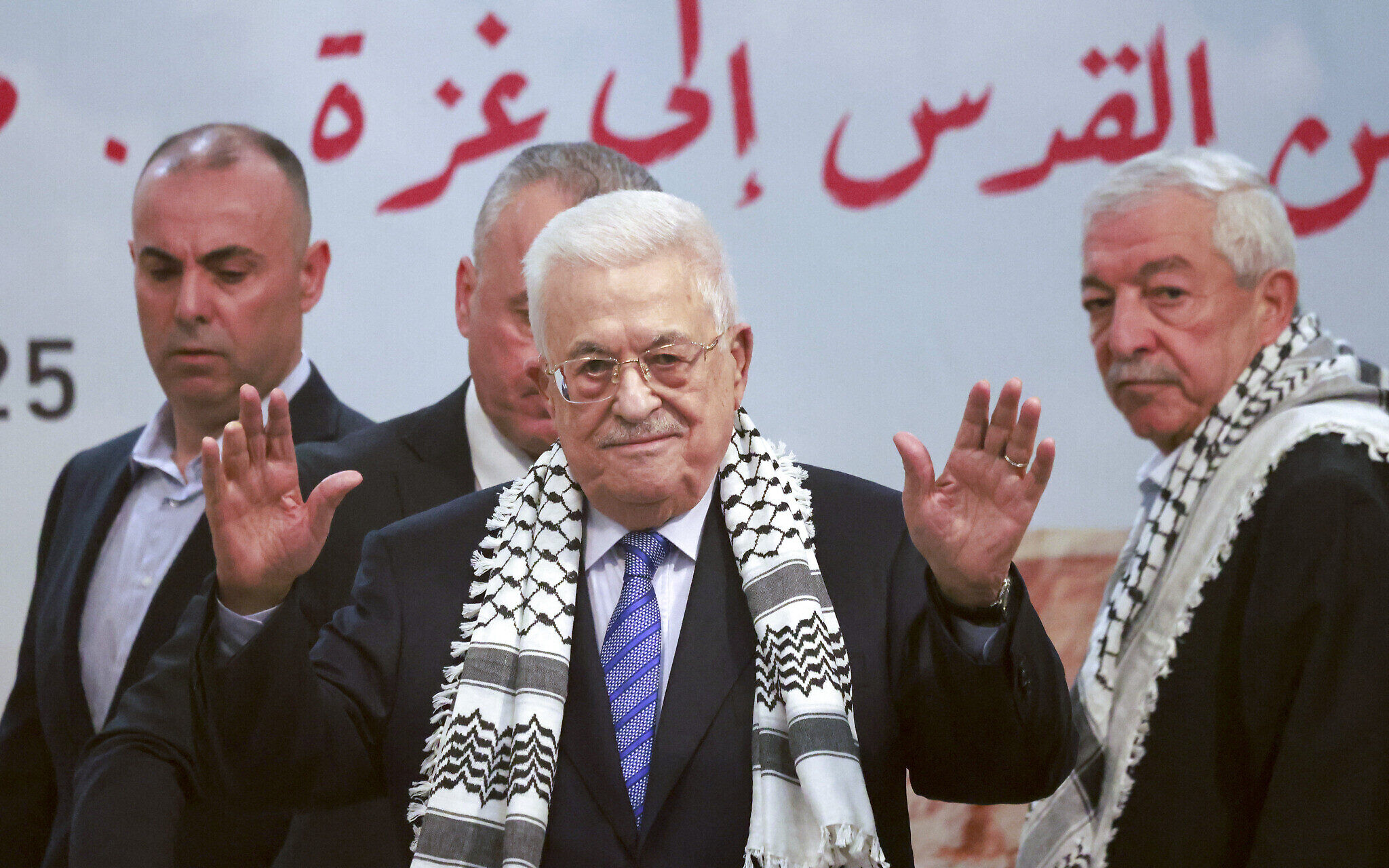
Asked whether the PA should be allowed to play a role in the postwar management of Gaza, Netanyahu reiterated that it will have to implement “real reforms.”
“Stop ‘pay-to-slay,’ change the curriculum in your textbooks, open up a different society and a different future,” said Netanyahu.
Ramallah says it is instituting those exact reforms of its welfare and education programs that have long been demanded by the international community, but Israel has dismissed those steps as artificial.
Agencies and The Times of Israel staff contributed to this report.
https://www.timesofisrael.com/meeting-pm-trump-warns-of-hell-to-pay-if-hamas-doesnt-disarm-in-very-short-time/