
World’s top oil exporter still stymied by Yemen’s Houthis in Red Sea, but ships millions of barrels to Asian refineries via UAE port after pause forced by latest US-Iran flare-up
By Florence Tan and Siyi Liu18 August 2026, 4:24 pm
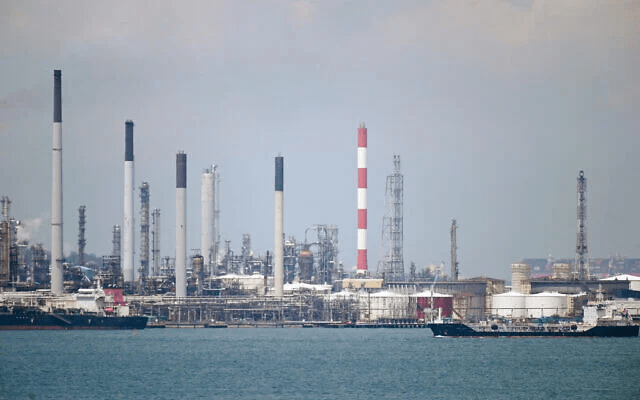
Illustrative: An oil tanker (R) sails past petroleum refineries on Bukom Island off Singapore on March 17, 2022. (Roslan RAHMAN/AFP)
SINGAPORE (Reuters) — Saudi Aramco resumed oil loading from inside the Strait of Hormuz last week and has more tankers waiting to load as the state energy giant offers spot heavy crude cargoes, according to shipping data and trade sources.
On Monday, the world’s top oil exporter offered some Asian refiners Arab Medium and Arab Heavy crude cargoes for loading via ship-to-ship transfers off Fujairah in the United Arab Emirates this month.
It had halted sales for weeks following attacks on its tanker fleet in the Strait of Hormuz during an escalation of the US-Iran conflict last month.
The resumption of Saudi exports could help ease the tight supply of heavier grades that produce more residue fuel. The material can be used to refuel ships, or processed further at refineries to yield higher-quality fuels such as gasoline and diesel.
Three very large crude carriers (VLCCs) — Malaysia Prosperity, Algeria Prosperity and Singapore Prosperity — loaded 2 million barrels of crude each from the Juaymah and Ras Tanura terminals from August 12 to 16.
Data from shiptrackers Vortexa and Kpler showed a gap of three weeks since the last loading at the ports. It was not immediately clear which grades the tankers were carrying.
Saudi Aramco has declined to comment. Sinokor, which owns the tankers, did not respond to a request for comment.
Six more VLCCs could load Saudi oil from inside the strait later this month, provisional data from Kpler showed.
Traders said Saudi Aramco could deploy Saudi tankers for the Hormuz transit, in addition to Sinokor vessels.
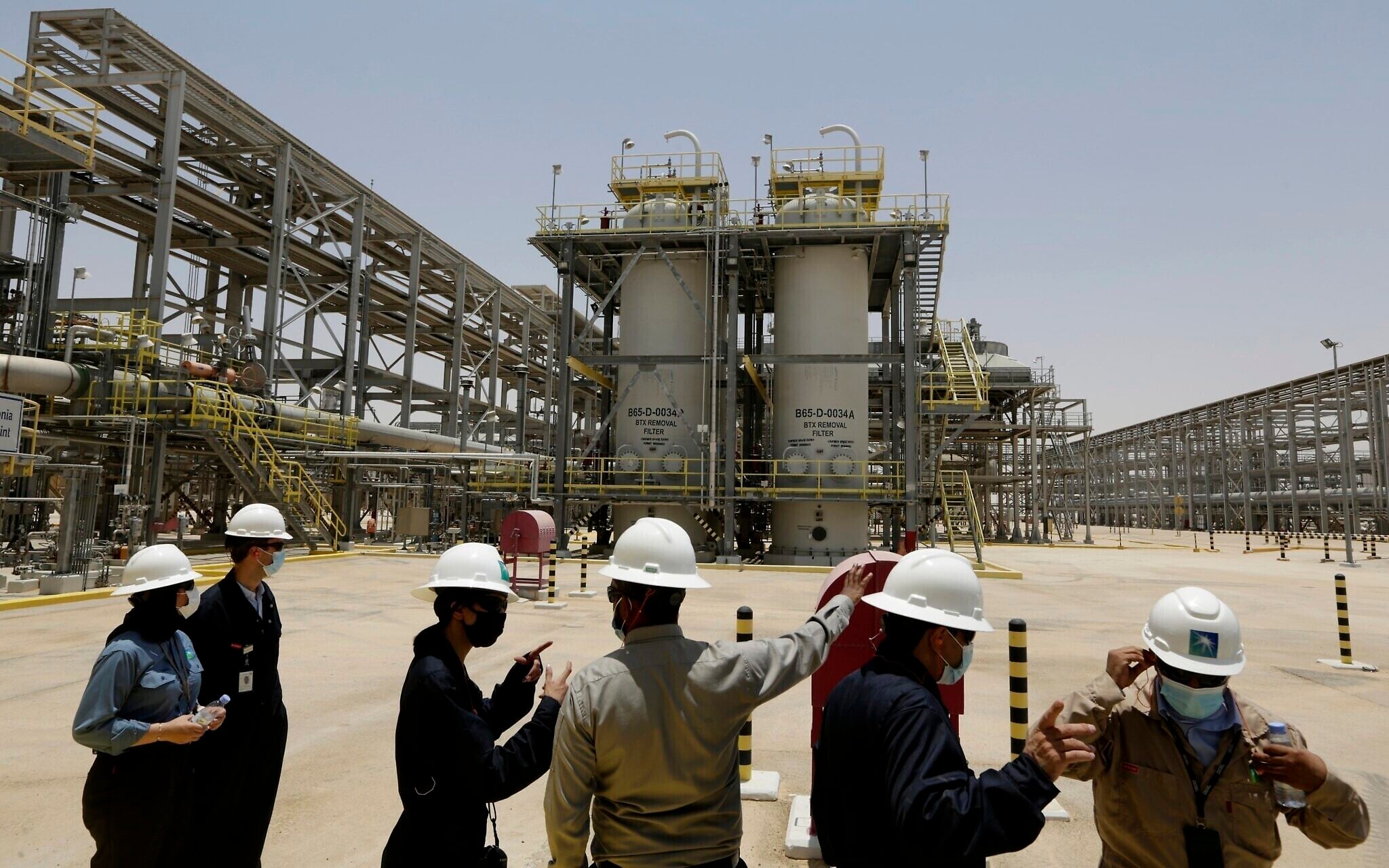
Seven VLCCs owned by Saudi-based operator Bahri were floating off the UAE and Oman while two more were heading to Fujairah, shipping data on LSEG showed on Tuesday.
However, Saudi oil exports remain curtailed as the producer faces a blockade by Yemen’s Iran-backed Houthi rebels in the Red Sea, where Aramco diverted its exports to the port of Yanbu earlier during the Iran war.
The producer has offered additional crude cargoes for loading from Egypt’s Mediterranean port of Sidi Kerir as an alternative, but the volume is a fraction of the pre-blockade level of 4 million barrels per day exported from Yanbu while additional shipping costs and longer voyages are deterring purchases.
About 670,000 barrels per day of Middle Eastern crude are expected to be loaded at the Sidi Kerir port for Asia this month, Kpler data showed, from zero in the previous three months.
“This shows that the Sidi Kerir offering to Asia is likely not working, as its Asian customers, at least the Chinese, are not happy with the long voyages and high freight cost,” said Emma Li, Vortexa’s China market analyst.