
Stunning flight data and post-landing photographs reveal the terrifying structural toll of a steep dive triggered by a violent mid-air struggle. Photographs circulating online after touchdown show extensive structural damage to the vertical stabilizer, sparking urgent questions on how close the airliner was to catastrophe.
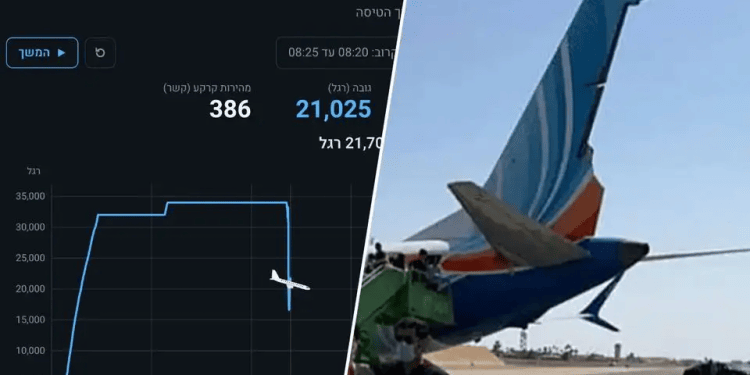
A graph showing the rapid descent alongside the damaged tail of the Flydubai aircraft | Photo: Social media
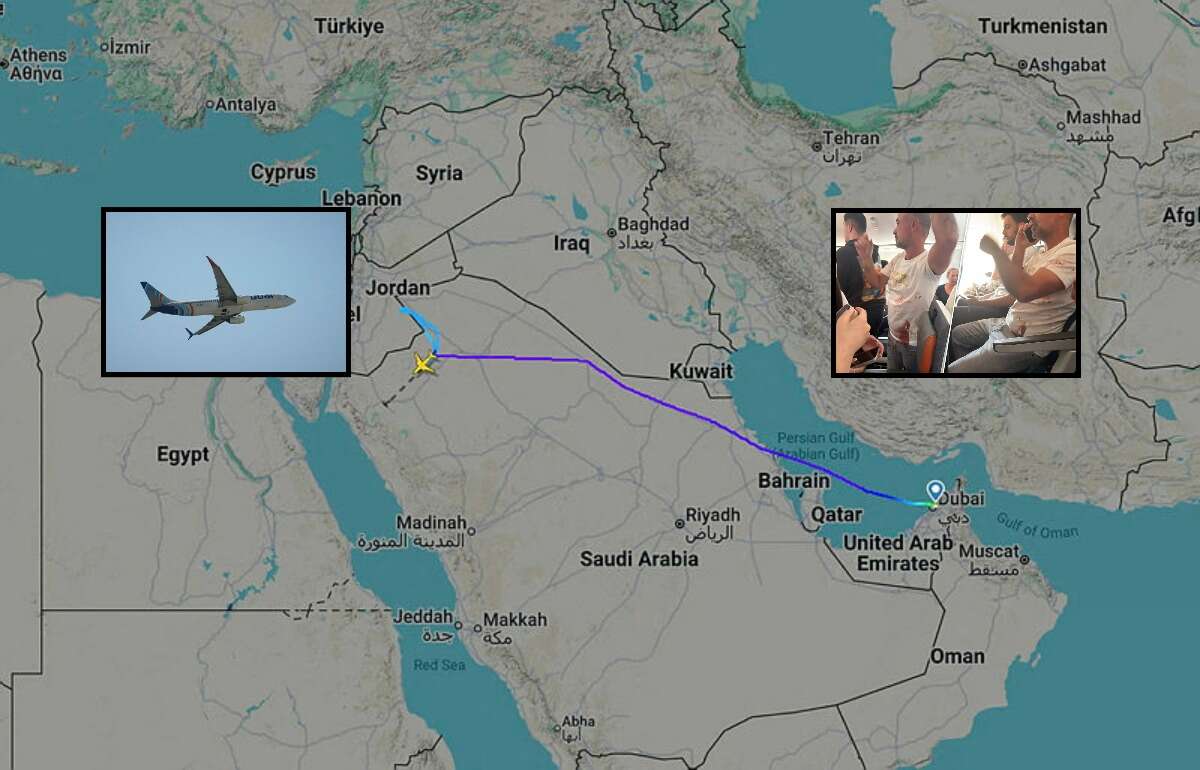
A violent cockpit assault aboard a flydubai low cost airline service from Dubai to Tel Aviv on Wednesday morning transformed a standard commercial journey into a critical emergency. A struggle for the flight deck left the captain stabbed and the aircraft plunging rapidly before crew and passengers subdued the attacker, ultimately forcing an unscheduled landing in Tabuk, Saudi Arabia. Photographs circulating online after touchdown show extensive structural damage to the vertical stabilizer, sparking urgent questions across the aviation world regarding how close the aircraft came to mid-air disintegration.
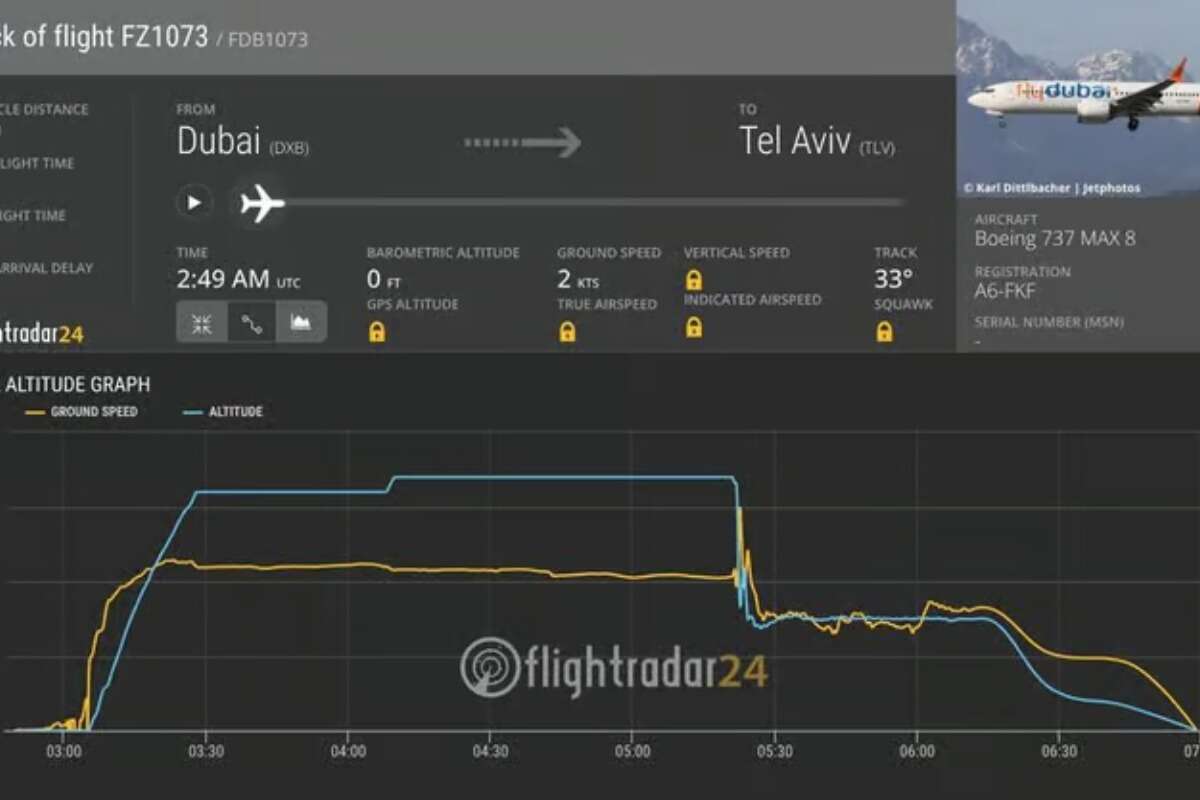
According to telemetry from Flightradar24 (global flight tracking service), the twin-engine jet departed Dubai at 06:05, establishing a standard cruising altitude of 34,000 feet (10,363 meters). Descent initiated at 08:21, followed by an ominous 18-second telemetry blackout preceding a staggering loss of 14,300 feet (4,359 meters) over a span of just 33 seconds. During this violent plunge, ground speed surged to 598 knots (688 mph / 1,107 km/h). The aircraft subsequently clawed its way back up to 21,700 feet (6,614 meters) before leveling off near 15,000 feet (4,572 meters), maintaining that altitude straight into its descent path toward Tabuk (city in northwestern Saudi Arabia).
Dan Bracha, a veteran F-16 (American multirole fighter jet) pilot, noted that the physical altercation in the cockpit generated an unprecedented aggressive maneuver, registering momentary descent spikes approaching 30,000 feet (9,144 meters) per minute. This extreme dive vastly exceeded certified operational parameters, inflicting severe structural strain on the empennage. Despite the grave compromise to the aircraft, an off-duty crew member exhibited exceptional airmanship to guide the crippled machine onto the tarmac without further injury.
The mechanics of such rapid-descent structural failure are stark. Speaking on condition of anonymity, an aviator designated as pilot C explained that every dynamic vehicle operates under strict engineering limitations. Drawing an analogy to motorcycle riding, the aviator pointed out that while normal speeds remain manageable, forcing a machine to an excessive 400 km/h (248.5 mph) introduces violent vibrations and chassis stress capable of tearing wheels and components apart. Naturally, the same principle applies with amplified severity to a massive commercial airliner plunging at rates far beyond its design threshold, where compounding aerodynamic loads fracture the outer skin.
A second anonymous aviator, designated as pilot R, detailed the destructive airflow dynamics hammering the tail section during such extreme events. Under standard flight conditions, an aircraft’s arrow-like aerodynamics ensure smooth airflow across the fuselage and tail assembly. However, during a frantic cockpit struggle and steep descent executed at blistering speeds, any heavy foot pressure applied to the rudder pedals forces the fuselage out of alignment with the relative wind. Instead of flowing cleanly past the structure, high-velocity air slams laterally into the tail with staggering impact, mirroring the force of a massive pneumatic hammer.
The convergence of excessive dive speeds, uncoordinated flight profiles, and potential rudder deflection created critical structural stress that nearly proved fatal. Had the aerodynamic forces acting upon the tail been even marginally higher, the entire vertical stabilizer could have sheared away mid-flight, stripping the aircraft of directional control and dooming it to a catastrophic crash. The ultimate saving grace, the pilot concluded, lies in the robust engineering of modern passenger aircraft designed to absorb extreme physical shocks without structural collapse, providing the narrow margin needed to secure control and touch down safely on Saudi soil.