
The midterm elections weakened Trump but left him room to maneuver on foreign policy. Israel, too, has room to maneuver. Op-ed.
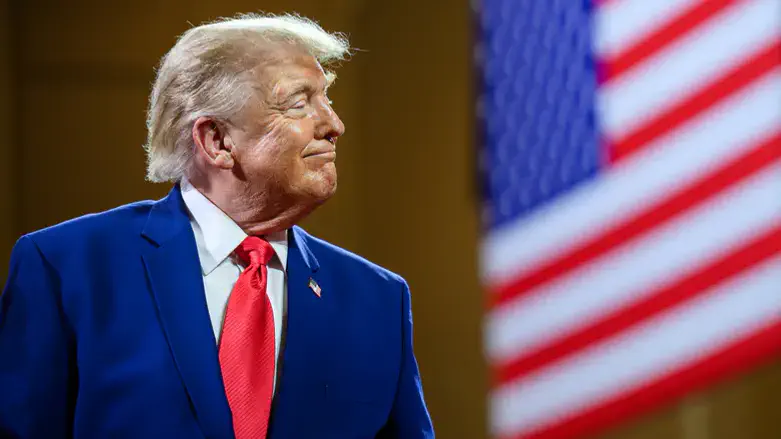
Donald TrumpWhite House Photo
Avishai Grinzaig is a columnist for the Hebrew Besheva weekly.
We must be honest: The results of the US elections were far from favorable to Israel. Whether due to the weakening of one of Israel’s strongest allies, Donald Trump; the election of a Mamdani-like antisemitic politician in Michigan, Abdul El-Sayed; or the increasingly vocal criticism of Israel within the Republican Party, led by Vice President JD Vance, there is little reason to celebrate.
But before giving in to panic and despair, it is important to put the results in perspective. While it is tempting to blame the outcome on factors such as the war with Iran or rising oil prices, the reality is that this is part of a longstanding American political pattern, one that appears to be deeply rooted in the country’s political culture.
The historical record is clear: Every American president over the past 75 years who served two full terms lost control of both houses of Congress during the second half of his second term. This happened under Presidents Dwight Eisenhower, Ronald Reagan, Bill Clinton, George W. Bush and Barack Obama. In some cases, the losses were smaller than those suffered this past week; in others, they were considerably larger.
There are two immediate and long-term advantages to the current situation.
First, Congress’s influence is concentrated primarily on domestic affairs. When it comes to foreign policy, including military operations and wars, its ability to constrain the president is relatively limited, despite the existence of the War Powers Resolution. This is why previous presidents who found themselves in a lame-duck position often focused on securing a foreign policy legacy. We saw this during the final years of both Clinton’s and Obama’s presidencies.
Second, with American voters having now used the midterm elections to express their frustration with the Republicans, the political pendulum may have less momentum left when the next presidential election arrives in two years. That could improve the prospects of a Republican candidate capable of winning the presidency without being burdened by the full backlash against Trump. A figure such as Marco Rubio, for example, could potentially deliver another eight years of exceptionally strong American support for Israel, building on and improving the Trump model.
There is even a silver lining in the Democrats’ larger-than-expected majority. Had their advantage rested on a single seat, the party’s moderate center, which includes a number of friends of Israel, albeit generally less enthusiastic ones than those found among Republicans, could have been held hostage by El-Sayed and his allies. A more comfortable majority gives moderate Democrats greater freedom to maneuver. They may not be inclined to offer Israel many favors, but they are also less likely to embrace an explicitly anti-Israel position.
Above all, we must remember that this is not the end of the world. What the non-Jewish world thinks and says about us matters, particularly when it comes to the United States. But what the Jewish people do matters far more.
