
Despite major damage to its military infrastructure, the Islamic Republic of Iran “likely has at least 1,700 ballistic missiles remaining,” and is building more every day, according to reports.
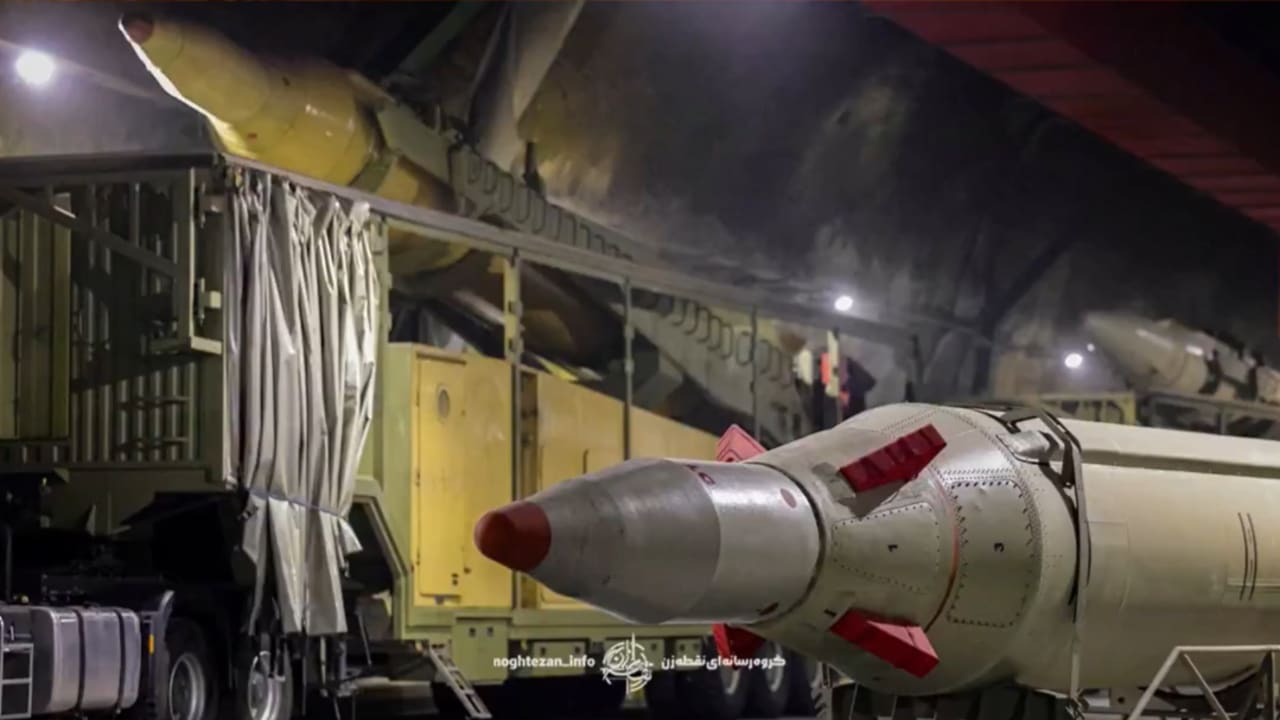

IRGC unveils underground ‘missile city,’ ambitions for striking US
Fatah-1 medium-range ballistic missiles appeared to fill the underground missile city.
“Advanced missiles will surprise enemies with their battlefield impact,” said the Chief of Staff of Iran’s Armed Forces, Maj.-Gen. Ali Abdollahi. “If the enemy makes another move against us, our response will extend beyond the region.”
The unveiling illustrates Iran’s efforts to show that it has preserved its missile capabilities despite American and Israeli airstrikes.
The missile, which reaches up to 18,500 kilometers per hour in parts of its flight, is feared by some analysts to be capable of reaching the mainland United States should Iran’s ambitions be realized by overlapping its multi-stage space launch technology used to put satellites into orbit with its ICBM infrastructure.
Iran has formally abandoned its self-imposed 2,000-kilometer missile range limit, and has actively begun threatening to strike US bases in Europe should attacks be launched from them, according to the Institute for the Study of War.
Netanyahu, Trump backtrack on Iran war successes, plan further strikes
In March, Prime Minister Benjamin Netanyahu claimed that “after 20 days, I can tell you, Iran today has no ability to enrich uranium, and no ability to produce ballistic missiles.”
US President Donald Trump has made similar statements following the execution of the war.
Trump stated on November 9 that nearly 85% of Iran’s manufacturing capability has been destroyed, while warning that US forces remain “locked and loaded and ready to go” if necessary.
Both leaders have made preparations to resume strikes on Iran because of the reported advancement of its nuclear weapons program.
Last week, former US Central Command (CENTCOM) deputy commander Rear-Adm. (ret.) Robert Stiles Howard said the failure of the United States and Israel to destroy Iran’s ballistic missile and drone capabilities is “probably the most significant failure” of the war.
