Netanyahu’s urgent trip to Washington comes amid Israeli concerns over stalled Iran talks and U.S. envoy responses, with Jerusalem worried about gaps on missiles and regional threat
US President Donald Trump and Iranian Supreme Leader Ali KhameneiAP Photo/Ben Curtis – Office of the Iranian Supreme Leader via AP
The US administration has told Iran that it expects Foreign Minister Abbas Araghchi and the Iranian delegation to arrive at the next round of nuclear talks “with significant content,” two sources familiar with the matter told i24NEWS.
The initial meeting between the parties was described as a “good meeting,” but focused primarily on procedural issues rather than substantive negotiations.
Recommended
Washington now anticipates that Tehran will present tangible concessions on its nuclear program and other pressing concerns during the upcoming discussions.
The developments come as Israeli Prime Minister Benjamin Netanyahu prepares for a hastily arranged meeting with US President Donald Trump on Wednesday, sources say. Israeli officials are dissatisfied with the responses provided last week by US envoy Steve Witkoff during his talks with Netanyahu and senior defense officials.
Netanyahu goes to D.C.: PM to meet Trump on Wed., says talks include Iran missiles
Jerusalem is increasingly concerned that the current trajectory of the US-led talks with Iran may not meet Israel’s core security demands, particularly regarding Tehran’s ballistic missile program and support for regional proxy groups. Criticism of Witkoff’s approach has grown in Israel amid fears that any emerging deal could leave these issues insufficiently addressed.
In apparent warning, CENTCOM chief in attendance; Iran FM says discussions focused primarily on finding framework; Omani mediator says talks useful to clarify thinking of both sides
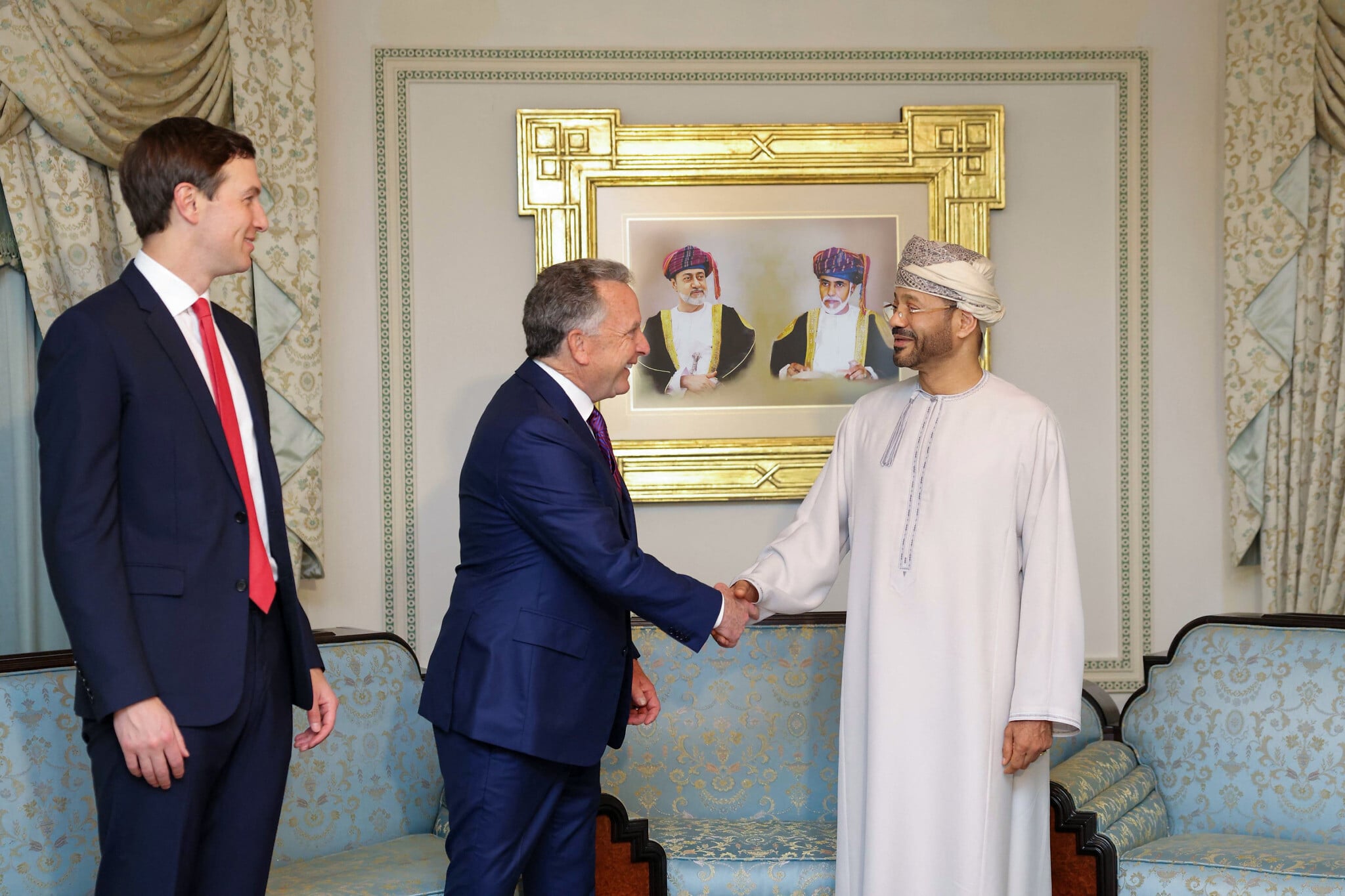
In this handout photo released by the Omani Ministry of Foreign Affairs on February 6, 2026, US special envoy Steve Witkoff shakes hands with Oman’s Foreign Minister Badr bin Hamad al-Busaidi as Jared Kushner looks on during a meeting in Muscat. (Handout/Omani Foreign Ministry/AFP)
Iran and the United States held two rounds of indirect talks in Oman on Friday, negotiations that appeared to return to the starting point on how to approach discussions over Tehran’s nuclear program.
Iranian and US officials indicated to Axios that they expect further talks to take place in the coming days.
For the first time at talks between the nations, America brought its top military commander in the Middle East to the table.
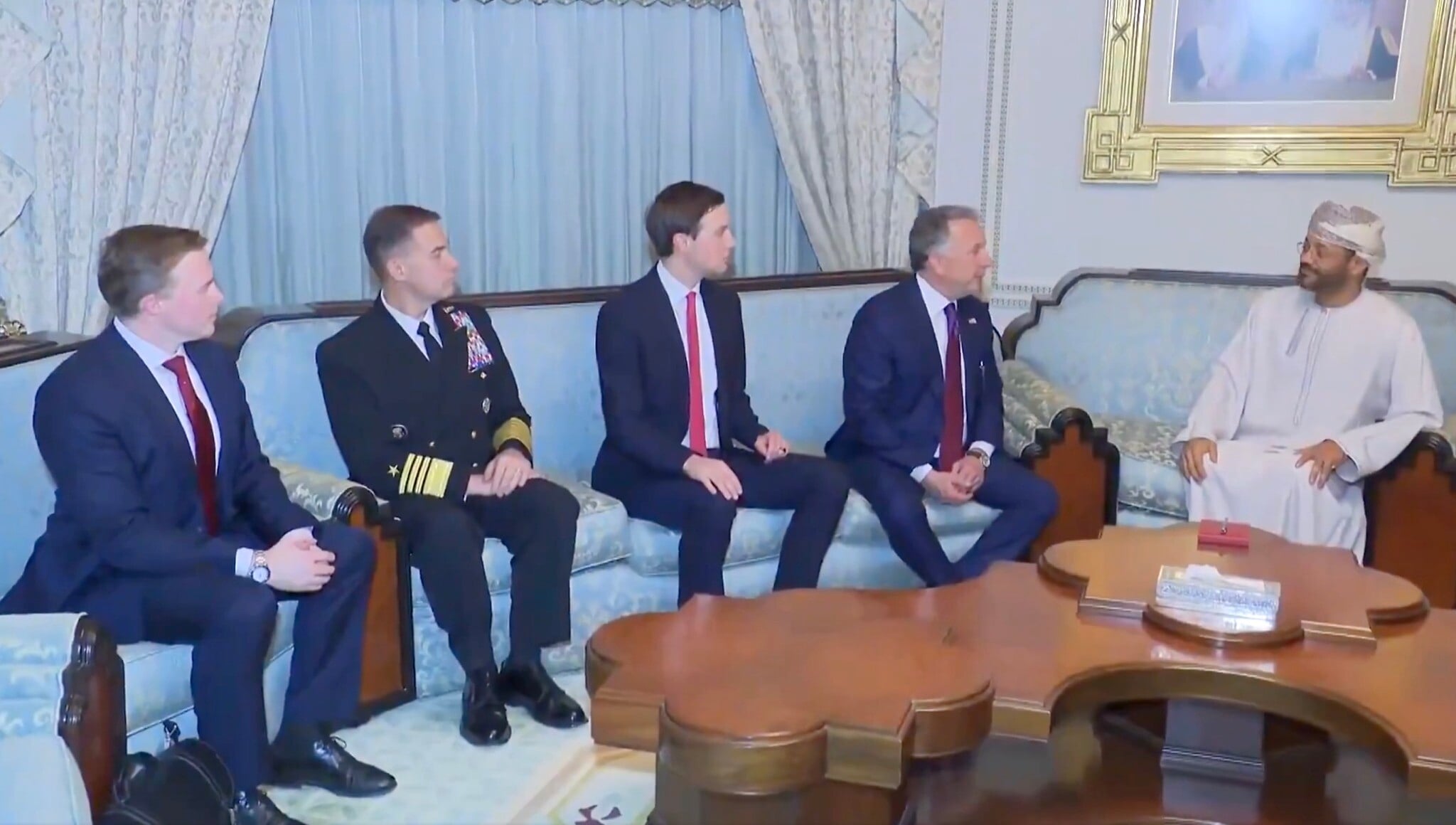
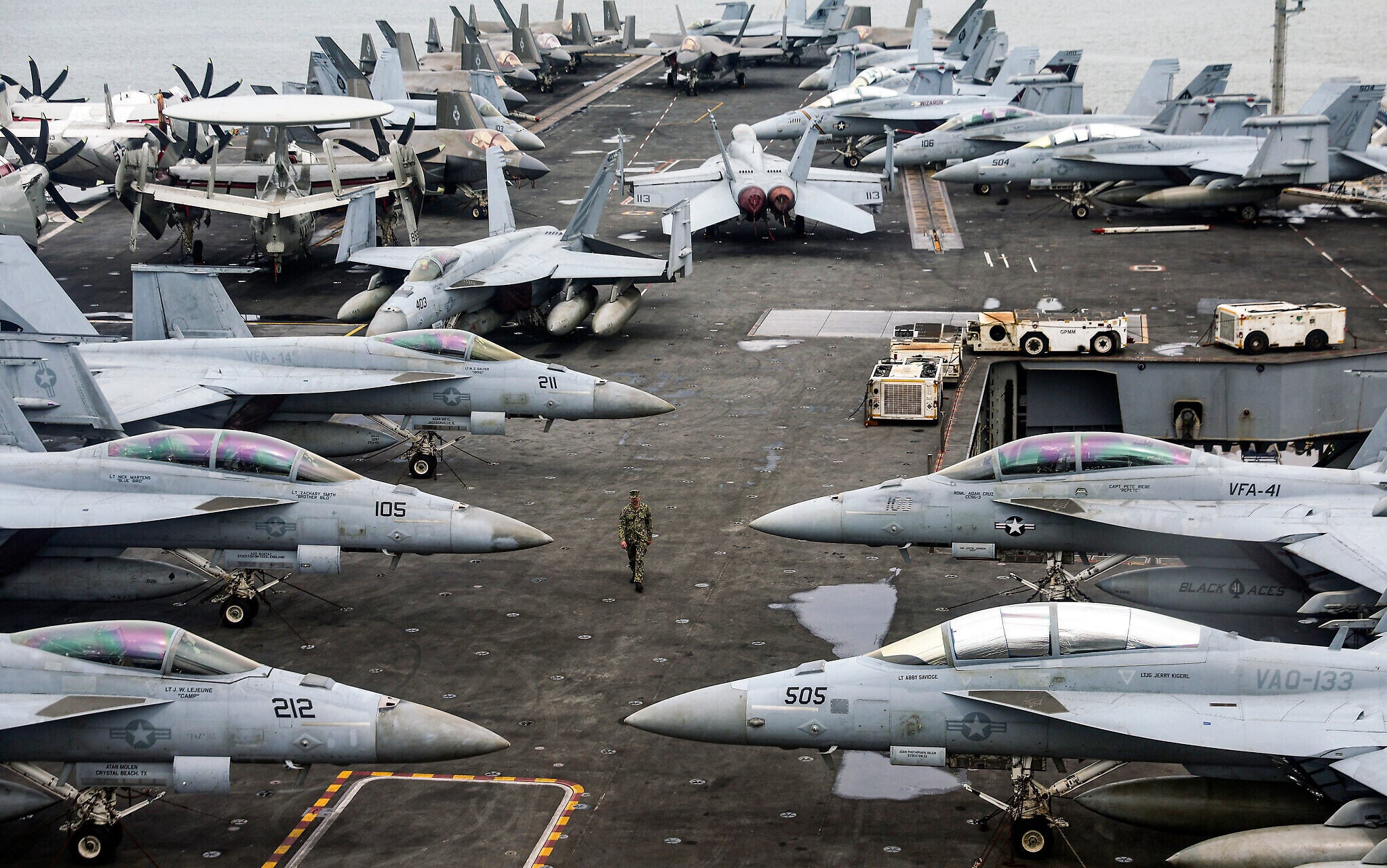
The presence of US Navy Adm. Brad Cooper, the head of the American military’s Central Command, in his dress uniform at the talks in Muscat, the Omani capital, served as a reminder that the aircraft carrier USS Abraham Lincoln and other warships were now off the coast of Iran in the Arabian Sea.
US President Donald Trump has repeatedly threatened to use force to compel Iran to reach a deal on the program after earlier sending the carrier to the region over Tehran’s bloody crackdown on nationwide protests that killed thousands and saw tens of thousands of others detained in the Islamic Republic.
The US, represented by Mideast special envoy Steve Witkoff and Jared Kushner, Trump’s son-in-law, did not immediately comment on the talks.
(2nd L-R) CENTCOM’s US Navy Adm. Brad Cooper, Jared Kushner, Steve Witkoff and Omani counterpart Sayyid Badr Albusaidi meet in Oman on February 6, 2026 (Screen grab/X)
“We did note that nuclear talks and the resolution of the main issues must take place in a calm atmosphere, without tension and without threats,” Iranian Foreign Minister Abbas Araghchi told journalists.
“The prerequisite for any dialogue is refraining from threats and pressure,” he added. “We stated this point explicitly today as well, and we expect it to be observed so that the possibility of continuing the talks exists.”
Araghchi said diplomats would return to their capitals, signaling this round of negotiations was over.
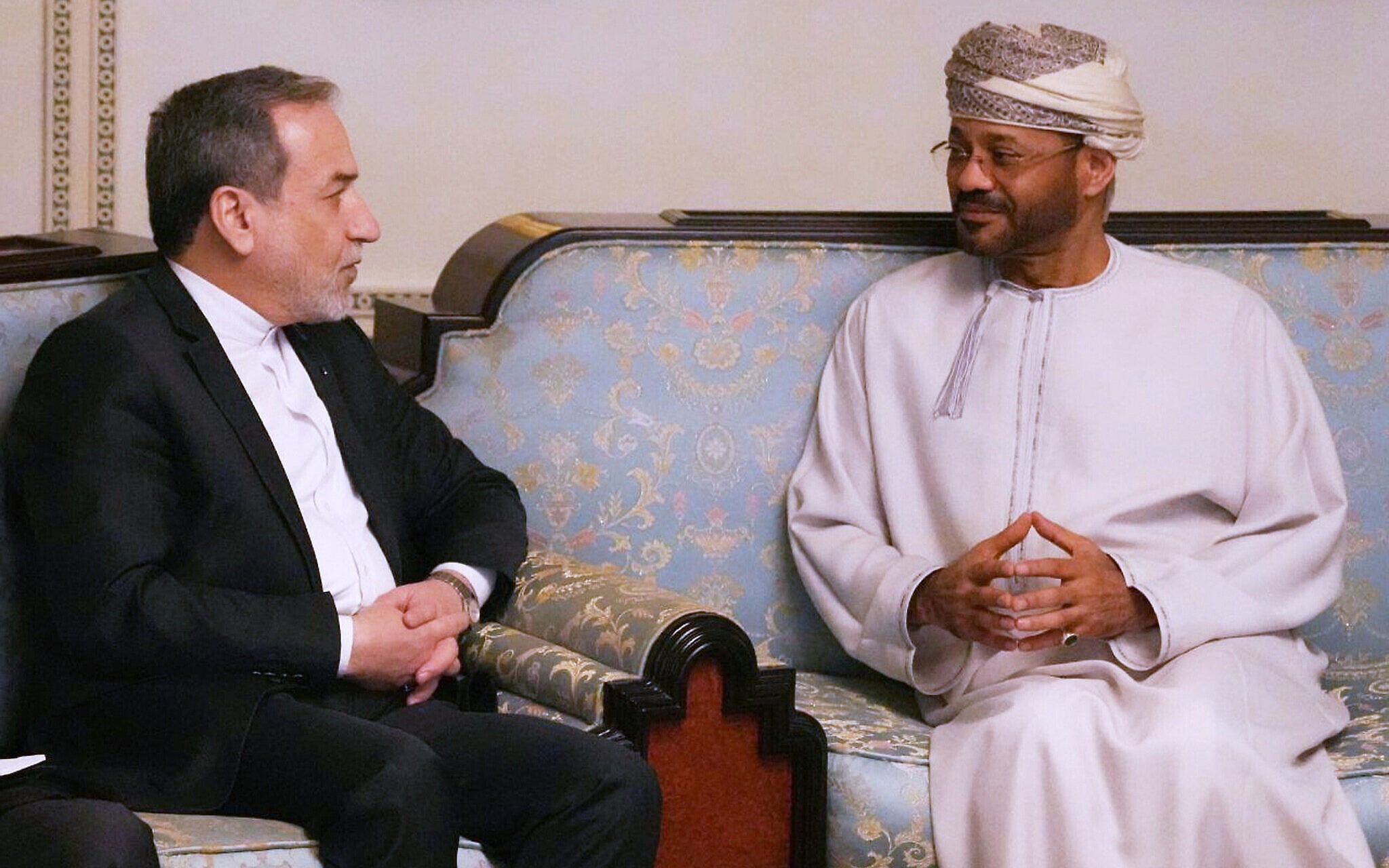
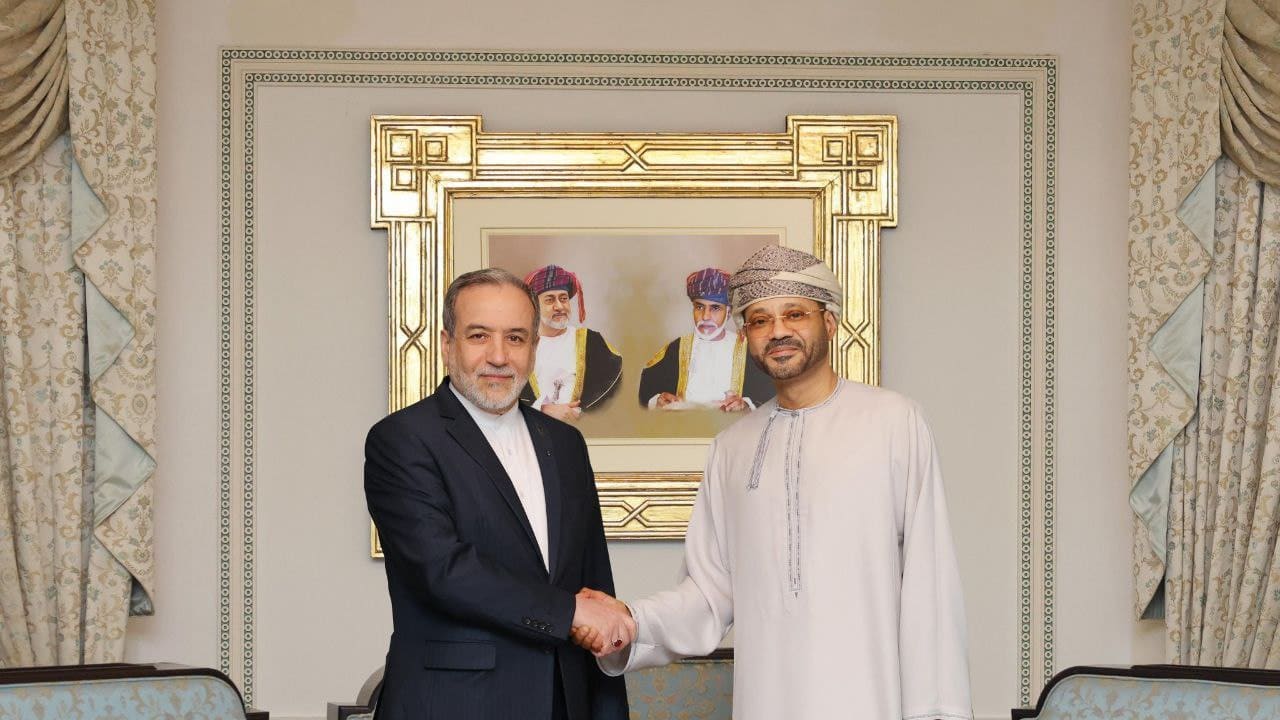
In this photo released by the Iranian Foreign Ministry, Iranian Foreign Minister Abbas Araghchi, left, speaks with his Omani counterpart Sayyid Badr Albusaidi during their meeting prior to Iran-US negotiations, in Muscat, Oman, Feb. 6, 2026. (Iranian Foreign Ministry via AP)
Gulf Arab nations fear a US attack on Iran could spark a regional war that would drag them in as well — Iran has vowed a harsh response to any strike and has cautioned neighboring countries that host US bases that they could be in the firing line.
Days before Friday’s talks, US forces shot down an Iranian drone near the USS Abraham Lincoln and Iran attempted to stop a US-flagged ship in the Strait of Hormuz.
On Wednesday, a top adviser to Iran’s supreme leader threatened that Tehran would attack Israel in any such event with an “unprecedented” retaliation, including “at the heart of Tel Aviv.”
Prime Minister Benjamin Netanyahu said Thursday that if Iran attacks Israel, “it will face a powerful response.”
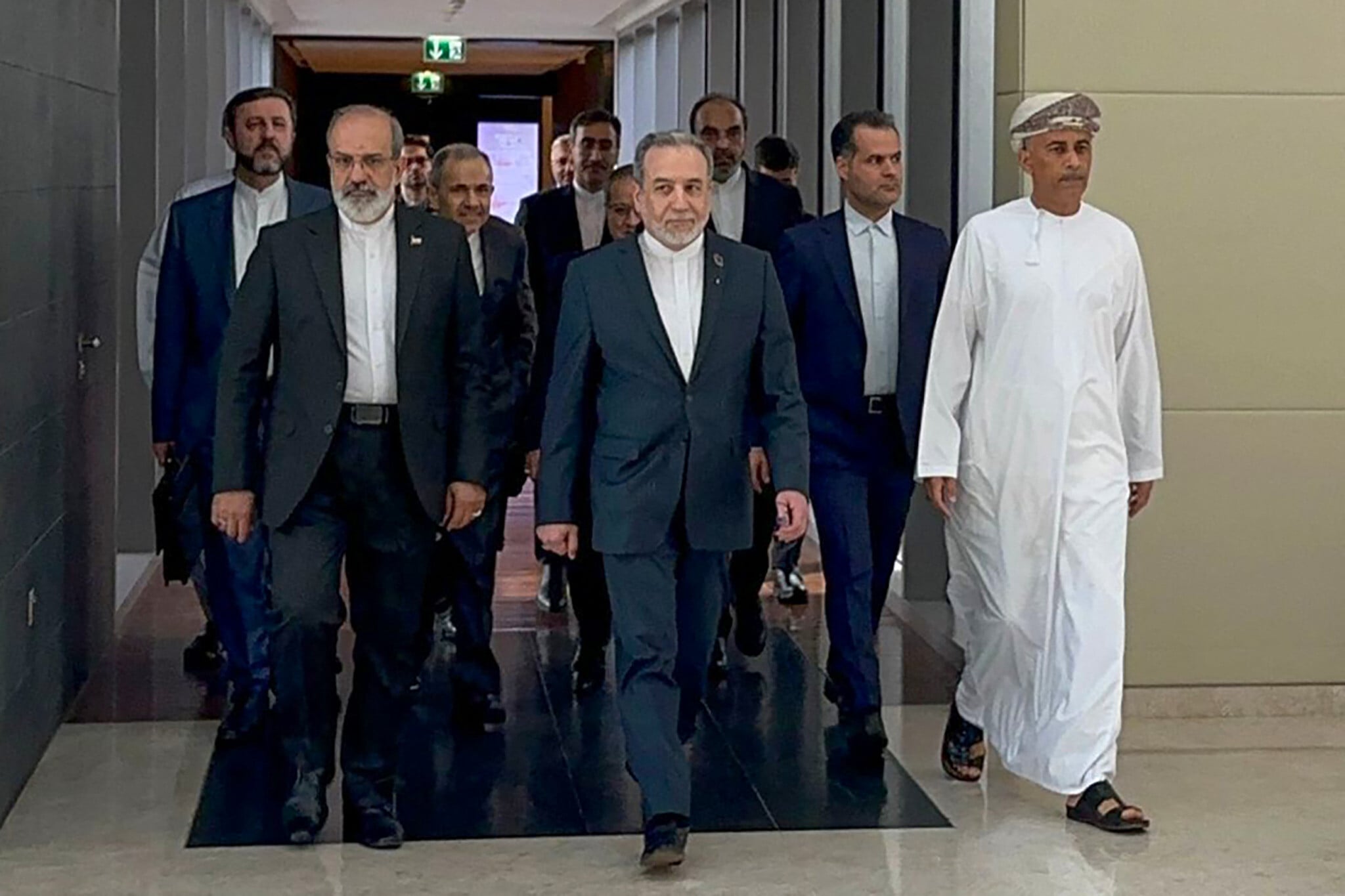
In this handout photo obtained from Iran’s foreign ministry delegation on February 6, 2026, Iran’s Foreign Minister Abbas Araghchi (C) arrives for a meeting in Muscat (IRAN FOREIGN MINISTRY / AFP)
Shortly after the talks wrapped up on Friday, the US announced new sanctions against shipping entities and vessels, aimed at curbing Iran’s oil exports.
But it was not clear if the move was linked to the outcome of the talks.
The new sanctions to curb Iran’s oil exports, including targeting 14 vessels, come with Trump “committed to driving down the Iranian regime’s illicit oil and petrochemical exports under the administration’s maximum pressure campaign,” State Department spokesman Tommy Pigott said in a statement.
Iran’s top diplomat offers a positive note
Araghchi offered cautious optimism as he spoke in a live interview from Muscat on Iranian state television.
He described Friday’s talks as taking place over multiple rounds and said that they were focused primarily on finding a framework for further negotiations.
“We will hold consultations with our capitals regarding the next steps, and the results will be conveyed to Oman’s foreign minister,” Araghchi said.
“The mistrust that has developed is a serious challenge facing the negotiations,” Araghchi said. “We must first address this issue, and then enter into the next level of negotiations.”
(FILE) A US Navy officer walks past fighter jets sitting on the flight deck of the Nimitz-class aircraft carrier USS Abraham Lincoln, during a media tour in Port Klang, on the outskirts of Kuala Lumpur, on November 26, 2024. (Fazry Ismail/Pool/AFP)
Omani Foreign Minister Badr al-Busaidi, who oversaw multiple rounds of negotiations before Israel launched its 12-day war on Iran in June targeting nuclear and military sites, called the talks “useful to clarify both the Iranian and American thinking and identify areas for possible progress.”
“We aim to reconvene in due course,” he said on X.
Still, Oman described the talks as a means to find “the requisite foundations for the resumption of both diplomatic and technical negotiations” rather than a step toward reaching a nuclear deal or easing tensions.
The talks had initially been expected to take place in Turkey in a format that would have included regional countries as well, and would have included topics like Tehran’s ballistic missile program and the brutal crackdown on protests — something Iran apparently rejected in favor of focusing only on its nuclear program.
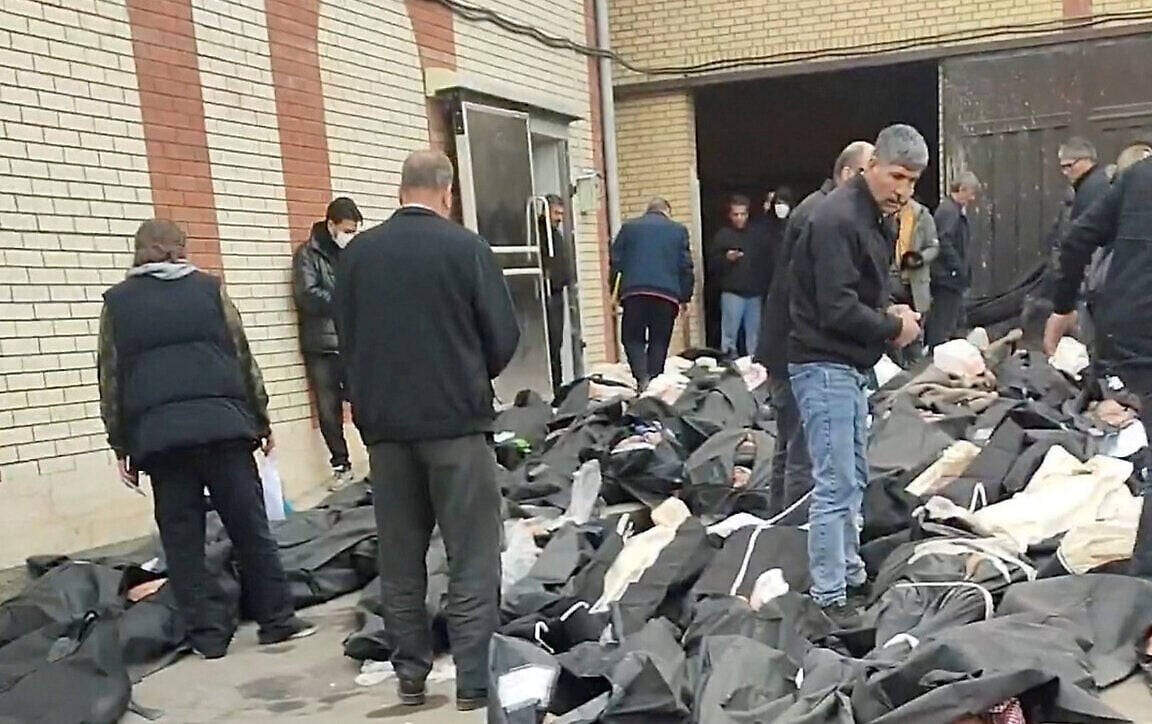
Bodies lie in body bags on the ground as people stand amid the scene outside Kahrizak Forensic Medical Centre in Tehran, Iran, in this screen capture from a video obtained from social media, January 11, 2026. (Social Media/via REUTERS)
Before the June war, Iran had been enriching uranium up to 60 percent purity, a short, technical step away from weapons-grade levels. The UN nuclear watchdog — International Atomic Energy Agency — has said Iran is the only country in the world to enrich to that level that wasn’t armed with the bomb.
Iran has been refusing requests by the IAEA to inspect the sites bombed in the June war, raising the concerns of nonproliferation experts. Even before that, Iran has restricted IAEA inspections since Trump’s decision in 2018 to unilaterally withdraw America from Iran’s 2015 nuclear deal with world powers.
Omani palace hosts talks
Friday’s talks saw in-person meetings at a palace near Muscat’s international airport, used by Oman in earlier Iran-US talks in 2025. Associated Press journalists saw Iranian officials first at the palace and later returning to their hotel before the Americans came separately.
It remains unclear just what terms Iran is willing to negotiate at the talks. Tehran has maintained that these talks will only be on its nuclear program.
However, the Al Jazeera satellite news network reported that diplomats from Egypt, Turkey and Qatar offered Iran a proposal in which Tehran would halt enrichment for three years, send its highly enriched uranium out of the country and pledge “not initiate the use of ballistic missiles.”
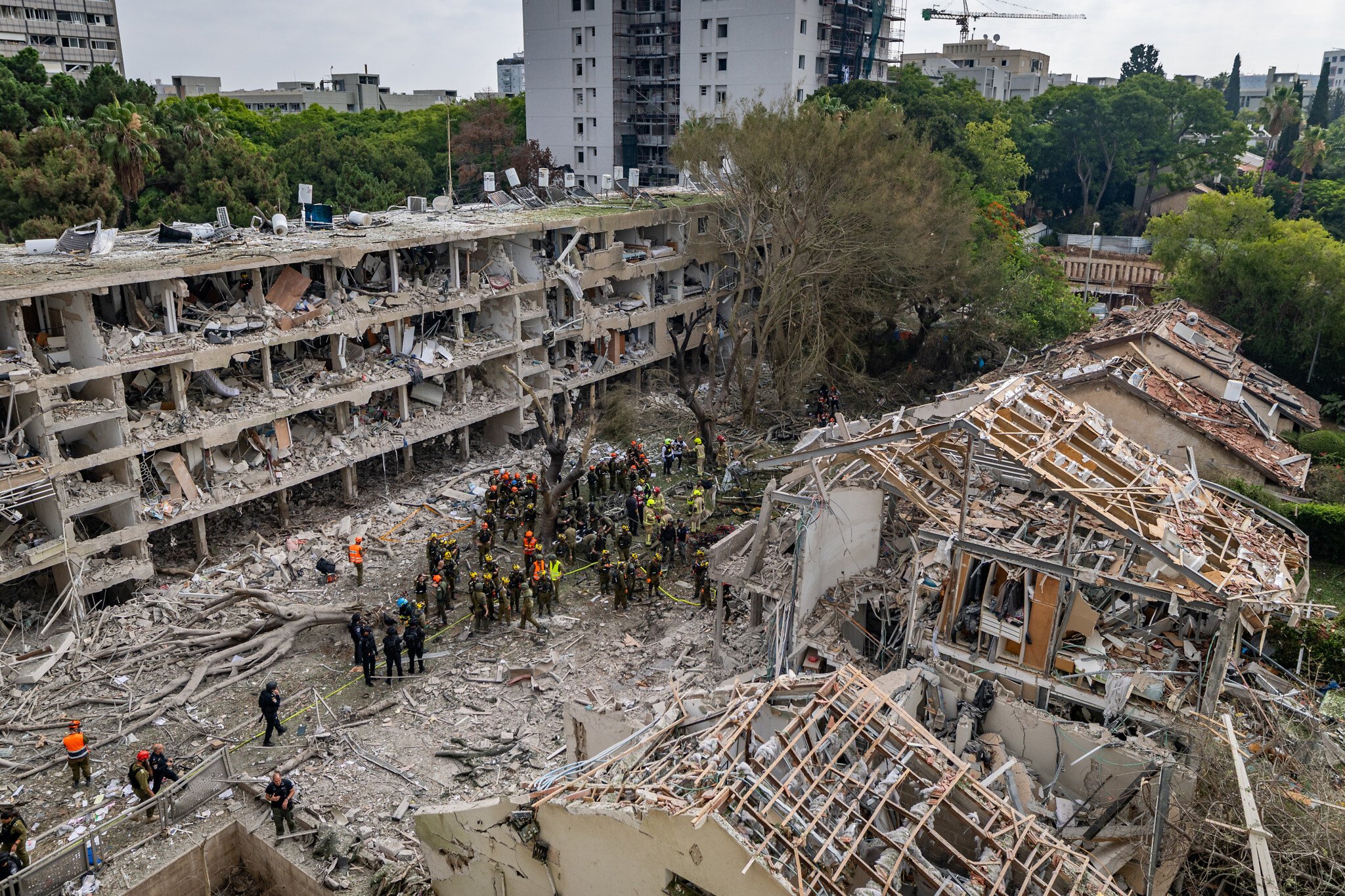
Israeli security and rescue forces at the scene where a ballistic missile fired from Iran hit and caused damage in Tel Aviv, June 22, 2025. (Chaim Goldberg/Flash90)
Russia had signaled it would take the uranium, but Iran has said ending the program or shipping out the uranium were nonstarters.
US Secretary of State Marco Rubio said on Wednesday that the talks needed to include Tehran’s nuclear program, its ballistic missiles, support for proxy terror groups around the region and “treatment of their own people.”
“I’m not sure you can reach a deal with these guys, but we’re going to try to find out,” Rubio said.
An Iranian official told Reuters the direct talks had not officially started, and that Iran’s demands had been conveyed to the US via Oman.
Iranian Foreign Minister Abbas Araghchi (L) meets with Omani Foreign Minister Badr bin Hamad al-Busaidi for indirect nuclear talks with the US in Muscat, Oman, February 6, 2026.(photo credit: VIA AMICHAI STEIN)
ByJAMES GENN,
REUTERS
FEBRUARY 6, 2026 08:51Updated: FEBRUARY 7, 2026 03:23
Iran and the United States started high-stakes negotiations via Omani mediation on Friday to try to overcome sharp differences over Tehran’s nuclear program, while a dispute over widening the agenda risked derailing diplomacy and setting off another Middle East war.
According to a regional diplomat briefed by Tehran, Iran has rejected US calls to halt uranium enrichment, but said it was willing to discuss the “level and purity” of enrichment or a regional consortium.
Oman’s Foreign Minister Badr bin Hamad al-Busaidi held separate meetings with Iranian Foreign Minister Abbas Araghchi and the Trump administration’s special envoy Steve Witkoff, who was accompanied by special advisor Jared Kushner. Previous Iran‑US talks have used a shuttle-diplomacy approach.
Milorad Dodik: ‘European leaders have no standards’
“Very serious talks mediating between Iran and the US in Muscat today,” said Busaidi after confirming the ending of the talks, and added, “It was useful to clarify both Iranian and American thinking and identify areas for possible progress. We aim to reconvene in due course, with the results to be considered carefully in Tehran and Washington.”
“The consultations focused on preparing the appropriate conditions for resuming diplomatic and technical negotiations, while emphasising their importance, in light of the parties’ determination to ensure their success in achieving sustainable security and stability,” Oman’s Foreign Ministry stated.
An Iranian official told Reuters the direct talks had not officially started, and that Iran’s demands had been conveyed to the US via Oman. The official said indirect negotiations “possibly” would begin after a meeting between the top US negotiator and Oman’s foreign minister.
(From L-R) Jared Kushner, Steve Witkoff, and Omani Foreign Minister Badr bin Hamad al-Busaidi meet in Oman for indirect Iran nuclear talks, February 6, 2026. (credit: VIA AMICHAI STEIN)
Iran, although it is in a position of weakness due to the US and Israel having destroyed its enrichment equipment during the war in June, said it was only willing to discuss its nuclear program, according to a report by the Wall Street Journal.
Additionally, protests earlier this year have posed the greatest challenge the regime has seen in its half-century of power, leaving its economy weakened and its currency at an all-time low.
Iran’s leaders showed little readiness to compromise on the core issue of uranium enrichment, threatening to trigger another war in the event of a US attack, according to the WSJ report. However, both sides showed willingness to continue working towards a diplomatic solution.
Araghchi claims Iran entering US talks ‘with open eyes, memory of 2025 talks’
These updates come after Iranian FM Abbas Araghchi commenting on X/Twitter that Iran “enters diplomacy with open eyes.”
Yet, the Islamic Republic has “a steady memory of the past year,” he noted, likely referring to how the last round of negotiations was disrupted by Israeli and American strikes on Iran in June.
“We engage in good faith and stand firm on our rights,” Araghchi claimed.
“Commitments need to be honored. Equal standing, mutual respect, and mutual interest are not rhetoric – they are a must and the pillars of a durable agreement,” the foreign minister affirmed.
Meanwhile, Ali Shamkhani, political advisor to Iran’s Supreme Leader Ayatollah Ali Khamenei, who participated in the 2025 talks and is likely participating in the renewed talks this weekend, commented that Araghchi is a “skilled, strategic and trustworthy negotiator at the highest levels of decision-making and military intelligence,” in a post on his own X page.
Iranian soldiers “will safeguard the nation’s interests” acting under Khamenei’s orders, Shamkhani added.
Notably, Shamkhani previously served as the naval chief of Iran’s military and of the Islamic Revolutionary Guard Corps.
His comments were posted in six languages: Farsi, Arabic, English, Hebrew, Russian, and Chinese.
Only acceptable negotiation result is Islamic Regime’s surrender to Iranian people, Crown Prince Pahlavi says
Additionally, Iranian Crown Prince Reza Pahlavi reacted to the renewed talks on Friday, commenting that the “only acceptable deal” is a deal where the “Islamic Republic surrenders to the people of Iran” in a post on his official X account.
“We are ready for such a deal, and it will bring peace to the region and the world,” Pahlavi affirmed, writing in both Farsi and English.
Araghchi denounces Germany’s Merz, E3 pressure on Iranian nuclear sanctions, Merz’s support for Israeli strikes last June
In a separate post, Araghchi reacted to Germany’s Chancellor Friedrich Merz, who called for an end to violence in Iran and noted that Berlin is prepared to increase pressure, engaging in talks aimed at bringing Iran’s nuclear program “to a swift end.”
Araghchi denounced Germany as an “engine of regression” that has fallen from its history as the “engine of Europe’s progress.”
He noted that the E3 (Germany, Britain, and France) pushed to reimpose UN sanctions on Iran, which the foreign minister believes “put an end to [E3s] role in nuclear negotiations,” alleging that Merz is now “begging” to be allowed to resume negotiations.
“We Iranians have unfortunately been faced with several other examples of Merz’s political naivety and distasteful character,” he accused.
He also commented that Merz “expressed exuberance” when Israel conducted airstrikes on Iran in June, and has “publicly daydreamed about Iran supposedly being weeks away from collapse.”
“Iran has always welcomed strong relations with Germany. It is, therefore, doubly regrettable that an individual such as Mr. Merz now represents Germany on the world stage. We hope that more mature and honourable political leadership will return to Germany,” Araghchi concluded.
Amichai Stein and Tobias Holcman contributed to this report.