What are the common interests between Iran and Russia, and which one of them is driving the direction of the relationship?

FOREIGN MINISTERS Sergei Lavrov of Russia (center) Mevlut Cavusoglu of Turkey (right) and Mohammad Zarif of Iran issued a declaration Tuesday on bringing an end to the Syrian civil war. (photo credit: REUTERS)
FOREIGN MINISTERS Sergei Lavrov of Russia (center) Mevlut Cavusoglu of Turkey (right) and Mohammad Zarif of Iran issued a declaration Tuesday on bringing an end to the Syrian civil war.
(photo credit: REUTERS)

Russia and Iran are cementing an alliance, claimed a report in The Wall Street Journal, turning heads on both Moscow and Tehran: “The two US rivals are accelerating efforts to build trade and military ties as they face international isolation.” State media has echoed the report.

One example is the Russian state media outlet TASS. This is clear because state media in Moscow doesn’t write in glowing terms about a foreign report unless it is happy to highlight said report.

“Russia and Iran are strengthening relations in light of Western sanctions against the two states, which worries Washington, columnist Benoit Faucon wrote in his column for the Wall Street Journal,” TASS said. The Journal report said that “Iran and Russia are forging tighter ties than ever, as their international isolation drives the two staunch American foes toward more trade and military cooperation, alarming Washington.”

“Russia is a country that is Iran’s priority for developing relations.”

Iranian ambassador to Russia

Aspirations for a new world order

Russia has long wanted to upturn the US-led global world order that emerged after the Cold War. Russia’s President, China’s leader and countries such as Iran and Turkey want to see the US “unipolar” world destroyed and they want a new authoritarian world order to emerge. The Russian media highlighted aspects of the new alliance, including trade.

Iran’s Fars News, which is close to the IRGC, also agreed with this assessment, reprinting excerpts from the article. Iran’s report repeated key aspects, such as the fact that Russia and Iran have both been sanctioned by the US.

Iran displays parts of S-300 air defense missile system imported from Russia in parade on ''National Army Day.'' (credit: FARS)Iran displays parts of S-300 air defense missile system imported from Russia in parade on ”National Army Day.” (credit: FARS)

Iran’s report highlighted comments by its own ambassador to Moscow. The ambassador has discussed growing bilateral trade and cooperation. “Russia is a country that is Iran’s priority for developing relations.”

Iran has emphasized that the relationship between Iran and Russia is growing based on the common interests of both countries and Iran says this has little to do with US policy.

Of course, Iran wants to pretend that US policy doesn’t affect Tehran and that Iran is able to continue to do whatever it wants, regardless of US sanctions.

Iran and Russia’s shared interests

Iran believes that Russia and Iran share many common interests, such as those in Syria, and their ties are growing. A recent visit by Russia’s President to Iran helped cement the ties. In addition, there are talks of possible Iranian cooperation with Russia on drone technology.

Overall the perception is clear that both Moscow and Tehran want the region to perceive their ties as growing and they want to mock Washington’s actions. They want to show that they can avoid sanctions and that US policy will only backfire for Washington in this regard.
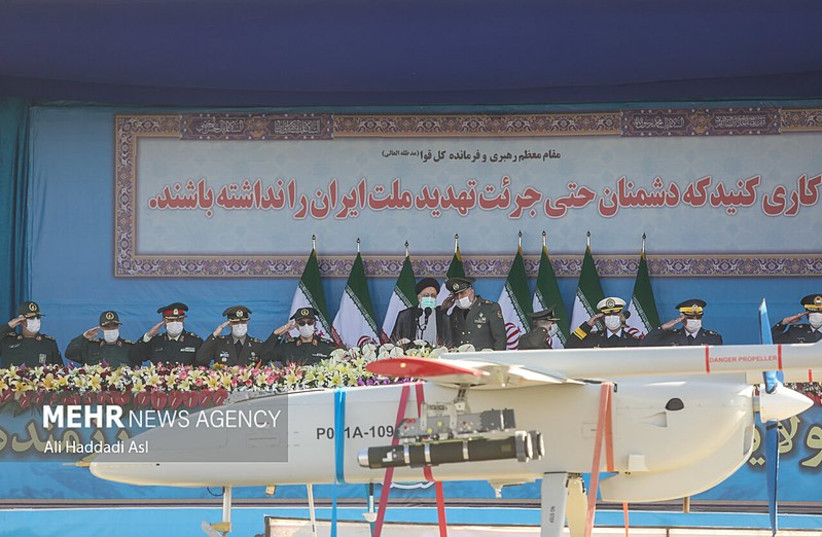
 This photo was taken at the Islamic Republic of Iran Army Day 2022 parade in Tehran. (credit: Wikimedia Commons)This photo was taken at the Islamic Republic of Iran Army Day 2022 parade in Tehran. (credit: Wikimedia Commons)

It’s not always clear however who is playing the leading role in the Iran-Russia relationship. Iran has been trying to pivot toward closer ties with China in the last several years. Russia wants to use Iran in regard to a new Iran deal between Iran and the West. Russia hopes to benefit from sanctions relief that might be provided to Iran. That makes Russia rely more on Iran than in the past. That means that while Russia is ostensibly the stronger partner, it increasingly needs Iran.

The Syrian job

This has major implications for the region as well. A stronger Iran with a stronger hand in regards to ties with Moscow means Iran can dictate more policies in Syria. If Iran can ask for more concessions from Moscow in terms of using Syria to threaten US forces and Israel this could be a recipe for instability and chaos. Iran of course argues that its ties to Moscow bring “stability” to Syria. But Moscow and Tehran have not shared the same goals in the past in Syria. Russia wants a strong and secure Syrian regime. Iran wants to hollow out Syria and use it as a platform to transfer weapons and threaten Israel. While both Iran and Russia want the US to leave Syria, they don’t agree on how to accomplish this goal. Iran has been threatening US forces in Syria in recent months, resulting in two rounds of US airstrikes last week.

There are other considerations as well. The more that Iran and Russia cooperate, and the more both of them need China, the less Russia-Israel ties may remain as amicable as in the past. If Iran secures a new deal with the West it could get needed sanctions relief and that could empower its role in Iraq, Syria, Lebanon and Yemen; potentially threatening Israel.

With Russia distracted by the Ukraine war — and angered by close ties between the US, Israel and the West — Russia could try to let Iran conduct more operations in Syria which threaten Israel.

In addition, there could be more Russia-Iran defense cooperation which could impact drone sales and also Central Asia. This could enable Iran to increase its defense abilities in missiles, space and drones. All of this could lead to more Iranian threats either from Syria, Lebanon, Yemen or other places.


Spymaster called emerging agreement ‘a strategic disaster’ in remarks that were not coordinated with prime minister and differed from official talking points, report says

Mossad chief David Barnea meets Prime Minister Yair Lapid in Jerusalem, August 25, 2022 (PMO)

Mossad chief David Barnea meets Prime Minister Yair Lapid in Jerusalem, August 25, 2022 (PMO)

Prime Minister Yair Lapid was surprised by Mossad chief David Barnea’s harsh warnings about an emerging Iran nuclear deal between the Islamic Republic and world powers, according to Friday reports.

In comments to reporters on Thursday, Barnea was quoted calling the nuclear deal being negotiated “a strategic disaster” for Israel and saying the United States “is rushing into an accord that is ultimately based on lies.”

The message was more strident and seen as more critical of the US position than other recent statements from Jerusalem.

Lapid had met with Barnea between the Mossad chief’s briefing to reporters and the publication of the remarks, catching Lapid off guard, Channel 12 news said.

Barnea had briefed reporters at 11 a.m. under the condition that his comments not be published until 8 p.m. Barnea and Lapid held a pre-scheduled meeting during that gap in time, which was announced by the prime minister’s office.

Lapid was aware of Barnea’s media briefing, but they had not coordinated the comments, and Barnea’s statements differed from talking points circulated by the prime minister’s office several days ago and from the message Lapid has been attempting to convey, the Channel 12 report said.

Shortly after Barnea’s comments were published, Lapid called the Mossad chief, telling him he had gone off script in his criticism of the US and asking for a clarification. It wasn’t clear if Lapid had directly reprimanded Barnea, reports said.

It also appeared that one or more Hebrew media outlets quoted Barnea inaccurately, as though he had directly criticized the Biden administration’s handling of the Iran issue, when he had not done so, Channel 12 also said.

Barnea said Thursday that the emerging Iran deal was “very bad for Israel” and based on lies, citing Iran’s claim that its nuclear activities are peaceful in nature.

Barnea added that an accord appeared to be inevitable “in light of the needs of the US and Iran.” Washington is seeking to prevent Tehran from acquiring the capability to build a nuclear bomb, while the Islamic Republic is seeking relief from crippling financial and economic sanctions.

According to Barnea, the deal, due to its sunset clauses, “gives Iran license to amass the required nuclear material for a bomb” in a few years, and will also provide Tehran billions of dollars in currently frozen money, increasing the danger Iran poses throughout the region via its proxies.

Lapid’s recent statements on the deal have been less grating. He told reporters on Thursday that Israel’s efforts to influence the outcome of negotiations had borne fruit, but that the accord was still “a bad deal” for Israel.

The prime minister pointed both to the trip to Washington this week by national security adviser Eyal Hulata for “very intensive discussions” on the issue and to Defense Minister Benny Gantz’s visit to the US, which began on Thursday.

Defense Minister Benny Gantz meets with US national security adviser Jake Sullivan in Washington DC, August 26, 2022. (Yossi Mai/Defense Ministry)

Gantz told US President Joe Biden’s national security adviser Jake Sullivan on Friday that Israel “needs” the US to have a credible military option against Iran, a senior Israeli official said to reporters Friday.

According to the defense official, Israel received “good hints” with regard to the US having a working offensive plan against Iran. He did not elaborate, but said it that would potentially make Tehran more flexible during negotiations.

The official said the meeting between Gantz and Sullivan in Washington was “intimate” and “positive.” He said Gantz emphasized Israel’s objection to the potential deal.

Channel 12 also reported Friday that the Mossad has told Lapid a renewed Iran deal will likely be signed in the coming days or weeks. The Israel Defense Forces and Mossad are preparing a series of actions against Iran in response, including targeting its nuclear program, terror activities and weapons smuggling.

On Wednesday, Iran announced that it had received the US’s response to its proposal for a return to the so-called Joint Comprehensive Plan of Action, or JCPOA, which then-US president Donald Trump pulled out of in 2018.

White House National Security Council spokesman John Kirby declined to characterize the administration’s response to the latest proposal, but noted that “we are closer now than we were even just a couple of weeks ago because Iran made a decision to make some concessions.”

Israel has long opposed the deal, arguing that Iran is seeking to build a nuclear bomb, and has published intelligence it says reveals the Iranian weapons program. Iran has denied any nefarious intentions and claims its program is designed for peaceful purposes, though it has recently been enriching uranium to levels that international leaders say have no civil use.


UNSC members condemn IDF raids on Palestinian NGO offices

A majority of the United Nations Security Council members condemned the IDF raid last week.

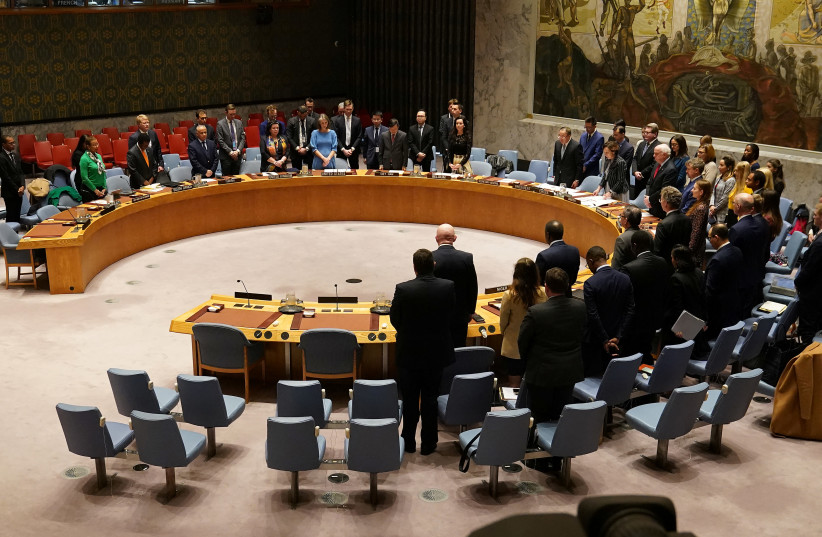
Members of the United Nations Security Council observe a moment of silence at the beginning of a meeting about Afghanistan at United Nations Headquarters in the Manhattan borough of New York City, New York, U.S., March 10, 2020 (photo credit: REUTERS/CARLO ALLEGRI)
Members of the United Nations Security Council observe a moment of silence at the beginning of a meeting about Afghanistan at United Nations Headquarters in the Manhattan borough of New York City, New York, U.S., March 10, 2020
(photo credit: REUTERS/CARLO ALLEGRI)

A majority of United Nations Security Council members condemned the IDF raid last week on seven NGO offices, noting that Israel had not provided information to back up its claim that these were terrorist groups.

“Norway has clearly stated that the information Israel has provided does not sufficiently justify designating the organizations as ‘terror organizations,’” Norwegian Deputy Ambassador Trine Heimerback told the UNSC on Thursday.

“We will continue our support for Palestinian civil society,” she added, adding, “We are troubled by subsequent reports of threats against the employees of these organizations and their families. Such actions are unacceptable.”

France, the United Kingdom and Ireland issued similar statements at the 15-member UNSC’s monthly meeting on the Israeli-Palestinian conflict. Other UNSC member states such as Albania, Mexico, China, Ghana and Gabon also spoke out. France and Ireland also signed onto a statement issued by nine European countries against the raid earlier this week.

US Deputy Ambassador Richard Mills took a softer tone at the UNSC, explaining that this country “values the role that independent NGOs play in monitoring human rights violations and abuses in the West Bank and Gaza, in Israel, and elsewhere.”


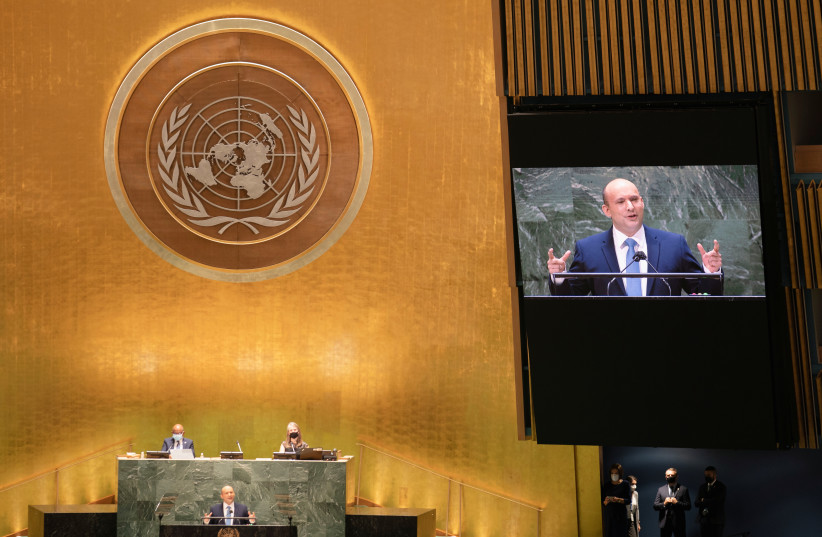
Prime Minister Naftali Bennett addresses the 76th Session of the United Nations General Assembly, at the UN headquarters in New York, US, September 27, 2021 (credit: JOHN MINCHILLO/POOL)Prime Minister Naftali Bennett addresses the 76th Session of the United Nations General Assembly, at the UN headquarters in New York, US, September 27, 2021 (credit: JOHN MINCHILLO/POOL)

The US “firmly believes they must be able to continue this important work. Respect for human rights and fundamental freedoms, and a strong civil society, are critically important to responsible, responsive and democratic governance,” Mills added.

US Deputy Secretary of State Wendy R. Sherman raised the matter with Israeli National Security Adviser Eyal Hulata when they met on Wednesday.

Palestinian Authority Ambassador Riyad Mansour told reporters in New York after the meeting that this issue “was a big test” for Western countries that support civil society.

US Special Coordinator for the Middle East Peace Process Tor Wennesland “described for the UNSC how On 18 August, Israeli forces ordered the closure of the offices of seven organizations, including all six NGOs designated as terrorist organizations in [October] 2021, and searched their offices in Ramallah.”

“Equipment was confiscated, in some cases destroyed, and confidential files were seized. Israeli authorities also summoned the directors of three of these organizations for questioning,” Wennesland said.

The arguments made

Israel has argued that the NGOs are affiliated with the Popular Front for the Liberation of Palestine, which the US and the EU recognize as a terror organization. However, Israel’s allies have argued that when it comes to the six NGO designated as terrorist groups in 2021, Israeli has not given sufficient proof to back up its claim.

In Ramallah on Thursday, EU Representative Sven Kühn von Burgsdorff made his second visit to the Al-Haq human rights organization in Ramallah since the raid.

The EU Ambassador to Israel along with representatives of 18 European countries met with the Foreign Ministry in Jerusalem on Wednesday to express their concern.

At issue for the international community are six of the NGOs. These are: Al-Haq, Addameer, the Bisan Center, Defense for Children International-Palestine, the Union of Agricultural Work Committees and the Union of Palestinian Women’s Committees.