“People are extremely angry,” a former official said, adding a US attack could lead Iranians to rise up again. “The wall of fear has collapsed. There is no fear left.”

Iranian demonstrators gather in a street during a protest over the collapse of the currency's value, in Tehran, Iran, January 8, 2026.
Iranian demonstrators gather in a street during a protest over the collapse of the currency’s value, in Tehran, Iran, January 8, 2026.(photo credit: STRINGER/WANA (WEST ASIA NEWS AGENCY) VIA REUTERS) ByREUTERS, JAMES GENN FEBRUARY 2, 2026 20:04Updated: FEBRUARY 3, 2026 10:11 Iran’s leadership is increasingly worried a US strike could break its grip on power by driving an already enraged public back onto the streets, following a bloody crackdown on anti-government protests, according to six current and former officials. In high-level meetings, officials told Supreme Leader Ayatollah Ali Khamenei that public anger over last month’s crackdown, the bloodiest since the 1979 Islamic Revolution, has reached a point where fear is no longer a deterrent, four current officials briefed on the discussions said. The officials said Khamenei was told that many Iranians were prepared to confront security forces again and that external pressure, such as a limited US strike, could embolden them and inflict irreparable damage to the political establishment.Unmute       One of the officials told Reuters that Iran’s enemies were seeking more protests so as to bring the Islamic Republic to an end, and “unfortunately,” there would be more violence if an uprising took place. “An attack combined with demonstrations by angry people could lead to a collapse (of the ruling system). That is the main concern among the top officials, and that is what our enemies want,” said the official, who, like the other officials contacted for this story, declined to be named due to the sensitivity of the matter.
Iran's Supreme Leader, Ayatollah Ali Khamenei looks on during a meeting at the IRGC Aerospace Force achievements exhibition in Tehran, Iran November 19, 2023. (credit: Office of the Iranian Supreme Leader/WANA
Iran’s Supreme Leader, Ayatollah Ali Khamenei looks on during a meeting at the IRGC Aerospace Force achievements exhibition in Tehran, Iran November 19, 2023. (credit: Office of the Iranian Supreme Leader/WANA (West Asia News Agency) via REUTERS)
The reported remarks are significant because they suggest private misgivings inside the leadership at odds with Tehran’s defiant public stance towards the protesters and the US. The sources declined to say how Khamenei responded. Iran’s Foreign Ministry did not immediately respond to a Reuters request for comment on this account of the meetings. Multiple sources told Reuters last week that US President Donald Trump is weighing options against Iran that include targeted strikes on security forces and leaders to inspire protesters, even as Israeli and Arab officials said air power alone would not topple the clerical rulers.

People are extremely angry, says former official

Any such uprising in the wake of a US strike would stand in contrast to the Iranians’ response to Israeli and US bombing attacks on Iran’s nuclear program back in June, which was not followed by anti-government demonstrations. But a former senior moderate official said the situation had changed since the crackdown in early January. “People are extremely angry,” he said, adding a US attack could lead Iranians to rise up again. “The wall of fear has collapsed. There is no fear left.” Tensions between Tehran and Washington are running high. The arrival of a US aircraft carrier and supporting warships in the Middle East has expanded Trump’s ability to take military action if he so wishes, after repeatedly threatening intervention over Iran’s bloody crackdown.

Regime must make major reforms or face wider protests, former president Rouhani states

The Iranian Regime needs to make major reforms, or it will face more protests, former president Hassan Rouhani was cited by The Telegraph as saying. “People have demands and we must respond to them with a major reform, not a minor reform,” Rouhani said. “If you make minor changes, God forbid, we might face problems again in two or three months, or even in 10 days,” he added. Nasrollah Pejmanfar, a hardline member of the Iranian parliament, denounced Rouhani’s comments, stating that “Today is the time for major reform, which is the arrest and execution of Rouhani.”

‘The game is over,’ says former prime minister

Several opposition figures, who were part of the establishment before falling out with it, have warned the leadership that “boiling public anger” could result in a collapse of the Islamic system. “The river of warm blood that was spilled on the cold month of January will not stop boiling until it changes the course of history,” former prime minister Mir-Hossein Mousavi, who has been under house arrest without trial since 2011, said in a statement published by the pro-reform Kalameh website. “In what language should people say they do not want this system and do not believe your lies? Enough is enough. The game is over,” Mousavi added in the statement.

Dire situation result of Khamenei’s destructive domestic, international interventions, policies, former parliament speaker Karroubi says

Iran’s current situation is the “direct result of destructive domestic and international interventions and policies” of Khamenei, former parliament speaker and reformist cleric Mehdi Karroubi was cited by The Telegraph as saying. The “costly and fruitless nuclear project and the heavy consequences of sanctions over the past two decades on the country and people” were examples of failed policies, according to Karroubi. “The depth of the tragedy [of protester deaths and injuries] is so deep that no excuse or justification can be accepted for this horrific and merciless massacre and disrespect for the bodies of victims,” he added. The only way out of the crisis while maintaining the peace is to “recognize the right of the people to self-determination in a free referendum,” he stated.

Security forces destroying demonstrations with lethal force

During the early January protests, witnesses and rights groups said, security forces crushed demonstrations with lethal force, leaving thousands killed and many wounded. Tehran blamed the violence on “armed terrorists” linked to Israel and the US. Trump stopped short of carrying out threats to intervene, but he has since demanded that Iran make nuclear concessions. Both Tehran and Washington have signaled readiness to revive diplomacy over a long-running nuclear dispute.

Simmering anger, ‘danger of bloodshed’

Analysts and insiders say that while the streets are quiet for now, deep-seated grievances have not gone away.
Iran's Supreme Leader Ayatollah Ali Khamenei waves during a public rally in Mashhad, Iran March 21, 2023. (credit: Office of the Iranian Supreme Leader/WANA
Iran’s Supreme Leader Ayatollah Ali Khamenei waves during a public rally in Mashhad, Iran March 21, 2023. (credit: Office of the Iranian Supreme Leader/WANA (West Asia News Agency)/Handout via REUTERS)
Public frustration has been simmering over economic decline, political repression, a widening gulf between rich and poor, and entrenched corruption that leaves many Iranians feeling trapped in a system offering neither relief nor a path forward. “This may not be the end, but it is no longer just the beginning,” said Hossein Rassam, a London-based analyst. If protests resume during mounting foreign pressure and security forces respond with force, the six current and former officials said they fear demonstrators would be bolder than in previous unrest, emboldened by experience and driven by a sense that they have little left to lose. One of the officials told Reuters that while people were angrier than before, the establishment would use harsher methods against protesters if it were under US attack. He said the result would be a bloodbath. Ordinary Iranians contacted by Reuters said they expected Iran’s rulers to crack down hard on any further protests. A Tehran resident whose 15-year-old son was killed in the protests on January 9 said the demonstrators had merely sought a normal life, and had been answered “with bullets.” “If America attacks, I will go back to the streets to take revenge for my son and the children this regime killed.”

Iran’s Khamenei compares protesters to Islamic State

Amid the ongoing protests, Khamenei on Monday compared Iranian protesters to Islamic State terrorists in a post on X/Twitter. In a post, the supreme leader claimed that “seditionists in Iran burned people alive. They beheaded people. They committed the very same atrocities that Islamic State committed.” Khamenei, who refers to the protests as “sedition,” stated that a defining feature of the protests was violence and went on to claim that the protests in Iran were orchestrated by the United States and by “Zionists.”


Tehran rejects demands for curbs on its ballistic missiles, support for terror groups; PM meets with Zamir after IDF chief’s DC visit; US says missile destroyer has left Eilat

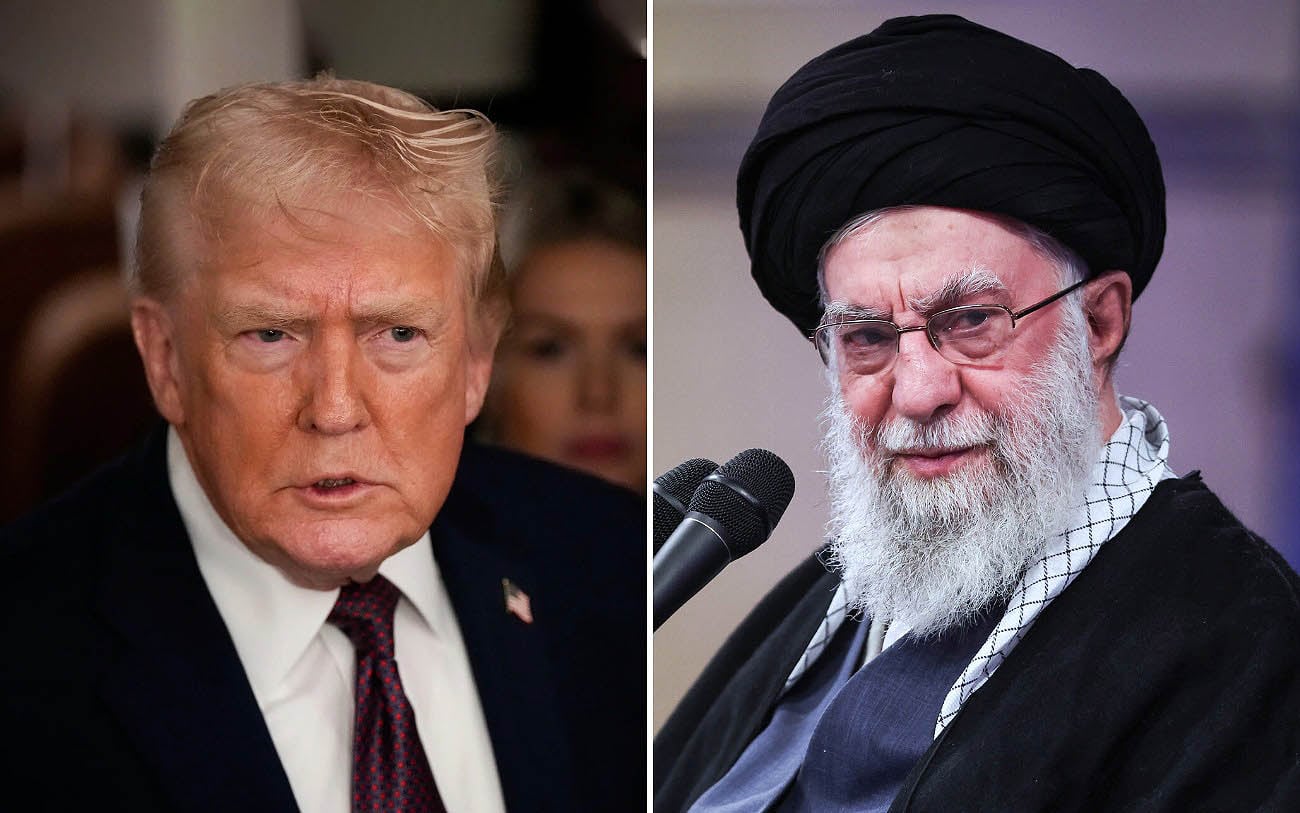
US President Donald Trump (left) speaks to reporters while in flight on Air Force One to Joint Base Andrews, Maryland, on January 11, 2026. (AP/Julia Demaree Nikhinson); Iranian supreme leader, Ayatollah Ali Khamenei speaks in a meeting, in Tehran, Iran, January 3, 2026. (Office of the Iranian Supreme Leader via AP)

US President Donald Trump (left) speaks to reporters while in flight on Air Force One to Joint Base Andrews, Maryland, on January 11, 2026. (AP/Julia Demaree Nikhinson); Iranian supreme leader, Ayatollah Ali Khamenei speaks in a meeting, in Tehran, Iran, January 3, 2026. (Office of the Iranian Supreme Leader via AP)

The US and Iran have reportedly informed each other that they are ready to conduct negotiations on an agreement to end tensions between them, as Prime Minister Benjamin Netanyahu held top-level meetings on the situation.

A senior American official told the Axios news site on Sunday that US President Donald Trump’s administration has made it clear it is open to holding such talks as soon as this week.

According to the report, Turkey, Egypt and Qatar are working to organize a meeting this week between White House special envoy Steve Witkoff and Iranian officials in Ankara, Turkey’s capital.

US officials told the news site that Trump’s comments calling for a deal are genuine and not a trick ahead of a military operation. The US has built up its forces in the Middle East recently, which Trump characterized as a “massive armada.”

Amid last year’s 12-day war between Israel and Iran — which began with a surprise Israeli strike — an Israeli official revealed that the messaging issued by the US ahead of the attack, seemingly downplaying the probability of a strike, had been part of a deliberate deception campaign.

“Why wouldn’t he say that? Of course he is going to say that. We have the biggest, most powerful ships in the world over there, very close — a couple of days [away]…. Hopefully we’ll make a deal. If we don’t make a deal, we’ll find out whether or not he was right,” Trump told reporters.

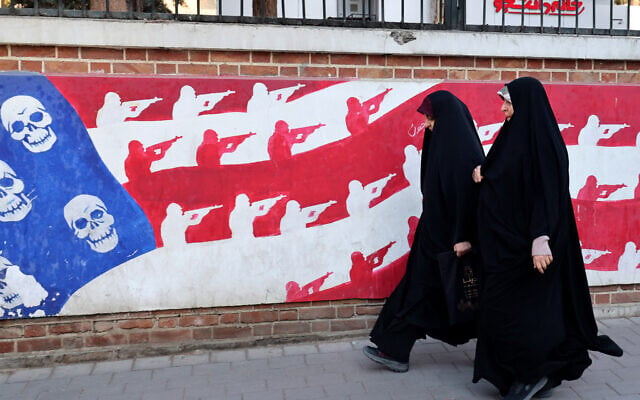
Women walk past a mural painted on the outer walls of the former US embassy in Tehran on February 1, 2026 (ATTA KENARE / AFP)

Speaking on CNN on Sunday, Iranian Foreign Minister Abbas Araghchi said he believes his country can reach an agreement with the United States on his country’s nuclear program.

Tehran’s top diplomat said he is “confident that we can achieve a deal” on the program, which the US and Israel say aims to build nuclear weapons. Iran has consistently denied seeking to acquire nuclear weapons. However, it enriched uranium to levels that have no peaceful application, obstructed international inspectors from checking its nuclear facilities, and expanded its ballistic missile capabilities.

“Unfortunately, we have lost our trust [in] the US as a negotiating partner,” Araghchi told the US network, while still touting “fruitful” talks being mediated by mutual partners.

Araghchi stressed that talks must be focused on Iran’s nuclear program and not on curbing its ballistic missile program or support for proxy terror groups.

“Let’s not talk about impossible things,” he said, in response to a question on those matters by CNN. “And not lose the opportunity to achieve a fair and equitable deal to ensure no nuclear weapons. That as I said, is achievable even in a short period of time.”

Israel targeted Iran’s ballistic missile program during last year’s war, and has debilitated several of the terror groups funded by Tehran that seek Israel’s destruction. Trump has also warned Iran not to expand its ballistic missile stockpile.

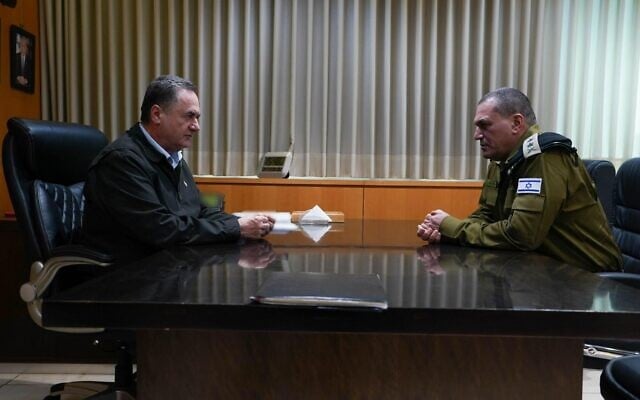
Defense Minister Israel Katz  (left) meets with IDF Chief of Staff Lt. Gen. Eyal Zamir at his office in Tel Aviv, February 1, 2026. (Ariel Hermoni/Defense Ministry)

Meanwhile, Netanyahu reportedly met Sunday evening with IDF Chief Lt. Gen. Eyal Zamir after Zamir returned from high-level meetings in Washington with US officials to discuss Iran.

Defense Minister Israel Katz and Mossad chief David Barnea were also reportedly part of the meeting. Katz and Zamir also met earlier Sunday to discuss the latter’s time in Washington. According to Hebrew media reports, the sense in the discussions was that the US is closer to attacking Iran than it was a week ago, although it is unclear what the scope of such an attack would be.

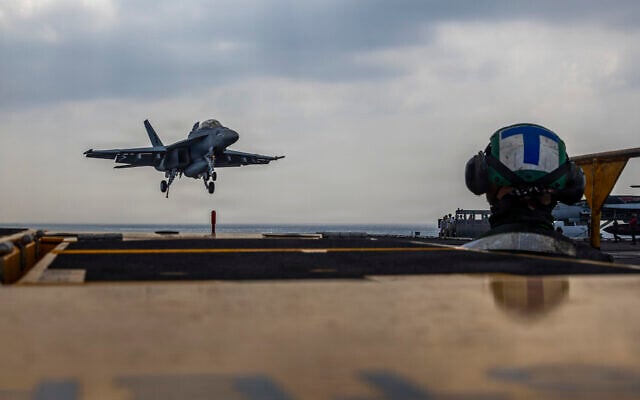
After sending a collection of military assets to the Middle East in recent weeks, the US Navy said Sunday that the American missile destroyer that had anchored at Israel’s Red Sea port city of Eilat on Friday has now departed.

USS Delbert D. Black departed Eilat following a “scheduled port visit,” said a statement from the US Naval Forces Central Command (NAVCENT) — the naval component of the US Central Command (CENTCOM).

“This port visit demonstrates US and Israel’s strong maritime partnership and shared commitment to advancing security and prosperity in the Mediterranean Sea, Gulf of Aqaba, and the Red Sea,” NAVCENT said.

According to the Israeli military, the destroyer’s arrival was pre-planned and part of the ongoing cooperation between the IDF and the US military.

A C-17 Globemaster III aircraft takes off during a readiness exercise within the US Central Command area of responsibility, January 22, 2026. (US Air Force photo/Tech. Sgt. Justin Norton)

Despite the apparent momentum toward negotiations, anxiety about a possible return to war persists.

Former IDF military intelligence chief Amos Yadlin said on Channel 12 on Sunday that while “Western logic” would suggest Iran will not try to preempt a possible American attack, and initiate war with the US and Israel, “jihadi logic, extremist religious logic” could be different. He said that the IDF should be thoroughly prepared “as though there is going to be a surprise.”

He said he hopes the IDF has an operational model in place, predicated on the idea “that the Iranians may do something that does not seem logical.”

Yadlin also noted that in recent regional conflicts, those who struck first have enjoyed a strong strategic advantage. He highlighted that the Iranian regime is seeking revenge against Israel for last June’s war.

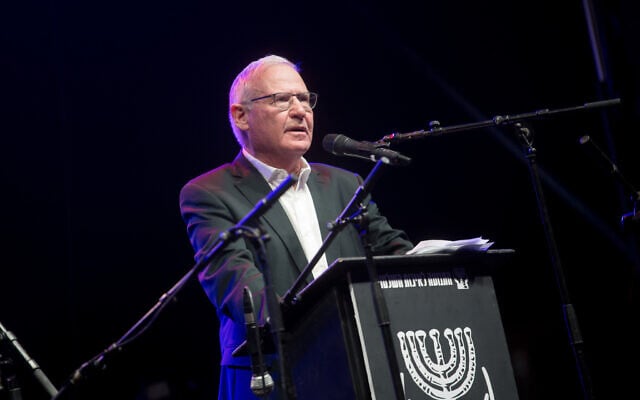
Director General of the National Security Studies (INSS) Amos Yadlin speaks at a protest against then-Israeli prime minister Benjamin Netanyahu at Rabin Square in Tel Aviv on November 14, 2020. (Miriam Alster/ Flash90)

Yadlin, who now heads the non-profit MIND Israel, a national security consultancy, said the IDF is working very closely with the US military in sharing the lessons it learned in past rounds of conflict with Iran, especially last year’s war.

The IDF took out more than 200 Iranian missile launchers, a success of profound interest to the Americans, he said.

He said Israel and the US will need to determine effective deconfliction mechanisms in the event of war. And he stressed the importance of mutual trust and confidence between Zamir and US Gen. Dan Caine, chairman of the US Joint Chiefs of Staff.

Jacob Magid and Emanuel Fabian contributed to this report.


Stop chasing after the Saudis to join the Abraham Accords

Now that they’ve stopped worrying about an Iranian bomb, Riyadh is making clear that it will never recognize the State of Israel. It was never going to be worth the price anyway.

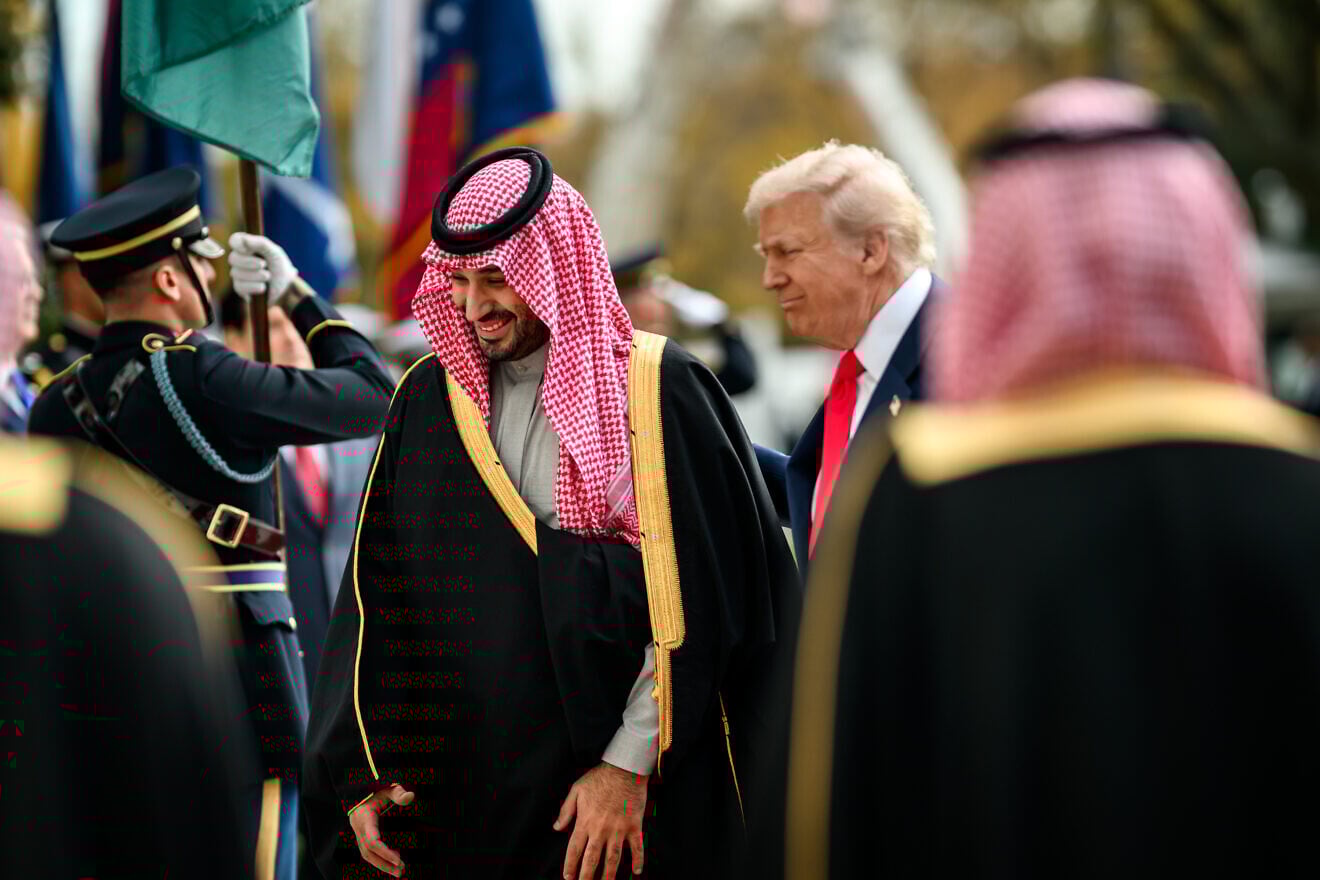
U.S. President Donald Trump welcomes Crown Prince and Prime Minister Mohammed bin Salman Al Saud of Saudi Arabia at the South Portico of the White House, Nov. 18, 2025. Credit: Daniel Torok/White House.

U.S. President Donald Trump welcomes Crown Prince and Prime Minister Mohammed bin Salman Al Saud of Saudi Arabia at the South Portico of the White House, Nov. 18, 2025. Credit: Daniel Torok/White House.
Jonathan S. Tobin
(Jan. 30, 2026 / JNS)

The 12-day air campaign against Iran that was carried out by Israel last June, and then eventually joined by the United States, changed the strategic equation in the Middle East. But as much as that is an enormous benefit to both Jerusalem and Washington, there was one consequence to this victory that will discourage many observers of the region.

The tacit alliance between Israel and Saudi Arabia against a common enemy in Tehran was the basis for the success of the first Trump administration’s ability to make the Abraham Accords a reality in 2020. It also raised the possibility of the entire Arab and Muslim world coming to terms with the permanence of Israel, as well as the possibility that the guardian of Islamic holy places in Mecca and Medina might embrace formal recognition of Israel.

The end of a threat

But after a week of war, the threat of Iran building a nuclear bomb in the near future no longer hangs over the Saudis. The crippling of Tehran’s nuclear facilities—and stripping it of its air defense and much of its missile arsenal—proved an enormous victory for Israel and America. It largely removed the prospect of an existential Iranian nuclear threat that had been hanging over the Jewish state for the last 20 years.

But it has now removed Riyadh’s prime motivation for its tilt toward Jerusalem.

As insider reports have increasingly made clear, Saudi Crown Prince Mohammed bin Salman, the de facto ruler of the country, has decided to alter his country’s course. Instead of continuing to move closer to Jerusalem and, as so many in the United States and Israel hoped and even expected, joining the Abraham Accords themselves, the Saudis seem to be eyeing a different sort of regional realignment, in which they will now link up with other Islamist countries like Qatar and Turkey. They have even reportedly been advocating for the United States not to attack Iran so as to help the protest movement succeed in overthrowing the Islamist theocrats that have despotically ruled since the Iranian Revolution in 1979. They’ve also refused to let Washington use their territory for potential attacks on Iran.

On top of that, the Saudis are also moving away from their efforts to erase antisemitism from their education system and public discourse, as they had been doing as late as 2024. Instead, the regime’s state-run media has again turned to spewing out anti-Israel venom, in addition to the sort of open hatred of Jews that was routine before Riyadh’s turn to Israel and the West. Among other monitors of the situation, the Anti-Defamation League is sounding the alarm about prominent Saudi voices—closely tied to the royal family and the government—promoting antisemitic conspiracy theories and trashing the Abraham Accords.

This is very disappointing for both Washington and Jerusalem. President Donald Trump has invested a lot of effort in trying to undo the damage to U.S.-Saudi relations done by the Obama and Biden administrations, which both sought to downgrade relations with Israel and Saudi Arabia in order to effect a rapprochement with Iran. It’s equally frustrating for Israeli Prime Minister Benjamin Netanyahu, who saw the expansion of the Abraham Accords to include the Saudis as his prime foreign-policy objective.

A beguiling prospect

To be fair, the idea of an Israeli embassy in Riyadh—and the Saudis following the lead of the United Arab Emirates in becoming an open friend of Israel and a friendly place for Jewish visitors—was a beguiling prospect. It made sense for the Saudis to go down this road from a strategic point of view. And it also dovetailed with MBS’s hopes of modernizing Saudi society, and even more importantly, its finances, to openly engage with the Start-Up Nation, the most economically dynamic in the region.

It’s time to admit that while it would have been nice, it was probably always a fantasy.

Even before the war that began as a result of the Hamas-led Palestinian Arab terror attacks on Israel on Oct. 7, 2023, which put a freeze on any efforts to expand the accords, there was good reason for skepticism about the Saudis ever fully embracing normalization. As I wrote in 2022, for a government whose identity has always been bound up with its alliance with the extreme Wahabi sect of Islam, recognition of Israel was always going to be a stretch. For all of his desire to get his nation into the 21st century and shake its reliance on oil income, MBS knew that good relations with the Jewish state are still extremely unpopular inside his country and elsewhere on the Arab street.

Israeli diplomats like to speak of the difference between cold and hostile public comments toward the Jewish state uttered by their Arab and Muslim counterparts and warmer private ones. However, the reason—with the possible exception of the UAE—that contrast still exists is the fact that hatred for Zionism and vicious antisemitism is the rule in the region, regardless of whether a war is going on. The leaders of moderate Arab nations know that letting a Palestinian national movement that cannot move beyond its dreams of Israel’s destruction hold them hostage to those fantasies is a mistake. But while the authoritarian rulers of these states do, as a general rule, ignore public sentiment, even a stable regime such as that in Riyadh knows that such governments are not invulnerable to threats of being toppled.

They were never serious

Moreover, for all of the optimism about the inevitability of their transforming their under-the-table good relations with Israel into one of open recognition, it’s not clear that it was ever a possibility. Even when it was being formally discussed after the Biden administration belatedly began pushing for their joining the Abraham Accords (though Biden’s team hated using the name because it was Trump’s signature foreign-policy achievement), the terms the Saudis asked for demonstrated that they weren’t really serious about it. The price they demanded in exchange for normalization included a formal defense pact with the United States and Washington gifting them a nuclear program—two things that were never going to happen under any circumstances.

The Saudis knew this, and by asking for the moon in this manner, they were sending a signal to much of the world, including many Americans and Israelis who ought to have known better.

Nor would it have been worth it for Israel to acquiesce to the principal demand made of them: the creation of a Palestinian state.

That has been a key element of the price tag the Saudis put on their joining the accords. That sounded right to an American foreign-policy establishment that continued to believe that a two-state solution was the only way to end the conflict. Of course, as Palestinians have made clear, over and over again, they have no interest in the idea if it means they’ll have to commit themselves to living in peace with a Jewish state, no matter where its borders are drawn.

After the Second Intifada (2000-2005), and then Oct. 7, the once broad Israeli support for the concept has evaporated. Even most left-wing Israelis know that the Palestinians aren’t interested in peace. Acquiescing to demands for Palestinian statehood would have meant repeating the same catastrophic blunder made by the late Ariel Sharon when he withdrew from the Gaza Strip in the summer of 2005, thus setting in motion the events that allowed Hamas to seize control of the coastal enclave and eventually to be able to commit the atrocities in southern Israel on Oct. 7. Doing so in the far larger and more strategic areas of Judea and Samaria (the “West Bank”) would have endangered the very existence of the state.

It’s equally true that the Saudis have no real desire to help create another failed Arab state that would, in all likelihood, be a perfect target to be taken over by Islamists—in this case, Hamas. Yet even before the Palestinians won general Arab and Muslim sympathy by launching a war on Oct. 7 with an orgy of mass murder, rape, torture, kidnapping and wanton destruction, the Saudis were only using the statehood issue to help deflect pressure to join the Abraham Accords.

That should serve as a reminder to Israelis and Americans not to be too disappointed by the Saudis’ decision to attempt to reclaim their status as the leader of Islamist rejectionist forces in the region, a stance that, in recent years, they surrendered to Qatar.

Would it ever have been worthwhile for Israel to have made such a grave sacrifice of its security concerns in exchange for Saudi recognition?

For Israelis, having the Saudis embrace them fully and openly as partners would have signaled the end of the Muslim world’s refusal to accept the Jewish state’s permanent place in the region. But setting up a situation where the Palestinian Authority would likely have been toppled by Hamas would have been suicidal. The scenario in which Hamas assumes control of the territories is a guarantee of nothing but another and even more bloody round of war.

As much as it’s nice to dream of a world where the region could truly be transformed into a “new Middle East,” such as the one that the late Shimon Peres dreamed of when he agreed to the 1993 Oslo Accords, 33 years later, Israelis still don’t live in such a world.

That’s why it is far better to keep such fantasies out of efforts to ensure that the Saudis remain outside of coalitions bent on Israel’s destruction. The Riyadh regime may still hope to develop its economy and needs to modernize its society to achieve that; however, it is never going to be entirely divorced from the Wahabi extremism that put their family in control of the Arabian Peninsula in the first place.

Riyadh can’t change

And so, Americans and Israelis should stop chasing after the vain hope of getting the desert kingdom to behave as if it is anything other than the Islamist regime that it has always been and likely always will be. The Saudis will always act in their own best interests, and if that lines up with a more Israel-friendly policy, then they’ll do that. And being realists and still desirous of friendly relations with the United States, there will be limits on how far they will go in terms of open hostility to Israel. But they can neither be persuaded nor bribed to give up their basic character.

It’s long past time for Washington and Jerusalem to acknowledge this fact and stop trying to pretend that Saudi Arabia is anything other than what it is. It may not be at war with Israel and may even prefer for it to, along with the United States, continue to act to deter Islamist forces that are hostile to Riyadh, even if they are no longer worried about Iran. But it’s never going to be a real friend or ally of a Jewish state.

Jonathan S. Tobin is editor-in-chief of JNS (Jewish News Syndicate). Follow him: @jonathans_tobin.